 Dogs & Cats
 Cattle
 Equine
 Poultry
 Swine
Swine Goats & Sheep
 Game Bird
 Gamecock
 Deer & Wildlife
 Fish & Pond
 Rabbit
 Specialty
 Ingredients & Bulk
 Special Order

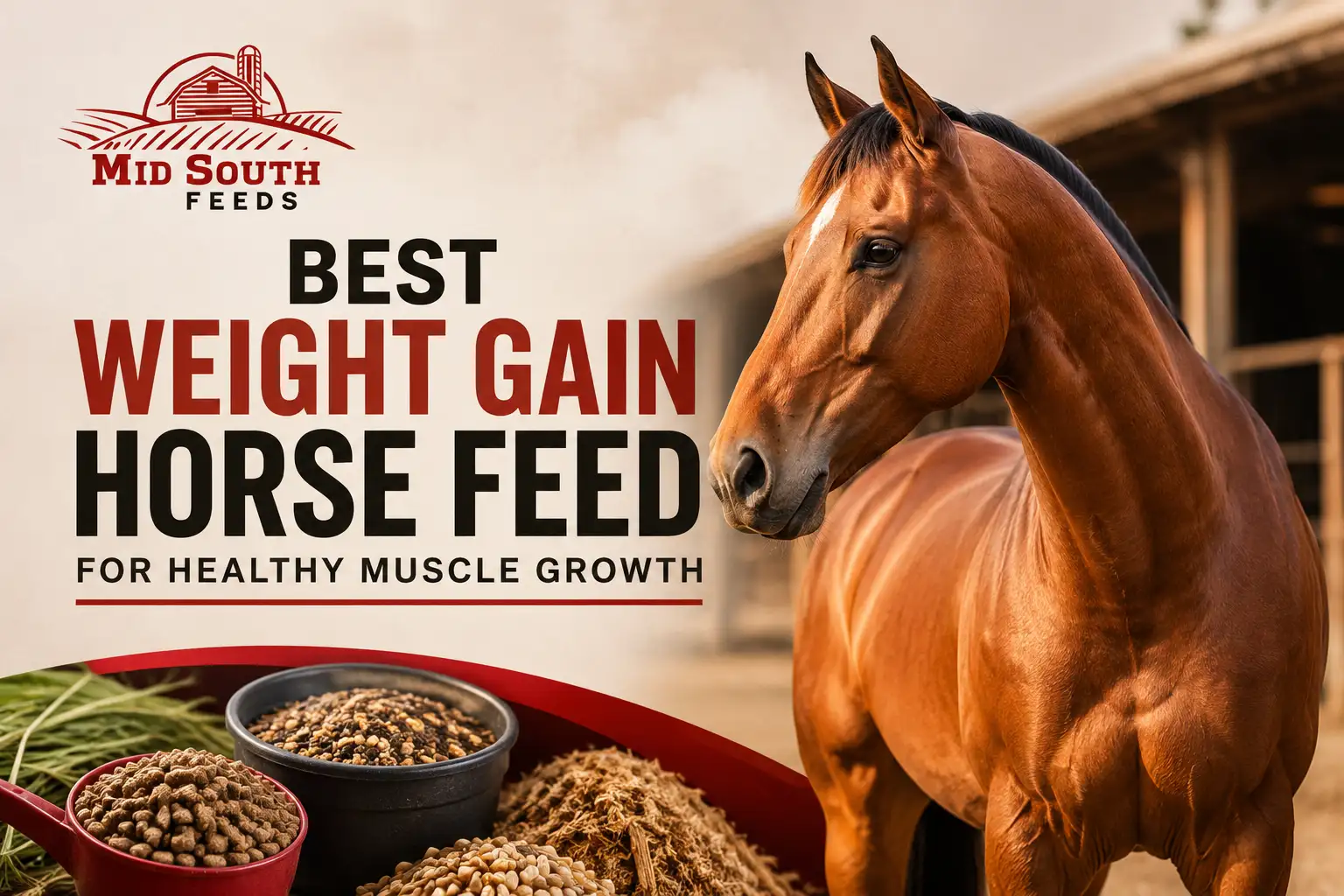
A horse that struggles to keep weight rarely has just one problem. Sometimes it is poor forage quality. Sometimes the horse burns more calories than it consumes. In older horses, dental wear and digestion issues are often part of the equation. Performance horses may lose condition simply because their energy output is higher than their daily intake.
That is why choosing the right horse feed for weight gain matters more than simply feeding extra grain.
The best weight gain horse feed supports three things at the same time:
- Healthy muscle development
- Safe calorie intake
- Digestive efficiency
Many horse owners try random supplements or overload concentrates, only to end up with digestive upset, excess starch intake, or unhealthy fat gain. A better approach is using scientifically balanced nutrition with digestible fiber, controlled starch, quality protein, and added fat sources.
According to Dr. Kathleen Crandell, Nutritionist at the Kentucky Equine Research, safe equine weight gain should focus on “increasing digestible calories while maintaining hindgut health.” That balance is what separates healthy muscle growth from risky rapid feeding changes.
Why Horses Lose Weight Even When They Are Eating
Many owners assume a thin horse simply needs more feed. In reality, equine weight loss can happen for several reasons:
Common Causes of Equine Weight Loss
- Poor-quality hay with low digestible energy
- Heavy training schedules
- Parasites
- Dental problems
- Stress during transport or competition
- Seasonal calorie burn in winter
- Ulcers or digestive disorders
- Aging and reduced nutrient absorption
Senior horses are especially vulnerable. Research from American Association of Equine Practitioners shows older horses commonly lose body condition because chewing efficiency declines with age.
This is why horse weight management should always start with forage quality, veterinary evaluation, and balanced calorie intake rather than simply feeding more grain.
What Makes the Best Horse Feed for Weight Gain?
Not all calories work the same way in horses.
The best feed to put weight on a horse should provide:
1. High Digestible Fiber
Fiber supports hindgut fermentation and steady calorie release. Ingredients like beet pulp and soybean hulls help horses gain condition safely.
2. Added Fat Sources
Fat provides roughly 2.25 times more energy than carbohydrates. Controlled fat supplementation increases calorie intake without excessive starch.
That is why many high calorie horse feed formulas include:
- Rice bran
- Vegetable oils
- Flaxseed
- Stabilized fat supplements
3. Quality Protein for Muscle Growth
A horse gaining weight without proper amino acids may gain fat but not topline muscle.
Lysine, methionine, and threonine are especially important for:
- Muscle recovery
- Tissue repair
- Performance conditioning
4. Controlled Starch Levels
Too much starch can increase digestive stress and metabolic risk. Modern equine nutrition focuses more on fiber and fat calories than excessive grain feeding.
How to Make a Horse Gain Weight Quickly Without Digestive Problems
Fast weight gain sounds appealing, but sudden feeding changes create real risks.
According to Dr. Carey Williams, Equine Extension Specialist at Rutgers University, rapid concentrate increases can disrupt hindgut bacteria and raise colic risk.
A safer plan includes:
- Free-choice high-quality forage
- Smaller, frequent meals
- Gradual feed increases over 10–14 days
- Added fat supplementation
- Consistent deworming and dental care
- Hydration and electrolyte support
Owners searching how to make horse gain weight quickly should focus on calorie density and digestibility instead of overfeeding starch-heavy grain.
Best Types of Weight Gain Feed for Horses
Different horses need different nutritional strategies.
Performance Horses
Performance horses burn calories rapidly and often require high calorie horse feed with elevated fat and protein levels.
Feeds like Performance Horse 12/6 and Southern Supreme 14/10 Race Formula are commonly used for:
- Energy maintenance
- Muscle support
- Athletic conditioning
- Recovery feeding programs
These formulations support sustained energy without relying entirely on high-starch grain intake.
Senior Horses
Older horses often struggle with chewing and digestion.
A good horse feed for weight gain in senior horses should contain:
- Soft, digestible fiber
- Added fat
- Balanced minerals
- Easily digestible protein
Southern Supreme Senior is designed specifically for aging horses that need support maintaining condition and daily calorie intake.
Horse owners researching what to feed older horses to gain weight should prioritize digestibility over sheer feed volume.
Hard Keepers
Some horses naturally burn calories faster than others. These horses benefit from:
- High-fat feeds
- Beet pulp blends
- Rice bran supplements
- Multiple daily feedings
Products like Advantage 30 are often included in feeding programs where additional concentrated nutrition is required alongside forage.
Are Weight Gain Supplements for Horses Necessary?
Not always.
If the base diet lacks calories, supplements alone will not solve the problem.
However, weight gain supplements for horses can help when:
- Horses cannot consume large meal volumes
- Additional fat calories are needed
- Recovery from illness is occurring
- Performance demands are high
Popular equine weight gain supplements often contain:
- Stabilized rice bran
- Omega fatty acids
- Probiotics
- Amino acids
- Yeast cultures
The best fat supplement for horses usually complements a balanced forage-based feeding program rather than replacing it.
How Long Does Healthy Equine Weight Gain Take?
Most healthy horses gain weight gradually over 30 to 90 days.
A realistic target is:
- 0.5 to 1 body condition score improvement over several weeks
Extremely rapid weight gain may increase metabolic strain or digestive upset.
Signs your feeding program is working include:
- Improved topline
- Better coat condition
- Increased stamina
- Fuller rib coverage
- Better muscle recovery
What Ingredients Should You Avoid in Weight Gain Horse Feed?
Some feeds create more problems than benefits.
Avoid feeds with:
- Excessive molasses
- Extremely high starch levels
- Low-quality filler grains
- Poor amino acid balance
Cheap calories do not always support healthy equine weight gain.
Research published by National Research Council emphasizes balancing digestible energy with proper nutrient ratios instead of simply increasing calorie quantity.
Feeding Strategies That Actually Work
Horse owners often get the best results when combining:
- Premium forage
- Balanced concentrate feed
- Fat supplementation
- Consistent feeding schedules
- Veterinary oversight
Many experienced horse managers also rotate feeding strategies seasonally depending on workload and weather conditions.
For horses needing consistent calorie support, specialized Horse Feed programs with performance-focused formulations can help maintain condition more effectively throughout the year.
Owners looking for Animal Feed Dealers near me should prioritize suppliers that understand forage analysis, equine digestive health, and performance nutrition rather than simply selling generic feed products.
Operations interested in reliable feed distribution and long-term nutrition partnerships can also Become a midsouth Feeds dealers to access specialized livestock and equine feed solutions designed for different stages of horse development and performance.
Frequently Asked Questions
What is the best horse feed for weight gain?
The best horse feed for weight gain combines digestible fiber, added fat, and quality protein while keeping starch levels controlled.
What is the best fat supplement for horses?
Stabilized rice bran, flaxseed-based supplements, and vegetable oil blends are commonly used fat supplements for healthy calorie support.
Can senior horses gain weight safely?
Yes. Senior horses often respond well to soft, digestible feeds with added fat and fiber designed for aging digestive systems.
How much high calorie horse feed should I give daily?
It depends on body condition, workload, forage quality, and veterinary guidance. Most feeding changes should happen gradually over 10–14 days.
Is forage still important during equine weight gain?
Absolutely. Forage remains the foundation of healthy digestion and calorie intake for horses.
A horse rarely gains healthy weight from calories alone. Muscle growth, digestive health, feed consistency, hydration, and forage quality all work together. The horses that improve condition safely are usually on balanced feeding programs designed around their workload, age, and metabolism instead of quick-fix supplements.
That is why many horse owners across the USA continue using Midsouth Feeds products like Advantage 30, Southern Supreme Senior, Performance Horse 12/6, Horse 12/4, and Southern Supreme 14/10 Race Formula as part of long-term feeding strategies focused on healthy body condition, sustained energy, and muscle development.
Sources
- Kentucky Equine Research
- American Association of Equine Practitioners (AAEP)
- Rutgers University Equine Science Center
- National Research Council Nutrient Requirements of Horses
- University of Minnesota Extension Equine Nutrition Program
Our Other Horse Related Blogs are:
Should I Feed My Horse Grain?
What Is the Best Feed for Old Skinny Horse
What Is the Best Feed for Ulcer Prone Horses
Is Sweet Feed Good for Horses?