 Dogs & Cats
 Cattle
 Equine
 Poultry
 Swine
Swine Goats & Sheep
 Game Bird
 Gamecock
 Deer & Wildlife
 Fish & Pond
 Rabbit
 Specialty
 Ingredients & Bulk
 Special Order
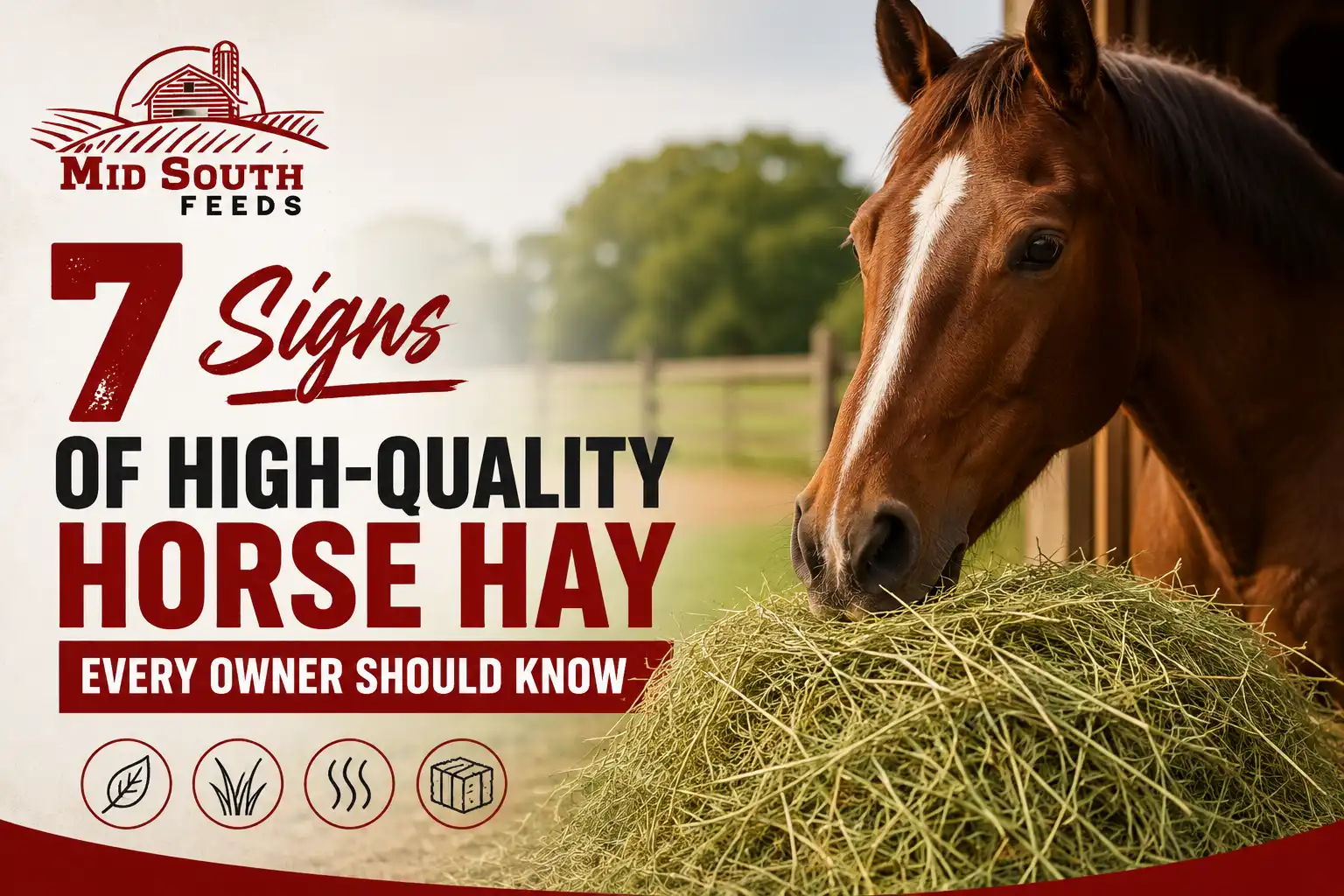
A surprising number of horse health problems start with bad hay.
Weight loss, dull coats, digestive upset, low energy, respiratory irritation, even poor performance often trace back to one thing sitting in the feed room every day. Most owners focus heavily on grain, supplements, or training schedules while overlooking the biggest part of a horse’s diet.
According to the University of Minnesota Extension, forage makes up at least 50% of most horses’ diets by weight. In many barns, it is closer to 70–100%. That means the quality of hay affects nearly every part of equine health, from digestion to body condition to respiratory function.
The problem is that many horse owners buy hay based on price, color alone, or whatever is available locally. Good hay for horses is more than green flakes and a fresh smell. Real horse quality hay has measurable signs tied directly to nutrition, storage conditions, harvesting methods, and maturity at cutting.
Once you know what to look for, bad hay becomes easier to spot before it becomes an expensive veterinary problem.
What Is the Most Important Visual Indicator of Hay Quality?
Horse owners often ask this question first, and honestly, there is not just one answer.
Color matters. Leaf retention matters. Smell matters. Texture matters. Together, these signs help determine whether hay supports healthy digestion and nutrient intake or creates avoidable health risks.
Dr. Krishona Martinson, Equine Extension Specialist at the University of Minnesota, explains that horse hay should be evaluated using multiple sensory indicators instead of relying on appearance alone.
That starts with the first sign most owners notice.
1. Good Quality Hay for Horses Has a Fresh Green Color
The color of hay tells you a lot about how it was harvested and stored.
High quality horse hay is usually:
- Green to light green
- Consistent throughout the bale
- Free from excessive yellowing or browning
Bright green hay generally retains more nutrients, especially Vitamin A and digestible protein.
Brown or sun-bleached hay does not automatically mean it is unusable, but heavily faded hay often indicates:
- Overmaturity at harvest
- Rain damage
- Excessive sun exposure
- Nutrient loss during storage
The color of hay is especially important when evaluating alfalfa products because leaf retention contributes heavily to protein value.
Premium forage products like Premium Alfalfa Hay (2-String Bale) are commonly preferred by horse owners looking for consistent leaf quality and digestible nutrition.
2. High Quality Hay for Horses Smells Fresh, Never Musty
Healthy hay has a clean, slightly sweet smell.
Bad hay smells:
- Moldy
- Sour
- Damp
- Dusty
- Fermented
That odor usually signals moisture problems during baling or storage.
According to Penn State Extension, mold exposure in hay can increase respiratory irritation and reduce palatability in horses.
Horses are surprisingly sensitive to poor forage smell. Many refuse dusty or moldy flakes long before humans notice visible spoilage.
If hay smells off, there is usually a reason.
3. Leafy Hay Usually Means Better Nutritional Value
Leaves contain most of the digestible nutrients in hay horse feeding programs.
This matters especially in legumes like alfalfa.
A bale with excessive stems and very few leaves often indicates:
- Late harvesting
- Poor handling
- Lower digestibility
- Reduced protein value
Good hay vs bad hay becomes obvious when comparing leaf retention side by side.
High quality hay for horses should feel balanced, not overly stemmy or brittle.
4. Soft Texture Matters More Than Most Owners Realize
Some owners assume coarse hay is more filling. In reality, overly rough hay may reduce intake and digestibility.
Good quality hay for horses should:
- Feel relatively soft
- Break apart easily
- Avoid excessive sharp stems
- Produce minimal dust when shaken
This becomes even more important for:
- Senior horses
- Horses with dental issues
- Hard keepers
- Horses recovering from illness
Dr. Carey Williams from the Rutgers University notes that softer forage often improves intake consistency in older horses.
5. Good Hay for Horses Should Be Low in Dust and Mold
Dust is not just annoying in a barn. It can affect respiratory health significantly.
The American Association of Equine Practitioners links dusty environments and poor forage quality to increased risk of inflammatory airway disease in horses.
Signs of poor hay include:
- Dust clouds during feeding
- White or gray mold patches
- Clumped damp areas
- Excessive fine particles at the bottom of bales
Even visually clean hay may contain hidden mold spores if stored improperly.
That is why many experienced horse owners inspect multiple flakes before purchasing large hay shipments.
6. Fine-Stemmed Hay Is Usually Easier to Digest
Stem thickness tells you a lot about plant maturity.
Thin stems generally indicate:
- Earlier harvest timing
- Better digestibility
- Higher nutrient density
- Improved palatability
Thick, woody stems usually mean the forage matured too long before cutting.
This affects:
- Fiber digestibility
- Nutrient absorption
- Feed waste
- Overall intake
For horses and hay management, digestibility matters just as much as nutrient numbers on paper.
7. Weed-Free Hay Is a Major Quality Indicator
One of the fastest ways to judge horse quality hay is by looking for weeds and foreign material.
High quality horse hay should contain:
- Minimal weeds
- No trash or debris
- No toxic plants
- Uniform forage consistency
Poorly managed hay fields often introduce:
- Unwanted grasses
- Nutrient inconsistency
- Toxic weed contamination
According to the University of California Agriculture and Natural Resources, toxic weeds in hay remain a preventable risk factor in equine poisoning cases.
What Is the Best Hay for Horses?
There is no universal answer because different horses have different nutritional needs.
Alfalfa Hay
Higher in:
- Protein
- Calcium
- Calories
Often useful for:
- Performance horses
- Underweight horses
- Growing horses
Grass Hay
Usually lower in calories and protein.
Often preferred for:
- Easy keepers
- Horses with metabolic concerns
- Maintenance feeding
Mixed Hay
Combines characteristics of both grass and legume forage.
Many horse owners choose mixed forage programs alongside balanced concentrates and Sweet Feed for Horses depending on workload and body condition goals.
How Can You Tell Good Hay vs Bad Hay Quickly?
If you only have 30 seconds to evaluate hay, check these five things first:
- Color should be greenish, not dark brown
- Smell should be fresh and clean
- Dust should be minimal
- Leaves should be visible throughout flakes
- Texture should not feel overly coarse or damp
Experienced horse feed suppliers often help horse owners compare forage quality before purchase, especially when seasonal hay conditions vary across the USA.
That is one reason many owners searching for Animal Feed Dealers near me prefer working with suppliers who understand forage analysis, horse nutrition, and long-term feeding management instead of simply selling bales by volume.
Frequently Asked Questions
What is the best hay for horses?
The best hay for horses depends on age, workload, metabolism, and body condition. Alfalfa often supports higher calorie needs, while grass hay works well for maintenance feeding.
Is green hay always better?
Usually, yes. Green hay generally retains more nutrients than heavily weathered hay, although texture, smell, and mold presence matter too.
Why does dusty hay matter?
Dusty hay can irritate the respiratory tract and contribute to airway inflammation in horses.
Can horses eat slightly brown hay?
Some brown hay remains safe if properly stored and mold-free, but excessive discoloration often signals nutrient loss.
How should horse hay be stored?
Hay should stay dry, ventilated, elevated off the ground, and protected from moisture exposure.
The best horse owners are usually the ones paying attention before problems start. They notice the smell of hay before feeding it. They check texture before unloading trailers. They understand that forage quality affects energy levels, digestion, coat condition, respiratory health, and long-term performance more than most supplements ever will.
For barns looking to improve forage consistency, Premium Alfalfa Hay (2-String Bale) from Midsouth Feeds is designed for horse owners who want dependable forage quality backed by practical feeding experience and nutrition-focused supply standards. Operations interested in expanding regional feed access can also Become a midsouth Feeds dealers through the company’s growing dealer network across the USA.
Sources
- University of Minnesota Extension
- Rutgers University Equine Science Center
- Penn State Extension
- American Association of Equine Practitioners (AAEP)
- University of California Agriculture and Natural Resources
- National Research Council Nutrient Requirements of Horses
Our Other Horse Related Blogs are:
How Long After Riding to Feed Horse for Better Digestion
What Is the Best Feed for Old Skinny Horse