 Dogs & Cats
 Cattle
 Equine
 Poultry
 Swine
Swine Goats & Sheep
 Game Bird
 Gamecock
 Deer & Wildlife
 Fish & Pond
 Rabbit
 Specialty
 Ingredients & Bulk
 Special Order
The Role of Veterinary Nutrition in Improving Animal Feed Quality
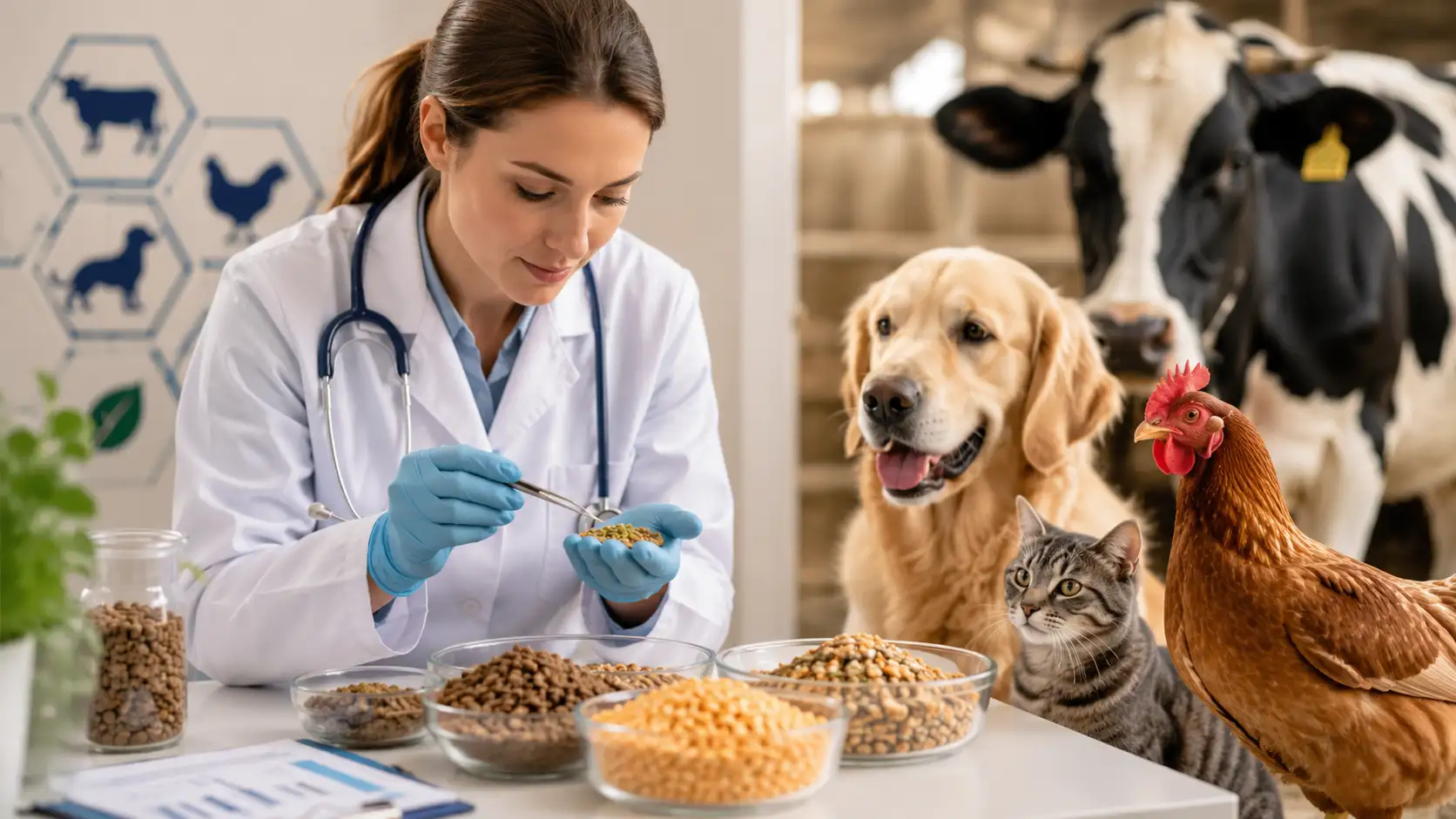
Poor feed quality costs livestock producers more than most realize. Animals gain weight slower, immune systems weaken, reproduction rates drop, and feed conversion becomes expensive. In many cases, the issue is not how much animals eat. It is what is missing inside the feed itself.
That is where veterinary nutrition changes the conversation.
Modern animal production in the USA depends on feed programs designed with veterinary science, ingredient analysis, gut health research, and species-specific nutrient balancing. Today’s producers are under pressure to improve performance while controlling costs, reducing disease risk, and meeting stricter food safety expectations. Better feed quality sits at the center of all three.
Veterinary nutrition helps producers understand how proteins, minerals, amino acids, vitamins, fiber levels, and digestibility affect animal health in real farm conditions. More importantly, it helps prevent expensive problems before they appear in the barn, pasture, or poultry house.
What Is Veterinary Nutrition and Why Does It Matter?
Veterinary nutrition focuses on how nutrients affect animal growth, immunity, reproduction, metabolism, and long-term health. It combines veterinary medicine with animal nutrition science to create feeding strategies that support healthier and more productive livestock.
Unlike generic feed formulation, veterinary nutrition evaluates:
- Digestive efficiency
- Disease prevention
- Feed contamination risks
- Nutrient absorption
- Species-specific requirements
- Stress-related nutritional deficiencies
- Life-stage feeding adjustments
This matters because feed quality directly affects profitability.
According to the Food and Agriculture Organization, feed can account for up to 70% of livestock production costs. Small nutritional improvements often produce measurable gains in feed conversion efficiency, weight gain, milk production, and animal welfare.
Dr. Joseph Wagner, Clinical Associate Professor of Large Animal Clinical Sciences at Michigan State University, has emphasized that precision nutrition is becoming one of the most effective tools for improving both herd health and economic performance in livestock systems.
How Does Veterinary Nutrition Improve Animal Feed Quality?
High-quality feed is not simply feed with more ingredients. It is feed that animals can digest, absorb, and convert into performance.
Veterinary nutrition improves feed quality through several critical areas.
Better Nutrient Balance
Animals require precise nutrient ratios. Too little protein limits growth. Too much mineral supplementation can damage metabolism or increase waste output.
Veterinary nutritionists evaluate:
- Amino acid profiles
- Energy density
- Calcium-to-phosphorus ratios
- Trace mineral availability
- Vitamin stability
- Fiber digestibility
This creates balanced diets that improve biological efficiency instead of simply increasing feed volume.
For example, dairy cattle need different nutritional support during lactation compared to dry periods. Poultry require different amino acid concentrations during growth stages. Swine diets also shift based on weight, genetics, and stress exposure.
One-size-fits-all feeding programs rarely deliver optimal results.
Feed Safety and Contamination Control
Feed contamination remains a major issue in animal agriculture.
Mycotoxins, mold growth, bacterial contamination, and poor ingredient storage can reduce feed quality quickly. Veterinary nutrition professionals help identify risk factors before they affect animal performance.
The U.S. Food and Drug Administration warns that contaminated animal feed can contribute to illness, reduced productivity, and food chain safety concerns.
Veterinary-guided feed evaluation often includes:
- Ingredient sourcing reviews
- Mycotoxin risk analysis
- Feed storage recommendations
- Moisture control
- Pathogen monitoring
- Digestibility testing
This scientific approach reduces nutritional inconsistencies that many farms overlook.
Improved Gut Health and Immunity
Modern veterinary nutrition places heavy focus on gut health because digestive performance affects almost every aspect of animal productivity.
A healthy digestive system improves:
- Nutrient absorption
- Immune response
- Weight gain
- Feed efficiency
- Stress recovery
Research from Cornell University College of Veterinary Medicine has shown that gastrointestinal health strongly influences immune regulation and disease resistance in livestock animals.
This is one reason why feed programs increasingly include:
- Probiotics
- Prebiotics
- Yeast cultures
- Functional fibers
- Organic trace minerals
Instead of reacting to illness later, veterinary nutrition supports prevention earlier in the production cycle.
Why Are Livestock Producers Investing More in Veterinary Nutrition?
Margins are tighter than they were a decade ago. Feed prices remain volatile across the USA, while disease outbreaks and environmental stress continue affecting production systems.
Producers are investing more in veterinary nutrition because nutrition mistakes are expensive.
Poor Feed Quality Creates Hidden Losses
Some losses are obvious. Others are difficult to detect until profits decline.
Common signs of poor nutritional management include:
- Slower daily weight gain
- Weak reproductive performance
- Higher mortality rates
- Increased veterinary costs
- Inconsistent feed intake
- Reduced milk production
- Weak eggshell quality in poultry
Dr. Mike Hutjens, Professor Emeritus of Animal Sciences at University of Illinois Urbana-Champaign has repeatedly noted that feed efficiency improvements often provide greater financial returns than increasing herd size alone.
That insight matters because many farms still focus on quantity before feed quality optimization.
Precision Feeding Reduces Waste
Precision nutrition allows farms to feed animals more accurately based on age, production stage, environment, and health status.
This reduces:
- Nutrient waste
- Excess supplementation
- Feed costs
- Environmental runoff
It also improves sustainability, which is becoming increasingly important in the U.S. livestock industry.
According to the United States Department of Agriculture, precision feeding strategies can improve nutrient utilization while reducing environmental impacts from livestock operations.
What Role Does Research Play in Modern Animal Feed Quality?
Animal nutrition is changing fast.
Feed manufacturers, veterinarians, and livestock specialists now rely heavily on research-driven formulations supported by laboratory analysis, field studies, and ongoing education.
That is why many industry professionals attend events like Veterinary Meeting & Expo and participate in Veterinary CE webinars to stay updated on feed science, disease prevention, and livestock nutrition technologies.
Research areas receiving major attention include:
- Alternative protein sources
- Antibiotic-free feeding systems
- Rumen microbiome management
- Amino acid optimization
- Heat-stress nutrition strategies
- Digestive enzyme supplementation
Veterinary conferences across the USA increasingly focus on how nutrition affects both animal welfare and farm profitability.
The shift is clear. Feed is no longer treated as a basic commodity. It is now viewed as a biological performance tool.
How Can Producers Identify High-Quality Animal Feed?
Many feed labels look similar, but ingredient quality and nutritional value can vary significantly.
Producers should evaluate:
Ingredient Transparency
Reliable feed suppliers clearly explain:
- Ingredient sourcing
- Nutritional guarantees
- Testing standards
- Quality control measures
Vague labeling often creates inconsistency in animal performance.
Consistent Manufacturing Standards
Feed quality depends heavily on manufacturing consistency.
Look for suppliers using:
- Laboratory nutrient testing
- Pellet durability testing
- Moisture monitoring
- Storage quality control
- Species-specific formulations
Strong quality control reduces nutritional variation between batches.
Veterinary and Nutritional Expertise
Feed companies working closely with animal nutrition specialists often provide more precise recommendations instead of generalized feeding advice.
This becomes especially important during:
- Seasonal stress periods
- Breeding cycles
- Weaning transitions
- Disease recovery
- Rapid growth phases
The best feed programs adapt to changing animal needs instead of remaining static year-round.
Common Questions About Veterinary Nutrition and Feed Quality
Does better feed quality really reduce veterinary costs?
Yes. Balanced nutrition improves immunity, digestive health, and metabolic stability, which can reduce disease incidence and treatment costs over time.
Is veterinary nutrition only important for large farms?
No. Small and mid-sized operations often benefit significantly because nutritional inefficiencies can impact profitability faster when margins are tighter.
Can poor feed quality affect reproduction?
Absolutely. Nutrient deficiencies commonly affect fertility, pregnancy maintenance, egg production, and offspring development.
Are probiotics and feed additives worth using?
Some are highly effective when supported by research and used correctly. Results depend on species, feed composition, stress levels, and overall herd management.
Why do nutrition strategies change throughout the year?
Temperature, humidity, forage quality, breeding schedules, and disease pressure all influence nutritional requirements.
The Future of Animal Feed Quality Will Be More Scientific
The future of livestock nutrition will rely more heavily on data, veterinary science, precision formulation, and ingredient transparency.
Producers are no longer asking only, “How much feed do animals need?”
They are asking:
- How digestible is the feed?
- How does it affect immunity?
- Does it improve conversion efficiency?
- Can it reduce stress-related losses?
- Is it consistent every month?
Those questions are shaping the next generation of feed manufacturing across the United States.
Feed companies that invest in nutritional research, quality testing, and science-backed formulation are becoming trusted partners instead of simple suppliers. That difference matters when animal health, productivity, and long-term operational performance are on the line.
For livestock producers looking for research-backed feed solutions built around animal performance and nutritional quality, Midsouth Feeds continues to support farms with feed products designed for real production demands, changing livestock needs, and long-term animal health outcomes.
Sources
- Food and Agriculture Organization (FAO) Animal Feed Resources
- U.S. Food and Drug Administration Animal Food Safety
- USDA Livestock and Animal Systems Research
- Cornell University College of Veterinary Medicine
- Michigan State University College of Veterinary Medicine
- University of Illinois Animal Sciences Department