 Dogs & Cats
 Cattle
 Equine
 Poultry
 Swine
Swine Goats & Sheep
 Game Bird
 Gamecock
 Deer & Wildlife
 Fish & Pond
 Rabbit
 Specialty
 Ingredients & Bulk
 Special Order
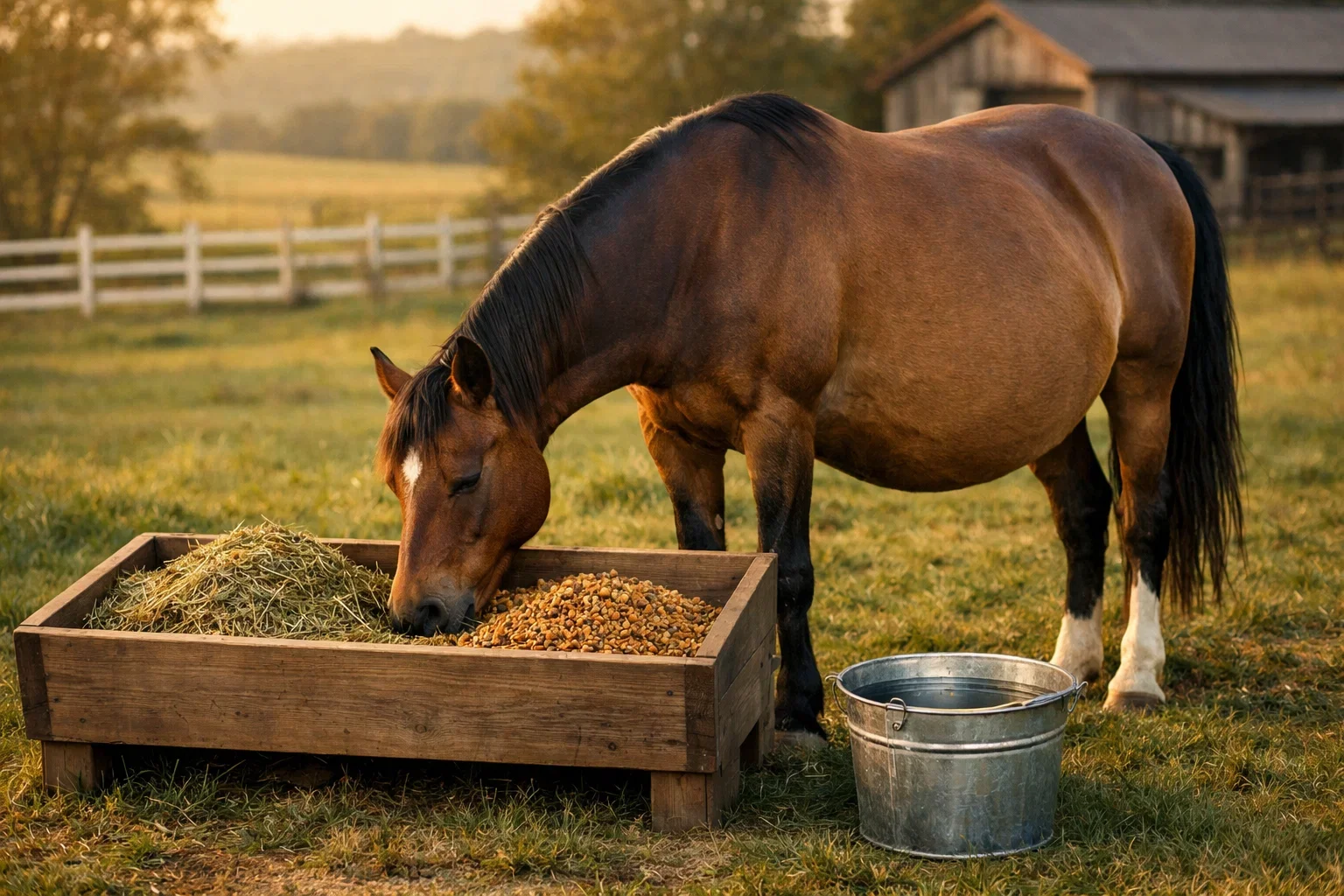
The most challenging physiological condition that a horse can face is pregnancy. You may be an experienced breeder or this is your first foal, but it is some of the most important issues you will undertake to know what to feed a pregnant horse. Your nutritional choices at that eleven-month period can determine how the mare and the growing foal are going to be healthy in the future.
In this guide, we will take you through all the phases of equine pregnancy nutrition, including the early gestation period and foaling period and well beyond that, so that you consistently feel confident that you are providing your mare with everything she requires.
Understanding the Stages of Equine Pregnancy
The gestation cycle of a horse takes about 340, or about 11, months. There are three broad stages in which the nutritional requirements change greatly and they are early gestation (months 1-8), late gestation (months 9-11), and after foaling (during postpartum).
This is an error many owners of horses commit: they overfeed mares during early pregnancy and underfeed during late pregnancy or the opposite. Striking the right balance between the three stages is the key to a healthy horse pregnancy diet.
Early Gestation: Months 1 Through 8
In the first two thirds of pregnancy, the fetus develops at a slow rate. Actually, at the end of month eight, the foal is not even able to attain 30 percent of its birth weight. This implies that the caloric requirements of your mare in early pregnancy are not radically different to that of a non pregnant horse at light work.

The major concern at this phase is to ensure a healthy body condition score (BCS) of 5 to 6 out of 9 Henneke scale. A mare, which goes into late gestation period when too thin will have difficulty with the rapid growth of the fetus and an overweight mare is at risk of more metabolic problems.
The basis of the early pregnancy diet of your mare should be made of good-quality forage, i.e. pasture grass or grass hay. Without grain supplementation, part of it, or no grain supplementation at all, might be necessary during the months one to eight if the quality of the forage is excellent, and the mare is in good condition. It is however advisable to take a balanced vitamin and mineral supplement to cover nutritional deficiencies especially in areas where forage lacks selenium, copper or zinc.
To obtain the mares in need of a dense source of protein, vitamins, and minerals but not calories, Advantage 30 by Mid-South Feeds is a good choice in the early gestation. It is specifically developed to aid reproduction during the rest of the stages of life and may be fed on little grain or forage to supplement nutritional deficiencies without driving undue weight gain.
The research articles published in the Journal of Equine Veterinary Science show that the fetus grows at a very slow rate up to the eighth month of fetal life with about 60-65 percent of overall fetal development being realized in the last three months of gestation. This is the reason why disproportionate significance is attached to late-gestation nutrition.
Late Gestation: What to Feed a Mare in the Last Trimester
The last three months of the pregnancy are the serious ones. The foal is fast developing, the belly of the mare is tight and she physically cannot eat a lot of feed at a time. Her protein, calcium, phosphorus, and energy needs have however gone up significantly.
It is at this point that most of the breeders pose the question most acutely: what to feed a mare in last trimester? The solution entails a series of major changes.
Increase Energy Intake Gradually
The energy needs are approximately 2030 percent higher during the final trimester than they were during the early pregnancy. It is important to start feeding your mare in the eighth or ninth month and not to change her diet immediately as it will shock her. Increase the caloric intensity of her ration slowly by adding or adding to the extent of concentrate feeds without reducing forage.
Extreme changes in diet should be avoided because it can cause changes to the hindgut microbial flora and cause gastrointestinal disturbance or colic.
Prioritize Protein Quality
The increased protein needs during late gestation are to assist in the rapid tissue growth of the fetus. During late-gestation mare the requirements of crude proteins increase to about 1.4 times the maintenance levels. Essentially, feeds that are high in lysine (the initial limiting amino acid in equine diet) can be important. Excellent sources of good quality protein are alfalfa hay, soybean meal and commercial ration balancers.
This is just at the point where Southern Supreme Mare and Foal 16/7 by Mid-South Feeds will be put into consideration. It has been created specifically to broodmares undergoing all phases of the reproductive process and provides the best sources of energy and protein ever, and fully satisfies the vitamin and mineral needs to promote the correct skeletal growth in the developing foal. It is one of the most diversified options available in the market as to what to feed a pregnant horse in the last trimester.
Calcium and Phosphorus Balance
The growing skeleton of a foetus puts a heavy strain on the calcium and phosphorus deposits of the mare. The perfect calcium to phosphorus ratio in the diet must not be more than 1.5:1 and not less than 2: 1. The alfalfa hay contains high amounts of calcium and can be a good supplement in the late-gestation diet, but it must be balanced with other sources of feed.
Nutritional Requirements Table: Pregnant Mare by Trimester
| Nutrient | Early Gestation (Months 1–8) | Late Gestation (Months 9–11) |
| Digestible Energy | ~16.7 Mcal/day (500 kg mare) | ~19.4 Mcal/day |
| Crude Protein | ~630 g/day | ~900 g/day |
| Calcium | ~20 g/day | ~36 g/day |
| Phosphorus | ~14 g/day | ~26 g/day |
| Vitamin E | 500 IU/day | 800 IU/day |
| Selenium | 1 mg/day | 1 mg/day |
Values are approximate for a 500 kg mare. Consult an equine nutritionist for individualized recommendations.
Best Feed for Pregnant Mare: What to Look For
Selecting the best feed for a pregnant mare is not just about increasing calories. It is about providing proper nutritional balance, quality ingredients, and palatability to support both the mare and her developing foal. Below are the most important feed components to consider and how each contributes to overall health during gestation.
1. Forage Hay and Pasture

Forage should form the foundation of the diet and must never drop below 1.5–2% of the mare’s body weight per day (dry matter basis).
High-quality grass hay or a grass-legume mix provides:
- Essential fiber for gut health
- Steady energy
- Vital vitamins and minerals
Alfalfa hay can be strategically used during late gestation because of its higher protein and calcium content. However, it should not dominate the entire diet, as excessive calcium or protein imbalance may create nutritional issues.
2. Commercial Mare and Foal Concentrates
Feeds specifically formulated for late-gestation and lactating mares provide targeted nutrition. These concentrates are typically rich in:
- High-quality protein and lysine
- Omega-3 fatty acids
- Vitamin E
- Essential trace minerals
Southern Supreme Mare and Foal 16/7 by Mid-South Feeds fits perfectly into this category. This textured concentrate is designed to simplify ration formulation during the most critical stage of pregnancy, ensuring proper nutrient delivery without unnecessary guesswork.
3. High-Energy Performance Blends for Active Breeding Mares
Mares that are still being worked or have a performance background may require higher energy intake.
Southern Supreme 14/10 Race Formula, also from Mid-South Feeds, is primarily a performance feed but can support broodmares and breeding stallions with elevated physiological demands.
It can also serve as a useful transition feed for mares moving from an active performance career into their reproductive phase.
4. Ration Balancers for Mares on Good Pasture
If a mare has access to high-quality pasture and does not require additional calories, a ration balancer is often the better option.
Ration balancers provide:
- Essential amino acids
- Vitamins and minerals
- Balanced protein
Advantage 30 by Mid-South Feeds is a concentrated protein and mineral supplement ideal for reproduction, growth, and performance phases. It is fed alongside minimal grain while maintaining nutritional balance.
5. Omega-3 Fatty Acid Sources
Omega-3 supplementation plays a significant role during late gestation.
Good sources include:
- Ground or stabilized flaxseed
- Fish oil
Benefits include:
- Improved immune function
- Reduced inflammation
- Enhanced colostrum quality
Research suggests that omega-3 supplementation during late gestation may improve passive immunity transfer from mare to foal.
What to Avoid During Late Gestation
One of the most critical feeding mistakes involves fescue hay or pasture contaminated with the endophyte Neotyphodium coenophialum.
During the final 60–90 days of pregnancy, contaminated tall fescue should be strictly avoided because the ergot alkaloids produced by this fungus can:
- Suppress prolactin
- Reduce or prevent milk production
- Extend gestation length
- Cause life-threatening foaling complications
Research from the University of Kentucky found that mares grazing on endophyte-infected tall fescue experienced:
- Thickened placentas
- Reduced colostrum secretion
- Increased foaling difficulties
As a result, it is now standard equine reproductive management practice to remove mares from fescue pasture at least 90 days prior to foaling.
What to Feed a Horse After Foaling
The nutritional requirements of a postpartum horse are often underestimated. In reality, the demands of lactation are even greater than those of pregnancy, which is why adjusting horse feed during this stage is essential.
A lactating mare nursing a foal consumes significantly more energy, protein, calcium, and water than she did during gestation. Milk production typically peaks within the first three months after foaling, and during this time a mare can produce 3–4 percent of her body weight in milk per day. Providing high-quality horse feed formulated for lactating mares helps support both milk production and the mare’s overall health and body condition.
Dramatically Increase Energy and Protein
Following foaling, the energy needs are raised by about 50-70 percent over maintenance – much more than during the late gestation period. When such needs are not met, the mare has to call on her own body tissue to aid in the production of milk hence losing weight rapidly and becoming less reproductively effective.
Southern Supreme Mare & Foal 16/7 is a feed of choice right after foaling and during the lactation period. Since it is supplemental and is aimed at broodmares at all stages of the reproduction period, and not only during pregnancy, it is easier to switch it into a lactation feed without causing an abrupt shift in the feed. This continuity is beneficial in the digestive system of the mare and the convenience of the owner.
Replenish Calcium Stores
The late gestation and the lactation calcium requirements are the same or greater. Make sure that the postpartum diet does not lack calcium by a mix of legume hay and a balanced commercial feed.
Fresh Water Is Non-Negotiable
There are 50-80 liters of water that a lactating mare can absorb on a daily basis. Always supply fresh clean water in a profuse amount. Poor water consumption will directly decrease the milk production and expose the mare to impaction colic.
Postpartum Feeding Summary Table
| Stage | Key Nutritional Focus | Recommended Feeds |
| Day 1–3 Post-Foaling | Hydration, gut motility restoration | Free-choice hay, water, limited grain |
| Week 1–4 | Gradual energy increase, colostrum replenishment | Southern Supreme Mare & Foal 16/7, alfalfa mix |
| Months 1–3 (Peak Lactation) | High energy, protein, calcium | Increased concentrate, quality hay, omega-3s |
| Months 4–6 (Declining Lactation) | Gradual reduction, body condition maintenance | Reduce concentrate as foal weans; Advantage 30 as supplement |
Monitoring Your Mare’s Body Condition
No matter at which point in the pregnancy cycle or in the lactation process of your mare, regular body condition scoring is among the most pragmatic instruments in your nutritional management arsenal. The BCS of 5 to 6.5 should be maintained during pregnancy and should not be allowed to drop below a 5 during lactation. The too thin mare will struggle to cycle into reproductive fitness and may take long to conceive.
Diet: Determine the diet with your veterinarian and an equine nutritionist to customize it according to the needs of your mare, the quality of the forage available, and the metabolic inclinations of your mare.
Final Thoughts
There is no simple appreciation of what one should give a pregnant horse to eat and this is because each month the horse is carrying is a different case. The initial phases require a consistent, balanced maintenance nutrition with the help of such a product as Advantage 30; the last trimester requires an even more specific increase in energy, protein, and minerals that can best be achieved by a specific broodmare concentrate such as Southern Supreme Mare and Foal 16/7; and the postpartum period necessitates an even higher level of nutritional commitment to aid the milk production as well as the rehabilitation of the mare; which is a role that the same Mare and Foal formula still serves to play with ease.
You can provide your mare with the basis she requires to give birth to a healthy foal and survive during lactation by combining high-quality forage with well-formulated products of Mid-South Feeds. In this case, you should talk to your veterinarian when you are unsure because the eleven months of equine pregnancy are too valuable to be left to chance.
FAQs
1. What should you feed a pregnant horse in early gestation?
In early gestation, a pregnant horse mainly needs high-quality forage such as grass hay or pasture. Calories usually do not need to increase if body condition is ideal. A balanced vitamin and mineral supplement helps cover nutrient gaps.
2. Does a pregnant mare need more food during the first eight months?
Most mares do not need significantly more food during the first eight months of pregnancy. The goal is to maintain a healthy body condition rather than promote weight gain. Overfeeding at this stage can lead to metabolic issues later.
3. What should you feed a pregnant horse in the last trimester?
During the last trimester, energy, protein, calcium, and phosphorus requirements increase sharply. A mare-and-foal concentrate combined with quality forage is ideal. Feed changes should be gradual to protect digestive health.
4. Why is protein important for pregnant horses?
Protein supports fetal muscle, organ, and skeletal development, especially in late pregnancy. High-quality protein sources rich in lysine are essential. Inadequate protein can result in weak or poorly developed foals.
5. How much forage should a pregnant horse eat daily?
A pregnant horse should consume about 1.5–2% of her body weight in forage each day. Forage provides fiber, energy, and digestive stability. Concentrates should supplement, not replace, forage intake.
6. What minerals are most important during pregnancy?
Calcium, phosphorus, selenium, zinc, and copper are especially important for pregnant mares. These minerals support bone formation, immune health, and reproductive function. The calcium-to-phosphorus ratio must remain balanced.
7. Should pregnant horses eat alfalfa hay?
Alfalfa hay can be beneficial, especially in late gestation, due to its high protein and calcium content. It should be fed in moderation and balanced with other forages. Excessive alfalfa may cause mineral imbalances.
8. What feeds should pregnant horses avoid?
Pregnant horses should avoid moldy hay, sudden high-grain diets, and endophyte-infected fescue in late pregnancy. These can cause foaling complications or digestive problems. Clean, consistent feed sources are essential.