 Dogs & Cats
 Cattle
 Equine
 Poultry
 Swine
Swine Goats & Sheep
 Game Bird
 Gamecock
 Deer & Wildlife
 Fish & Pond
 Rabbit
 Specialty
 Ingredients & Bulk
 Special Order

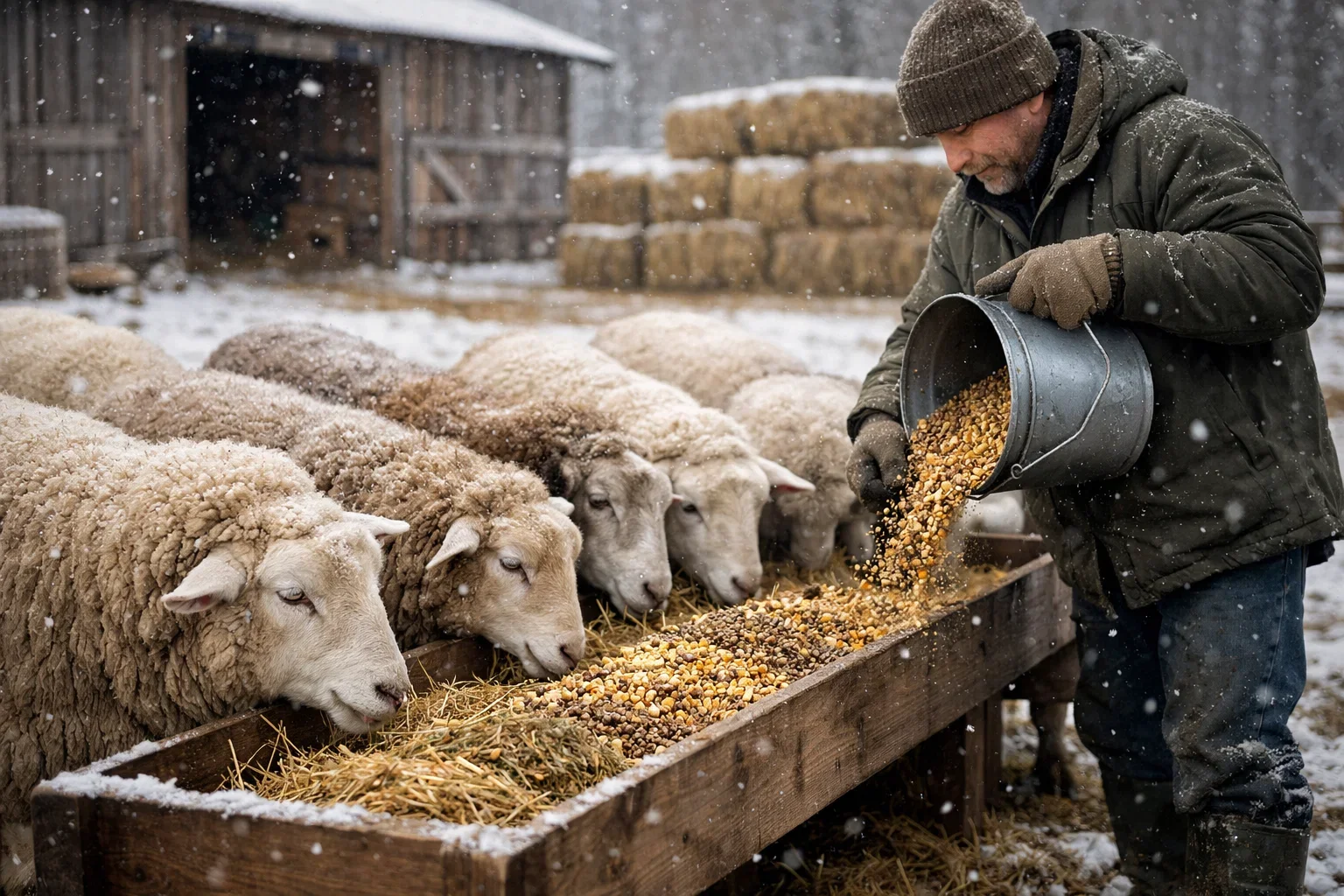
Knowing what to feed sheep in the winter is one of the most important decisions a farmer makes each year. When temperatures drop and pasture disappears, sheep depend entirely on what you provide. Without the right nutrition, they lose body condition fast and that leads to weaker lambs, lower wool quality, and higher vet bills.
Winter feeding isn’t complicated, but it does require planning. The right combination of forage, energy-rich feed, protein, and minerals will carry your flock through even the harshest months in good shape.
Why Winter Feed for Sheep Is Different From Other Seasons
In warm months, sheep graze freely and meet most of their nutritional needs from pasture. Winter changes everything. Grass stops growing, frozen ground limits grazing time, and cold temperatures increase the energy sheep need just to stay warm.
This means a sheep eating the same amount in winter as in summer is actually running a calorie deficit. Their body burns extra energy to maintain core temperature, which pulls from fat reserves if feed intake doesn’t increase. Winter feed for sheep must account for this higher energy demand especially for pregnant ewes, young lambs, and older animals.
What to Feed Sheep in the Winter: The Core Feed Types
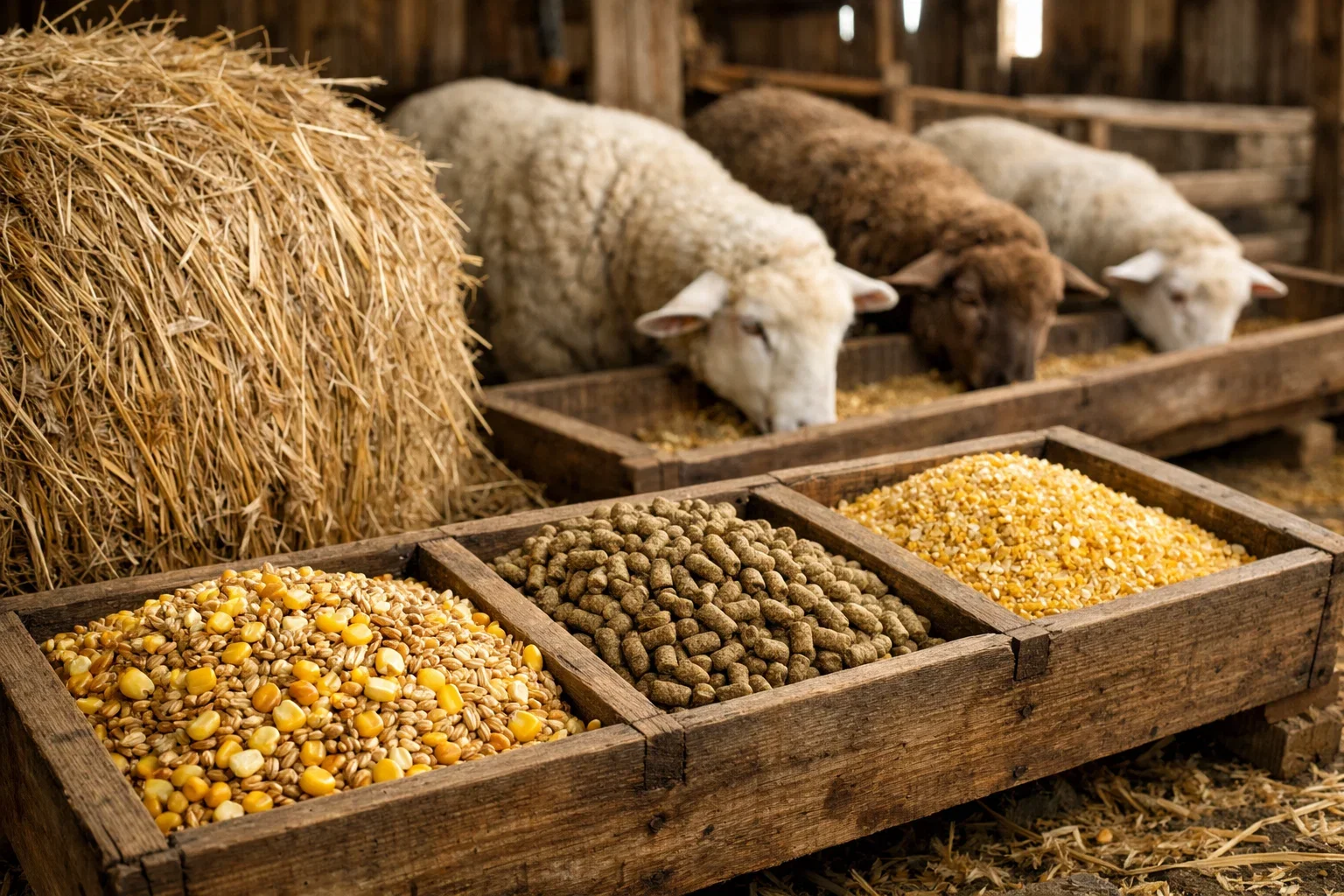
1. Hay – The Winter Staple
Hay is the backbone of sheep winter nutrition. It replaces fresh pasture and keeps the digestive system working properly through its fiber content.
Not all hay is equal. Here’s what to know:
- Grass hay (timothy, orchard grass) good for maintenance, lower in protein
- Legume hay (alfalfa, clover) higher in protein and energy, better for growing animals and pregnant ewes
- Mixed hay a practical middle ground for most adult sheep
An average adult sheep needs 3–4 pounds of hay per day in winter. Pregnant ewes in late gestation may need 20–30% more. Always provide hay free-choice so sheep can self-regulate throughout the day and night.
2. Grain for Extra Energy
When hay alone isn’t enough, which is often the case during late pregnancy or the finishing phase, grain provides concentrated energy to close the gap.
Common grain options include:
- Corn highest energy, good for cold-weather warmth
- Barley balanced protein and energy
- Oats gentler on digestion, good for lambs or older sheep
Introduce grain slowly over 7–10 days to prevent digestive upset. A sudden switch to a grain-heavy diet can cause bloat or acidosis, both of which are serious and preventable.
3. Protein Supplements
Sheep in late pregnancy or early lactation need more protein than hay and grain alone typically provide. Protein powers fetal development, milk production, and immune function.
Good protein additions include soybean meal, cottonseed meal, and protein tubs. For a convenient and consistent option, a quality sheep pellet feed with 16% protein delivers a reliable nutrient profile that takes the guesswork out of balancing rations in the colder months.
Cheap Winter Feed for Sheep: Budget-Friendly Options
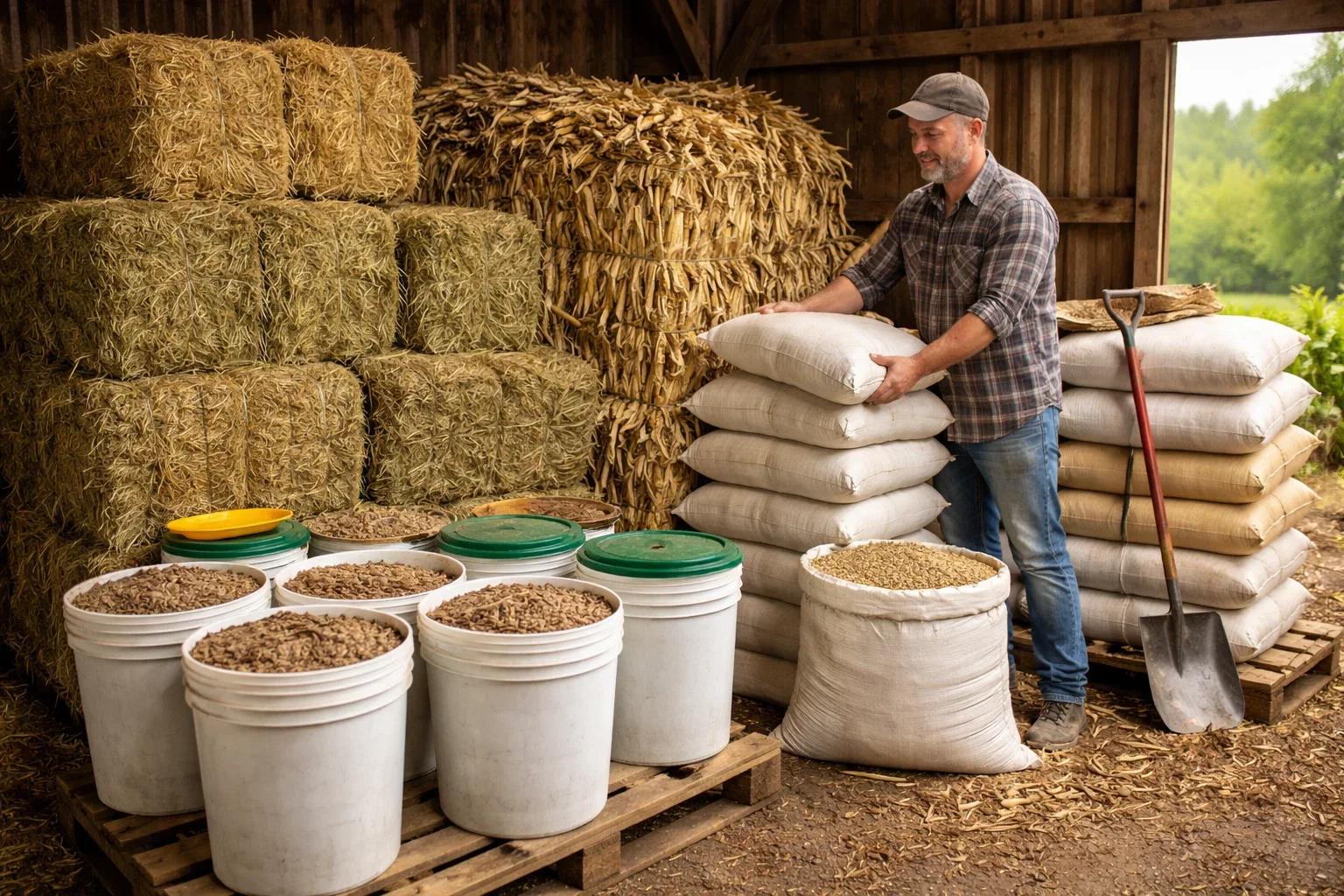
Feeding a flock through winter can be expensive, but there are smart ways to reduce cost without cutting nutrition.
| Budget Feed Option | Benefit | Watch Out For |
| Local grass hay | Affordable and widely available | May be low in protein test if possible |
| Corn stalks/silage | Good roughage and energy | Balance with protein source |
| Beet pulp | High fiber, good energy density | Soak before feeding to prevent choke |
| Brewer’s grains | Protein-rich by-product feed | Spoils quickly, feed fresh only |
Buying hay in bulk at the start of the season is one of the most effective ways to lower cost. Many farmers also grow their own root crops, turnips, fodder beets as a cheap winter feed for sheep that adds variety and extra energy to the diet.
Sheep Winter Nutrition: Minerals and Water
Minerals are the most overlooked part of sheep winter nutrition and one of the most damaging when neglected. Cold-weather stress, reduced grazing, and confined living all increase the risk of mineral deficiency.
Key minerals sheep need in winter:
- Selenium muscle health and immunity; deficiency causes white muscle disease
- Copper wool quality, metabolism, and liver function (use sheep-specific minerals cattle minerals are toxic to sheep)
- Zinc hoof integrity and skin condition
- Vitamin E works alongside selenium, especially important for pregnant ewes
A free-choice sheep mineral feed formulated for sheep and goats provides a balanced trace mineral profile without the risk of over-supplementing any single nutrient. Place mineral feeders in a covered, dry area so moisture doesn’t degrade the product.
Water is equally critical and often forgotten in freezing temperatures. Sheep need 0.5–1.5 gallons of fresh water per day in winter. Ice in water troughs stops sheep from drinking, which reduces feed intake and overall health. Check and refresh water sources at least twice daily.
Feeding Pregnant Ewes in Winter
Late pregnancy the final 6 weeks before lambing is the most nutritionally demanding time in a ewe’s year. Lambs grow rapidly during this period, leaving less room in the ewe’s abdomen for a full stomach. This is called pregnancy toxemia risk, and it happens when energy intake can’t keep up with demand.
To prevent it:
- Feed smaller, more frequent meals rather than one large daily feeding
- Prioritize high-energy feeds like legume hay and grain
- Monitor body condition score weekly a score of 3 out of 5 is the target going into lambing
Thin ewes at lambing produce less colostrum (first milk), which weakens lamb survival rates. Keeping ewes in good condition through winter directly affects the health of the next lamb crop.
Setting Up a Winter Feeding Schedule
A consistent routine reduces waste, prevents bullying at the feeder, and helps you track intake changes that might signal illness.
A simple winter feeding plan:
- Morning distribute hay and check water
- Midday check mineral feeders and observe the flock
- Evening provide grain ration for pregnant ewes or animals needing extra condition
Separate animals by nutritional need where possible. Thin sheep, pregnant ewes, and lambs all have different requirements. Feeding them together means some animals get too much and others get too little.
Partnering with a reliable animal food supplier that stocks both forage and supplement products year-round makes it easier to stick to a consistent plan without supply gaps mid-winter.
Conclusion
Knowing what to feed sheep in the winter is the difference between a flock that thrives and one that struggles. Cold weather strips away what pasture provides and it’s your feed program that fills that gap. Quality hay, the right grain ration, adequate protein, and a solid mineral plan are the four pillars that carry sheep through the season in good condition.
Brands like Mid-South Feeds have built their products around exactly that, giving farmers practical, well-tested feed options designed to meet the real demands of sheep through every season. Whether you’re managing a small hobby flock or a commercial operation, the right winter feeding plan starts with knowing what your animals need.
Take a close look at your current setup, assess body condition across the flock, and make any adjustments before the coldest weeks arrive, not after.
FAQs
1. Can sheep eat snow instead of drinking water in winter?
No, sheep can’t rely on snow alone as it lowers their body temperature and doesn’t provide enough hydration.
2. Should sheep be fed at the same time every day in winter?
Yes, keeping a consistent feeding schedule helps maintain digestion and reduces stress within the flock.
3. How do I know if my sheep are getting enough food in winter?
Watch their body condition and behaviour, if they appear thin, weak, or overly hungry, their diet likely needs adjusting.
4. Can overfeeding grain harm sheep in cold weather?
Yes, too much grain can cause digestive issues like acidosis, so it’s important to balance it with proper forage.
5. Is it okay to feed sheep frozen hay or feed?
It’s best to avoid frozen feed as it can reduce intake and make digestion harder for sheep.
Do sheep need more feed during extreme cold snaps?
Yes, during very cold weather, sheep burn more energy to stay warm, so increasing feed slightly helps maintain condition.