 Dogs & Cats
 Cattle
 Equine
 Poultry
 Swine
Swine Goats & Sheep
 Game Bird
 Gamecock
 Deer & Wildlife
 Fish & Pond
 Rabbit
 Specialty
 Ingredients & Bulk
 Special Order

What to Feed Baby Sheep: Nutrition Facts Every Owner Should Know
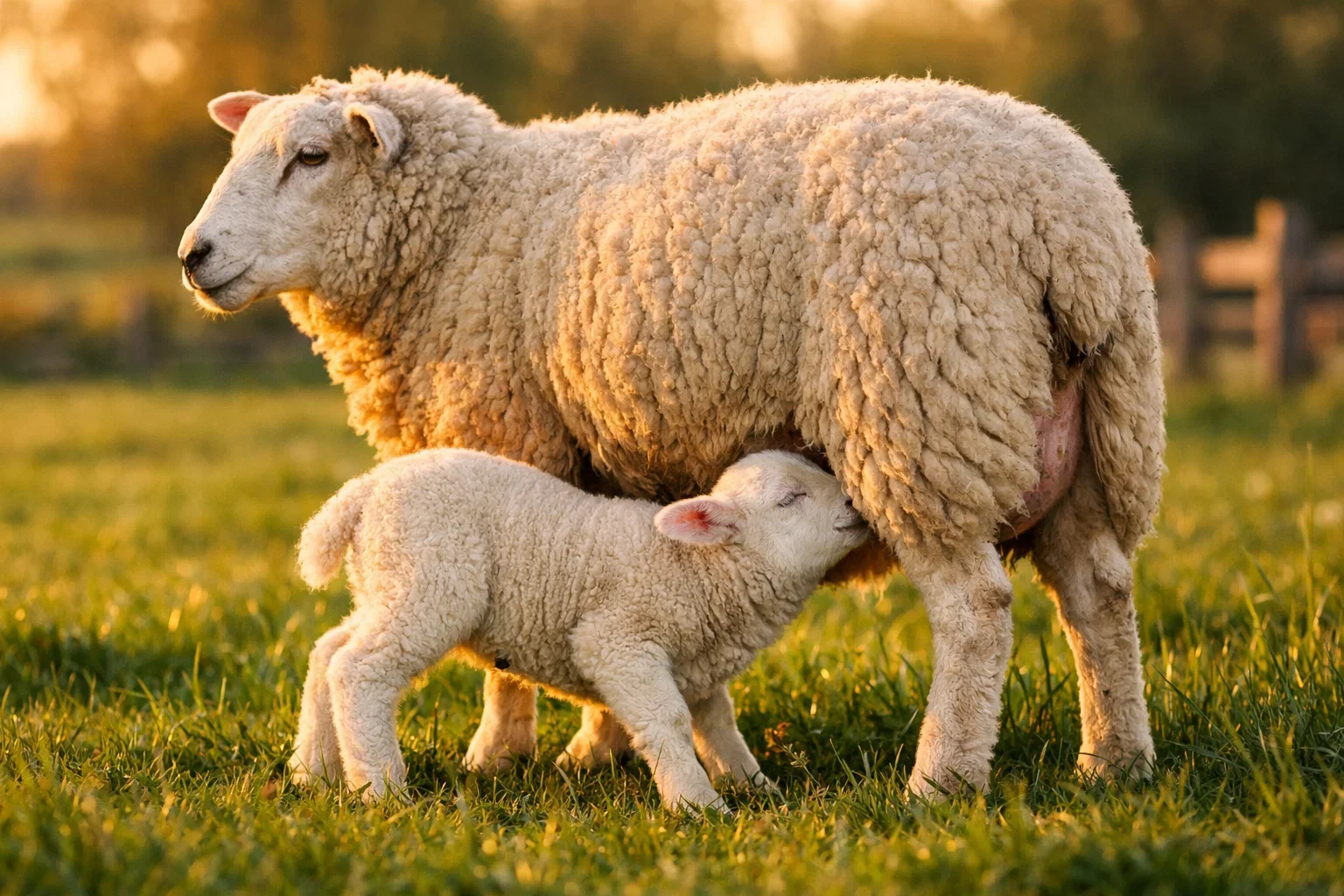
Knowing what to feed baby sheep from day one can mean the difference between a thriving lamb and a struggling one. Baby sheep have very specific nutritional needs that change as they grow. Whether you’re a first-time sheep owner or expanding your flock, getting the diet right early saves time, money, and heartache.
The First Hours Matter Most
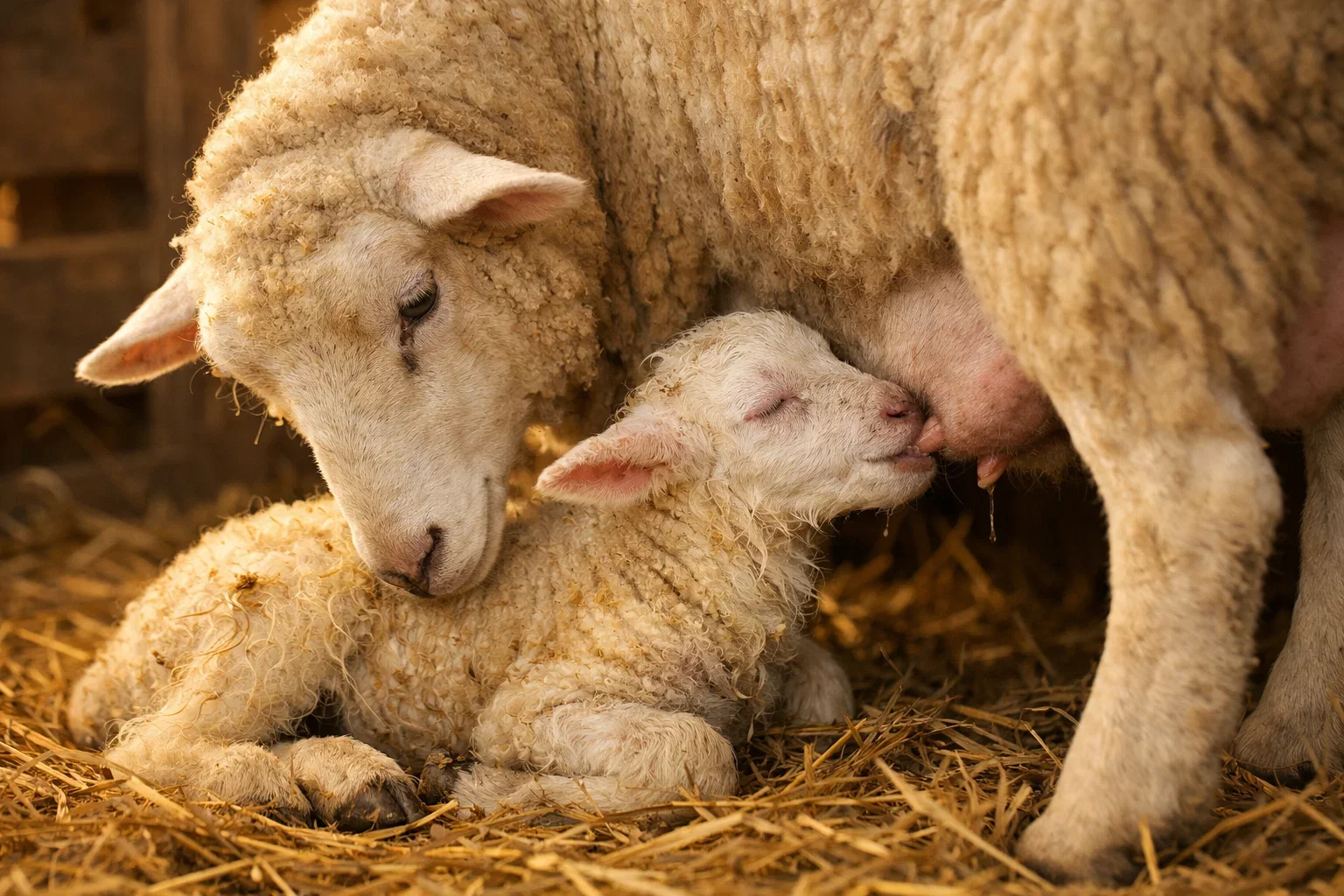
When a lamb is born, the very first thing it needs is colostrum, the thick, yellowish milk a ewe produces right after giving birth. Colostrum is packed with antibodies, which are natural proteins that fight disease and infection. Without it, lambs have almost no immune protection at all.
Lambs should nurse within the first 2 to 4 hours of birth. If the mother is unavailable, a colostrum replacer is the next best option. Always use a lamb-specific colostrum product not a regular milk replacer for the best results.
What Do Baby Sheep Eat in the First Weeks?
After the colostrum phase, lambs rely almost entirely on milk either from their mother or from a bottle. Here’s a simple breakdown of what baby sheep eat at each stage:
| Age | Primary Feed | Supplemental Feed |
| 0–3 days | Colostrum | None |
| 4 days–3 weeks | Ewe’s milk or milk replacer | None needed |
| 3–6 weeks | Milk + hay introduction | Fresh water |
| 6–8 weeks | Weaning begins | Starter pellets, hay, water |
| 8+ weeks | Solid feed primary | Minerals, fresh forage |
Skipping steps or rushing weaning causes digestive problems and poor growth. Following this timeline gives your lambs the best start possible.
Milk Replacer: What to Look For
If you’re bottle-feeding a lamb, choosing the right milk replacer is critical. Using a cow-based formula is one of the most common mistakes new owners make. It can cause serious digestive upset in lambs.
Look for a lamb-specific milk replacer that contains at least 25–30% crude protein and 20–25% fat for energy. It should also include vitamins A, D, and E. Avoid formulas with added antibiotics unless your vet recommends them.
Mix the replacer exactly according to the label instructions. Overfeeding or under-mixing causes bloating and diarrhea. Feed it warm around 100–102°F and always keep bottles clean to prevent bacterial buildup.
Best Feed for Baby Lambs as They Grow
Once lambs reach 3 to 4 weeks old, you can begin offering high-quality hay alongside their milk. This step is called creep feeding giving lambs access to solid food in a space that keeps adult sheep out. It prepares the rumen for digestion and supports faster, healthier growth.
Use fine-stemmed grass hay or alfalfa hay as the first solid offering. Alfalfa is high in protein and works well for young lambs. Introduce it gradually to avoid loose stools.
Starter Feed for Lambs: Pellets and Grains
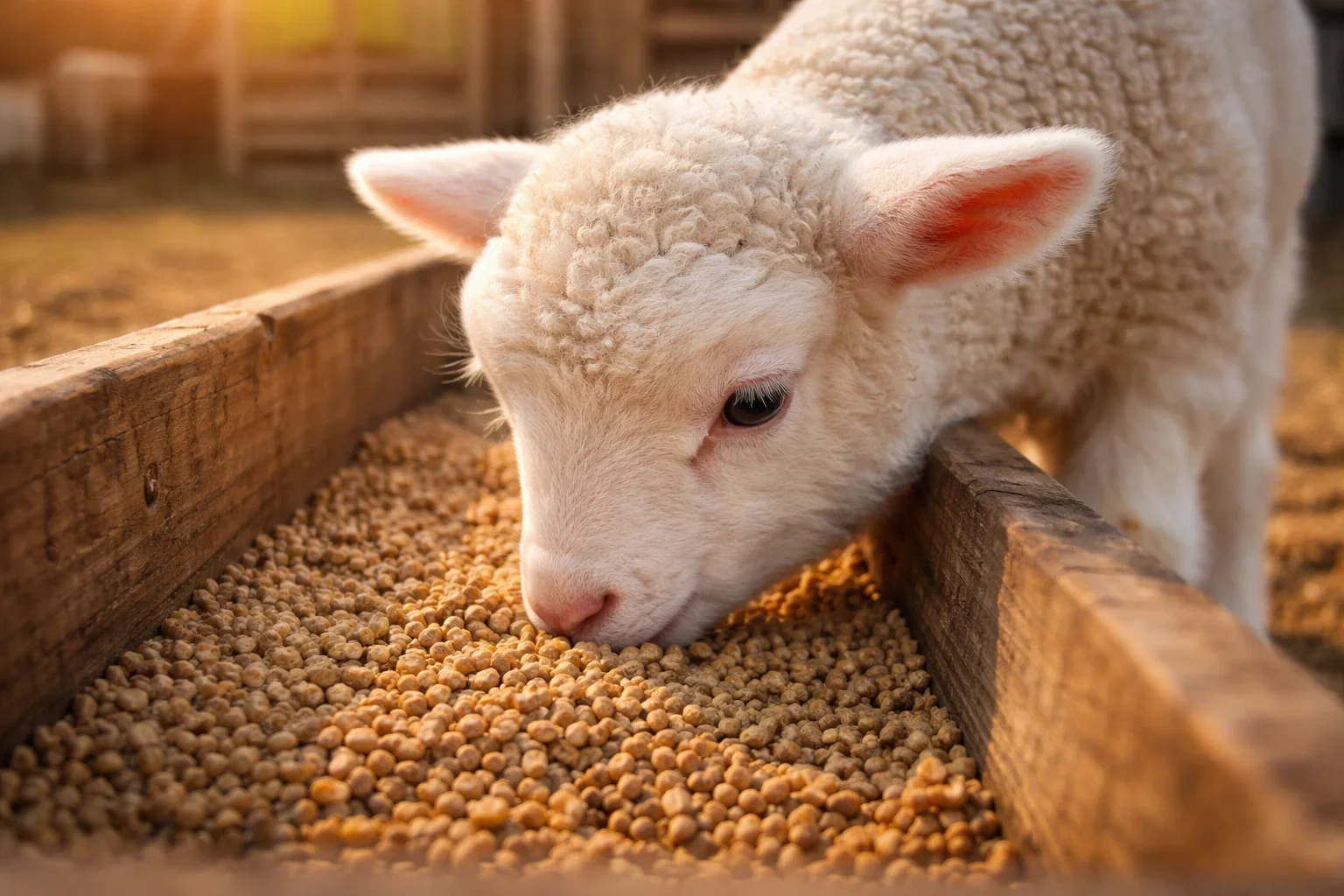
At around 6 to 8 weeks, lambs can handle starter grain pellets. These should be formulated specifically for lambs and contain 16–18% crude protein. They need to be easy to chew and balanced in energy and minerals.
One product worth considering is the 16% Sheep Pellet from Midsouth Feeds. It’s designed to support healthy growth in lambs during the weaning phase. It’s a straightforward, reliable option for farmers who want a trusted starter feed.
Introduce pellets slowly starting with a small handful per lamb per day. Increase the amount over 1 to 2 weeks as their digestive system adjusts. Never switch feeds abruptly.
Nutrition for Baby Sheep: The Role of Minerals
Minerals are one of the most overlooked parts of nutrition for baby sheep. Young lambs are especially vulnerable to deficiencies that can cause serious health problems. Catching this early makes a real difference in their development.
Here are the key minerals every lamb needs:
- Selenium supports muscle function; deficiency causes white muscle disease
- Copper needed for coat health and immune function
- Zinc essential for skin integrity and growth
- Calcium and Phosphorus critical for healthy bone development
As lambs approach 8 weeks, offer a free-choice sheep mineral supplement in a clean feeder. Never use cattle mineral blends; they contain copper levels that are toxic to sheep. Always choose a sheep-specific mineral product.
Fresh Water: Often Forgotten, Always Essential
Once lambs begin eating solid food usually around 3 to 4 weeks they need constant access to clean, fresh water. Water supports digestion, temperature regulation, and overall health. Dehydrated lambs grow slowly and get sick more easily.
Use shallow troughs or small buckets that lambs can reach safely. Check and refill water sources at least twice a day. Dirty water is just as harmful as no water at all.
Common Feeding Mistakes to Avoid
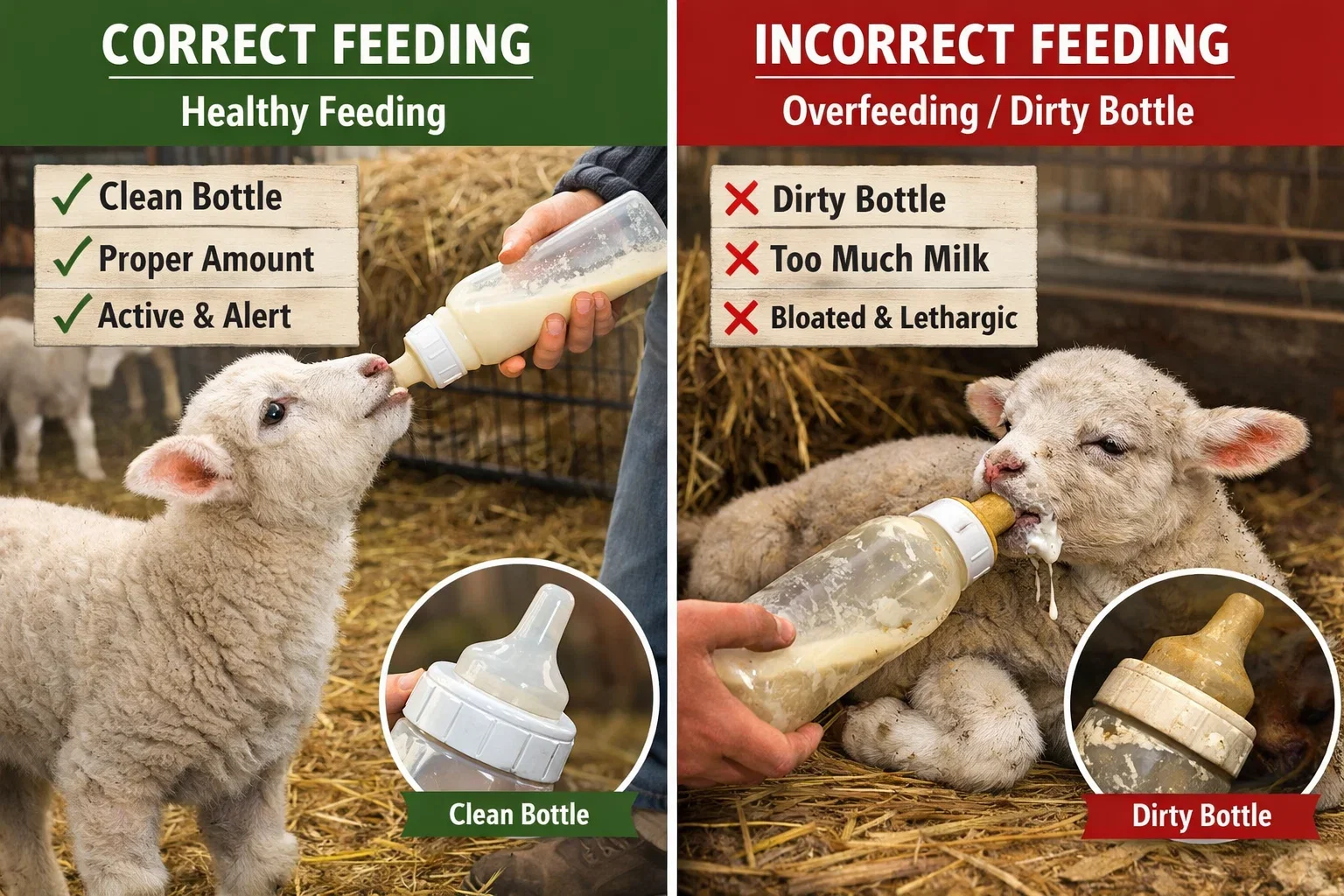
Even well-meaning owners make errors that set lambs back. Here are the most common ones to watch for:
- Overfeeding milk replacer causes bloating and severe diarrhea
- Switching feeds too fast always transition over 7 to 10 days
- Ignoring mineral needs leads to slow growth and preventable illness
- Using the wrong species formula always choose lamb-specific products
- Skipping clean water even bottle-fed lambs need water by week 4
Avoiding these mistakes puts your lambs on the right track from the very beginning.
When to Call a Vet
Sometimes a lamb won’t thrive despite your best efforts. Signs that need immediate attention include refusal to eat, persistent diarrhea, weakness, or a swollen belly. Labored breathing or an inability to stand are also serious warning signs.
Early intervention almost always leads to better outcomes. Don’t wait and hope to act quickly and contact your vet at the first sign of real trouble.
Conclusion
Understanding what to feed baby sheep is one of the most important responsibilities of any sheep owner. From colostrum in the first hours to minerals at weaning, every stage of the diet plays a direct role in long-term health. Getting this right doesn’t require expertise, it requires consistency and the right products.
Brands like Midsouth Feeds have built their product line around the real nutritional needs of sheep and lambs. Their sheep pellets and mineral supplements give farmers a reliable, practical foundation to work from. When it comes to what to feed baby sheep, starting with trusted nutrition is always the right move.
FAQs
1. Can baby sheep drink cow’s milk in an emergency?
It’s not ideal, as cow’s milk doesn’t match a lamb’s nutritional needs. If used temporarily, it should be replaced with proper lamb milk replacer as soon as possible.
2. How often should baby lambs be bottle-fed each day?
Young lambs usually need feeding 4–5 times a day in the early weeks. The frequency gradually decreases as they grow and start eating solids.
3. Can baby sheep overeat milk replacer?
Yes, overfeeding can lead to bloating and diarrhea. It’s important to follow feeding guidelines and not exceed recommended amounts.
4. When do lambs start chewing cud?
Lambs begin developing rumen function and chewing cud around 2–3 weeks of age. This improves as they start eating hay and solid feed.
5. Should baby lambs be separated for feeding?
Yes, especially during bottle feeding or creep feeding, to ensure each lamb gets the right amount without competition.