 Dogs & Cats
 Cattle
 Equine
 Poultry
 Swine
Swine Goats & Sheep
 Game Bird
 Gamecock
 Deer & Wildlife
 Fish & Pond
 Rabbit
 Specialty
 Ingredients & Bulk
 Special Order
A dog wakes you up at 3 a.m. Restless. Whining. Asking to go outside again.
By the third trip, you know what’s coming. Loose stool. Maybe watery. Maybe worse.
Now you’re standing there half asleep, wondering one simple thing: what to feed a dog with diarrhea so this stops and your dog actually feels better.
This isn’t about fancy recipes or internet myths. This is about calming an irritated gut, avoiding mistakes that make diarrhea in dogs last longer, and knowing when food alone is not enough.
I’ve dealt with this problem more times than I’d like to admit. Puppies. Adult dogs. Senior dogs. Different causes, same panic.
Let’s walk through it clearly and honestly.
Why dogs get diarrhea in the first place
Before food fixes anything, you need to understand the trigger.
Most cases of dog diarrhea come from one of these:
- Sudden diet change
- Eating table scraps or trash
- Stress or anxiety
- Mild infections or parasites
- Food intolerance
- Fatty foods
- New treats or chews
- Feeding inappropriate food (for example, letting an adult dog eat puppy food regularly)
When a dog has diarrhea, the gut lining is inflamed. Digestion speeds up. Nutrients are not absorbed. Water stays in the stool.
Food should slow things down, not push more irritation through an already angry system.
Takeaway: The goal is not to “feed more.” The goal is to calm the gut.
Tip 1: Pause food briefly if diarrhea just started
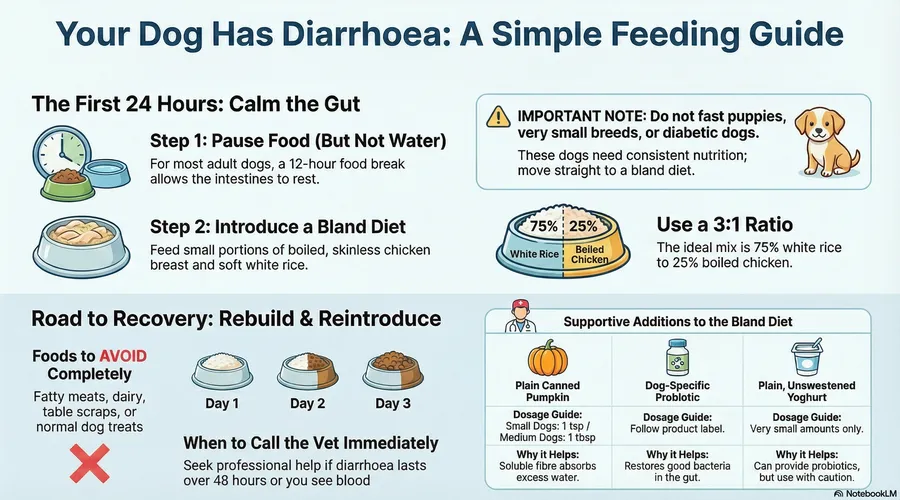
If your dog has diarrhea but is still alert and drinking water, a short food break helps.
For adult dogs, this usually means:
- 12 hours without food
- Unlimited access to fresh water
This gives the intestines time to reset.
Do not do this for:
- Puppies under 6 months
- Very small breeds
- Diabetic dogs
In those cases, move straight to bland food.
Takeaway: A short fast can help, but only when it’s safe.
Tip 2: Start with boiled chicken and white rice

This is the classic answer for a reason.
Plain boiled chicken breast and white rice are easy to digest. They bind stool and reduce irritation.
How to prepare:
- Skinless, boneless chicken
- Boiled only. No salt. No oil.
- White rice cooked soft
Ratio:
- 75 percent rice
- 25 percent chicken
Feed small portions, 2 to 3 times a day.
This is often the safest answer to what can I give my dog for diarrhea in the first 24 to 48 hours.
Takeaway: Simple food works because the gut needs boring right now.
Tip 3: Use plain canned pumpkin, not pumpkin pie mix
Pumpkin is one of the most misunderstood foods for dogs.
Plain canned pumpkin contains soluble fiber. It absorbs excess water in the gut and firms stool.
Dosage:
- Small dogs: 1 teaspoon
- Medium dogs: 1 tablespoon
- Large dogs: up to 2 tablespoons
Mix it into bland food.
Avoid:
- Pumpkin pie filling
- Added sugar or spices
This is especially helpful when a dog upset stomach comes with loose stool but no vomiting.
Takeaway: Fiber can help diarrhea, but only the right kind.
Tip 4: Add probiotics to restore gut bacteria
Diarrhea wipes out good bacteria. Without them, recovery takes longer.
Dog-specific probiotics help rebalance the gut.
Look for:
Yogurt can help, but only:
- Enterococcus faecium
- Lactobacillus strains
- Veterinary-labeled products
These are useful for ongoing diarrhea in canines or stress-related episodes.
- Plain
- Unsweetened
- In very small amounts
Takeaway: Fixing the gut microbiome speeds recovery.
Tip 5: Avoid these foods completely during diarrhea
Some foods make things worse even if your dog usually tolerates them.
Do not feed:
- Fatty meats
- Table scraps
- Dairy (most dogs are lactose intolerant)
- Treats or chews
- Raw food
- Grain-heavy kibble
When a dog has diarrhea, the digestive system cannot handle complexity.
This is not the time to experiment.
Takeaway: Familiar foods can still be wrong during illness.
Tip 6: Feeding a dog with vomiting and diarrhea needs extra care
When vomiting joins diarrhea, feeding changes.
Step one:
- Stop food until vomiting stops for at least 6 hours
Step two:
- Offer small sips of water or ice cubes
Step three:
- Reintroduce bland food slowly
Best options for what to feed a dog with vomiting and diarrhea:
- Boiled chicken and rice
- Rice water (the water left after boiling rice)
- Small portions only
If vomiting continues, food is not the solution. Medical care is.
Takeaway: Vomiting plus diarrhea raises the risk of dehydration fast.
Tip 7: Bloody diarrhea changes everything
Seeing blood in stool is scary for a reason.
What to feed a dog with bloody diarrhea depends on the cause. Food alone may not fix it.
Possible causes include:
- Hemorrhagic gastroenteritis
- Parasites
- Bacterial infections
- Toxins
You can offer bland food only if:
- Your dog is alert
- No repeated vomiting
- No weakness or collapse
Otherwise, do not wait.
Takeaway: Blood means the gut lining is damaged. Get help quickly.
Tip 8: Adjust feeding for sick or weak dogs
A sick dog with diarrhea needs calories, but not stress.
For what to feed a sick dog with diarrhea, focus on:
- Small meals
- High digestibility
- Low fat
Good options:
- Chicken and rice
- Prescription gastrointestinal diets
- Hydrolyzed protein formulas
Many dog feed suppliers design therapeutic diets specifically for gut recovery. These are not marketing gimmicks. They are nutritionally targeted.
Takeaway: Sick dogs need gentle nutrition, not volume.
Tip 9: Transition back to regular food slowly
One of the biggest mistakes is going back to normal food too fast.
After stool firms up:
- Day 1: 75 percent bland, 25 percent regular food
- Day 2: 50/50
- Day 3: 25 percent bland, 75 percent regular
This prevents relapse.
Sudden switches are a common reason diarrhea in dogs comes back.
Takeaway: Recovery fails when transitions are rushed.
Tip 10: Hydration matters as much as food
Food helps stool. Water keeps organs working.
Signs of dehydration:
- Dry gums
- Sunken eyes
- Lethargy
Encourage drinking by:
- Offering fresh water frequently
- Using ice cubes
- Adding water to food
In severe cases, electrolyte solutions made for dogs help.
Takeaway: Diarrhea drains fluids faster than you think.
Myth vs Fact: Feeding dogs with diarrhea
Myth: Dogs should eat normally during diarrhea
Fact: Normal food often makes symptoms worse
Myth: Starving fixes everything
Fact: Puppies and small dogs need nutrition
Myth: Spices help digestion
Fact: Spices irritate the gut lining
Myth: One good meal cures diarrhea
Fact: Healing takes time and consistency
Takeaway: Internet myths delay real recovery.
Practical checklist: What to do when your dog has diarrhea
- Check energy level
- Check for vomiting
- Look for blood in stool
- Pause food if appropriate
- Start bland diet
- Add probiotics
- Monitor hydration
- Transition slowly
- Call a vet if symptoms persist beyond 48 hours
Takeaway: Structure prevents panic and mistakes.
Case example: Diet change gone wrong
A medium-sized adult dog switched kibble brands overnight.
Within 24 hours:
- Loose stool
- Gas
- Restlessness
Solution:
- 12-hour food break
- Chicken and rice for 2 days
- Slow transition back over 4 days
No medication needed.
This is one of the most common causes of diarrhea in canines I see.
Takeaway: Most diet-related diarrhea is preventable.
Case example: Stress-induced diarrhea
A dog boarded for the first time developed diarrhea without diet changes.
Treatment:
- Bland food
- Probiotics
- Quiet environment
Resolved in 48 hours.
Stress affects gut movement more than most people realize.
Takeaway: Emotional stress shows up in the digestive system.
How quality feed plays a long-term role
Recurring diarrhea often points to poor digestibility or inconsistent nutrition.
Reliable sourcing matters. A reputable dog feed manufacturer focuses on ingredient consistency, protein quality, and gut health formulation.
The same principles apply across the animal nutrition industry, whether you’re working with an animal feed supplier or sourcing livestock feed. Digestibility and safety always come first.
Takeaway: Long-term gut health starts with better nutrition choices.
When food is not enough
Call a vet immediately if:
- Diarrhea lasts more than 48 hours
- Your dog is lethargic
- There is repeated vomiting
- There is blood in stool
- Your dog is a puppy or senior
Food supports healing. It does not replace medical care.
Takeaway: Knowing when to stop home treatment saves lives.
Final thoughts
When people ask what to feed a dog with diarrhea, they’re really asking how to make their dog feel normal again.
The answer is not complicated.
It’s careful.
It’s patient.
And it’s consistent.
Bland food. Small meals. Hydration. Observation.
Do those things well, and most cases of dog diarrhea resolve without drama.
Ignore them, and small problems turn into long ones.
Your dog’s gut will tell you when it’s healing. You just need to listen.