 Dogs & Cats
 Cattle
 Equine
 Poultry
 Swine
Swine Goats & Sheep
 Game Bird
 Gamecock
 Deer & Wildlife
 Fish & Pond
 Rabbit
 Specialty
 Ingredients & Bulk
 Special Order
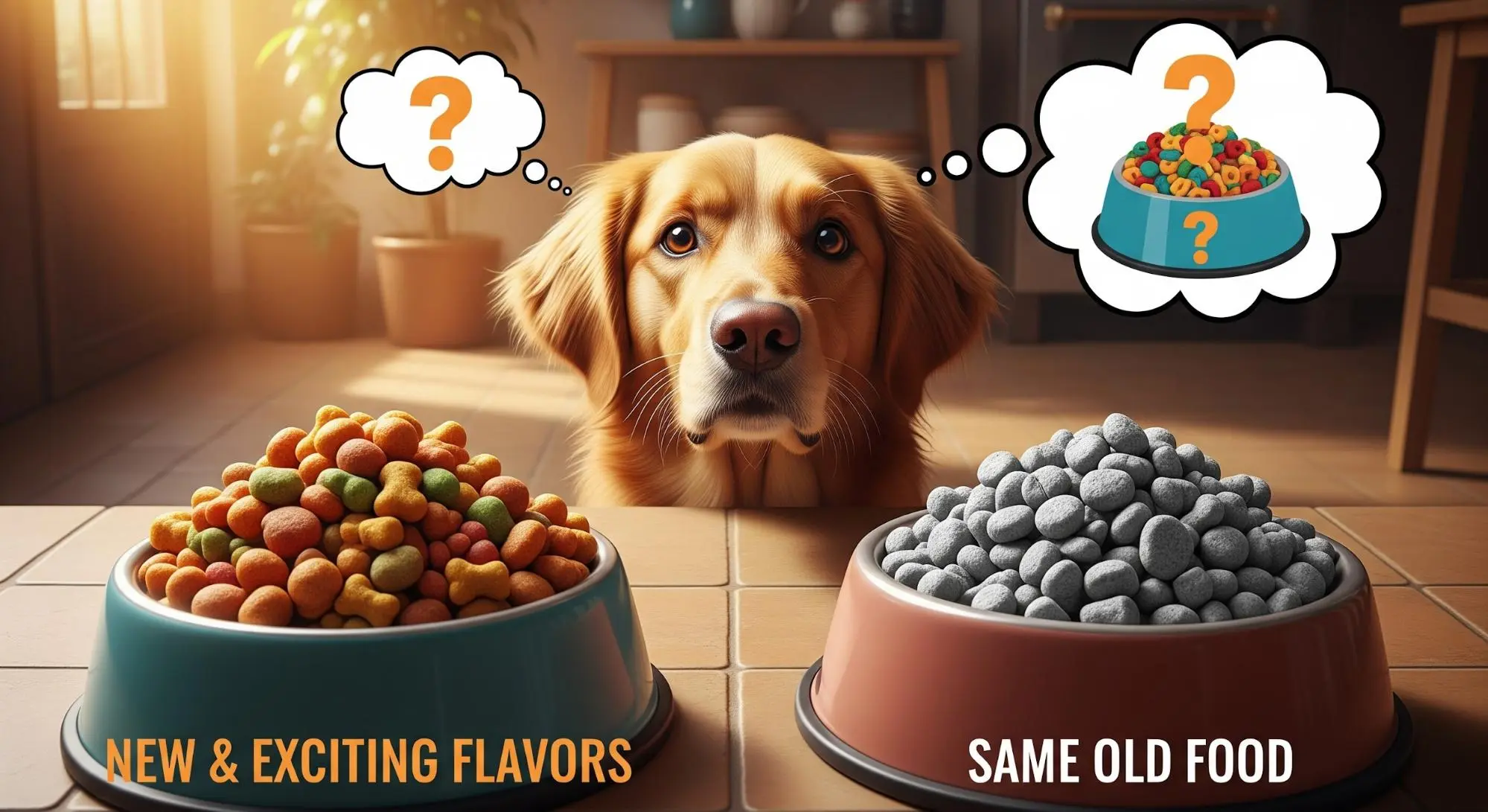
You are having the same breakfast in the morning and after a couple of weeks you are tired of it. But what about your dog? Months, maybe years have passed and they ate the same kibble. And are dogs bored with the same food as we are? We should take a look at the science behind dog nutrition and feeding habits and they are so interesting.
The Biological Truth: Dog Taste Buds vs Humans
To understand whether dogs get bored of their food, we need to first understand how dogs experience taste and food differently than humans do.
The Science of Canine Taste Perception
| Aspect | Dogs | Humans | Impact on Feeding |
| Total Taste Buds | ~1,700 | ~9,000 | Dogs have 5x fewer taste receptors |
| Primary Sense for Food | Olfactory (smell) | Gustatory (taste) | Dogs “taste” with their nose primarily |
| Smell Sensitivity | 10,000-100,000x stronger | Baseline | A dog’s food choice is 80% smell-based |
| Sweet Receptors | Present but limited | Highly developed | Dogs less interested in sweet flavors |
| Savory (Umami) Receptors | Highly developed | Moderately developed | Dogs prefer meat-based proteins |
| Need for Variety | Minimal – thrive on consistency | High – require diverse diet | Dogs are neophobic (fear of new foods) |
Key Scientific Fact: A study from the Waltham Petcare Science Institute found that dogs primarily use their sense of smell—which is 10,000 to 100,000 times more sensitive than humans—to determine food palatability. This means the aroma of their food matters far more than its taste variety.
Understanding Food Neophobia in Dogs
Having a strong aversion to new things, dogs in contrast to humans are by nature neophilic (seekers of novelty) with regard to food. It is an evolutionary aspect that prevents the wild canines from consuming what could be harmful to them.
What This Means for Your Dog:
- Consistency, which means safety in the instinctual programming of your dog.
- Sudden change in food may result in stress.
- In fact, dogs like familiar eating habits.
- Diversity has digestive disturbances and anxiety.
Do Dogs Get Bored of Their Food? Separating Myth from Reality
The direct answer: Dogs don’t experience food boredom the same way humans do. However, there are legitimate reasons why you might notice your dog refusing to eat the same food, and in some cases switching to wet dog food can help improve appetite.
Clinical Reasons for Food Refusal
| Category | Specific Causes | Observable Signs | Action Required |
| Medical Issues | Dental disease, gastrointestinal problems, kidney disease, liver dysfunction | Drooling, pawing at mouth, weight loss, lethargy | Immediate veterinary consultation |
| Metabolic Changes | Decreased activity, aging, hormonal shifts | Gradual appetite reduction, maintained health otherwise | Monitor and adjust portions |
| Sensory Changes | Olfactory decline (aging), food oxidation, rancidity | Sniffing but not eating, eating fresh food only | Check food freshness, storage |
| Behavioral Conditioning | Learned pickiness, treat overfeeding, table scraps | Selective eating, holding out for “better” food | Behavioral modification needed |
| Environmental Stress | Moving, new pets, schedule changes, loud noises | Temporary appetite loss, anxiety signs | Address stressor, maintain routine |
Signs Dog Bored With Food vs. Medical Emergency

Understanding the difference between a picky eater and a sick dog can be life-saving. Here’s a comprehensive breakdown:
Normal Selective Eating Behaviors:
- Timing-Based Refusal: Dog turning nose up at food during regular meals but enthusiastically eating treats
- Social Eating: Only eating when you’re present or watching
- Food Shopping: Moving kibble around, eating selectively
- Environmental Preference: Eating from hand but not bowl
- Temperature Sensitivity: Preferring room temperature over cold food
Red Flag Medical Symptoms:
- Complete Anorexia: No food intake for 24+ hours (puppies: 12+ hours)
- Accompanied Symptoms: Vomiting, diarrhea, excessive drooling — including cases where you notice a dog throwing up undigested food, which may indicate regurgitation or digestive issues.
- Behavioral Changes: Lethargy, hiding, aggression when approached
- Physical Signs: Bloated abdomen, pale gums, rapid breathing
- Progressive Pattern: Gradual decline over several days
Critical Note: If your dog shows any red flag symptoms, seek veterinary care immediately. Food refusal can indicate serious conditions like pancreatitis, obstruction, or organ failure.
The Dog Tired of Same Food Every Day Syndrome: What’s Really Happening
When your dog appears tired of their daily food, several factors might be at play:
Factor 1: Treat Overload and Caloric Satisfaction
In case your dog is fed on treats, table scraps, or training rewards during the day, he might just be full. Divide the total calories intake each day:
Example Calculation:
30kg adult dog requires approximately 700 calories/day.
2 cups high end kibble = approximately 600 calories.
5 training treats = approximately 50 calories per = 250 calories.
Total: 850 calories (21% more than necessary)
Solution: Cut treats to less than 10% of daily calories (70 calories in our case example of a dog).
Factor 2: Food Palatability Degradation
When the bag of dry dog food is opened, it undergoes oxidation and loses aromatic compounds which are appealing to dogs.
Food Storage Best Practices:
- Keep the original bag in an airtight container.
- Use within 6 weeks of opening
- Keep in cool, dry place (60-70°F ideal)
- Note rancid odor monthly.
- Note expiration dates
Factor 3: Learned Pickiness Behavior
Numerous dogs teach their owners better than owners teach them! When you say no to food and get upgraded food, then you have made a picky eater.
Picky Eater Dog Solutions: Evidence-Based Strategies
Here are scientifically-backed solutions for addressing selective eating:
Strategy 1: Scheduled Meal Times (The 15-Minute Rule)
How it works: Establish fixed feeding times with limited availability.
Implementation:
- Offer food at the same times daily (e.g., 7 AM and 6 PM)
- Leave food down for exactly 15 minutes
- Remove uneaten food with no commentary
- Offer no food until next scheduled meal
- Repeat consistently for 7-10 days
Expected Results: 80% of healthy dogs adapt within 3-5 days.
Strategy 2: Food Enhancement Techniques
Rather than changing food entirely, make current food more appealing:
Safe Enhancement Methods:
- Add warm (not hot) water to kibble – releases aromatic compounds
- Mix in 1-2 tablespoons unsalted bone broth
- Add 1 tablespoon plain pumpkin puree (fiber + palatability)
- Sprinkle freeze-dried meat topper (small amount)
- Warm food to body temperature (101°F for dogs)
Avoid These Common Mistakes:
- Adding excessive human food (creates expectations)
- Hand-feeding every meal (reinforces dependence)
- Offering multiple food options (enables pickiness)
- Showing stress or anxiety during feeding (dogs sense this)
Strategy 3: Environmental Optimization
Create the ideal feeding environment:
Checklist:
- ✓ Quiet location away from household traffic
- ✓ Consistent feeding spot
- ✓ Appropriate bowl height (neck-level for large dogs)
- ✓ Stainless steel or ceramic bowls (no plastic taste/smell)
- ✓ Clean bowls between meals
- ✓ Separate feeding stations for multi-dog households
- ✓ No distractions during feeding time
Strategy 4: Increase Food Appeal Through Exercise
Physical activity increases appetite through several mechanisms:
Pre-Feeding Activity Protocol:
- Walk or play session 30-60 minutes before meals
- Increases metabolic rate and hunger hormones
- Mental stimulation via training (burns calories too)
- Consistency is key – daily exercise routine
Benefits of Changing Dog Food: When and Why It’s Necessary
While dogs don’t need variety for enjoyment, strategic food changes offer real health benefits:
| Benefit | Scientific Basis | When to Apply | Expected Outcome |
| Life Stage Nutrition | Puppies need 2x protein and fat vs. adults; seniors need joint support and fewer calories | 8-12 months (puppy to adult), 7+ years (adult to senior) | Optimal growth/maintenance/aging support |
| Protein Rotation | Reduces risk of developing food sensitivities to single protein | Every 3-6 months rotation between chicken, beef, fish, lamb | Decreased allergy development risk |
| Digestive Health | Different fiber sources support diverse gut microbiome | When changing between formulas with varied fiber sources | Improved digestion and immune function |
| Nutrient Profile Optimization | Various ingredients provide different vitamins, minerals, antioxidants | Strategic selection based on health needs | Comprehensive nutritional coverage |
| Emergency Preparedness | Dogs familiar with food changes adapt better to necessity | Gradual transitions every 6-12 months | Flexibility during food shortages or recalls |
Important Caveat: These benefits apply to strategic, gradual transitions between high-quality foods—not frequent random changes.
The Role of Animal Feed Manufacturers in Food Quality
The quality of ingredients and the manufacturing process is the direct influence whether dogs would always eat their food. There are various quality criteria used by the professional animal feed manufacturers:
Manufacturing Quality Indicators:
Ingredient Sourcing:
- Named protein sources (e.g., “deboned chicken” vs. “poultry meal”)
- Human-grade ingredient options
- Transparent supply chain documentation
- No artificial colors, flavors, or preservatives
- Whole food ingredients vs. by-products
Production Standards:
- AAFCO (Association of American Feed Control Officials) compliance
- FDA-registered facilities
- Regular safety testing for contaminants
- Batch tracking systems for recalls
- Nutrient analysis validation
Palatability Research:
- Palatability studies with real dogs
- Aroma profile optimization
- Texture consistency
- Digestibility testing (minimum 80% digestibility for quality foods)
How Manufacturing Affects Food Acceptance:
Quality manufacturers understand that dogs primarily select food based on:
- Aroma intensity (60% of decision)
- Fat content (30% of decision)
- Texture/mouthfeel (10% of decision)
Premium manufacturing preserves these qualities through proper processing temperatures, quick packaging, and nitrogen-flushing to prevent oxidation.
Teaching Children to Train Dogs for Better Eating Habits
Even young family members can help establish healthy eating patterns:
Child-Friendly Training Steps:
Step 1: Create the Feeding Routine Chart
- Make a colorful chart showing meal times
- Include pictures of the dog bowl and clock
- Mark off successful feeding times with stickers
- Responsibility teaches consistency
Step 2: Prepare the Feeding Station
- Child places bowl in designated spot
- Measures exact food amount with scoop
- Adds any approved toppers
- Learns portion control and responsibility
Step 3: The Quiet Feeding Rule
- No talking to dog during meals
- No petting or touching while eating
- Walk away after placing food down
- Teaches respect for dog’s eating space
Step 4: The Timer Game
- Set 15-minute timer together
- When timer rings, remove bowl together
- No emotion – just routine
- Teaches cause and effect
Step 5: Positive Reinforcement
- Praise dog when they eat well
- Use gentle, happy voice
- Never scold for not eating
- Teaches positive association
Step 6: Observation Journal
- Draw pictures of how much dog ate
- Note if dog seemed happy or sad
- Track patterns over time
- Develops observation skills and empathy
Safety Rules for Children:
- Never disturb a dog that’s eating (prevents resource guarding)
- Always wash hands before and after handling dog food
- Never feed human food without adult permission
- Tell an adult if dog isn’t eating for a whole day
The Gradual Transition Method: Step-by-Step Guide
When you do need to change your dog’s food, proper transition is critical:
10-Day Transition Schedule:
| Days | Old Food % | New Food % | What to Monitor |
| 1-2 | 90% | 10% | Stool consistency, energy level |
| 3-4 | 75% | 25% | Any digestive upset, appetite |
| 5-6 | 50% | 50% | Coat condition, scratching |
| 7-8 | 25% | 75% | Overall acceptance, enthusiasm |
| 9-10 | 0% | 100% | Complete adjustment confirmation |
For Sensitive Stomachs: Extend to 14-21 days with even smaller increments.
Monitoring During Transition:
Normal Adjustment Signs:
- Slight stool softness (temporary)
- Increased drinking (due to different sodium content)
- Initial hesitation (neophobia – normal)
- Increased sniffing of food
Problem Signs Requiring Slowdown:
- Diarrhea lasting more than 24 hours
- Vomiting more than once
- Complete food refusal for 2+ meals
- Excessive gas or bloating
- Skin irritation or itching
Advanced Nutritional Considerations
Understanding Dog Food Labels:
Guaranteed Analysis Minimums (for adult maintenance):
- Crude Protein: Minimum 18% (higher for active/growing dogs)
- Crude Fat: Minimum 5.5%
- Crude Fiber: Maximum 4-5%
- Moisture: Typically 10-12% for dry food
Ingredient List Reading:
- Ingredients listed by weight
- First 5 ingredients are most significant
- Named meat sources should appear first
- Whole grains better than grain by-products
- Identifiable vegetables and fruits
Special Diet Considerations:
When Prescription Diets Are Necessary:
- Kidney disease (restricted protein/phosphorus)
- Food allergies (novel protein/hydrolyzed)
- Diabetes (high fiber, complex carbs)
- Weight management (calorie-restricted)
- Gastrointestinal issues (highly digestible)
Always Consult Your Veterinarian before changing to or from prescription diets.
Common Feeding Mistakes to Avoid
Understanding what NOT to do is just as important:
Mistake 1: Free Feeding
Leaving food out all day leads to:
- Obesity (20-40% of pet dogs are overweight)
- Inability to monitor appetite changes
- Food spoilage and pest attraction
- Loss of food motivation for training
Mistake 2: Excessive Variety
Constantly changing foods causes:
- Digestive upset and diarrhea
- Increased food selectivity
- Difficulty identifying allergens
- Unnecessary expense
Mistake 3: Human Food as Regular Diet Supplement
Problems include:
- Nutritional imbalance
- Obesity from excess calories
- Pancreatitis from fatty foods
- Toxic exposure (onions, garlic, grapes, chocolate)
Mistake 4: Emotion-Based Feeding
Responding to “sad dog eyes” results in:
- Reinforced begging behavior
- Picky eating habits
- Weight gain
- Disrupted meal routines
Mistake 5: Ignoring Body Condition
Not adjusting food amounts leads to:
- Weight gain or loss
- Health complications
- Reduced quality of life
Body Condition Assessment: You should be able to feel (but not prominently see) your dog’s ribs with light pressure. Visible waist when viewed from above.
When Professional Help Is Needed
Sometimes, despite your best efforts, professional intervention is necessary:
Veterinary Consultation Required If:
- No food intake for 24+ hours (12+ for puppies)
- Weight loss exceeding 10% body weight
- Chronic digestive issues (lasting 3+ days)
- Suspected pain during eating
- Sudden behavioral changes around food
- Senior dogs with declining appetite
Veterinary Nutritionist Consult When:
- Managing chronic health conditions through diet
- Dog has multiple food allergies/sensitivities
- Creating homemade diet plans
- Optimizing performance for working/sporting dogs
- Persistent feeding problems despite interventions
Animal Behaviorist for:
- Severe food anxiety or fear
- Resource guarding around food
- Eating disorders (pica, coprophagia)
- Multi-dog household feeding conflicts
The Future of Dog Nutrition: Industry Innovations
Animal feed manufacturers continue advancing nutritional science:
Current Innovations:
- Microbiome-focused formulas: Prebiotics and probiotics for gut health
- Functional ingredients: Glucosamine, omega-3s, antioxidants
- Fresh food delivery services: Preservative-free, refrigerated options
- Personalized nutrition: DNA-based food recommendations
- Sustainability: Insect proteins, upcycled ingredients
- Enhanced palatability: Natural flavor enhancement technologies
These advances mean higher-quality options than ever before for maintaining your dog’s interest and health with consistent nutrition.
Conclusion:
Therefore, do dogs become bored by the same food? The science indicates that it is not true—dogs are not subjected to food boredom as humans are because they have biology that is built to accept consistency in the food rather than variety. What you think was your dog getting bored with feeding on the same food each day is often a medical condition, your dog has picked up food habits, problems with the food quality of the food, or is overfed with treats throughout the day. The most important thing to do is to select quality food by the trusted manufacturers of animal feed, regular feeding and keeping track of the overall health of your dog.
Mid South Feeds make the dog food by following the science-supported recipes and the quality ingredients that naturally attract canine biology, and the distributors of dog food could make a partnership with Mid South Feeds to deliver customers with consistent and reliable nutrition. It is always good to keep in mind that a healthy dog fed on the same good food daily is not a bored dog, it is actually a relaxed dog whose nutritional requirements are being fulfilled in a predictable and safe manner, which is proper pet care, and this is done in accordance with what is known of the canine biology.
FAQs
1. Why is my dog suddenly refusing to eat their regular food?
Food refusal can indicate medical issues like dental disease or gastrointestinal problems, food quality degradation from oxidation, or learned pickiness from receiving too many treats. Check for signs like drooling, lethargy, or weight loss, and consult your veterinarian if refusal persists beyond 24 hours. If your dog is otherwise healthy and energetic, they may have learned that refusing food leads to better options.
2. How long does it take for a dog to adjust to new food?
A proper food transition should take 10 days using a gradual method, starting with 10% new food mixed with 90% old food and slowly increasing the ratio. For dogs with sensitive stomachs, extend the transition period to 14-21 days with even smaller increments. Monitor stool consistency, energy levels, and appetite throughout the process.
3. What’s the 15-minute feeding rule for picky eaters?
The 15-minute rule establishes scheduled meal times where you offer food at consistent times daily, leave it down for exactly 15 minutes, then remove uneaten food without commentary. Offer no food until the next scheduled meal and repeat consistently for 7-10 days. About 80% of healthy dogs adapt to this routine within 3-5 days.
4. How many taste buds do dogs have compared to humans?
Dogs have approximately 1,700 taste buds while humans have around 9,000, making dogs five times less sensitive to taste variations. However, dogs compensate with a sense of smell that’s 10,000 to 100,000 times stronger than humans, meaning they primarily “taste” food through aroma. This is why food freshness and smell matter more than flavor variety for dogs.
5. When should I be concerned about my dog not eating?
Seek immediate veterinary care if your dog shows complete food refusal for 24+ hours (12+ hours for puppies), experiences vomiting or diarrhea alongside appetite loss, displays lethargy or behavioral changes, or has physical symptoms like bloated abdomen or pale gums. These red flags can indicate serious conditions like pancreatitis, obstruction, or organ failure.
6. How should I store dog food to maintain freshness?
Store dry dog food in its original bag inside an airtight container in a cool, dry place at 60-70°F. Use the food within 6 weeks of opening the bag, as oxidation causes loss of aromatic compounds that attract dogs. Check monthly for rancid smells and always note expiration dates.
7. Is it healthy to rotate my dog’s protein sources?
Yes, rotating protein sources every 3-6 months between chicken, beef, fish, and lamb can reduce the risk of developing food sensitivities to a single protein. This strategic rotation also provides varied nutrient profiles and prepares dogs to adapt better during food shortages or recalls. Always use the gradual 10-day transition method when changing proteins.
8. What percentage of daily calories should come from treats?
Treats should make up less than 10% of your dog’s total daily caloric intake. For example, a 30-pound dog needing 700 calories per day should receive no more than 70 calories from treats. Excessive treats can lead to your dog refusing regular meals simply because they’re already calorically satisfied.
9. Can I add toppers to make my dog’s food more appealing?
Yes, safe enhancement methods include adding warm (not hot) water to release aromatic compounds, mixing 1-2 tablespoons of unsalted bone broth, adding 1 tablespoon of plain pumpkin puree, or sprinkling small amounts of freeze-dried meat topper. Warming food to body temperature (101°F for dogs) also increases palatability without changing the base diet.