 Dogs & Cats
 Cattle
 Equine
 Poultry
 Swine
Swine Goats & Sheep
 Game Bird
 Gamecock
 Deer & Wildlife
 Fish & Pond
 Rabbit
 Specialty
 Ingredients & Bulk
 Special Order
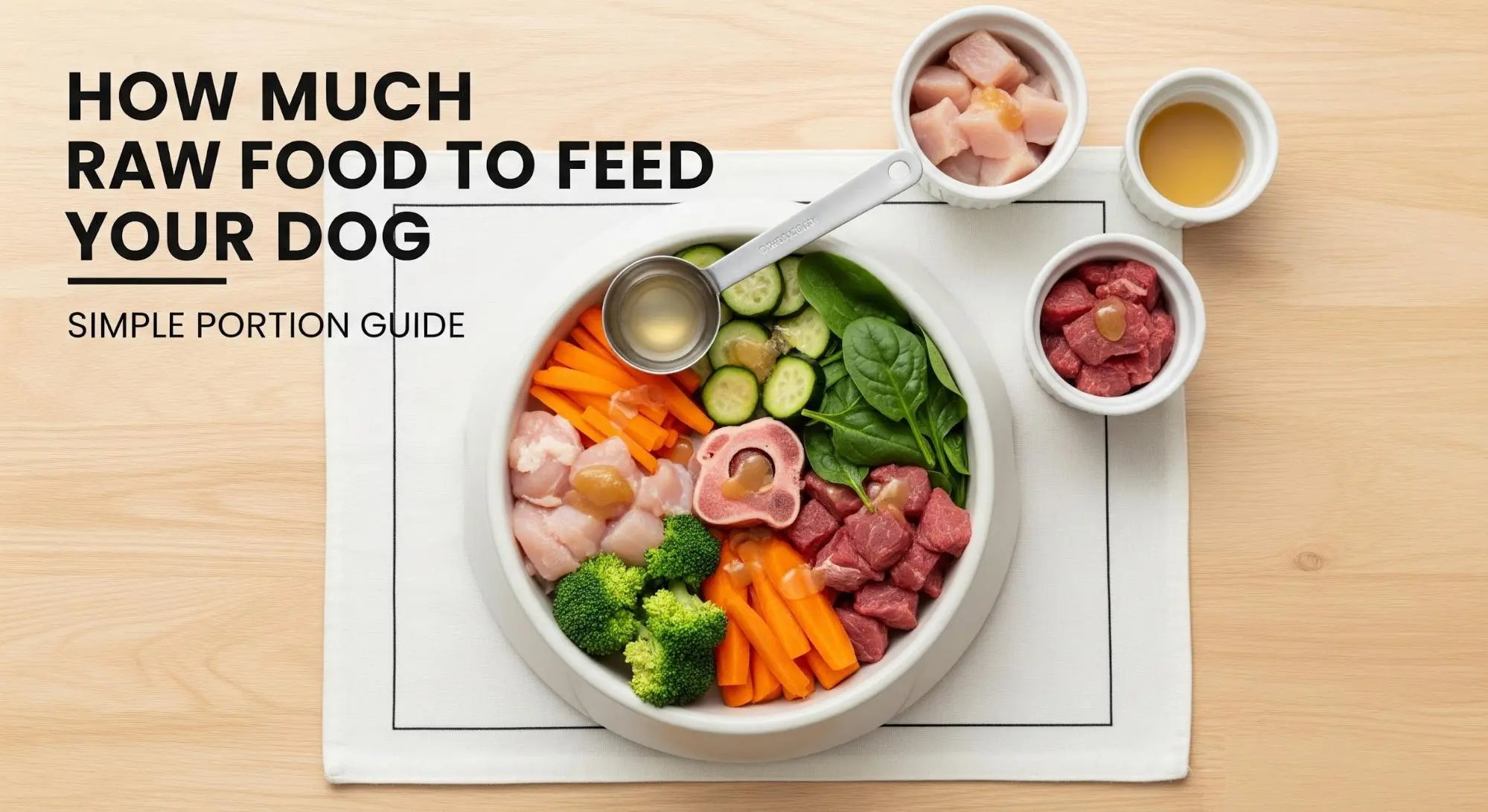
Switching your furry friend to a raw diet can feel confusing at first. You might wonder exactly how much raw food to feed dog companions to keep them healthy and happy. Don’t worry! This guide will walk you through everything in simple terms, so even a young dog owner can understand and get it right.
Understanding the Basics of Raw Feeding
Raw feeding means giving your dog uncooked meats, bones, organs, and sometimes vegetables. Think of it like making a natural meal instead of opening a bag of kibble. The amount your dog needs depends on their size, age, and activity level.
The golden rule is simple: most adult dogs need about 2-3% of their body weight in raw food each day. That means a 50-pound dog would eat roughly 1 to 1.5 pounds of raw food daily.
How Much Raw Food Per Pound Dog Should You Give?
Let’s break this down so it’s super easy to understand. For every pound your dog weighs, they need a certain amount of food. Here’s the math made simple:
Basic Formula:
- Adult dogs: 2-3% of body weight daily
- Active dogs: 3-4% of body weight daily
- Puppies: 5-6% of body weight daily (This higher requirement continues until you reach the stage of deciding when to switch puppy to dog food, as their nutritional needs begin to stabilize.)
- Senior dogs: 1.5-2% of body weight daily
According to research from veterinary nutritionists, the percentage varies based on your dog’s individual needs, metabolism, and lifestyle.
Quick Reference Table: Raw Food Portions by Dog Weight
| Dog Weight | Daily Food Amount (2.5% average) | Split into 2 Meals |
| 10 lbs | 4 oz (0.25 lbs) | 2 oz per meal |
| 25 lbs | 10 oz (0.62 lbs) | 5 oz per meal |
| 50 lbs | 20 oz (1.25 lbs) | 10 oz per meal |
| 75 lbs | 30 oz (1.87 lbs) | 15 oz per meal |
| 100 lbs | 40 oz (2.5 lbs) | 20 oz per meal |
Special Considerations for Different Dogs
Raw Food for Senior Dogs

Dogs grow old, just as grandparents do. They lose their metabolism and do not burn the calories as quickly. Senior dogs need to be fed on raw food that is made to resist weight gain.
Begin with an amount of 1.5-2% of body weight. When your adult dog is 60 pounds, then start with approximately 0.9-1.2 pounds of raw food per day. Monitor their waistline and readjust accordingly.
High Energy Dog Raw Food Needs
Does your dog run, leap and play all day? Energetic dogs, sporting breed, or hyperactive puppies consume more energy. Raw food pieces of high energy in dogs are to be raised to 3-4 percent of the mass.
An active 40 pound dog may require 1.2 to 1.6 pounds of the raw food per day to sustain the energy levels and muscle mass.
Overweight Dog Raw Food Portions
It happens that your dog has gained excess weight, and there is nothing to be concerned about it since raw feeding can help it lose weight. In the case of an overweight dog under raw food plan, one should start with 1.5-2 percentage of the ideal body weight of the dog, not the actual weight of the dog.
Suppose that your dog is 70 pounds when it is supposed to be 60 pounds, choose portions by 60. This is feeding of approximately 0.9 to 1.2 pounds per day as they reduce in weight.
The Composition of a Balanced Raw Meal
- It is not only about the amount, but what is in the food also counts. A complete raw diet includes:
- 80% muscle meat (chicken, beef, turkey, lamb)
- 10 percent raw meaty bones (chicken necks, wings, ribs)
- 5 percent liver (chicken, beef or lamb liver)
- Other organs (kidney, spleen, pancreas) 5%
Weekly Raw Food Planning Guide
| Component | Percentage | Example for 50 lb Dog (Weekly) |
| Muscle Meat | 80% | 7 lbs |
| Raw Meaty Bones | 10% | 0.87 lbs |
| Liver | 5% | 0.44 lbs |
| Other Organs | 5% | 0.44 lbs |
| Total | 100% | 8.75 lbs per week |
Understanding Livestock and Raw Food Quality
Quality is very important when taking raw food. Livestock is used to denote farm animals used as sources of food such as cattle, chicken, sheep, and pigs. Raw diet is based on consuming fresh livestock feeds.
Most of the raw feeders buy direct at the local farm or from specialty suppliers that deal with the livestock producers. This guarantees a quality and freshness.
Practical Tips for Raw Feeding Success
Begin Sluggishly: With the switch to raw food, make a transition within 7-10 days. Add little raw food to their existing diet, and add more and more raw food.
Check Your Dog: Check their activity, skin and fur state, feces quality, and mass. These indications give you the idea whether you are feeding enough or not.
Take a Kitchen Scale: Portions can be estimated by eye and are therefore inaccurate. Basic online scale is reliable, particularly in terms of learning the appropriate amount of raw food to give dog companions.
Make Adjustments as required: Each dog is different. There are those who require more food than others. The portions you use can be altered according to your dog, not just the scale than the body condition of the dog.
Safety and Storage Tips
Raw food must be handled safely:
- Keep raw food frozen until ready to use
- Thaw in the refrigerator, not on the counter
- Feed within 2-3 days of thawing
- Clean bowls and surfaces with hot, soapy water
- Wash your hands after handling raw meat
Common Mistakes to Avoid
Feeding Too Much Too Fast: Do not go and increase the portions in a short period of time as your dog can be hungry. Slow increments eliminate gastrointestinal discomfort.
Disregard of Body Condition: The scale is not all. Palpate dog ribs- you will be able to touch them with a light hand but not be able to see them jutting.
All Meat, No Bones: Bones give a lot of necessary calcium. By not taking them, one causes nutritional imbalances.
Leaving out Adjusting: The puppy develops, the adult grows and the level of activity varies. Examine sections on a regular basis of couple of months.
Raw Food vs. Packed Food: Understanding the Difference
When figuring out how much raw food to feed dog companions, it’s helpful to understand how raw portions compare to commercial kibble or dog feed.
The Key Difference: Raw food contains much more moisture (about 70% water) compared to dry kibble (only 10% water). This means raw food portions look bigger, but the actual nutrition is similar when properly balanced.
Comparison: Raw Food vs. Packed Dog Food
Here’s a simple comparison for a 50-pound dog:
Raw Food Feeding:
- Daily amount: 1.25 pounds (20 ounces)
- Moisture content: High (70%)
- Feeding frequency: 2 meals daily
Packed Kibble Feeding:
- Daily amount: 2.5-3 cups (roughly 10-12 ounces)
- Moisture content: Low (10%)
- Feeding frequency: 2 meals daily
Notice that kibble amounts are smaller because water has been removed. When you add back the moisture that’s naturally in raw food, the nutritional value balances out.
Why This Matters for Your Dog
Understanding this relationship helps you:
- Avoid overfeeding when switching between food types
- Recognize proper portions for your dog’s size
- Mix feeding methods safely if needed (though transition periods are important)
Some owners use a combination approach—feeding quality packed dog food during busy weekdays and raw meals on weekends. If you do this, calculate the total daily calories to ensure you’re not doubling up. For a 50-pound dog, this might mean 1 cup of kibble in the morning and 10 ounces of raw food in the evening.
The Importance of Quality in Any Diet
Whether you choose raw feeding or commercial options, the quality of your dog’s food directly impacts their health, energy, and lifespan. Premium dog food—whether raw or kibble—should contain wholesome ingredients sourced from quality livestock feed and farms.
Good nutrition supports strong muscles, shiny coats, healthy digestion, and a robust immune system. When you invest in proper portions and quality ingredients, you’re investing in your dog’s future.
Conclusion
One of the most significant measures of responsible pet ownership is learning to feed dog companions with the appropriate amount of raw food. Begin with 2-3% rule, take into account the age and activity of your dog and observe its state periodically. It does not matter whether you are feeding senior dogs on raw food, or you are calculating the raw food portions as per the weight of the dogs, or you are planning on an overweight dog raw food diet, the rules are the same i.e. observe, measure, and adjust.
It is important to remember that learning to know the amount of raw food a dog is supposed to be presented with each pound is only the tip of the iceberg. Quality is as important as quantity. The tables and guidelines above should form the basis of the high energy dog raw food portions or differences in adjusting the meals depending on the life stages.
The pet food sector has been continuously developing with improved products of our pet friends. Such manufactures as Mid South Feeds are striving to develop high-quality dog foodstuffs that can satisfy the current nutritional requirements, and thus assist distributors to offer high-quality foodstuffs to more pet owners nationwide.
You will be ready to feed your dog with the ideal raw food proportions to live a long, happy and healthy life with patience, observation and the following simple guidelines!
FAQs
1. How much raw food should I feed my adult dog daily?
Feed adult dogs 2-3% of their body weight in raw food each day. For example, a 50-pound dog needs approximately 1 to 1.5 pounds of raw food daily. Split this amount into two meals for better digestion and consistent energy throughout the day.
2. What percentage of body weight should puppies eat?
Puppies require 5-6% of their body weight in raw food daily because they’re growing rapidly. This is significantly more than adult dogs need. Monitor your puppy’s growth and adjust portions as they develop to ensure proper nutrition.
3. How do I calculate raw food portions for an overweight dog?
Calculate portions based on your dog’s ideal weight, not their current weight, at 1.5-2% daily. If your dog weighs 70 pounds but should weigh 60 pounds, feed 0.9 to 1.2 pounds daily. This helps them slim down gradually while maintaining proper nutrition.
4 .What should a balanced raw meal include?
A complete raw diet consists of 80% muscle meat, 10% raw meaty bones, 5% liver, and 5% other organs. This combination provides all essential nutrients including protein, calcium, vitamins, and minerals for optimal health.
5. How much more do active dogs need to eat?
Active and working dogs need 3-4% of their body weight in raw food daily. A 40-pound active dog requires 1.2 to 1.6 pounds of raw food daily to maintain energy levels and muscle mass from their increased activity.
6. Do senior dogs need less raw food?
Yes, senior dogs need 1.5-2% of their body weight due to slower metabolism. A 60-pound senior dog needs about 0.9 to 1.2 pounds daily. Watch their body condition and adjust portions to prevent weight gain.
7. How does raw food compare to kibble portions?
Raw food portions look larger because they contain 70% moisture versus kibble’s 10%. A 50-pound dog eats 1.25 pounds of raw food or 2.5-3 cups of kibble daily. The nutritional value is similar when properly balanced.
8. How should I transition my dog to raw food?
Transition gradually over 7-10 days by mixing small amounts of raw food with current diet. Slowly increase the raw portion each day while decreasing the old food. This prevents digestive upset and allows your dog’s system to adjust.
9. How do I know if I’m feeding the right amount?
Monitor your dog’s energy levels, coat condition, stool quality, and weight regularly. You should be able to feel their ribs with light pressure but not see them prominently. Adjust portions based on these observations.
10. What safety precautions should I take with raw food?
Keep raw food frozen until use, thaw in the refrigerator only, and feed within 2-3 days of thawing. Clean all bowls and surfaces with hot soapy water after use. Always wash your hands thoroughly after handling raw meat.