 Dogs & Cats
 Cattle
 Equine
 Poultry
 Swine
Swine Goats & Sheep
 Game Bird
 Gamecock
 Deer & Wildlife
 Fish & Pond
 Rabbit
 Specialty
 Ingredients & Bulk
 Special Order

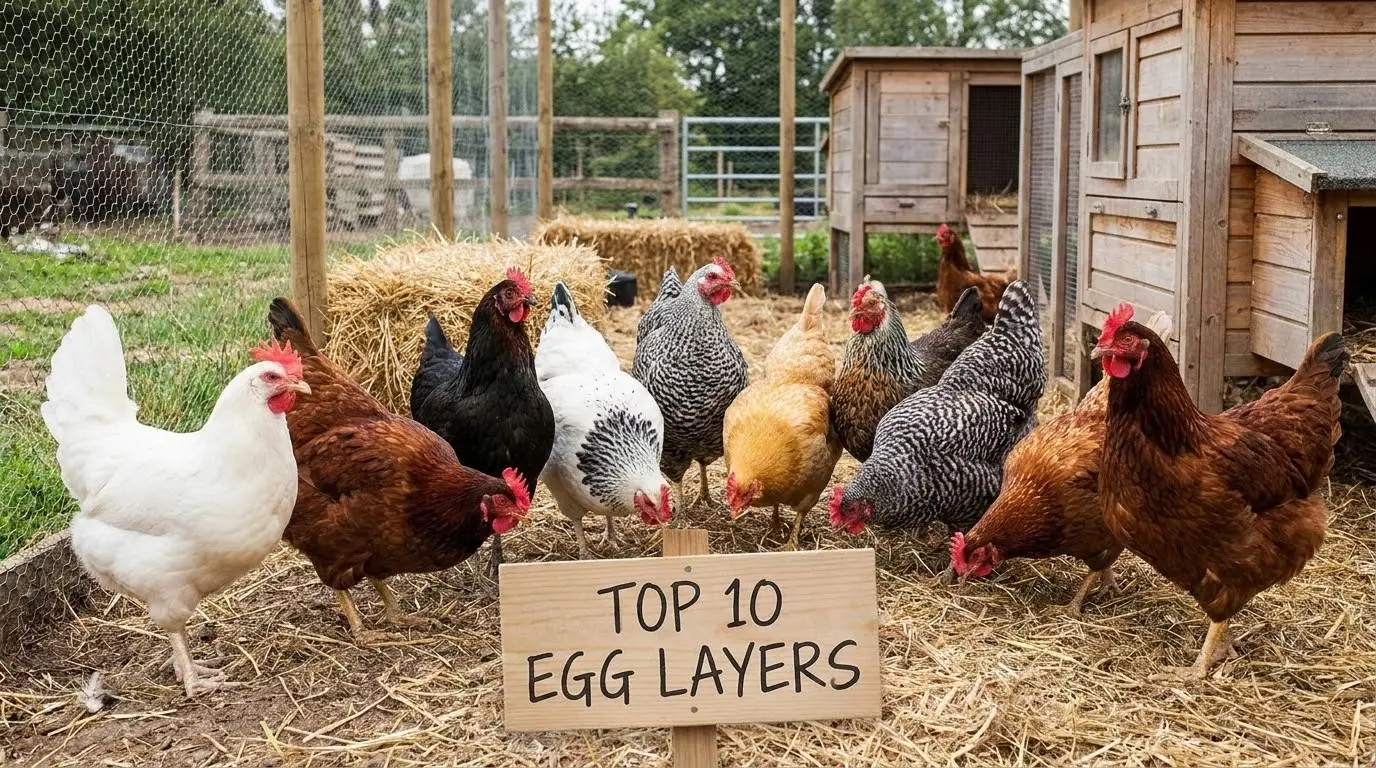
If your hens aren’t laying consistently, it’s rarely just a feed issue. More often, it’s the breed.
Some chickens are built for meat. Others for looks. And then there are egg machines—hens genetically wired to produce 250–320 eggs per year when managed properly.
Here’s the reality:
You can provide perfect nutrition, clean housing, and ideal lighting—but if you picked the wrong breed, your egg basket will still be half empty.
This guide cuts through the noise and shows you the best breed for laying hens, backed by research, production data, and practical farm experience.
What makes a chicken breed a high egg layer?
Before jumping into the list, it helps to understand what separates heavy egg laying chicken breeds from average ones.
Key factors that affect egg production:
- Genetics (most important)
- Feed quality (protein 16–18% for layers)
- Daylight exposure (14–16 hours ideal)
- Stress levels and environment
According to the USDA, commercial laying hens can produce 280–320 eggs annually, but only under optimal breed and management conditions.
Dr. Michael Lilburn, Poultry Nutritionist at Ohio State University, explains:
“Genetics determines the ceiling of egg production. Nutrition and management decide how close you get to that ceiling.”
10 Best Chicken Breeds for Egg Production
1. Leghorn (White Leghorn)
If you want maximum output, this is it.
- Eggs per year: 280–320
- Egg color: White
- Temperament: Active, independent
Leghorns dominate commercial egg farming for a reason. They convert feed into eggs more efficiently than most chicken breeds.
Best for: High-efficiency egg production systems
2. Rhode Island Red
One of the most popular chicken breeds for backyard and farm use.
- Eggs per year: 250–300
- Egg color: Brown
- Temperament: Hardy, adaptable
These are chickens that are good egg layers even in less-than-perfect conditions.
Best for: Beginners and mixed farming setups
3. ISA Brown
A hybrid breed engineered specifically for egg production.
- Eggs per year: 300–320
- Egg color: Brown
- Temperament: Calm, friendly
ISA Browns are among the best chicken egg layers globally.
According to commercial poultry data, they reach peak production faster than most pure breeds.
4. Sussex (Light Sussex)
A reliable dual-purpose bird with strong laying performance.
- Eggs per year: 250–280
- Egg color: Light brown
- Temperament: Docile
These laying chickens are known for consistency across seasons.
5. Plymouth Rock (Barred Rock)
A balanced breed with good egg output and meat value.
- Eggs per year: 200–280
- Egg color: Brown
- Temperament: Friendly
A solid choice if you want both eggs and manageable birds.
6. Australorp
Holds a world record for egg production.
- Eggs per year: 250–300
- Egg color: Light brown
An Australorp hen once laid 364 eggs in 365 days, a record recognized in poultry history.
Best for: Cold climates and consistent laying
7. Golden Comet
Another hybrid known for early and heavy production.
- Eggs per year: 280–320
- Egg color: Brown
These are often considered among the best laying hens for small farms.
8. Lohmann Brown
Widely used in commercial operations.
- Eggs per year: 300+
- Egg color: Brown
Efficient, predictable, and one of the top egg laying chickens in industrial farming.
9. Ancona
A lesser-known but highly productive Mediterranean breed.
- Eggs per year: 220–280
- Egg color: White
They require more space but reward you with steady output.
10. Hamburg
Small but efficient layers.
- Eggs per year: 200–250
- Egg color: White
These birds eat less, making them cost-effective types of hen for egg production.
How do you choose the best chicken for laying?
Should you pick hybrid or pure breeds?
Hybrid breeds (ISA Brown, Golden Comet):
- Higher production
- Faster maturity
- Shorter lifespan
Pure breeds (Rhode Island Red, Sussex):
- More durable
- Better for breeding
- Slightly lower output
Your choice depends on your goal:
- Maximum eggs → hybrids
- Long-term sustainability → pure breeds
What feed do high-producing hens need?
Even the best breed for laying hens will underperform without proper nutrition.
Essential nutrition requirements:
- Protein: 16–18%
- Calcium: 3.5–4% (for strong shells)
- Energy balance: Consistent intake
Dr. Jacquie Jacob, Poultry Extension Specialist at University of Kentucky, notes:
“Layer hens require a precise balance of protein, energy, and calcium to maintain peak egg production and shell quality.”
If you’re serious about egg output, your feed matters as much as your breed selection. Using high-quality Chicken Feed and supplements like chicken treats can improve both productivity and bird health.
Common questions about egg laying chickens
How many eggs can a hen lay per day?
Most hens lay one egg every 24–26 hours, not daily. Even the best breeds average 5–6 eggs per week.
When do hens start laying eggs?
- Most breeds: 18–24 weeks
- Hybrids: Often earlier (around 16–18 weeks)
Do hens lay eggs year-round?
Not naturally.
Egg production drops in winter due to reduced daylight. Farmers often use artificial lighting to maintain output.
Which breed is best for beginners?
- Rhode Island Red
- Plymouth Rock
- Sussex
These are low-maintenance and forgiving for new poultry keepers.
Final thoughts: Breed matters, but management decides results
Here’s the honest truth most guides skip:
You don’t need all 10 breeds.
You need the right one for your system—and the discipline to manage it well.
A Leghorn on poor feed will underperform.
A Rhode Island Red with proper nutrition can outperform expectations.
That’s where most farms get it wrong.
If you’re serious about improving egg production, don’t just focus on breeds. Pay equal attention to Best Animal & Livestock Feed quality and sourcing reliable chicken feed dealers near me who understand poultry nutrition at a deeper level.
At Midsouth Feeds, the focus isn’t just selling feed—it’s helping you get closer to that genetic ceiling your birds are capable of reaching.
Because in the end, the best laying hens only perform like the best… when you support them like the best.