Most backyard flocks don’t struggle because of disease—they struggle because of what they’re fed. Too many owners rely on random scraps, thinking chickens will “eat anything.” They will—but that doesn’t mean they should.
Here’s the truth: chicken treats can improve health, egg quality, and behavior—but only when done right. Feed the wrong foods, and you risk poor laying, obesity, or even toxicity.
This guide breaks down exactly what can chickens eat, what they should avoid, and how to use chicken treats properly—based on poultry nutrition science and real farm practices.
What Should Chickens Eat Daily (Before Treats)?
Before we even talk about chicken treats, let’s get one thing straight:
Treats should never replace a complete feed.
According to poultry nutritionists like Dr. Michael Lilburn (Professor of Poultry Nutrition, Ohio State University), a balanced diet must provide:
- Protein (16–20% depending on age)
- Calcium (critical for layers)
- Energy (grains and fats)
- Vitamins and minerals
That’s why high-quality feeds for poultry are the foundation.
For example, a proper feeding setup often includes:
- Layer hens: 16% Layer Mash, Pellets, or Crumbles
- Growing birds: 20% Pullet Starter-Grower Crumbles
- Supplement: Scratch grains in moderation
This answers a common question: what are chickens fed on farms?
Not scraps—scientifically formulated feeds for animals designed for performance and health.
What Are Chicken Treats (And Why They Matter)?
Chicken treats are supplemental foods given in small amounts alongside a complete diet.
Used correctly, they can:
- Reduce stress and boredom
- Encourage natural foraging behavior
- Improve egg yolk color (through greens and pigments)
- Strengthen bonding with your flock
But here’s the key rule:
👉 Treats should not exceed 10% of the total diet
Go beyond that, and you dilute essential nutrients.
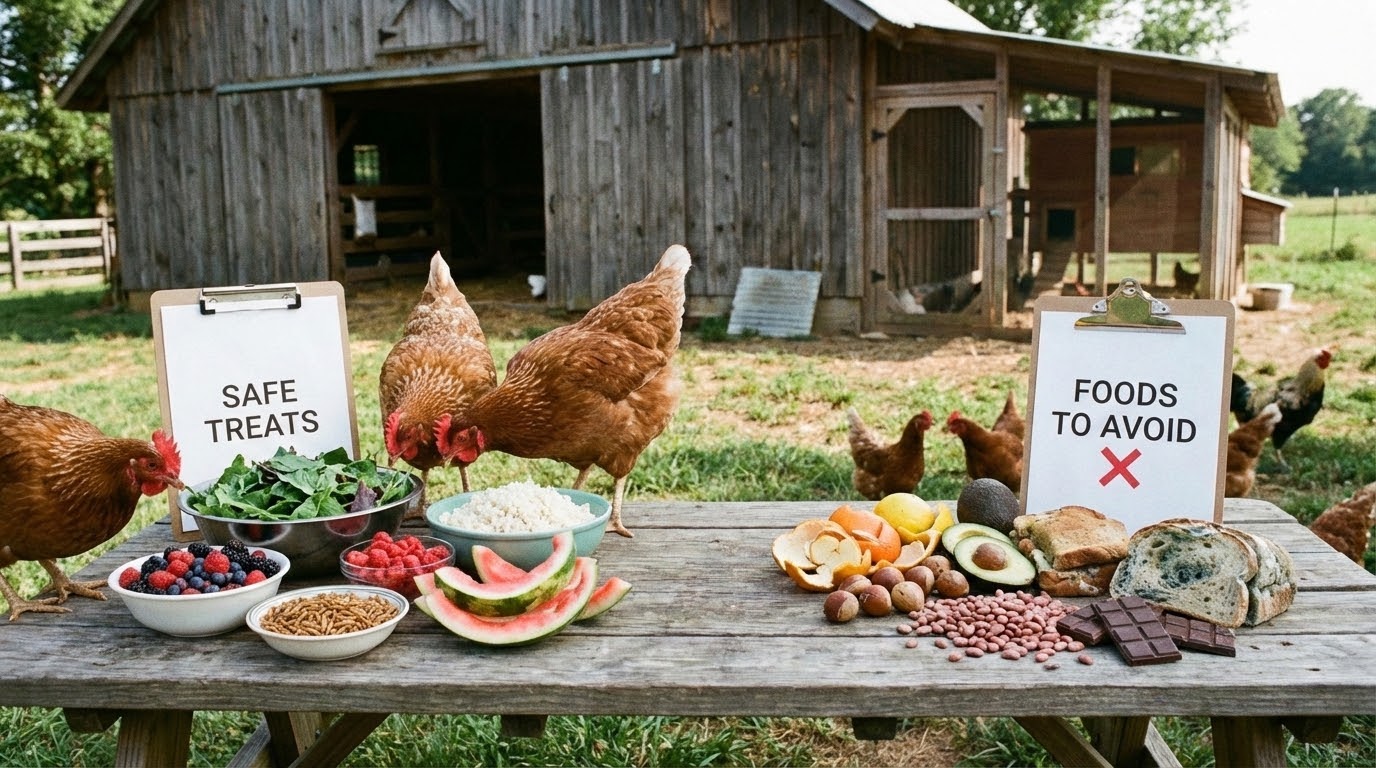
What Can Chickens Eat? (Safe Chicken Treats)
If you’ve ever asked what can I feed chickens, here’s a practical, safe list backed by poultry feeding guidelines.
🥬 Vegetables Chickens Can Eat
Yes, chickens eat vegetables, and they benefit from them.
Safe options include:
- Leafy greens (spinach, kale, lettuce)
- Carrots (grated or chopped)
- Cucumbers
- Pumpkin and squash
These provide fiber, vitamins, and hydration.
🍎 Fruits (In Moderation)
Chickens naturally enjoy fruits, which answers what do chickens like to eat.
Safe fruits:
- Apples (without seeds)
- Berries
- Bananas
- Melons
Keep portions small—fruits are high in sugar.
🌾 Grains and Scratch Feed
Grains are energy-rich and popular as treats for chickens.
Options include:
- Corn
- Wheat
- Oats
- 4-grain scratch feed mixes
These are especially useful in colder months for added energy.
🥚 Protein Boosters
Chickens are omnivores. Protein treats help with feather growth and egg production.
Safe protein treats:
- Cooked eggs
- Mealworms
- Fish scraps (in small amounts)
🌿 Kitchen Scraps (Some, Not All)
You can use scraps wisely if you understand what chickens eat safely.
Safe scraps:
- Rice (cooked or uncooked)
- Pasta (plain)
- Bread (occasionally)
But this is where many people go wrong—more on that next.
What Foods Should Chickens NEVER Eat?
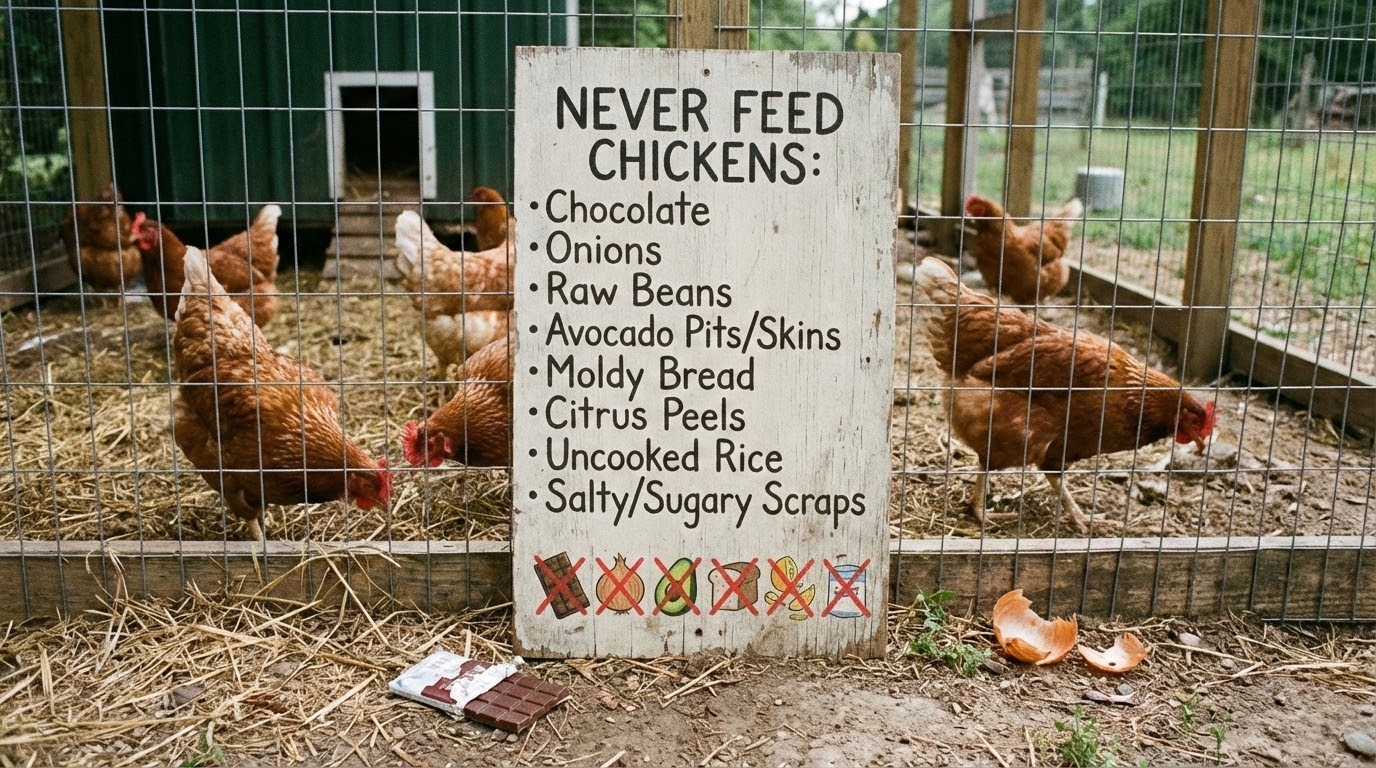
This is where most flock owners make mistakes.
Some foods are not just unhealthy—they’re dangerous.
❌ Toxic Foods to Avoid
Never feed:
- Avocado (contains persin)
- Chocolate or caffeine
- Raw potato peels (solanine)
- Moldy or spoiled food
⚠️ Risky Foods (Limit or Avoid)
- Onion and garlic (can affect egg taste)
- Citrus (may reduce calcium absorption)
- Salty or processed foods
Do Chickens Eat Vegetables Every Day?
Yes—but not as a replacement for feed.
Vegetables should be:
- Fresh
- Chopped for easy digestion
- Offered in moderation
They’re ideal as healthy snacks for chickens, especially for confined flocks.
How to Feed Chicken Treats the Right Way
Even safe foods can cause problems if fed incorrectly.
Follow These Practical Rules:
- Keep treats under 10% of daily intake
- Feed in the afternoon (after main feed)
- Scatter treats to encourage movement
- Avoid feeding spoiled leftovers
A well-managed feeding system also matters. Using the right feeder and waterer for chickens ensures:
- Clean feed access
- Reduced waste
- Better hygiene
Best Food for Poultry vs Treats: Know the Difference
Let’s clear the confusion around best food for poultry.
Complete feed = nutrition
Treats = enrichment
A balanced feeding program typically includes:
- Layer feed (for egg production)
- Grower feed (for young birds)
- Occasional scratch grains
- Limited treats
Products like:
…are designed to meet exact nutritional needs—something scraps simply cannot do.
Common Questions About Chicken Treats
What can chickens eat daily?
A complete poultry feed should make up 90% of the diet. Treats fill the remaining 10%.
What do chickens like to eat the most?
Chickens prefer:
- Mealworms
- Corn
- Fruits
But preference doesn’t equal nutrition—balance matters.
Can chickens eat vegetables every day?
Yes, in small amounts. Vegetables are excellent healthy snacks for chickens.
What can I feed chickens cheaply?
- Kitchen scraps (safe ones only)
- Garden waste (greens)
- Scratch grains
But never replace balanced feed with cheap alternatives.
Are scratch grains enough for chickens?
No. Scratch is low in protein and nutrients. It’s a treat, not a complete diet.
The Real Feeding Strategy That Works
After working with poultry nutrition guidelines and farm-level feeding practices, one thing stands out:
Healthy chickens come from consistency, not creativity.
You don’t need exotic treats or complicated diets.
You need:
- A reliable base feed
- Smart use of chicken treats
- Awareness of harmful foods
That’s it.
Where Most Chicken Owners Get It Wrong
They overfeed treats.
It usually starts with good intentions—using leftovers, reducing waste—but ends with:
- Poor egg production
- Overweight birds
- Nutritional deficiencies
The fix isn’t complicated. Just return to basics:
feed properly first, treat second.
Final Thought (From a Practical Feeding Perspective)
If your flock looks healthy, lays consistently, and stays active, your feeding strategy is working.
If not, the problem is rarely the breed or environment—it’s almost always the feed.
Start with a solid foundation using proper feeds for poultry, then layer in chicken treats the smart way. That balance is what separates hobby flocks from productive ones.
And if you’re serious about improving results, it might be time to rethink not just what chickens eat, but how you’re feeding them every single day.