 Dogs & Cats
 Cattle
 Equine
 Poultry
 Swine
Swine Goats & Sheep
 Game Bird
 Gamecock
 Deer & Wildlife
 Fish & Pond
 Rabbit
 Specialty
 Ingredients & Bulk
 Special Order
What to Feed Pond Fish for Strong Growth Color and Immunity Boost
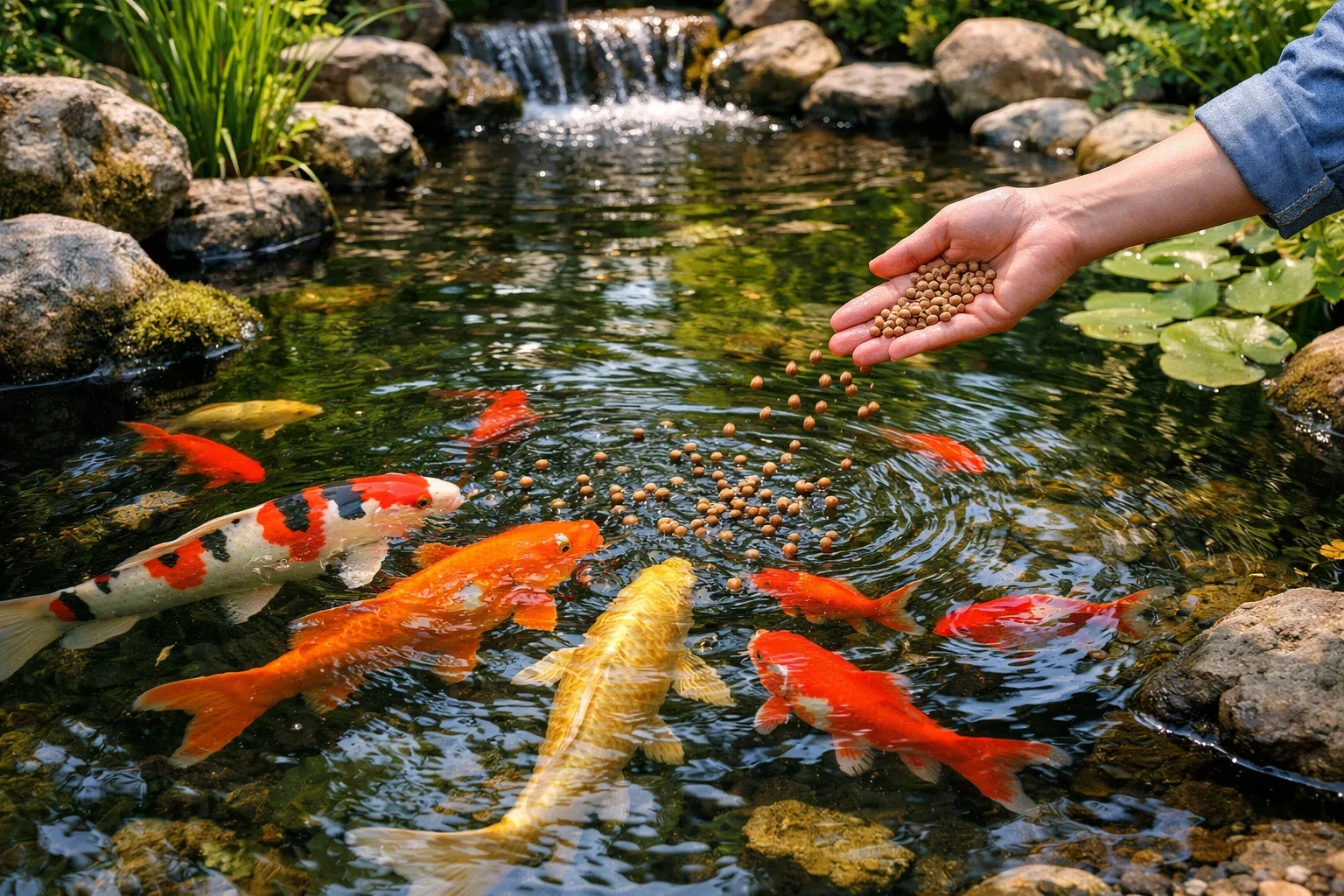
If you own a backyard pond or manage a farm pond, one of the most important decisions you make every single day is what goes into the water at feeding time. What to feed pond fish isn’t a one-size-fits-all answer; it changes based on the season, the species you’re keeping, the water temperature, and the life stage of your fish. Get it right and your pond becomes a thriving ecosystem. Get it wrong and you’re dealing with murky water, sick fish, and frustrating die-offs.
This guide covers everything you need to know from what pond fish can eat, to how feeding shifts between summer and winter, to a practical pond fish diet chart you can reference all year long.
Why Pond Fish Feeding Is Different from Aquarium Feeding
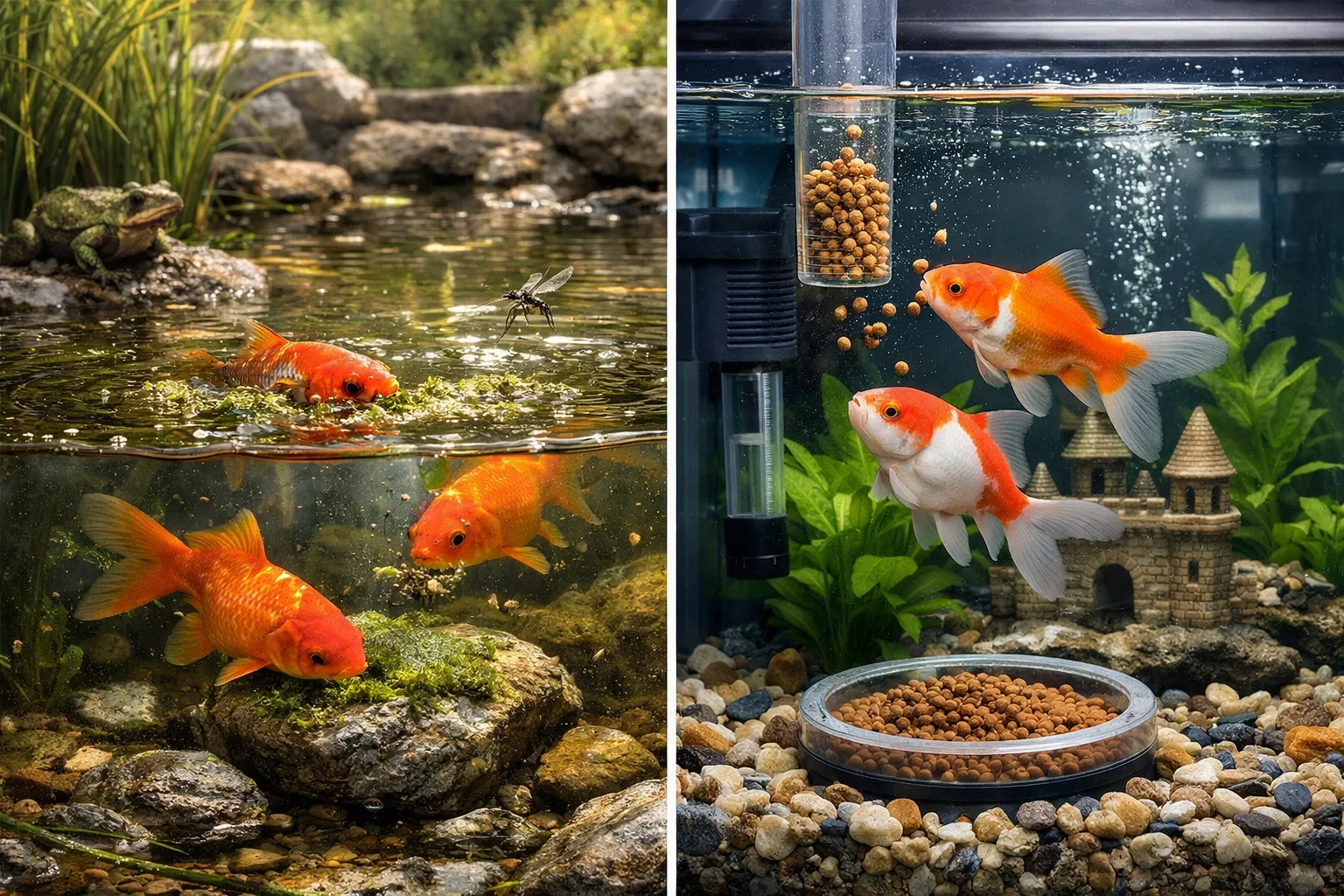
Pond fish live in a dynamic, open environment. Unlike aquarium fish in a controlled tank, pond fish interact with natural food sources algae, insects, worms, larvae, and aquatic plants. This means their supplemental feeding needs shift constantly based on what nature is already providing.
That said, relying entirely on natural food sources is a mistake especially in densely stocked ponds or during seasonal extremes. The right animal food supplementation fills the nutritional gaps nature leaves behind and ensures consistent growth, healthy coloring, and strong immune function all year round.
Understanding this balance is the first step toward becoming a genuinely skilled pond keeper.
What Can Pond Fish Eat? Natural and Supplemental Foods
What pond fish can eat is a broader question than most people expect. Pond fish are opportunistic feeders; they’ll eat a wide range of foods depending on their species and what’s available.
Natural food sources pond fish consume:
- Algae and aquatic plant matter
- Insects and insect larvae (mosquito larvae, midges)
- Worms and small invertebrates
- Zooplankton and phytoplankton
- Small crustaceans
Supplemental foods appropriate for pond fish:
- Floating pellets formulated for warm-water species
- Sinking pellets for bottom-feeding species like catfish
- High-protein fingerling formulas for juvenile fish
- Cold-weather pellets designed for low-temperature digestion
- Wheat germ-based foods (easily digestible, ideal for transitional seasons)
The most important rule in pond fish feeding is matching the food to the species. Catfish, koi, goldfish, bass, and tilapia all have meaningfully different nutritional requirements. Using a high-quality, species-appropriate fish feed is always the smartest starting point.
Pond Fish in Summer: Feeding at Peak Season
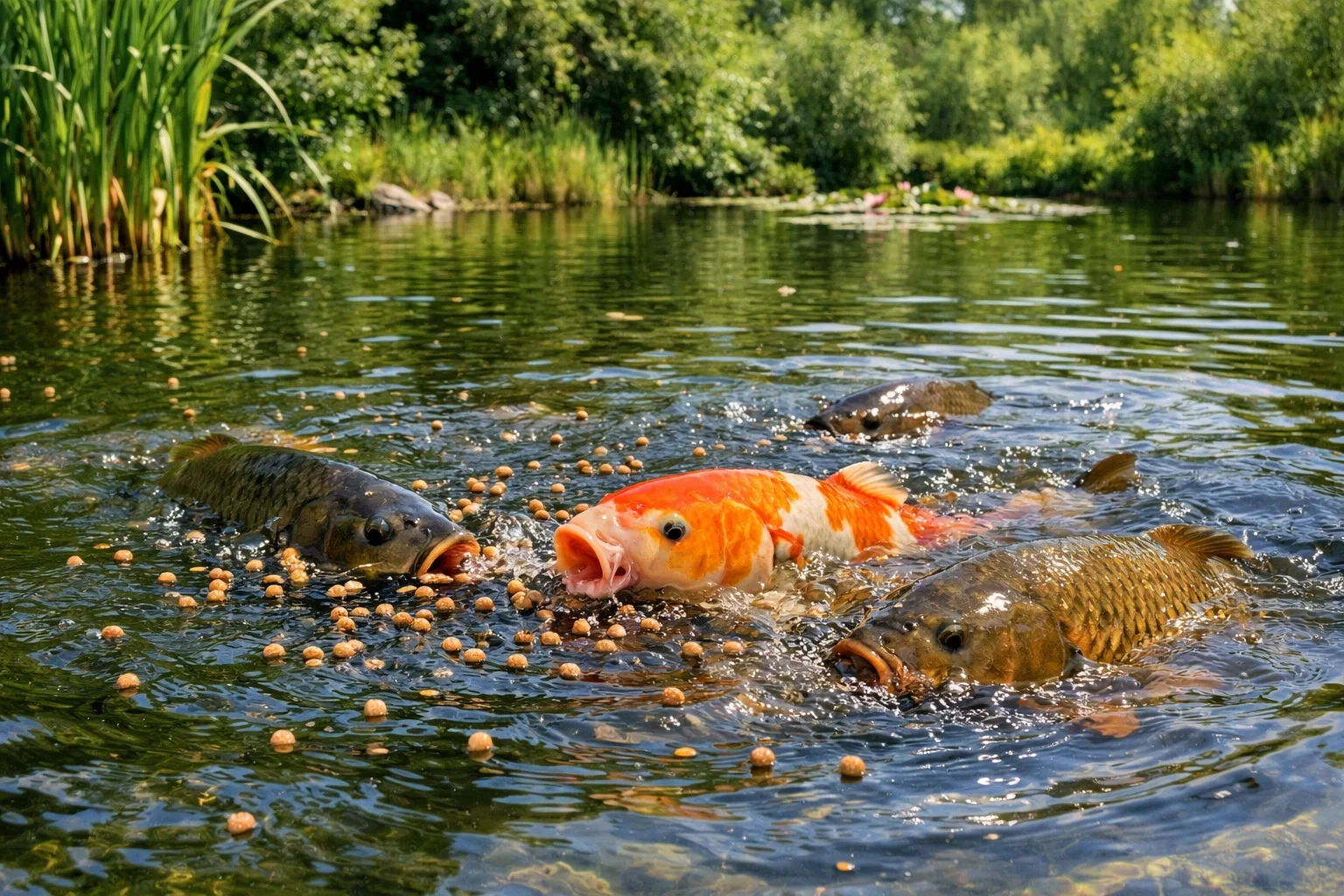
Summer is when pond fish are most active, growing fastest, and burning the most energy. Warm water typically between 65°F and 85°F accelerates metabolism, which means fish need more food, more frequently.
Summer feeding guidelines:
Feed once or twice daily during summer. Morning and late afternoon are the best times when water oxygen levels are most stable, and fish are naturally active. Always feed only what your fish can consume in 3–5 minutes. Uneaten food breaks down quickly in warm water and causes dangerous ammonia spikes.
During peak summer, a pond fish in summer feeding routine should prioritize:
- High-protein floating pellets (28–36% protein for most warm-water species)
- Enough variety to cover both surface feeders and bottom dwellers
- Consistent portion control to avoid water quality issues
- Daily observation to monitor fish health and appetite
Hot tip: If water temperatures exceed 90°F, reduce feeding. Oxygen levels drop in very hot water, and fish under heat stress digest poorly. Overfeeding in extreme heat is one of the leading causes of summer fish loss in backyard ponds.
Pond Fish in Winter: Feeding Through the Cold
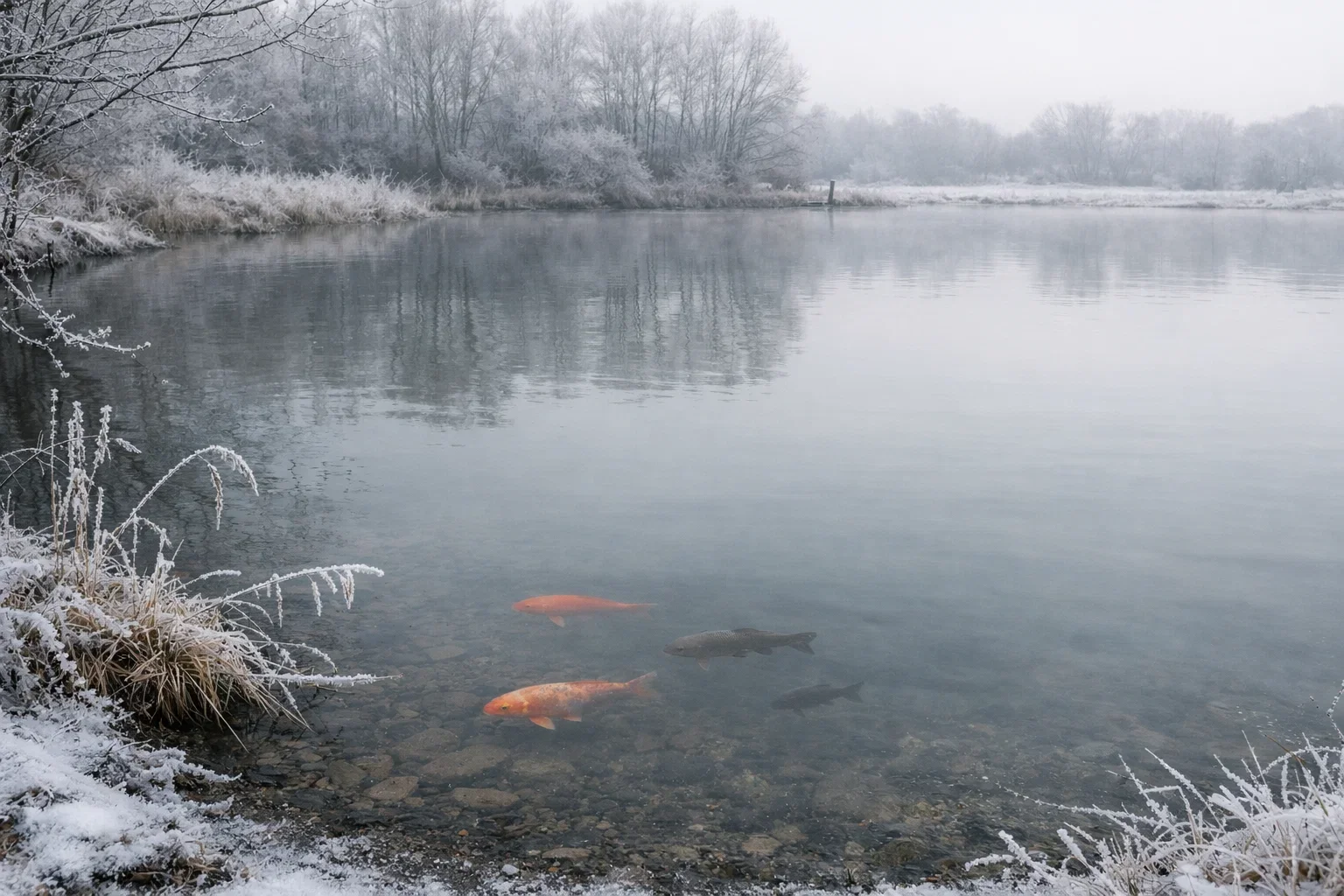
Winter pond fish care is where most beginners make costly mistakes. As water temperatures drop below 55°F, a fish’s metabolism slows dramatically. They move less, require fewer calories, and their digestive systems become significantly less efficient at processing standard warm-season feed.
Pond fish in winter feeding requires a completely different approach:
- Below 65°F: Begin reducing feeding frequency to once every 2–3 days
- Between 50°F–55°F: Switch to a cold-water or wheat germ-based formula that digests easily at low temperatures
- Below 50°F: Stop feeding entirely in most cases fish enter a semi-dormant state and do not need supplemental food
Continuing to feed standard pellets in cold water is dangerous. Fish cannot digest them properly, undigested food rots in the gut, and bacteria thrive in the resulting waste, a combination that causes serious illness and death even in otherwise healthy fish.
A seasonal cold-weather fish feed formula is not optional if you want your pond fish to survive winter and come back strong in spring.
Pond Fish Diet Chart: Feeding by Season and Temperature
Use this reference chart to guide your feeding decisions throughout the year:
| Water Temperature | Season | Feeding Frequency | Recommended Feed Type |
| Above 75°F | Peak Summer | 1–2 times daily | High-protein floating pellets (32–36%) |
| 65°F – 75°F | Late Spring / Early Fall | Once daily | Standard maintenance pellets |
| 55°F – 65°F | Early Spring / Late Fall | Every 2–3 days | Wheat germ or easy-digest formula |
| 50°F – 55°F | Early Winter | Every 3–5 days | Cold-water formula only |
| Below 50°F | Deep Winter | Stop feeding | None fish are semi-dormant |
What to Feed Different Types of Pond Fish
Not all pond fish eat the same thing. Here’s a practical breakdown to help you match the right food to the right species in your pond:
| Fish Species | Diet Type | Best Feed Format | Protein Needs |
| Koi | Omnivore | Floating pellets | 28–35% |
| Goldfish | Omnivore | Floating pellets / flakes | 25–30% |
| Catfish | Carnivore / Bottom feeder | Sinking pellets, floaters | 32–36% |
| Bass | Carnivore | Floating pellets, live bait | 40%+ |
| Tilapia | Herbivore / Omnivore | Plant-based pellets | 25–32% |
| Fingerlings (all species) | High metabolic demand | Fine pellets / fingerling food | 36%+ |
The takeaway: the more precisely you match your animal food choice to the actual species and life stage in your pond, the better your results will be across every metric growth, health, coloring, and survival rate.
Common Pond Feeding Mistakes to Avoid
Even experienced pond owners fall into these traps:
- Overfeeding in warm weather Warm water already has lower oxygen levels. Excess decomposing food accelerates oxygen depletion and creates ammonia spikes that can wipe out an entire pond rapidly.
- Not switching feed seasonally Using the same warm-season pellets in October through February ignores the biological reality of cold-water digestion. Your fish physically cannot process warm-season food in cold water.
- Feeding only one species’ food in a multi-species pond If you have catfish and koi in the same pond, surface-only floating pellets starve your bottom feeders. Use a combination of floating and sinking formats.
- Ignoring fingerlings, young fish need higher protein concentrations than adults. Using adult maintenance feed on fingerlings slows growth significantly and leaves juveniles nutritionally deficient during their most critical development window.
- Choosing generic feed over species-formulated nutrition This is the most overlooked mistake. Generic pond food may keep fish alive, but purpose-built fish feed is what makes them truly thrive.
The Right Fish Feed for Your Pond
Once you understand what your pond fish need across every season, the next step is sourcing fish feed that’s actually built to deliver it. Mid South Feeds offers a targeted lineup of aquatic nutrition products designed for real pond environments not generic store shelves.
36% Fingerling Fish Food: A complete diet specifically formulated for small and starter warm-water pond fish. At 36% protein, it supports the rapid healthy growth that juvenile fish demand during their most critical early months. If you’re raising fish from fingerling size, this is the formula to start with.
32% Catfish Floater: A floating pellet formula developed specifically for warm-water species like catfish. The floating design makes feeding easy to observe, helps you monitor intake, and simplifies removal of uneaten portions before they affect water quality.
Farm Pond Floater: Designed for warm-water pond environments during active feeding seasons. This formula supports steady growth and natural surface-level feeding behavior, making it ideal for mixed warm-water pond setups.
Fish Food Pellets: Formulated to supplement farm pond fish specifically through the winter months when natural food sources disappear and fish metabolism slows. This is the kind of season-aware nutrition that separates serious pond managers from casual hobbyists.
Every product in this lineup is made with premium-quality ingredients and crafted to deliver balanced nutrition your pond fish can actually use season by season, life stage by life stage.
Conclusion
Feeding pond fish well is a year-round commitment. It means adjusting your routine as the seasons shift, choosing food that matches your species and their life stage, and never cutting corners on the quality of what goes into the water.
That’s exactly the philosophy that Mid South Feeds is built on. As a premium animal food manufacturer rooted in southern agricultural tradition and backed by science-based formulation, Mid South Feeds understands that every species deserves nutrition engineered for its specific needs, not a generic bag pulled off a shelf.
Whether you’re managing a backyard koi pond, a catfish farm pond, or raising fingerlings through their first season, Mid South Feeds has the formula that fits your fish and your feeding goals.
Don’t leave your pond’s health to guesswork. Find an animal dealer near you through the Mid South Feeds dealer locator and connect with a local source for premium, species-specific pond nutrition trusted by fish farmers and pond owners across the country.
Better feed. Healthier ponds. That’s the Mid South Feeds promise.
FAQs
1. What should you feed pond fish daily?
Pond fish should be fed high-quality pellets made for their species and life stage. These feeds provide balanced nutrition for growth and health. Natural foods like insects and algae can be added as supplements.
2. Can pond fish survive on natural food alone?
Pond fish do eat natural food like algae and larvae found in the water. However, this is usually not enough in stocked ponds. Supplemental feeding helps maintain proper growth and immunity.
3. How often should pond fish be fed in summer?
In summer, pond fish are active and should be fed once or twice daily. Feeding in the morning or evening works best. Always give only what they can eat in a few minutes.
4. What do pond fish eat in winter?
In winter, fish metabolism slows, so they need less or no food. Feeding should reduce as temperatures drop. Below 50°F, feeding is usually stopped completely.
5. Can you feed pond fish household food?
Some foods like vegetables or plain rice can be given occasionally. These should only be treats and not regular feed. Too much can harm fish and water quality.