Cattle can look healthy and still be nutritionally deficient. Weight gain slows down. Breeding rates drop. Calves don’t develop as expected. Then comes the usual reaction: increase feed.
But here’s the reality most producers in the U.S. learn the hard way—more feed doesn’t fix a mineral imbalance.
The real issue often sits quietly in the background: trace mineral deficiency.
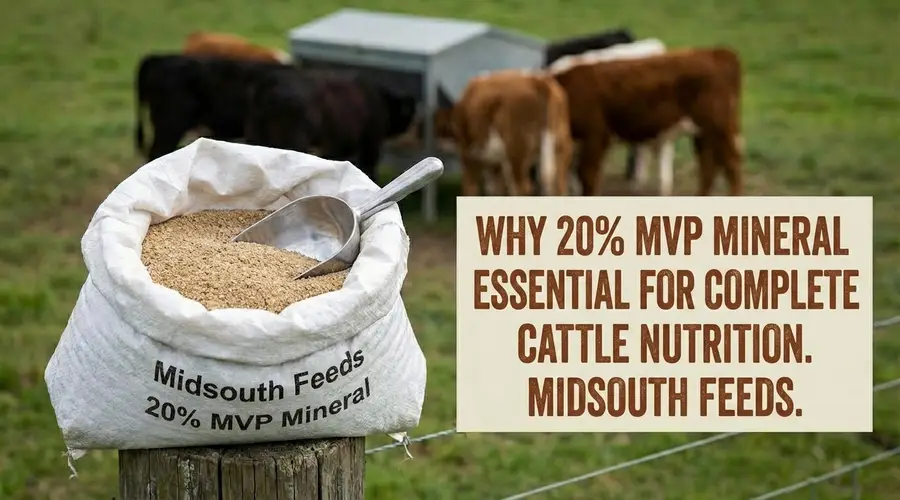
That’s where 20% MVP Mineral changes the equation. It doesn’t just “add minerals.” It corrects the hidden gaps that directly impact growth, immunity, and reproductive performance.
What is 20% MVP Mineral and why does it matter?
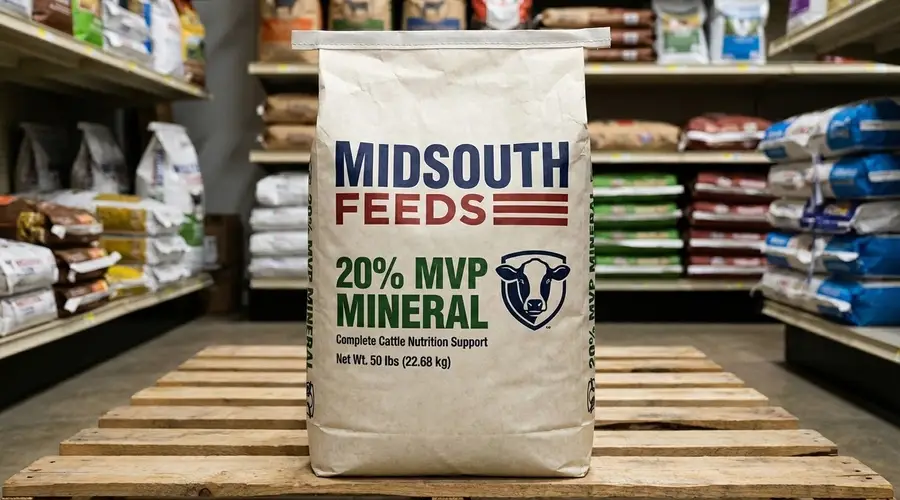
20% MVP Mineral is a concentrated mineral supplement designed to provide essential macro and trace minerals that cattle often lack in forage-based diets.
In practical terms, it works as a nutritional balancing tool. Even high-quality pasture in the U.S. can be deficient in key elements like:
- Zinc
- Copper
- Selenium
- Phosphorus
These aren’t optional nutrients. They control:
- Enzyme function
- Immune response
- Reproductive efficiency
- Muscle development
According to Dr. Rick Funston (Beef Cattle Reproductive Specialist, University of Nebraska-Lincoln),
“Mineral nutrition is one of the most overlooked factors affecting fertility and herd productivity. Deficiencies often go unnoticed until performance drops.”
Why isn’t forage alone enough for cattle nutrition?
The short answer: Soil determines everything
Even well-managed pastures in the U.S. often lack consistent mineral profiles. Soil composition, rainfall, and seasonal variation all affect what cattle actually consume.
The reality on the ground:
- Grass may look rich but lack bioavailable minerals
- Stored feeds lose nutrient density over time
- Different regions have known deficiencies (e.g., selenium-deficient soils)
A study from the USDA Natural Resources Conservation Service (NRCS) highlights that over 70% of U.S. grazing lands show mineral imbalances affecting livestock performance.
That means relying on pasture alone is a gamble.
How does 20% MVP Mineral support complete cattle nutrition?
1. Improves growth and weight gain
Minerals are directly involved in metabolic processes. Without them, cattle cannot efficiently convert feed into muscle.
What happens with proper mineral balance:
- Better feed efficiency
- Faster weight gain
- Reduced feed waste
This is especially important when using cattle livestock feed, where nutrient absorption determines profitability.
2. Strengthens immune function
Trace minerals like zinc and selenium play a critical role in immune defense.
Without adequate minerals:
- Increased disease susceptibility
- Higher veterinary costs
- Slower recovery rates
With proper supplementation:
- Stronger immune response
- Reduced illness in calves
- Better herd resilience
Dr. Kenny Burdine (Livestock Economist, University of Kentucky) notes,
“Healthier cattle are more profitable cattle. Mineral programs are one of the simplest ways to reduce preventable losses.”
3. Enhances reproductive performance
Reproduction is one of the first systems affected by mineral deficiencies.
Common signs of deficiency:
- Low conception rates
- Irregular estrus cycles
- Weak calves at birth
20% MVP Mineral helps by:
- Supporting hormone regulation
- Improving fertility rates
- Increasing calf survival
4. Supports skeletal and structural development
Calcium and phosphorus are essential for:
- Bone strength
- Frame development
- Mobility
This becomes critical when feeding young cattle alongside products like 16% Calf Creep Feed, where growth demands are high. Read more about Guide to Feeding 16% Calf Creep Feed for Maximum Results
What makes 20% MVP Mineral different from generic mineral mixes?
Not all mineral supplements are created equal.
Key differences that matter:
Balanced formulation
Instead of overloading one mineral, it maintains proper ratios (critical for absorption).
Bioavailability
Higher absorption rates mean cattle actually use what they consume.
Consistency
Designed to deliver uniform nutrition across different feeding systems.
Many generic mixes fail because they:
- Ignore mineral interactions
- Use low-quality sources
- Lack consistency in intake
How should you feed 20% MVP Mineral?
Best practices for effective results:
- Offer free-choice access at all times
- Place near water sources or feeding areas
- Monitor intake regularly
- Adjust based on herd size and conditions
Typical intake pattern:
Cattle will naturally regulate their mineral intake when the formulation is balanced correctly.
Common mistakes cattle owners make with mineral feeding
1. Assuming all minerals are the same
They’re not. Quality and formulation matter more than price.
2. Ignoring regional deficiencies
What works in Texas may not work in Missouri.
3. Inconsistent availability
Minerals must be available daily, not occasionally.
4. Over-reliance on base feed
Even high-quality livestock feed cannot replace a proper mineral program.
Is 20% MVP Mineral worth it economically?
Let’s break it down in practical terms.
Without proper mineral supplementation:
- Lower weight gain
- Reduced fertility
- Higher disease risk
With a balanced mineral program:
- Improved feed efficiency
- Higher calving rates
- Stronger, healthier herd
A report from Kansas State University Beef Extension suggests that mineral supplementation can improve reproductive efficiency by up to 10–15%, which directly impacts profitability.
Who should be using 20% MVP Mineral?
This product is especially useful for:
- Cow-calf operations
- Stocker cattle producers
- Backgrounding operations
- Ranchers relying heavily on pasture
It’s also a strong addition for those working with Livestock Feed systems where precision nutrition matters.
Where does it fit in your feeding strategy?
Think of 20% MVP Mineral as the foundation, not an add-on.
It works alongside:
- Forage programs
- Grain-based feeding
- Commercial feed systems
For producers searching for animal feed dealers near me, choosing the right mineral supplement should be a top priority—not an afterthought.
Common questions cattle owners ask
How quickly will I see results?
You may notice improvements in intake and behavior within weeks, but performance gains (weight, fertility) typically show over a few months.
Can I overfeed minerals?
With a properly balanced product like this, cattle self-regulate intake. Problems usually arise with poorly formulated mixes.
Does it replace other feeds?
No. It complements your existing feeding program by correcting deficiencies.
Is it suitable year-round?
Yes. Mineral needs exist in all seasons, though intake may vary.
The bottom line most producers overlook
Cattle don’t fail because of lack of feed. They fail because of imbalanced nutrition.
You can invest in better genetics, better pasture, and better management—but without correcting mineral deficiencies, results will always fall short.
Experienced producers don’t wait for visible symptoms. They build nutrition from the ground up.
As Dr. John Paterson (Beef Cattle Nutritionist, Montana State University) puts it,
“Mineral supplementation isn’t an option in modern cattle production. It’s a requirement for consistent performance.”
And once you see the difference in herd health, fertility, and growth, it becomes clear why programs built around 20% MVP Mineral tend to outperform the rest.