 Dogs & Cats
 Cattle
 Equine
 Poultry
 Swine
Swine Goats & Sheep
 Game Bird
 Gamecock
 Deer & Wildlife
 Fish & Pond
 Rabbit
 Specialty
 Ingredients & Bulk
 Special Order

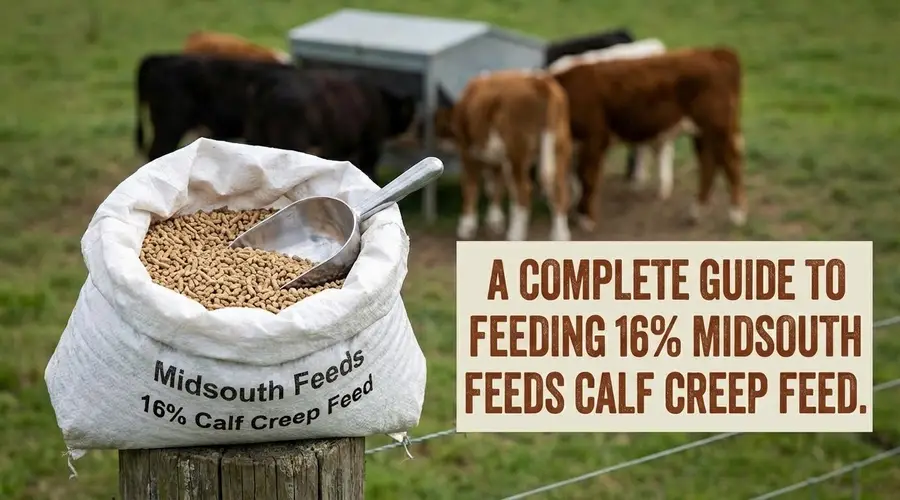
Calves that should be gaining fast often fall behind for one simple reason: milk alone isn’t enough after a certain point. By the time a calf is a few months old, its growth potential starts outpacing what the cow can supply. That gap shows up later as lighter weaning weights and lost profit.
This is where 16% Calf Creep Feed changes the outcome. When used correctly, it fills the nutritional gap, supports rumen development, and pushes consistent weight gain without stressing the cow.
This guide breaks down exactly how to use it, when it works best, and what real-world results you can expect.
What Is 16% Calf Creep Feed and Why Does It Matter?
16% Calf Creep Feed is a specialized high-protein feed designed for nursing calves, typically containing around 16% crude protein along with energy, vitamins, and minerals.
Unlike general feed for farm animals, creep feed is formulated specifically to:
- Support early rumen development
- Increase daily weight gain before weaning
- Reduce nutritional pressure on the cow
- Prepare calves for smoother weaning transition
Dr. Rick Rasby, Beef Nutrition Specialist at the University of Nebraska–Lincoln, explains:
“Creep feeding is most effective when forage quality declines or milk production drops. It allows calves to maintain growth without relying entirely on the dam.”
In practical terms, it helps you capture growth that would otherwise be lost.
When Should You Start Feeding Calves Creep Feed?

Timing matters more than most producers realize.
Start at the Right Age
Most calves benefit from creep feeding starting at:
- 60 to 90 days of age
At this stage:
- Milk production from the cow begins to decline
- Calves become more curious and willing to try solid feed
- Rumen development accelerates
Ideal Situations for Creep Feeding
You’ll see the best results when:
- Pasture quality is low or declining
- Calves are born in late season or drought conditions
- You want to maximize weaning weights for market
According to research from Oklahoma State University, creep-fed calves can gain 0.3 to 0.5 pounds more per day compared to non-creep-fed calves under limited forage conditions.
What’s Inside a High-Quality 16% Calf Creep Feed?
Not all feeds are equal. A well-formulated high protein cattle feed like this typically includes:
Key Nutritional Components
- 16% Crude Protein
Supports muscle development and tissue growth - Digestible Energy Sources
Often from grains like corn or barley - Fiber Content
Helps rumen function and prevents digestive upset - Minerals & Vitamins
Especially calcium, phosphorus, Vitamin A, D, and E - Palatability Enhancers
Encourages consistent intake
Dr. Jane Parish, Beef Cattle Specialist at Mississippi State University, notes:
“Palatability is critical. If calves don’t consume the feed consistently, even the best formulation won’t deliver results.”
How Much Creep Feed Should Calves Eat?
This is where many producers either overfeed or underfeed.
Typical Intake Guidelines
- Start: 1–2 lbs per calf per day
- Gradually increase to: 3–6 lbs per day
Key Rule
Let calves self-regulate intake, but monitor closely.
Too much intake can:
- Increase feed costs unnecessarily
- Lead to excessive fat deposition
Too little intake:
- Limits growth potential
Practical Tip
Use a creep feeder that:
- Allows calves only (no cows)
- Keeps feed dry and fresh
- Controls overconsumption
Does Creep Feeding Actually Pay Off?
Short answer: yes, but only when done strategically.
Proven Benefits
- Heavier weaning weights (often +30 to 60 lbs)
- Better feed efficiency post-weaning
- Reduced stress during weaning transition
A study from Kansas State University found that creep-fed calves showed improved post-weaning performance, especially when forage was limited.
When It May Not Pay
- When pasture quality is already high
- When feed costs exceed weight gain value
- When calves overconsume low-quality creep feed
This is why feed quality matters. Reviewing product-specific formulations like those from Midsouth Feeds can help ensure the right nutrient balance.
How to Get the Best Results from 16% Calf Creep Feed
Success isn’t just about feeding. It’s about management.
1. Place Feeders Strategically
- Near water or loafing areas
- Where calves naturally gather
2. Keep Feed Fresh
- Replace old or spoiled feed
- Protect from moisture
3. Monitor Intake Weekly
- Adjust based on calf growth and pasture conditions
4. Avoid Sudden Changes
- Gradually introduce feed
- Prevent digestive upset
5. Pair with Good Management
Even the best feed won’t fix:
- Poor genetics
- Parasite issues
- Low-quality pasture
How Does 16% Compare to 12% Steer Feed?
Many producers confuse these two.
Key Difference
- 16% Calf Creep Feed → Designed for young, growing calves
- 12% Steer Feed for cattle → Designed for older animals in finishing or maintenance phases
Protein needs are higher in early growth stages. Using a lower protein feed too early can limit muscle development.
Common Questions Producers Ask
How much creep feed should a calf eat?
There’s no one‑size‑fits‑all number, but producers should watch calf appetite and body condition. Start slow and adjust as they grow. Research shows calves gaining 30–60 extra pounds through creep feeding is typical when introduced and managed correctly.
Does 16% creep feed reduce stress at weaning?
Yes. Calves familiar with solid feed adjust quicker at weaning, which can translate into better post‑weaning performance and fewer setbacks than calves fed only milk and pasture.
Is creep feeding with 16% protein profitable?
Profitability depends on feed costs versus calf weight value. Economic studies show creep feeding can pay off when feed is cost‑effective and calves get heavier at weaning. Higher feed prices or low calf markets can change the equation.
Where can I find reliable feed sources?
Working with trusted cattle feed dealers near me ensures consistent quality and supply. If you’re scaling operations, you might even consider opportunities to become an animal feed dealer to control your input chain.
Real-World Insight: What Experienced Producers Do Differently
Producers who consistently get top results with creep feeding focus on:
- Feed quality over cheapest option
- Timing over routine feeding
- Monitoring over assumptions
They treat creep feeding as a precision tool, not a default practice.
Practical Tips That Make Feeding 16% Calf Creep Feed Easier
- Choose the right feeder location. Place near watering and shade to attract calves.
- Keep feed fresh and dry. Moisture leads to spoilage and lowers intake.
- Watch herd health. Healthy calves eat better; treat illness swiftly. — Dr. Sarah Michaels, DVM, Ruminant Nutrition Specialist.
Final Insight
Feeding 16% Calf Creep Feed is not guesswork. When you start at the right age, balance it with pasture and water, and match your goals to market conditions, it can push weaning weights up and ease the transition to later rations. Done well, creep feeding becomes a tool that works with your herd’s biology, not against it — and that’s where real performance gains start.
If you want help evaluating your specific herd and forage situation, talk to your local extension agent or feed specialist. They can help you tailor a creep feeding strategy that protects your margins and grows stronger calves.