 Dogs & Cats
 Cattle
 Equine
 Poultry
 Swine
Swine Goats & Sheep
 Game Bird
 Gamecock
 Deer & Wildlife
 Fish & Pond
 Rabbit
 Specialty
 Ingredients & Bulk
 Special Order

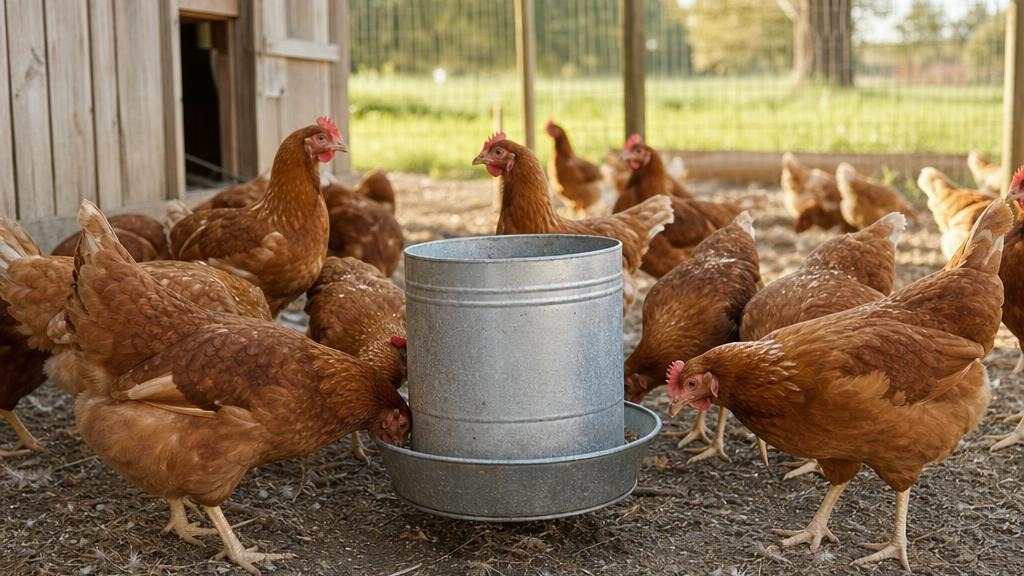
The first egg feels like a starting gun, but a pullet's move into the laying flock is better treated as a transition than a single calendar date. Young birds are still growing as their reproductive system matures. Keeping them on chick starter too long, moving them to a high-calcium ration too early, or letting scratch and treats replace balanced feed can all make the handoff less orderly.
A practical plan uses three clues together: age, physical development, and the beginning of egg production. Breed and strain matter, so there is no universal birthday when every pullet should change feed. Watch the flock in front of you and keep the complete ration at the center of the program.
Why Grower and Layer Feeds Are Different
Starter and grower feeds are designed for developing birds. Layer feed is formulated for hens producing eggs and contains substantially more calcium to support shell formation. That added calcium serves a purpose once lay begins, but it is not intended as the everyday ration for young chicks.
The names on bags vary by manufacturer: starter, starter-grower, developer, and layer are common. Read the intended life stage and feeding directions on the tag instead of relying on the product name alone. A complete feed already balances energy, protein, amino acids, vitamins, and minerals for the stage printed on the label.
Use Readiness Clues, Not Just the Calendar
Many laying breeds approach maturity around the late-teen weeks, but individuals and breeds develop at different rates. These signs help show that pullets are nearing lay:
- Combs and wattles become larger and redder.
- The birds approach their expected mature size and body weight.
- They begin investigating nest boxes and may show a crouching response.
- The first eggs appear in the group.
None of these clues alone needs to trigger a same-day feed change. If the flock is uniform and near the age specified on the feed label, the appearance of the first eggs is a sensible time to begin moving toward layer feed. In a mixed-age flock, separate feeding is often cleaner because chicks and mature hens have different needs.
Watch Flock Uniformity
Stand back and compare the pullets. If a few are much smaller, determine whether they are being pushed away from feeders or drinkers. Adding space or another station may help more than changing the formula. Commercial guidance often uses sample weights to follow pullet development; a backyard keeper can apply the same idea by weighing a small, representative group regularly and comparing progress over time.
Make the Feed Change Gradually
A gradual change keeps the ration familiar and gives you time to observe intake. Unless the label directs otherwise, blend the current grower feed with the new layer feed over several days:
- First step: mostly grower with a smaller portion of layer feed.
- Middle step: roughly equal portions once birds are eating normally.
- Final step: mostly layer, then the complete layer ration.
Use clean scoops and mix evenly so birds cannot sort the ration. Do not pour fresh feed over a deep bed of stale fines. Let feeders empty to a safe level, brush out damp or caked material, and refill with fresh feed. The poultry feed page is a useful place to compare life-stage labels and feed forms before you shop.
Keep Extras in Their Proper Place
Scratch grain, kitchen scraps, and treats can dilute a carefully balanced ration when they become a large part of intake. Offer extras sparingly, and never use them to replace the complete feed. Pullets also need constant access to clean water; a bird cannot maintain feed intake or begin laying normally when drinkers are empty, hot, or dirty.
For laying hens, a calcium source such as oyster shell may be offered separately so birds can consume it as needed. Keep it in its own small feeder rather than guessing and stirring extra calcium into a complete ration. Insoluble grit is a different material with a different job: it helps birds grind foods other than formulated feed. Neither product fixes an unbalanced diet.
Reduce Stress at the Same Time
Moving pullets, changing their ration, opening nest boxes, and combining flocks all at once creates unnecessary disruption. Stage changes when possible. Provide adequate feeder and water space, keep the coop dry and well ventilated, and check for bullying after birds are moved. A sudden intake drop deserves attention even if the ration itself is appropriate.
A Straightforward Transition Checklist
- Confirm the feed is labeled for the birds' current life stage.
- Track age, growth, flock uniformity, and first eggs together.
- Keep different ages on feeds suited to their own stage when possible.
- Blend feeds over several days and monitor normal eating and droppings.
- Keep water clean and treats limited.
- Offer supplemental calcium separately after laying begins.
The best transition is almost uneventful: pullets continue eating, finish growing, and move into production on a ration built for laying hens. For help comparing appropriate starter-grower and layer options available in your area, ask a local feed professional or visit the dealer locator.