 Dogs & Cats
 Cattle
 Equine
 Poultry
 Swine
Swine Goats & Sheep
 Game Bird
 Gamecock
 Deer & Wildlife
 Fish & Pond
 Rabbit
 Specialty
 Ingredients & Bulk
 Special Order

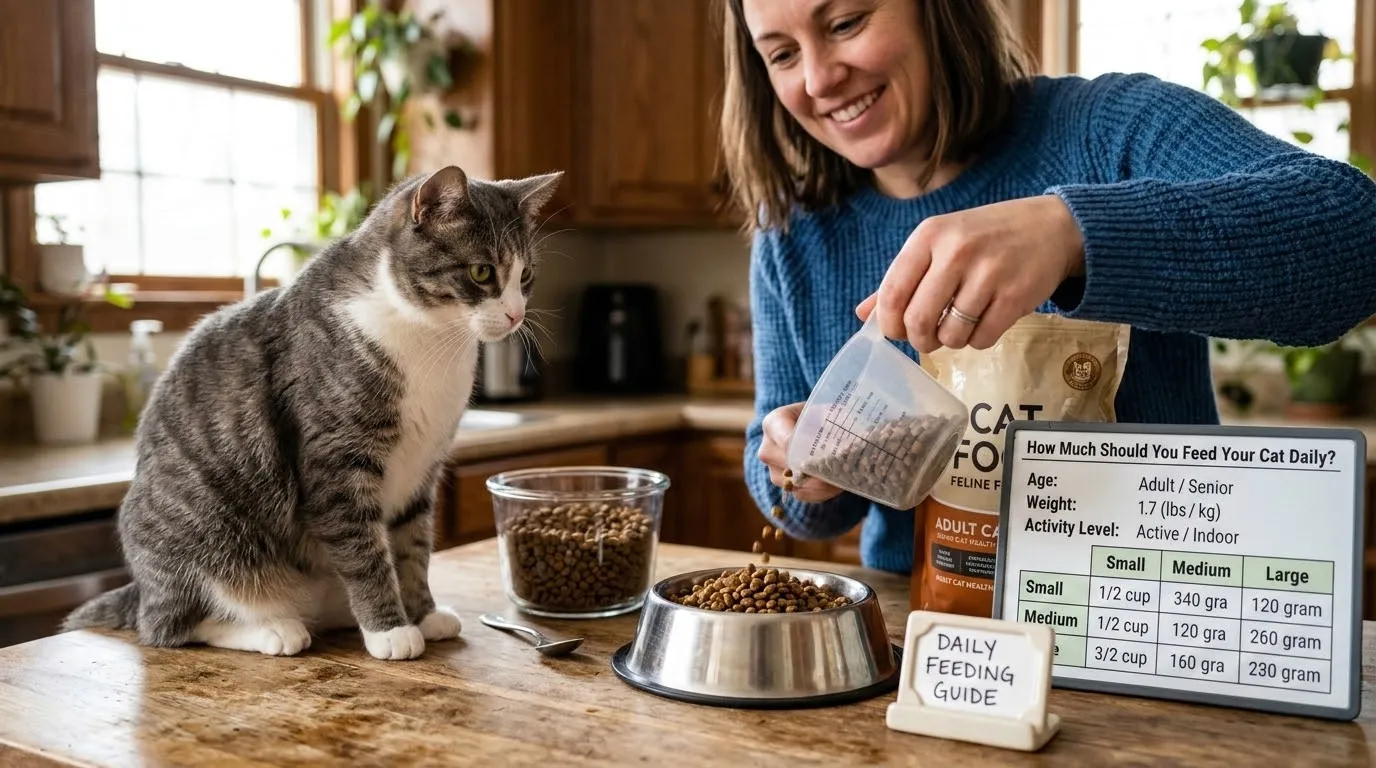
Most cat owners are either underfeeding without realizing it or giving far more food than their cat actually needs. The result shows up slowly: weight gain, low energy, digestive issues, begging behavior, or muscle loss in older cats.
A healthy adult cat usually needs around 20 to 25 calories per pound of body weight per day, but that number changes based on age, activity level, whether the cat is neutered, and the type of food you serve. A highly active young cat burns calories differently than an indoor senior cat sleeping 18 hours a day.
Protein matters just as much as calories. Cats are obligate carnivores. Their bodies are built to use animal protein as the primary energy source, not carbohydrates. Feeding the right amount without enough quality protein can still leave a cat nutritionally short.
That’s why simply filling the bowl once a day is rarely the best approach.
Why Feeding the Right Amount Matters More Than Most Owners Think
According to the World Small Animal Veterinary Association, pet obesity has become one of the most common nutrition-related health problems in cats. Extra weight increases the risk of diabetes, arthritis, urinary issues, and heart strain.
On the other side, underfeeding or feeding low-protein diets can lead to muscle loss, especially in aging cats.
Dr. Lisa Pierson, DVM, a veterinarian known for feline nutrition research, has repeatedly emphasized that cats thrive on moisture-rich, protein-focused diets because their metabolism is designed around animal prey, not high-carb fillers.
The problem is that many feeding charts on pet food bags are too general. They do not account for:
- Indoor vs outdoor lifestyle
- Breed differences
- Activity level
- Wet food vs dry food
- Metabolism changes after neutering
- Muscle maintenance in senior cats
A feeding routine should fit the cat, not just the package instructions.
How Many Calories Does a Cat Need Per Day?
Here is a practical starting point for healthy adult cats:
| Cat Weight | Average Daily Calories |
| 5 lbs | 100–140 calories |
| 8 lbs | 160–200 calories |
| 10 lbs | 200–250 calories |
| 12 lbs | 240–300 calories |
| 15 lbs | 300–375 calories |
Most healthy 10 to 11-pound indoor cats need roughly 200 to 290 calories daily depending on activity and body condition.
Indoor Cats Usually Need Less Food
Indoor cats burn fewer calories. If they spend most of the day sleeping or lounging near windows, overfeeding becomes easy.
Signs your indoor cat may be eating too much:
- Belly hanging lower than normal
- Trouble jumping
- Sleeping more than usual
- Heavy breathing after play
- Constant grazing from a full food bowl
Free-feeding dry food all day is one of the biggest reasons indoor cats gain excess weight.
How Much Protein Does a Cat Need Daily?
This is the part many feeding guides skip.
Cats require significantly more protein than humans or dogs because their bodies constantly break down amino acids for energy.
The Association of American Feed Control Officials recommends adult cat food contain a minimum of 26% protein on a dry matter basis, while kittens and pregnant cats need at least 30%.
But many feline nutrition experts believe optimal protein intake is often higher than the minimum standard.
Research summarized by PetMD notes that adult cats fed diets below roughly 40% protein may gradually lose lean muscle mass over time.
Daily Protein Needs by Body Weight
A healthy adult cat generally needs around:
- 5 to 6 grams of protein per kilogram of body weight daily
- Or about 2.3 to 2.7 grams per pound
Example:
- A 10-pound cat may require roughly 23–27 grams of protein daily
Protein quality matters too. Animal-based proteins like chicken, turkey, salmon, and beef provide amino acids cats need, including taurine.
Wet Food vs Dry Food: Which Feeding Style Works Better?
This debate never really ends among cat owners.
The reality is simpler: the best diet is one your cat consistently eats, digests well, and maintains healthy weight on.
Wet Food Benefits
Wet food helps increase moisture intake, which supports urinary and kidney health.
Many veterinarians prefer at least partial wet feeding because cats naturally have a low thirst drive.
Benefits include:
- Higher moisture content
- Better hydration
- Often lower carbohydrates
- Easier portion control
Dry Food Benefits
Dry food is convenient, affordable, and stores easily.
It can work well when:
- Portions are measured carefully
- Protein levels are appropriate
- Cats drink enough water
A mixed feeding routine often works best for busy households.
For example:
- Wet food in the morning
- Measured dry food later in the day
That gives hydration benefits while keeping feeding practical.
How Often Should You Feed Your Cat?
Most healthy adult cats do best with:
- 2 to 3 smaller meals daily
Cats naturally prefer multiple small meals because their wild feeding behavior involves catching several prey animals throughout the day.
Feeding Schedule by Age
Kittens
- 3 to 4 meals daily
- Higher calories and protein needed for growth
Adult Cats
- 2 meals daily minimum
- Consistent timing helps digestion
Senior Cats
- Smaller frequent meals may help appetite and digestion
- Monitor muscle loss closely
How Do You Know If You’re Feeding Too Much or Too Little?
Body condition tells the truth faster than food labels.
Healthy Weight Signs
You should:
- Feel ribs without pressing hard
- See a visible waist from above
- Notice an abdominal tuck from the side
Signs of Overfeeding
- Rounded belly
- Fat pads near hips
- Reduced activity
- Constant overeating
Signs of Underfeeding
- Visible ribs or spine
- Muscle loss near hips
- Low energy
- Poor coat condition
The World Small Animal Veterinary Association recommends regular body condition scoring because weight alone does not always show nutritional health.
Common Cat Feeding Mistakes Owners Make
Guessing Portions Instead of Measuring
Eyeballing kibble almost always leads to overfeeding.
Using a measuring cup or kitchen scale makes a major difference.
Ignoring Treat Calories
Treats should stay under 10% of total daily calories.
Switching Foods Too Fast
Sudden food changes can trigger vomiting or diarrhea.
Transition gradually over 7 to 10 days.
Choosing Food Based Only on Marketing
Words like natural or premium do not automatically mean nutritionally balanced.
Look for foods meeting Association of American Feed Control Officials nutritional standards.
What Should You Look for in Good Cat Food?
A quality cat food should include:
- Named animal protein source first
- Taurine
- Balanced vitamins and minerals
- Clear feeding guidelines
- Appropriate calorie information
The World Small Animal Veterinary Association also encourages pet owners to choose brands with strong nutritional research and quality control practices.
If you’ve recently searched terms like “animal feed dealers near me” or compared different types of pet food, focus less on flashy packaging and more on nutritional transparency.
Frequently Asked Questions
Can I Leave Dry Food Out All Day?
You can, but it increases the risk of overeating in many indoor cats. Scheduled meals usually help maintain healthier weight.
Should Cats Eat More Protein as They Age?
Yes. Senior cats often need higher-quality protein to maintain muscle mass.
Is Wet Food Better Than Dry Food?
Neither is automatically better. What matters most is balanced nutrition, hydration, protein quality, and portion control.
How Much Water Should a Cat Drink Daily?
Cats generally need around 3.5–4.5 ounces of water per 5 pounds of body weight daily, including moisture from food.
How Do I Transition My Cat to a New Food?
Mix increasing amounts of the new food with the old food over 7–10 days to reduce stomach upset.
The Feeding Routine Most Cats Actually Thrive On
The healthiest cats usually are not the ones eating the fanciest food. They are the ones eating consistent portions, getting enough protein, maintaining lean muscle, and staying hydrated.
That means:
- Measured meals
- Protein-focused nutrition
- Regular weight checks
- Adjusting portions as activity changes
A cat’s nutritional needs also change over time. A kitten, an overweight indoor adult, and a 12-year-old senior cat should never be fed exactly the same way.
For pet owners looking for reliable pet food guidance and trusted feeding support, Mid South Feeds continues to be a helpful resource for quality feed solutions, practical nutrition advice, and products designed for healthier pets and animals.
Sources
- WSAVA Global Nutrition Guidelines
- AAFCO Pet Food Nutrient Profiles
- FDA Complete and Balanced Pet Food Guide
- Healthline Cat Feeding Guide
- PetMD High Protein Cat Food Research