 Dogs & Cats
 Cattle
 Equine
 Poultry
 Swine
Swine Goats & Sheep
 Game Bird
 Gamecock
 Deer & Wildlife
 Fish & Pond
 Rabbit
 Specialty
 Ingredients & Bulk
 Special Order

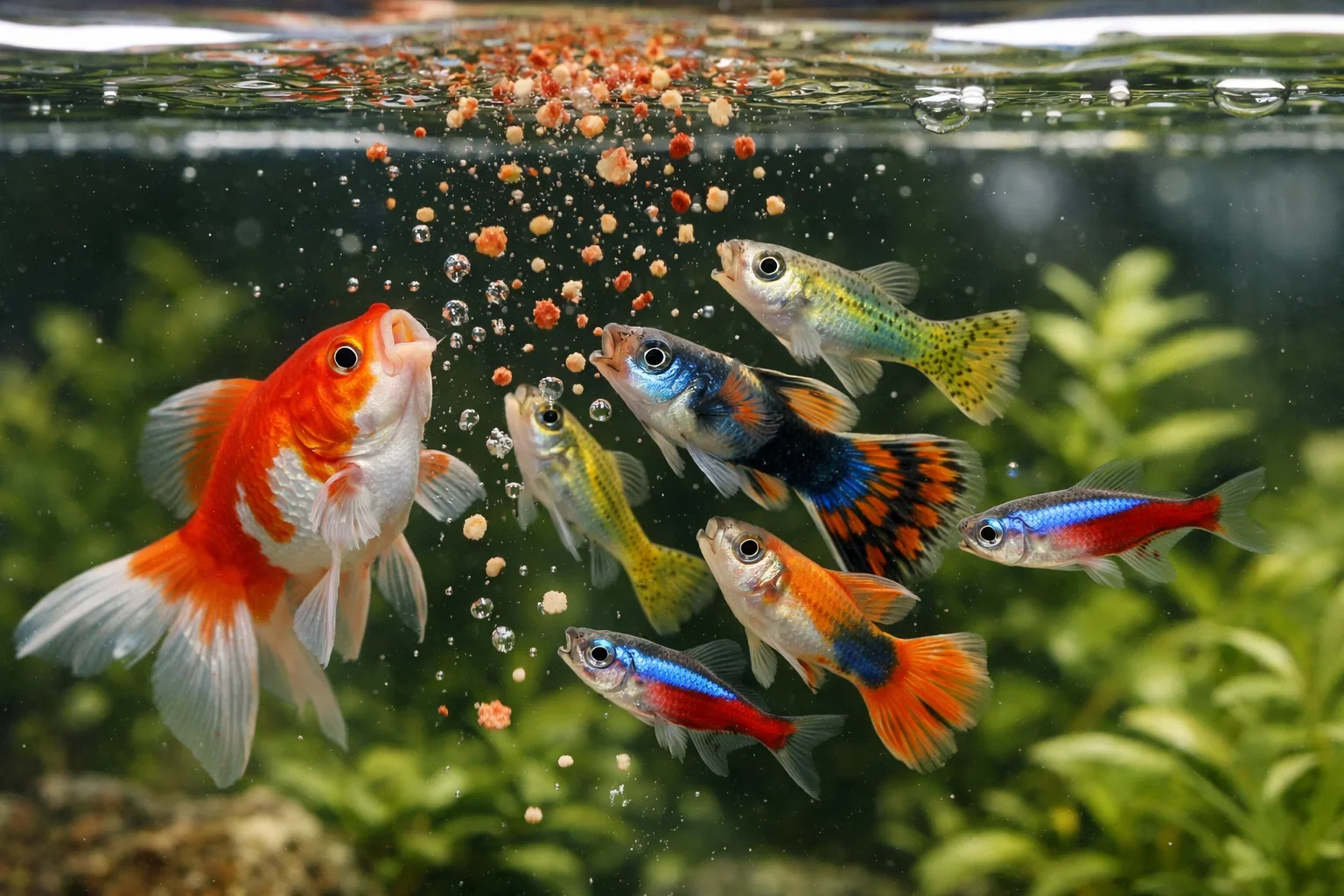
Feeding aquarium fish sounds simple: drop some flakes in the tank and you’re done, right? Not quite. Overfeeding is the number one mistake beginner fishkeepers make, and underfeeding the wrong food type is a close second. If you’ve ever wondered how to feed aquarium fish correctly, how much, how often, and what type this guide gives you every answer you need backed by real aquarium science.
Whether you’re raising ornamental fish, pond fish, or a mixed community tank, understanding proper fish nutrition is the foundation of a clean, healthy, and thriving aquatic environment.
Why Proper Fish Feeding Matters More Than You Think
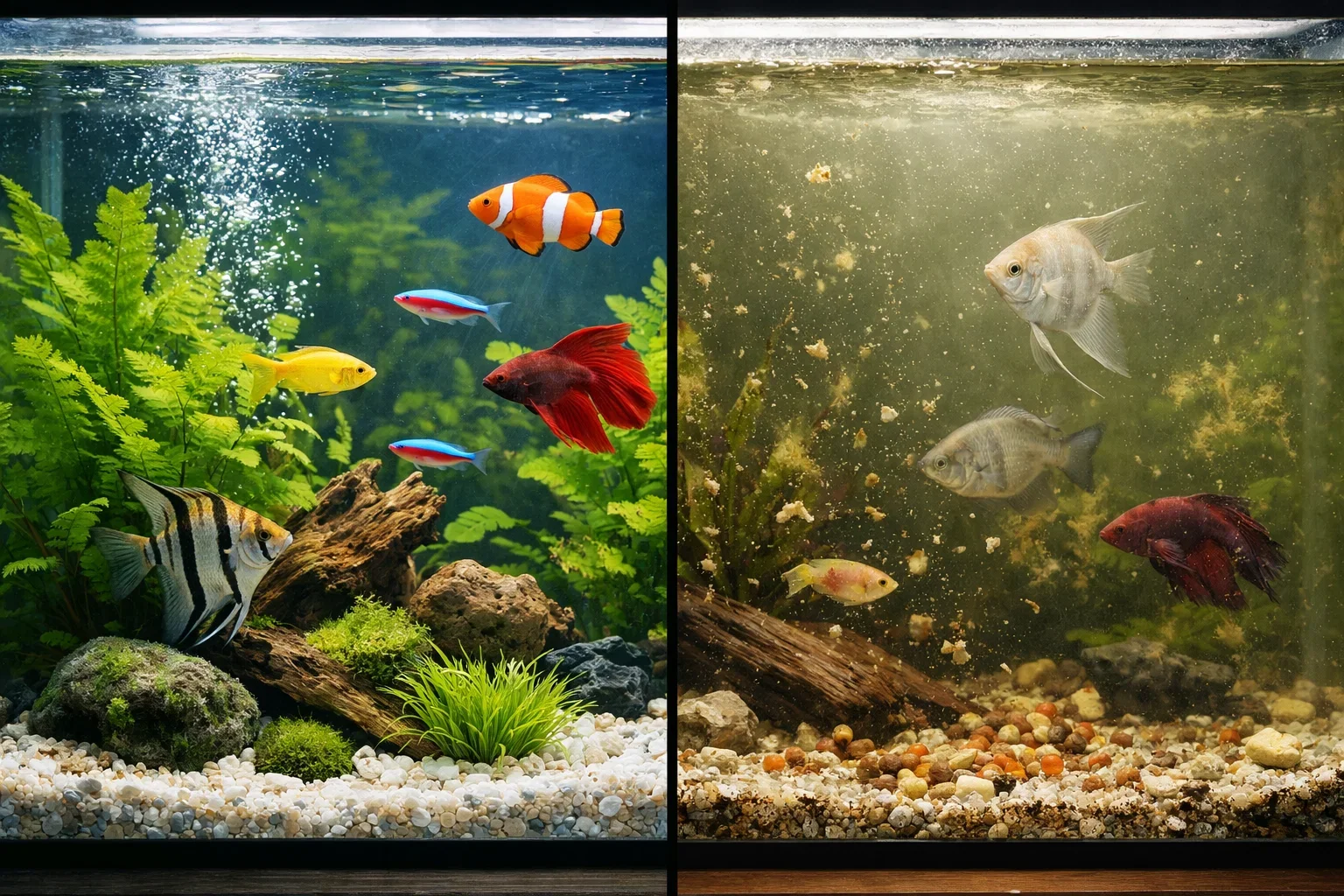
Most fish deaths in home aquariums aren’t caused by disease, they’re caused by poor water quality triggered by overfeeding. Uneaten food sinks to the bottom, decomposes, spikes ammonia and nitrite levels, and creates a toxic environment for your fish.
On the flip side, underfeeding or using nutritionally poor animal feed not formulated for fish results in stunted growth, faded coloring, weakened immune systems, and shortened lifespans.
The way you feed your fish directly impacts:
- Water quality and tank cleanliness
- Fish growth rate and coloration
- Immune function and disease resistance
- Breeding behavior and reproductive health
Getting it right isn’t difficult, it just requires understanding a few key principles.
Types of Fish Food for Aquarium Fish
Before you can feed your fish correctly, you need to know what to feed them. The types of fish food for aquarium use fall into several broad categories, and the best choice always depends on the species you’re keeping.
- Flake Food : The most common form of aquarium food. Ideal for small community fish like tetras, guppies, danios, and ornamental species such as peacock fish. Flakes float at the surface and are best consumed quickly before they dissolve and cloud the water.
- Pellets (Floating & Sinking) : Pellets are more nutritionally dense than flakes and hold their structure longer in water. Floating pellets are great for surface feeders; sinking pellets serve bottom-dwellers like catfish and loaches.
- Freeze-Dried and Frozen Foods : Bloodworms, brine shrimp, and daphnia are excellent high-protein treats that mimic natural prey. These are particularly useful for carnivorous and omnivorous species.
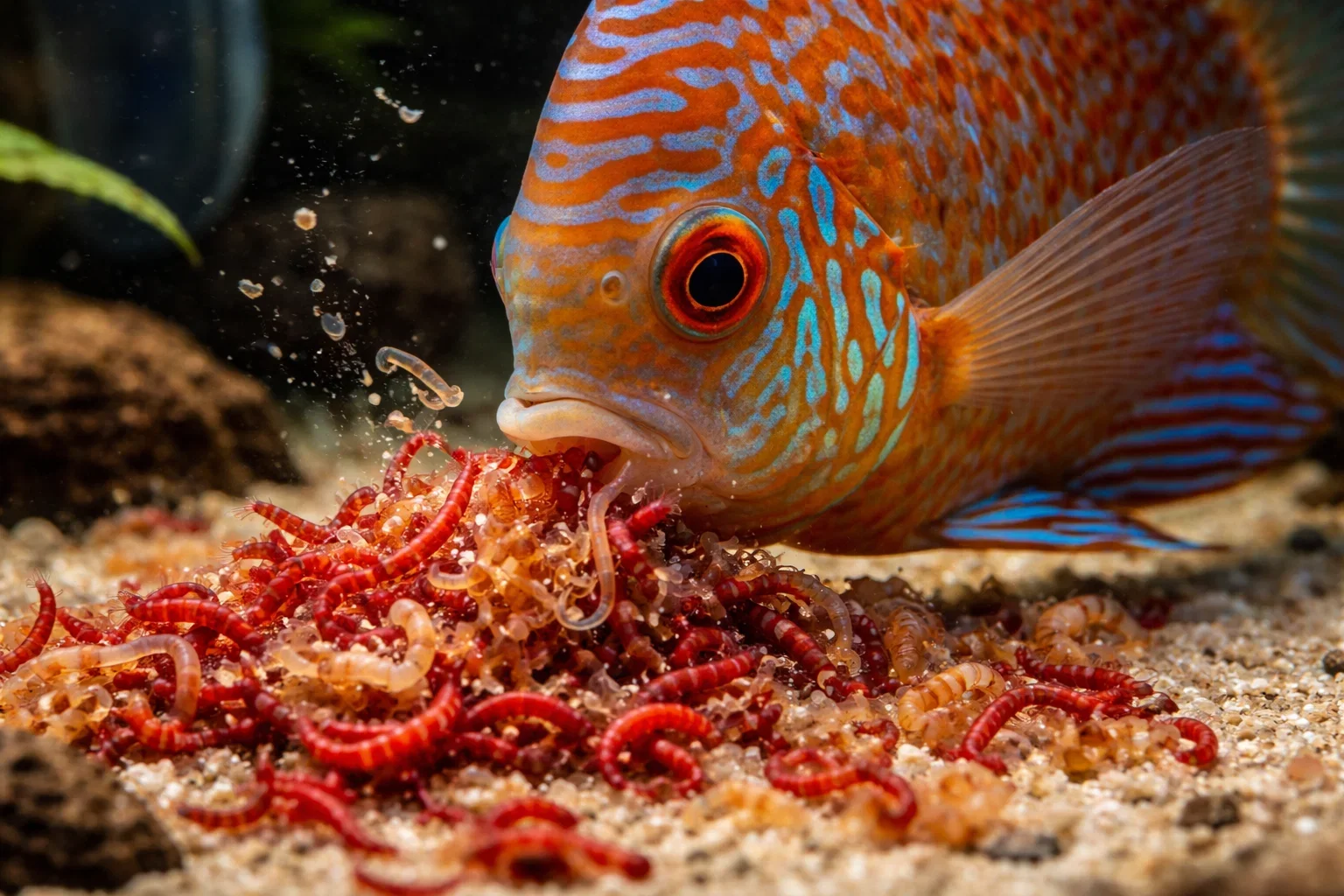
- Live Foods : Live brine shrimp, blackworms, and micro-worms stimulate natural hunting behavior and are among the best conditioning foods for breeding fish.
- Vegetable-Based and Herbivore Foods : Algae wafers, spirulina-based pellets, and blanched vegetables like zucchini or spinach serve the dietary needs of herbivorous species such as plecos, goldfish, and cichlids.
- Specialty Fish Feed : For pond fish, catfish, fingerlings, and farm fish, commercial fish feed formulated for specific species and life stages delivers precise nutrition that generic aquarium food simply cannot match.
How Many Times Should I Feed My Fish?
One of the most searched questions in fishkeeping is: how many times should I feed my fish? The answer varies by species, age, and tank type but here are the universal rules every fish owner should follow.
- For most adult aquarium fish: Feed once or twice daily. Offer only what your fish can consume in 2–3 minutes. Remove any uneaten food immediately with a small net or turkey baster.
- For young fish and fry: Feed 3–4 times daily in very small portions. Baby fish have fast metabolisms and need frequent nourishment to grow properly.
- For slow-metabolism fish (like goldfish, oscars, or large cichlids): Once daily feeding or even every other day is often sufficient and keeps water quality higher.
- For pond fish in winter: Fish metabolism slows dramatically in cold water. Reduce feeding frequency significantly and switch to a cold-weather formula that is easier to digest at low temperatures.
| Fish Type | Feeding Frequency | Recommended Food Type |
| Small community fish (tetras, guppies) | 1–2 times daily | Flakes or micro-pellets |
| Cichlids and larger fish | Once daily | Floating or sinking pellets |
| Bottom feeders (catfish, loaches) | Once daily (evening) | Sinking pellets, wafers |
| Herbivores (goldfish, plecos) | 1–2 times daily | Algae wafers, vegetable pellets |
| Fry and juvenile fish | 3–4 times daily | Finely crushed flakes, live food |
| Pond fish (warm season) | 1–2 times daily | Floating pond pellets |
| Pond fish (cold season) | Every 2–3 days or stop | Low-protein cold-water formula |
The Best Way to Feed Aquarium Fish
The best way to feed aquarium fish isn’t just about dropping food in the tank. It’s a deliberate, consistent routine that protects water quality while ensuring every fish gets its fair share.
- Step 1:
Choose the right food for your species. Research your fish’s natural diet. Carnivores need high-protein food. Herbivores need plant-based nutrition. Omnivores need a balanced mix of both.
- Step 2
Measure the portion carefully. A good rule of thumb: feed an amount roughly equal to the size of your fish’s eye. For a community tank, feed just enough that all fish finish it within 2–3 minutes with nothing left sinking.
- Step 3
Feed at consistent times. Fish are creatures of habit. Feeding at the same time each day reduces stress and keeps fish healthier. Morning and early evening work well for most species.
- Step 4
Watch your fish during feeding. Observation during feeding tells you a great deal about your fish’s health. A fish that refuses food for more than two days may be sick and needs closer attention.
- Step 5
Fast your fish once a week. A once-weekly fasting day gives the digestive system a break and dramatically improves water quality by reducing waste output. This is a practice used by experienced aquarists worldwide.
Step 6
Remove uneaten food promptly. Any food not consumed within 3–5 minutes should be removed immediately. Decomposing food is the primary cause of ammonia spikes in home aquariums.
Common Feeding Mistakes That Harm Your Fish
Even experienced fish owners make these errors. Avoiding them is the fastest way to improve your tank’s health:
| Common Mistake | What It Causes | The Fix |
| Overfeeding | Ammonia spikes, cloudy water, fish illness | Feed only what’s eaten in 2–3 minutes |
| Using low-quality food | Poor growth, faded colors, weak immunity | Use species-specific, nutritionally complete fish feed |
| Feeding only one food type | Nutritional deficiencies | Rotate between pellets, flakes, and treats |
| Skipping the fasting day | Digestive issues, excess waste | Fast once per week |
| Feeding cold-water pond fish warm-weather food | Digestive stress, fish deaths | Switch to cold-water formula in winter |
| Ignoring bottom feeders | Starvation of shy or nocturnal species | Use sinking pellets fed at night |
What to Look for in Quality Fish Feed
Not all fish feed is created equal. When selecting food for your aquarium or pond fish, look for these quality indicators on the label:
- Named protein sources (e.g., fish meal, shrimp meal) listed as the first ingredients not generic “meat by-products”
- Species-appropriate protein percentage carnivores need 40%+, herbivores need less
- Added vitamins particularly Vitamin C, which fish cannot produce on their own
- No artificial fillers like excessive corn starch or soy in carnivore formulas
- Formulated for life stage fingerling, juvenile, and adult fish have very different nutritional needs
This is why sourcing animal feed from a manufacturer that understands aquatic nutrition at a species and life-stage level makes such a meaningful difference in your fish’s long-term health.
The Right Fish Feed for Every Setup
Once you know how to feed your fish correctly, the next decision is equally important choosing a fish feed that’s actually built for the job. Mid South Feeds offers a focused lineup of aquatic nutrition products designed for real-world pond and farm fish scenarios:
- 36% Fingerling Fish Food: A complete diet engineered for small and starter warm-water pond fish. The elevated 36% protein level supports rapid, healthy growth during the most critical early life stage ideal for anyone raising fish from fingerling size in a warm-water pond environment.
- 32% Catfish Floater: A floating formula specifically developed for warm-water species like catfish. The floating design makes it easy to observe how much your fish are eating and remove any uneaten portions before they affect water quality.
- Farm Pond Floater: Another surface-feeding option for warm-water pond environments. This formula supports active, growing pond fish during peak feeding seasons and keeps feeding natural and easy to manage.
- Fish Food Pellets: Formulated specifically to supplement farm pond fish through the winter months when natural food sources drop off and fish metabolism slows. This is the kind of seasonal-specific nutrition most generic aquarium brands simply don’t offer.
Every one of these products is made with premium ingredients to deliver the balanced nutrition your fish need not just to survive, but to grow, perform, and thrive across every season.
Conclusion
Getting fish nutrition right comes down to three things: the right food, the right amount, and the right timing. Master those three, and you’ll have a cleaner tank, healthier fish, and far fewer problems to troubleshoot.
That’s the approach Mid South Feeds is built on. With a southern legacy of quality and a science-backed formulation philosophy, Mid South Feeds delivers animal nutrition you can trust from fingerlings in a farm pond to the catfish in your backyard water feature.
Don’t settle for generic when species-specific nutrition exists. Find an animal dealer near you through the Mid South Feeds dealer locator and get the right feed into the right hands yours.
Better feed. Healthier fish. That’s the Mid South Feeds standard.
FAQs
1. Why is proper feeding important for aquarium fish?
Proper feeding is essential because it directly affects water quality, fish health, and tank stability. Overfeeding leads to ammonia spikes and dirty water, while underfeeding causes poor growth and weak immunity.
2. What types of food can aquarium fish eat?
Aquarium fish can eat flakes, pellets, frozen or live foods, and vegetable-based foods depending on their species. Each type provides different nutrition levels suited for surface, bottom, or carnivorous feeders.
3. How many times a day should aquarium fish be fed?
Most adult aquarium fish should be fed once or twice daily in small amounts. Fry and juvenile fish need more frequent feeding, usually 3–4 times a day, due to their faster metabolism.
4. What is the correct portion size for fish feeding?
A good portion size is what your fish can finish within 2–3 minutes without leftover food sinking. Overfeeding should be avoided as it quickly damages water quality.
5. What happens if you overfeed aquarium fish?
Overfeeding causes uneaten food to decompose, leading to ammonia buildup and cloudy water. This creates stress, disease, and can even be fatal for fish if not controlled.