 Dogs & Cats
 Cattle
 Equine
 Poultry
 Swine
Swine Goats & Sheep
 Game Bird
 Gamecock
 Deer & Wildlife
 Fish & Pond
 Rabbit
 Specialty
 Ingredients & Bulk
 Special Order
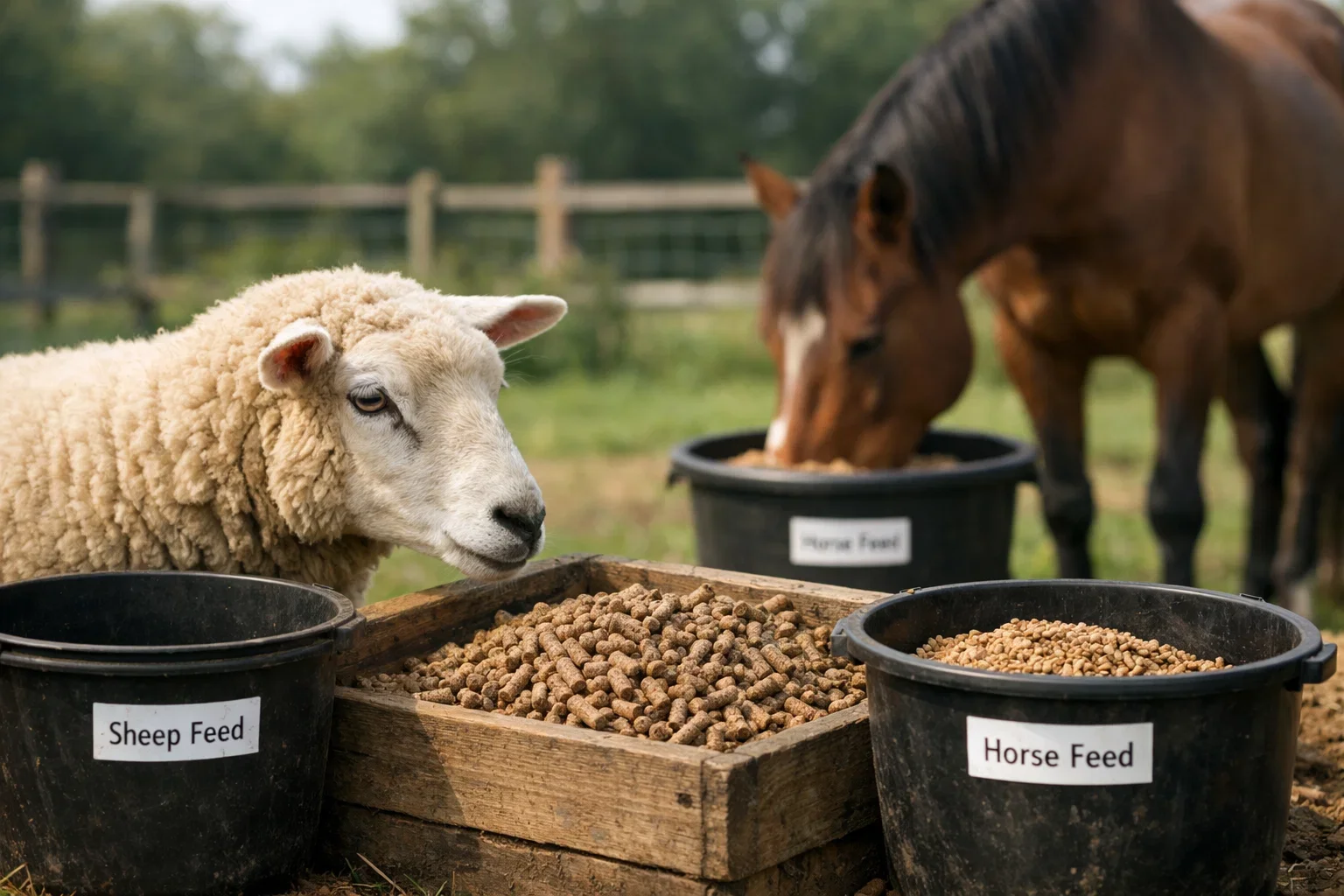
When you keep both sheep and horses on the same farm, you must have at one point asked yourself, can sheep eat horse food? It appears to be a simple question – both of the animals are herbivores, grazing in the same fields, and sometimes they even nourish on one field. With bagged, formulated feeds, however, it is a much more complex and even risky question than is generally understood by the livestock owner.
This resource will take you through the major distinctions between sheep food and horse food, what sheep eat and should not eat, and why the confusion between these two feeding patterns may be disastrous to your sheep.
Understanding What Sheep Actually Need to Eat
In order to respond to the question on whether horse feed is safe to sheep, we must first grasp what is needed by sheep as a nutrition. Sheep are tiny ruminants having four-chambered stomachs. Their digestive system is very effective in the extraction of nutrients in roughage such as grasses, legumes, hays (such as alfalfa or clover) and browse plants. They should also be provided with appropriate proportions of the minerals, protein, and energy, but most importantly, some of the minerals that are beneficial or even neutral when it comes to horses are toxic to sheep.
So, what can sheep eat? Generally, a nutritious sheep meal contains:
- Good pasture grass or grass hay.
- Legume hays e.g. alfalfa or clover (in moderation)
- Grains such as corn, oats and barley (in moderated quantities)
- Sheep specific mineral supplements.
- Clean and fresh water always.
Sheep are also reported to be grazers on an extremely large range of plants in the wild, although certain types of popular garden plants and shrubs are poisonous to them. It is equally important to know what not to give sheep as much as it is to know what to give them.
Sheep Feed vs Horse Feed: Key Differences You Must Know
On the surface, sheep feed and horse feed might appear to be similar, but they are both in either a pellet or a textured form, both include grains and forages, and are both promoted as complete feeds in herbivores. However, the differences in formulations are severe and in certain instances, life endangering to sheep.

Table 1: Sheep Feed vs Horse Feed — Nutritional and Safety Comparison
| Feature | Sheep Feed | Horse Feed |
| Copper Level | Low (5–10 ppm) | High (25–75 ppm) |
| Added Molasses | Minimal or none | Often high |
| Protein Source | Plant-based, rumen-safe | Plant-based |
| Selenium | Carefully controlled | Present, varies by region |
| Additives | Specific to sheep needs | May include equine medications |
| Safe for Sheep? | Yes | No — risk of copper toxicity |
Copper is the largest concern of all. Horses have a fairly high demand of copper in their diets and most horse feeds available commercially are designed to satisfy this requirement. Instead, sheep are highly intolerant of copper and they may build up copper in their liver with time which causes copper toxicity- a disease that is fatal.
Veterinary nutrition studies have shown sheep to develop copper toxicity at normal or low levels of copper that are regarded as normal in other livestock species. The maximum safe dose of copper in sheep is about 1525 ppm in the total diet, and the upper limit of horses is 2-4 times higher.
Can Sheep Eat Horse Feed? The Real Answer
The brief response is: no, sheep are not supposed to be fed horse food on a regular basis and even the occasional intake of horse feed can be a health hazard in a cumulative manner.
The major cause is toxicity of copper. Contrary to other animals such as horses or cattle, sheep can hardly release excess copper in the body. Rather, copper gathers in the liver during weeks and months. This accumulated copper is then discharged into the bloodstream at some point leading to a hemolytic crisis, which is a rapid demolition of red blood cells. The symptoms are jaundice, weakness, dark-colored urine and sudden death. When symptoms manifest themselves, it is usually too late to rescue the animal.

In any case, can sheep be given horse feed? Even one dose of horse food would hardly inflict instant harm in the event of a real emergency, when there is no alternative feed over a very short period. Though, this must never be a routine. Just a few weeks of giving horse food can already start increasing copper levels in the liver of a sheep to dangerous levels.
Other Risks Of Horse Feed For Sheep Include:
Huge sugar and molasses content: Numerous horse feeds and, in particular, sweet feeds and performance rations have molasses and simple sugars in large quantities. Ruminal acidosis (grain overload) affects sheep more and they do not accept high-sugar feeds as well as equines. This may lead to digestive disturbance, bloat and laminitis.
Specific horse drugs and supplements: Ionophore antibiotics like monensin or lasalocid are used in some horse feeds to enhance their feed efficiency and to prevent digestive problems in horses. Although these compounds are safe in horses and even may act beneficially in case of cattle in low amounts, they are very toxic to the sheep and they may cause cardiac damage and death.
Imbalanced mineral ratios: Copper is not the only mineral horse feeds contain; zinc, selenium and iron may also be added at equine physiological levels. Calcium to phosphorus ratios of the horse feeds can also vary with those needed by sheep to develop healthy bones and have normal reproductive functions.
What Not to Feed Sheep: A Broader Look
While the focus here is on horse feed, it’s worth understanding the broader picture of what not to feed sheep. Many well-meaning farmers accidentally poison their flocks with common foods and supplements.
Table 2: Common Foods That Are Dangerous for Sheep
| Food/Substance | Risk to Sheep | Severity |
| Horse feed (copper-rich) | Copper toxicity, liver failure | High |
| Feeds with ionophores (monensin) | Heart failure | Very High |
| Brassica plants in excess | Hemolytic anemia | Moderate–High |
| Avocado leaves or fruit | Respiratory distress, edema | High |
| Rhododendron/Azalea | Neurological symptoms, death | Very High |
| High-grain diets (sudden) | Ruminal acidosis, bloat | Moderate–High |
| Cattle mineral supplements | Copper toxicity (similar to horse feed) | High |
This list supports why species-specific feeding is of such importance. A protein additive that is good to make a healthy cattle can actually poison your sheep in the long run.
A survey carried out in the Veterinary Record revealed that copper toxicity in sheep is commonly not an event of acute and high-dose poisoning but a cumulative event which occurs due to the mineral supplements and feeds used in other animals. This implies that the threat is incremental and can pass unnoticed until it is too late by the farmers.
Safe Feeding Practices for Mixed-Species Farms
When you keep sheep and horses, it is quite possible to have the cross-feeding of the animals. The following are some realistic measures to use towards keeping your sheep safe:
Separate feeding areas: Give the feed to horses and sheep in other places where they do not have access to the rations of each other. A curious sheep, which occasionally gets into a horse feeder, can be dangerous in the long run, even.
Lock up your horse feed: Keep horse food locked up in bins or rooms. Sheep are smarter creatures than people believe them to be and they will find high-energy feeds.
Use minerals that are specific to sheep: Cattle mineral licks or horse mineral licks should never be used in sheep pastures. When giving any supplement to sheep, always look at the label and see whether it contains copper or not.
Transition feeds slowly: Any alteration on the diet of a sheep such as change in feeds between two sheep-safe feeds ought to be gradual over a span of 710 days to prevent digestive disruptions.
Consult your veterinarian: In case you suspect that a sheep has eaten horse food, then get a vet to check the liver copper levels. Liver biopsy is the best as blood tests alone might not show any liver accumulation until the crisis is near.
What to Feed Sheep Instead
The positive thing is, it is not hard to feed sheep well with the right products. Sheep would survive on quality forage. Their nutrition is based on good grass hay or pasture. In case of poor pasture quality a sheep-specific grain mixture can be used as an energy and protein supplement.
In the case of minerals, it is always important to select one that is specifically sheep labeled. These formulations maintain the level of copper at low level and maintain a sufficient amount of selenium (where it is deficient), zinc, and other trace minerals, as well. The other simple method of helping health without any risk of copper overload is salt blocks marked sheep.
Pregnant, lactating or growing sheep might require more energy and protein. In such situations, grass could be supplemented with alfalfa hay and limited amounts of grain supplements, but only under the light supervision of a veterinarian.
Final Thoughts: Can Sheep Eat Horse Feed?
Returning to the main question, can sheep feed on horse feed? The answer to this is a resounding no except on the most extreme emergency occasions. Most commercial horse feeds contain high levels of copper, which alone makes them a severe threat to sheep, and the possibility of other toxic additives only increases the danger. Instead, farmers should stick to properly formulated sheep rations or balanced goat feed that is clearly labeled as safe for sheep, since goats and sheep have more similar mineral requirements than horses.
Keeping sheep and horses together is a picturesque and convenient setup on many farms, but it requires strict discipline when it comes to feeding. Separate feed areas, careful label reading, and using only sheep-compatible supplements or properly approved goat feed will help keep your flock healthy and give you peace of mind.
As a rule, always consult a livestock veterinarian before making feed changes. Investing a few extra dollars in the right feed and a simple vet check can prevent the tragedy of losing animals due to a preventable nutritional mistake.
FAQs
1. Can sheep eat horse feed even occasionally?
Sheep should not eat horse feed, even occasionally, because copper builds up in their liver over time and can become fatal. A single small exposure may not cause immediate symptoms, but repeated access greatly increases the risk of copper toxicity. It is safest to keep sheep completely away from horse feed at all times.
2. Why is horse feed dangerous for sheep?
Horse feed contains much higher levels of copper than sheep can safely tolerate. Sheep cannot efficiently remove excess copper from their bodies, so it accumulates in the liver until it causes sudden organ failure. Other additives in horse feed can also worsen the risk.
3. What happens if a sheep eats horse feed?
If a sheep eats horse feed, copper may slowly build up in its liver without obvious signs. When toxicity occurs, symptoms include weakness, jaundice, dark urine, and sudden death. By the time signs appear, treatment is often unsuccessful.
4. Is copper the only risk in horse feed for sheep?
No, copper is the main risk, but it is not the only one. Horse feed may contain high sugar levels, imbalanced minerals, or equine-specific additives that can upset digestion or damage organs. These risks make horse feed unsuitable for sheep overall.
5. Can sheep and horses share the same feeding area?
Sheep and horses should not share feeding areas if concentrates or supplements are used. Sheep can easily access leftover horse feed and consume unsafe amounts over time. Separate feeding spaces are essential for mixed-species farms.
6. What should sheep eat instead of horse feed?
Sheep should eat high-quality pasture grass or grass hay as the main part of their diet. When extra nutrition is needed, use sheep-specific grain and mineral supplements with low copper levels. Clean water and gradual diet changes are also important.
7. Are mineral blocks for horses safe for sheep?
Horse mineral blocks are not safe for sheep because they usually contain high copper levels. Sheep should only have access to mineral blocks clearly labeled for sheep. Using the wrong mineral block can cause slow, unnoticed copper poisoning.
8. What should I do if my sheep eats horse feed by accident?
If a sheep eats horse feed, remove access immediately and monitor the animal closely. Contact a veterinarian to assess the risk, especially if exposure may have happened more than once. Early guidance can help prevent long-term damage.