 Dogs & Cats
 Cattle
 Equine
 Poultry
 Swine
Swine Goats & Sheep
 Game Bird
 Gamecock
 Deer & Wildlife
 Fish & Pond
 Rabbit
 Specialty
 Ingredients & Bulk
 Special Order

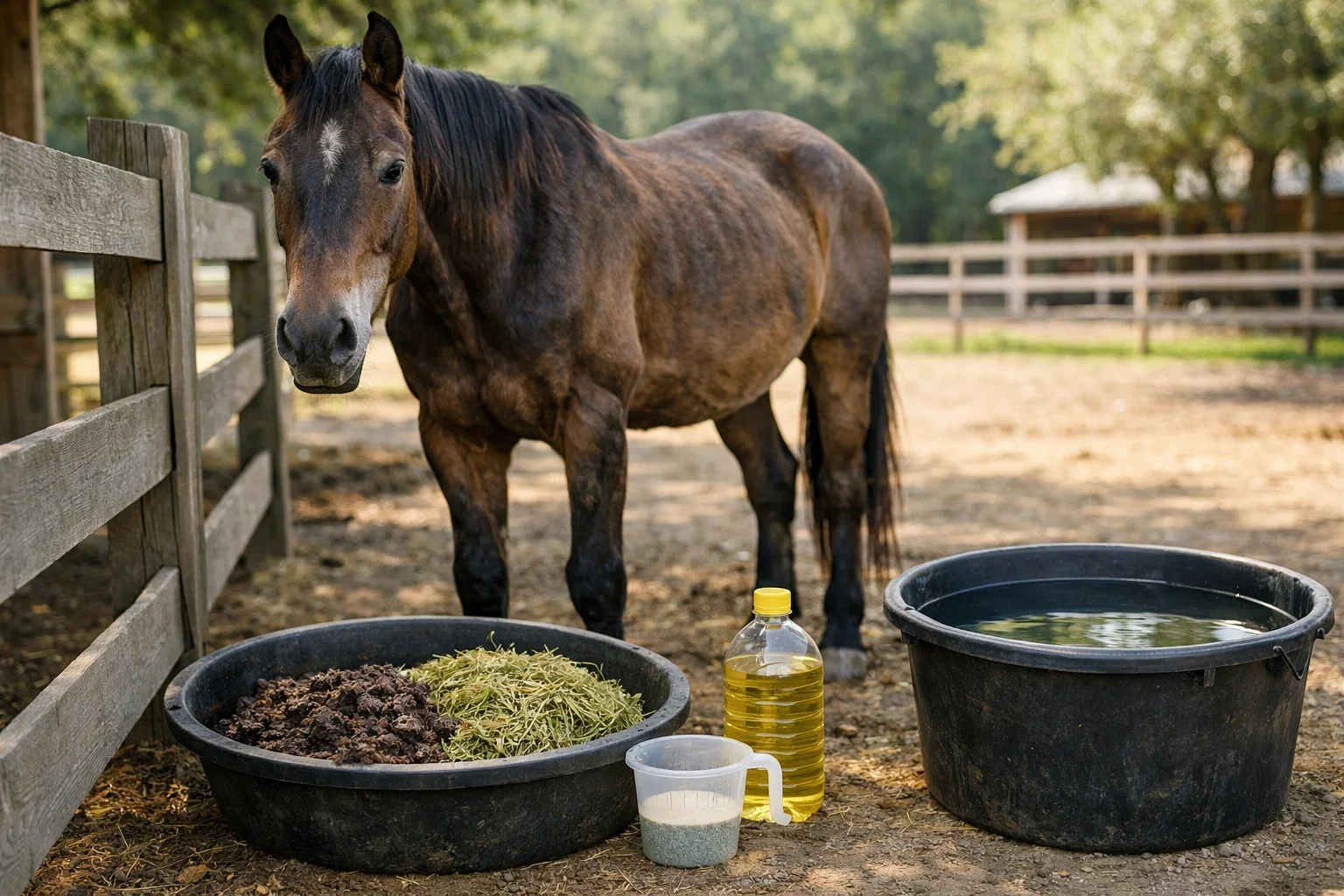
Kidney disease in horses is one of the conditions that often goes unnoticed until it has progressed to a serious stage. The kidneys play a vital role in removing waste products from the blood, regulating fluid balance, and maintaining proper electrolyte levels. When kidney function begins to decline, nearly every aspect of your horse’s management must be adjusted — and at the top of that list is horse feed.
Choosing the right horse feed becomes critical because the kidneys are directly affected by excess protein, minerals, and imbalanced electrolytes. A carefully controlled diet can reduce the strain on compromised kidneys, help maintain hydration, and support overall body condition. Understanding how to properly feed a horse with kidney issues can truly make the difference between a horse that maintains a good quality of life for years and one whose condition worsens rapidly.
It will take you through the scientific aspect of nutrition that underlies kidney-friendly feeding and what to avoid and how to know things are worsening.
Understanding the Connection Between Diet and Kidney Health
It is worth knowing before delving into the details of foods and feeding techniques why the diet is of so much concern in horses whose kidneys are impaired. The kidney plays a role in removing nitrogen waste which is produced during protein degradation in the body, and this is filtered by the healthy kidneys. In the case of kidney damage, the waste accumulates in the blood, which is known as azotemia. When left uncontrolled, it moves into uremia which is toxic and life threatening.
The horse kidney disease diet is hence constructed on a single principle that is; to decrease the amount of work required of the kidneys by minimizing the number of substances they have to filter but at the same time to ensure that they get adequate nutrition, so as to avoid muscle wasting and weight loss.
Recognizing the Problem: Horse Kidney Failure Symptoms
You cannot treat a horse with a kidney disease properly when you are not aware of the problem. Most of the owners do not note the early symptoms. The symptoms of horse kidney failure may be rather insidious in the beginning and may be confused with a common disease or a digestive upset.
Common Symptoms To Watch For Include:
- Increased thirst and urination (polyuria/polydipsia)
- Dull coat and general lethargy
- Loss of appetite
- Edema, particularly around the lower legs and abdomen
- Mouth ulcers or a distinctive ammonia-like smell on the breath
- Progressive weight loss despite adequate feed
- Muscle wasting along the topline
Equine veterinary studies have indicated that chronic renal failure (CRF) is the most prevalent diagnosis of kidney failure in horses, and most frequently observed in horses that are more than 15 years old. The invidious condition of the illness implies that when the clinical manifestations become noticeable, as many as three-quarters of the kidney functionality can be destroyed.
When a horse loses its weight, especially when the kidney disease appears, this is very disastrous and is an indication that the body is breaking down muscles as a source of energy. It is an indication that dietary intervention is much needed.
The Core Principles of a Kidney-Friendly Diet
When you are calculating what to feed a horse with kidney issues, all the nutritional choices must pass through a simple filter; does this decrease kidney workload, maintain body weight, and prevent toxic build up.
Here’s how that breaks down in practice.
1. Reduce Protein — But Don’t Eliminate It

This is the least understood about the horse kidney disease diet. When the word reduce protein is heard, many of the owners take all the sources of protein off the table. This is a mistake. Protein should also be included in horses with kidney disease since horse with kidney disease weight loss is already a serious issue. The objective is to consume quality protein of high digestibility and moderate quantities to ensure that less wastes are produced per gram of the protein.
Protein sources that are of good quality do not produce urea as compared to poor sources. Even though alfalfa hay is very rich in protein, it is not always good in horses with kidney disease since during digestion, it produces high levels of urea. The better base is a grass hay that has moderate protein content.
Protein range: 8 -10 percent of total diet dry matter basis, however, varies based on the individual horse and the severity of the disease.
2. Focus on Grass Hay as the Foundation
Hay to make up the bulk of the diet of your kidney compromised horse should be timothy hay or orchard grass or a combination of both. These hays contain digestible energy, fiber to keep the gut healthy, and moderately high protein that neither overworks the kidneys with nitrogen wastes.
Legume hays (alfalfa, clover) should not be used as a major source of roughage. They are excessively high in protein and will increase the uremic toxins accumulation.
3. Manage Phosphorus Carefully
Phosphorus in the body is also controlled by the kidneys. In case of poor functioning of kidneys, phosphorus may build up in the blood, causing hazardous disequilibrium with calcium. This calcium phosphorus imbalance may result in secondary hyperparathyroidism, where the body extracts calcium out of the bones to compensate ratios – weakening the bones in the long run.
Such grains as wheat bran and rice bran contain phosphorus infamously and must be avoided or kept to a minimum. Beet pulp (free of molasses) is far safer as a source of energy and contains low phosphorus and is not very harsh on the kidneys.
4. Ensure Adequate Hydration
Kidney problems in horses require them to remain hydrated. Kidneys are dependent on sufficient supply of water to dilute and excrete toxins. Promote drinking of water by providing fresh and clean water at all times preferably slightly warmed during winter seasons to avoid dislike of drinking. A little salt in the feed (not more than 12 tablespoons a day) can serve to increase the thirst in horses that are not taking in enough water.
What to Feed: Recommended Foods
| Feed Type | Recommended | Notes |
| Timothy/orchard grass hay | ✅ Yes | Primary roughage; moderate protein |
| Beet pulp (no molasses) | ✅ Yes | Excellent energy source; low phosphorus |
| Vegetable oil (canola/flaxseed) | ✅ Yes | Calorie-dense; kidney-safe fat source |
| Alfalfa hay | ❌ No | Too high in protein and calcium |
| Wheat bran / Rice bran | ❌ Avoid | Very high phosphorus |
| Commercial senior feeds | ⚠️ Check label | Some contain too much protein or phosphorus |
| Electrolyte supplements | ⚠️ Vet guidance | Can stress kidneys if unbalanced |
| Grass pasture (low-protein) | ✅ Moderate | Beneficial if access is controlled |
Caloric Support for Weight Maintenance
Weight loss is one of the most serious concerns in a horse suffering from kidney disease. When protein intake is reduced to ease the burden on the kidneys, horses can quickly begin to lose body condition. This is where dietary fat becomes extremely valuable.
Fat is an excellent energy source because it does not produce nitrogenous waste that the kidneys must filter. Adding 100–200 mL of canola oil or flaxseed oil to your horse’s daily ration can provide additional calories without placing extra stress on compromised kidneys. Flax oil also offers the added benefit of omega-3 fatty acids, which have mild anti-inflammatory properties and may support overall systemic health.
In modern livestock feed manufacture, specialized formulations are often developed to address conditions like kidney disease by carefully balancing energy sources, limiting unnecessary protein, and maintaining proper mineral levels. Working with your veterinarian and selecting well-designed feeds ensures your horse receives safe, kidney-friendly nutrition while maintaining a healthy weight and body condition.

Other heavy weights are beet pulp. It is an extremely fermentable fiber, which supplies a lot of energy through hindgut fermentation, i.e. it does not enter the small intestine at all, and is not digested by the type of proteins. It is among the safest high-calorie feed that is used with horses having impaired kidney functions.
In the equine internal medicine literature, it has been established that fat may be utilized to supplement up to 20 percent of the daily caloric intake of a horse in terms of energy without adverse metabolic effects, thus it makes an excellent alternative source of energy in cases where protein intake has to be limited such as in chronic renal failure.
Supplements: Proceed with Caution
When a horse is sick, many horse owners instinctively get to the supplements. In the case of kidney disease, this desire must be put on a leash.
Avoid: Vitamin D supplements (vitamin D is activated by the kidney, and in the case of excess vitamin D, it becomes hard), high dosage calcium supplements, and supplements with huge portions of herbs or concentrated plant compounds.
Consider (under vet guidance): B-vitamins, specifically B-complex may be useful due to the water solubility and also because some may be excreted through urines as one urinates more. The body of evidence regarding the general anti-inflammatory support of omega-3 fatty acids of flax is quite reasonable.
Never introduce any supplement that you not already discussed with your veterinarian. What can be harmless in a healthy horse is really very dangerous in a horse with a low kidney filtration rate.
Feeding Schedule and Management Tips
| Management Factor | Recommendation |
| Feeding frequency | 2–3 small meals daily rather than one large one |
| Water access | Fresh water available 24/7; monitor intake daily |
| Pasture access | Low-protein grass in moderation; avoid lush spring grass |
| Salt | Small daily allowance to stimulate drinking |
| Monitoring | Weigh monthly; adjust feed based on body condition score |
| Veterinary check-ups | Bloodwork every 3–6 months to track kidney values |
Working With Your Veterinarian
The most comprehensive dietary advice could not substitute a relationship with equine veterinarian or veterinary nutritionist. Kidney disease severity in horses is enormous and changes in dietary requirements as the disease advances. Blood and urine tests, which in particular considers creatinine, blood urea nitrogen (BUN) and fractional excretion of electrolytes, will provide your veterinarian with an accurate picture of how hard or how easy the kidneys are working and what changes should be made.
With proper monitoring and proper diet a horse with a chronic kidney disease at its early stages will have a number of comfortable years to live. An acute renal failure horse requires urgent veterinary care together with a change in diet.
Final Thoughts
It does not just involve replacing one hay with another to know what to feed a horse with kidney problems. It entails the considerate, full-diet strategy that will focus on lowering workload on the kidneys and simultaneously preserving body status and living standards in the body. The pillars of an animal-friendly eating plan include grass hay, fat supplementation, proper protein balance, and regular hydration.
One of the first indicators that something has gone wrong is a horse with kidney disease weight loss that gives you the best excuse to act. The quicker you change the diet and seek the help of your vet the better it is to your horse. These animals are tough in case of the proper support- and one of the strongest weapons you possess is a properly controlled diet.
FAQs
1. What should you feed a horse with kidney problems?
A horse with kidney problems should be fed mainly grass hay with moderate protein levels. The diet should reduce kidney workload while still providing enough calories to maintain weight. Fat sources like vegetable oil and beet pulp are ideal additions.
2. Why is protein restricted in horses with kidney disease?
Protein creates nitrogen waste that damaged kidneys struggle to filter out. Reducing protein lowers toxin buildup in the blood while slowing disease progression. However, some high-quality protein is still needed to prevent muscle loss.
3. Can a horse with kidney disease eat alfalfa hay?
Alfalfa hay is not recommended for horses with kidney disease. It is too high in protein and calcium, which increases waste products and stresses the kidneys. Grass hay is a much safer alternative.
4. How do kidney problems cause weight loss in horses?
Kidney disease leads to toxin buildup that reduces appetite and muscle efficiency. When protein intake is restricted, horses may burn muscle for energy. Without added calories from fat or fiber, weight loss can progress quickly.
5. Is beet pulp safe for horses with kidney disease?
Beet pulp without molasses is very safe and beneficial for horses with kidney disease. It provides digestible energy with low protein and phosphorus levels. It also supports gut health without stressing the kidneys.
6. Why is phosphorus control important in kidney disease?
Damaged kidneys cannot properly excrete phosphorus, causing it to build up in the blood. This imbalance forces calcium out of bones, weakening the skeleton. Limiting high-phosphorus feeds helps prevent long-term complications.
7. How important is water intake for horses with kidney problems?
Water intake is critical because hydration helps dilute and flush toxins from the body. Horses with kidney disease often urinate more and lose fluids quickly. Unlimited access to clean, fresh water is essential.
8. Can fat be added safely to a kidney disease diet?
Yes, fat is one of the safest calorie sources for horses with kidney disease. It provides energy without producing nitrogen waste. Oils like canola or flaxseed help maintain weight without harming the kidneys.