 Dogs & Cats
 Cattle
 Equine
 Poultry
 Swine
Swine Goats & Sheep
 Game Bird
 Gamecock
 Deer & Wildlife
 Fish & Pond
 Rabbit
 Specialty
 Ingredients & Bulk
 Special Order

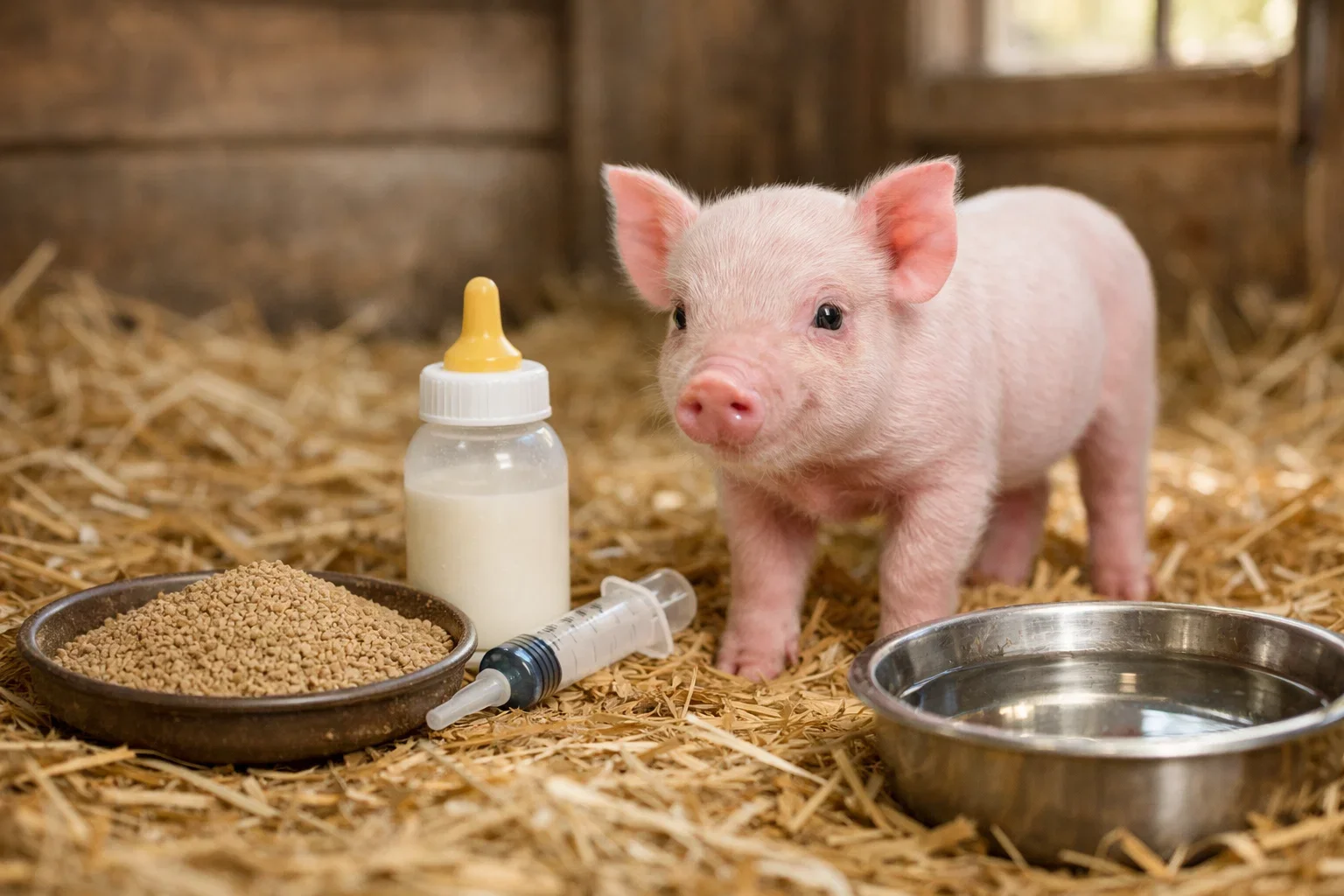
One of the most fulfilling experiences an animal lover can go through is raising up a baby pig, be it in the farm or as a pet. Yet there is the price to be paid, in it being real responsibility, particularly in regard to nutrition. The question that new pig owners tend to ask most of the time is: what can I feed a baby pig? This is an issue that can literally be life and death to a piglet in the early weeks.
This manual will give you all you need to know about feeding a baby pig, the initial few hours of life up to the weaning age, and useful tips, with tables about the food, and facts by the experts to ensure that your piglet is well fed.
The First Hours Matter Most: Colostrum Is Non-Negotiable

We shall begin at hour one, before we discuss what I can feed a baby pig in the long run. The first milk of the sow is known as colostrum and newborn piglets need to be fed on colostrum during the first 12-24 hours of their life. Colostrum is full of maternal antibodies (immunoglobulins) which form the immune system of the piglet. Piglets are very susceptible to disease and infection without it.
Otherwise, in case the mother is inaccessible or has too many piglets than she can nurse, one can get the colostrum of another lactating sow or purchase a commercially made colostrum replacer that is specifically designed to meet the swine requirements. Do not skip this step. None of the formulas or supplements can completely substitute the immune protection which colostrum offers during the first hours of critical need.
Piglets are virtually born with no immune defense. Their intestines can only absorb the massive immunoglobulin molecules present in the colostrum of around 24 hours of being in the womb – beyond that time the opportunity is closed forever.
Newborn Piglet Feeding: Week One Through Weaning
Sow milk is the most important food a newborn piglet consumes after colostrum. A healthy sow typically nurses her piglets every 45 to 60 minutes, delivering a perfectly balanced combination of fat, protein, and lactose. With an average litter size of 10 to 12 piglets, a sow that has enough functional teats can usually nourish them all without assistance.
However, orphaned piglets, runts, or piglets from very large litters often require supplemental or complete hand feeding. This is where proper pig feed management becomes essential. High-quality pig feed formulated specifically for young piglets—such as milk replacers or creep feed—can provide the nutrients they need for steady growth, strong immunity, and healthy development when natural nursing is not sufficient.
What to use when sow’s milk isn’t available:
When natural nursing isn’t possible, the best alternatives in order of preference are:
- Milk from another lactating sow — the closest match to natural milk
- Commercial piglet milk replacer — specially formulated for swine with the right fat-to-protein ratio
- Goat’s milk — a commonly used emergency substitute that is more digestible than cow’s milk for piglets
- Homemade piglet formula — used only as a short-term emergency measure (see below)
Cows milk should not be a first line feed since the protein and fat ratios do not suit the piglets and the lactose in cows milk may lead to digestive upsets and diarrhea which is fatal in such small animals.
How Often to Feed a Baby Pig: A Feeding Schedule by Age
One of the most critical factors in raising a healthy piglet is consistency. How often to feed a baby pig depends on its age and whether it’s nursing or being hand-fed.
Feeding Frequency Table
| Age of Piglet | Feeding Method | Frequency | Amount Per Feeding |
| 0–3 days | Colostrum / Sow milk | Every 1–2 hours | 5–10 ml per feeding |
| 4–7 days | Sow milk or milk replacer | Every 2–3 hours | 15–20 ml per feeding |
| 1–3 weeks | Milk replacer / Sow milk | Every 3–4 hours | 30–60 ml per feeding |
| 3–4 weeks | Milk + creep feed introduction | Every 4–5 hours | Milk + small amounts of solid |
| 4–8 weeks | Gradual weaning to solid feed | 3–4 times daily | Increasing solids, decreasing milk |
For the first two weeks, never let more than 4 hours pass between feedings for a hand-raised piglet. Hypoglycemia (low blood sugar) is a real and serious risk in very young pigs, and missing feedings can lead to weakness, seizures, or death.
What Can I Feed a Baby Pig as It Grows? Introducing Solid Food
Even the piglets who are still sucking the sow at the age of about 10-14 can express curiosity towards solid food. It is now time to introduce creep feed, a very palatable, finely ground feed that is specifically made with pre-weaned piglets in mind. Creep feed is used to help the digestive system to acclimatize to solid nutrition prior to the weaning stress factor.
Good creep feed for baby pigs typically contains:
- High-quality protein sources (fishmeal, soy protein isolate, milk proteins)
- Easily digestible carbohydrates
- Added vitamins and minerals (especially iron, which piglets are born deficient in)
- Probiotics and prebiotics to support gut health
Place creep feed in a shallow dish near the heat source in the piglet area. They’ll explore it out of curiosity first, then begin eating. Don’t force it — the process should be gradual and stress-free.
Emergency Homemade Piglet Formula
In case you happen to be in a fix and cannot get a commercial milk replacer immediately then a temporary homemade formula can keep a piglet alive. Maximum use can be not longer than 24 to 48 hours until you find a suitable replacer.

Emergency piglet formula:
- 1 quart whole goat’s milk
- 1 teaspoon white sugar
- 1 drop liquid pediatric iron supplement (or as directed by a vet)
- Warm to 100°F (38°C) before feeding
This formula is not nutritionally complete for long-term use, but it provides enough calories and hydration to sustain a piglet in the short term. Always consult a veterinarian as soon as possible when hand-raising a piglet.
Iron Supplementation: A Step You Cannot Skip
The piglets are born with very low stores of iron and the milk of the sow is not sufficient to sustain the fast growth. Piglets become iron-deficiency anemic in the first two weeks of life in the absence of supplementation – resulting in pale skin, lethargy, rapid breathing and poor growth.
The recommended treatment is an iron dextran injection (150-200mg) administered at 2-3 days of age with a second time at 2-3 weeks as necessary. This is done regularly on commercial farms and it should not be avoided to hand-reared piglets as well.
Compared to other domestic animals, the baby pigs develop at a higher rate with respect to the weight of the body. A piglet can gain twice the initial weight in its initial 7 days of existence- a development pace that renders sufficient intake of iron, protein, as well as caloric energy as a necessity on the very first day.
What to Feed a Baby Pig After Weaning
Weaning will normally occur at the age of 3-8 weeks depending on whether the piglet is in a farm or being reared as a pet. The diet is completely changed to solid food following weaning. The following is an example of what a post-weaning diet should be:
Nutritional Requirements After Weaning
| Nutrient | Recommended Range (Post-Weaning) | Primary Sources |
| Crude Protein | 18–22% | Soybean meal, fishmeal, dairy proteins |
| Crude Fat | 3–6% | Soybean oil, corn |
| Lysine | 1.2–1.5% | Soybean meal, synthetic lysine |
| Calcium | 0.7–0.9% | Limestone, dicalcium phosphate |
| Phosphorus | 0.6–0.8% | Dicalcium phosphate, bone meal |
| Vitamin E | 16 IU/kg minimum | Premix supplementation |
Commercial starter feeds formulated for piglets typically meet all of these requirements. If you’re raising a pet pig, look for feeds labeled specifically for miniature or potbelly pigs rather than commercial swine, as growth rates and caloric needs differ significantly.
Fresh water should always be available. Dehydration in young pigs accelerates rapidly, especially in warmer environments or if the piglet is experiencing digestive issues.
Foods to Avoid Feeding a Baby Pig
Knowing what can I feed a baby pig is just as important as knowing what to avoid. Some foods that seem harmless can cause real harm to young pigs:
Never feed a baby pig:
- Raw meat or fish (risk of disease transmission)
- Chocolate or caffeine (toxic to pigs)
- Onions, garlic, or leeks (can cause anemia)
- Salty snacks or processed human food
- Moldy or spoiled food of any kind
- Cabbage or broccoli in large amounts (can cause gas and bloating)
- Avocado (contains persin, which is toxic to pigs)
Pigs are natural foragers and will eat almost anything — which means it falls on the owner to control what goes into their environment.
Final Thoughts
The process of raising a healthy baby pig begins with understanding its nutritional requirements at every developmental stage. From colostrum in the first hour of life to creep feed after two weeks, and finally a balanced solid diet after weaning, each step builds upon the previous one. Using high-quality animal feed that is specifically formulated for piglets ensures they receive the right balance of protein, energy, vitamins, and minerals for steady growth. With proper care and appropriate feeding practices, most piglets—including underweight or orphaned ones—can grow into strong and healthy adults.
If you are ever uncertain about your piglet’s health, feeding schedule, or diet, it is always wise to consult a veterinarian experienced with pigs. The first few weeks pass quickly, and getting the nutrition right during this critical window can make all the difference in long-term health and performance.
FAQs
1. What can I feed a baby pig in the first days of life?
A baby pig must receive colostrum within the first 12–24 hours to build immunity. After that, sow’s milk is the primary food source. If the sow is unavailable, use a piglet milk replacer or goat’s milk as a short-term alternative.
2. How often should I feed a newborn baby pig?
Newborn piglets need very frequent feedings to avoid low blood sugar. Hand-fed piglets should be fed every 1–2 hours during the first few days. As they grow, feeding intervals can gradually be extended.
3. Can a baby pig drink cow’s milk?
Cow’s milk is not ideal for baby pigs and should not be used long term. Its nutrient balance can cause diarrhea and poor growth. Goat’s milk or a piglet milk replacer is a safer option.
4. When can a baby pig start eating solid food?
Baby pigs can begin exploring solid food around 10–14 days of age. This is done using creep feed designed for piglets. Solid food introduction should be gradual and stress-free.
5. What is creep feed and why is it important?
Creep feed is a finely ground, nutrient-dense feed for young piglets. It helps prepare their digestive system for weaning. Early exposure reduces stress and weight loss during weaning.
6. Do baby pigs need iron supplements?
Yes, baby pigs are born with very low iron stores. Without supplementation, they can develop anemia within two weeks. An iron injection at 2–3 days old is the most reliable method.
7. What can I feed a baby pig after weaning?
After weaning, baby pigs should eat a high-protein starter feed formulated for piglets. The diet should support rapid growth and muscle development. Fresh water must always be available.