 Dogs & Cats
 Cattle
 Equine
 Poultry
 Swine
Swine Goats & Sheep
 Game Bird
 Gamecock
 Deer & Wildlife
 Fish & Pond
 Rabbit
 Specialty
 Ingredients & Bulk
 Special Order

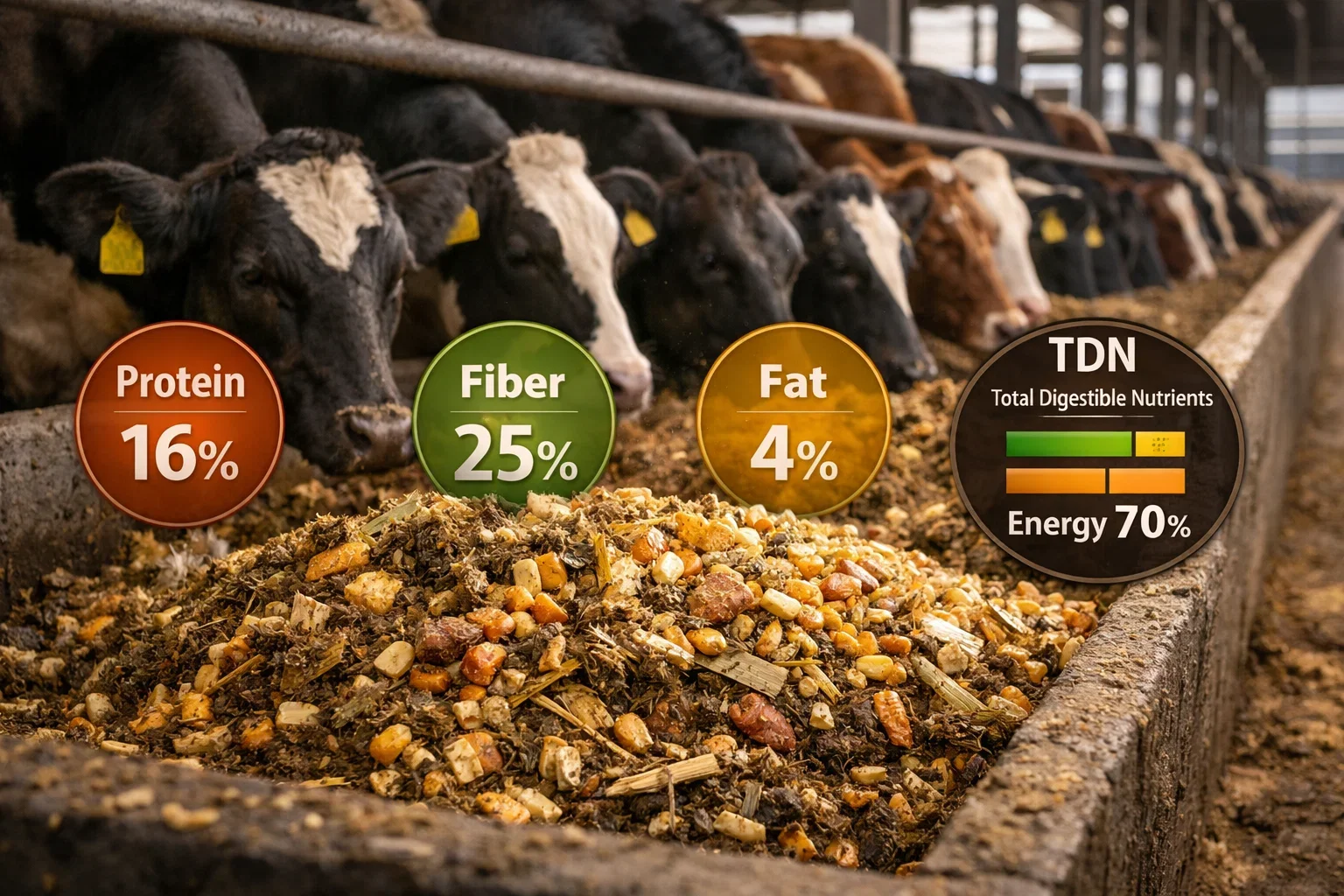
Whenever you have glanced at a feed tag or a forage analysis report, chances are that you have seen the term TDN. To most cattle producers particularly those who are only venturing into feed management this figure might appear technical or confusing to the eye. One of the most useful things you can do in developing a smarter, more efficient nutrition program in your herd, however, is to understand what TDN is in cattle feed.
TDN is not a figure on a label. It is a practical value of energy that can assist you in determining the quality of feed, being able to compare feedstuffs to each other, and making decisions without any hesitations about the amount of supplementation that your cattle actually require. After getting the idea of how TDN functions, balancing rations becomes much easier and more specific.
TDN Full Form in Cattle Feed
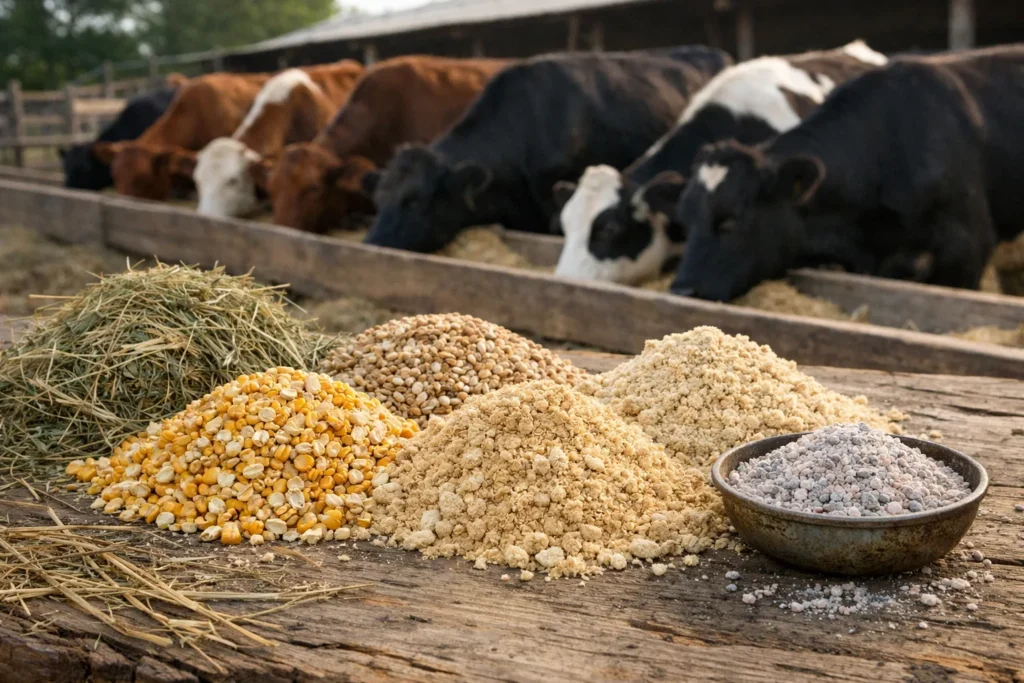
TDN complete in cattle nutrition is the Total Digestible Nutrients. It is a method of expressing the energy worth of a feed by adding up all of the digestible organic elements specifically digestible crude protein, digestible crude fiber, digestible nitrogen-free extract, and digestible crude fat (shaped to 2.25 to consider that fat is more energetically dense than carbohydrates).
TDN was initially created as an effective tool to compare feeds when advanced energy systems were not made. Although TDN is among the older systems of energy measurement in animal nutrition, it is still very popular in the United States and most of other regions of the world due to its simplicity and high levels of predictability to actual animal performance. This is expressed as a percentage of the feed dry matter and this makes it easy to compare feeds on equal grounds.
Why TDN Matters in Cattle Nutrition
Energy is virtually the limiting nutrient in a cattle diet, when it comes to animal feeding. Protein, minerals, and vitamins are all important, but when an animal lacks the energy to power the basic functions of the body, then production will decline despite the balance of everything being perfect. TDN provides a trusted and convenient window to producers of whatever they feed on the energy content.
A well-maintained beef cow is an animal that is in good body shape, and thus its diet should be about 50-55 percent TDN on a dry matter basis. The demand during late pregnancy or in top lactation reaches 60% or more. Once you know the TDN value of your hay, silage or grain then you can easily know how well your current ration is.
- Mature beef cows at maintenance need approximately 50–55% TDN in the diet
- Late-gestation cows require 58–62% TDN to support fetal growth and body reserves
- Lactating cows need 60–65% TDN to sustain milk production and maintain condition
- Growing and finishing cattle need 65–75% TDN depending on target daily gain
- High-grain finishing diets can reach TDN values of 80% or above
Nutritional Fact: Corn grain has a TDN value of approximately 88% on a dry matter basis, making it one of the most energy-dense feeds commonly used in cattle rations. Mature grass hay, by comparison, typically ranges from 48 to 55% TDN which is why grain supplementation becomes important when forage quality drops.
How to Calculate TDN in Feed
Understanding how to calculate TDN in feed helps producers move beyond simply reading a label and actually verify or estimate the energy content of feedstuffs on their own. The standard formula for TDN calculation adds together the digestible fractions of each major nutrient group in the feed.
The basic formula is:
TDN (%) = Digestible Crude Protein + Digestible Crude Fiber + Digestible Nitrogen-Free Extract + (Digestible Crude Fat × 2.25)
In reality, the majority of producers will not compute TDN starting with a pen and paper. Rather they depend on forage testing laboratories which perform proximate analysis of feed samples and report TDN directly. But being aware of the ingredients you are not alone in the number will make you interpret the result more wisely and pose the appropriate questions to a nutritionist or a feed supplier.
All items in TDN equation are a product of proximate analysis of the feed. Measurement of crude protein, crude fiber, ether extract (fat) and nitrogen-free extract measure values and then digestibility coefficients are applied according to values of research established regarding each type of feed. These coefficients are in consideration that all nutrients in a feed are not actually absorbed, some of them are passed through unabsorbed.
- Send forage samples to a certified lab at least once per cutting or batch
- Request an acid detergent fiber (ADF) reading TDN can be estimated from ADF using the formula: TDN = 88.9 − (0.779 × ADF%)
- Always request results on a dry matter basis for accurate comparison across feeds
- Use the TDN value alongside crude protein to build a complete picture of feed quality
TDN Values of Common Cattle Feeds
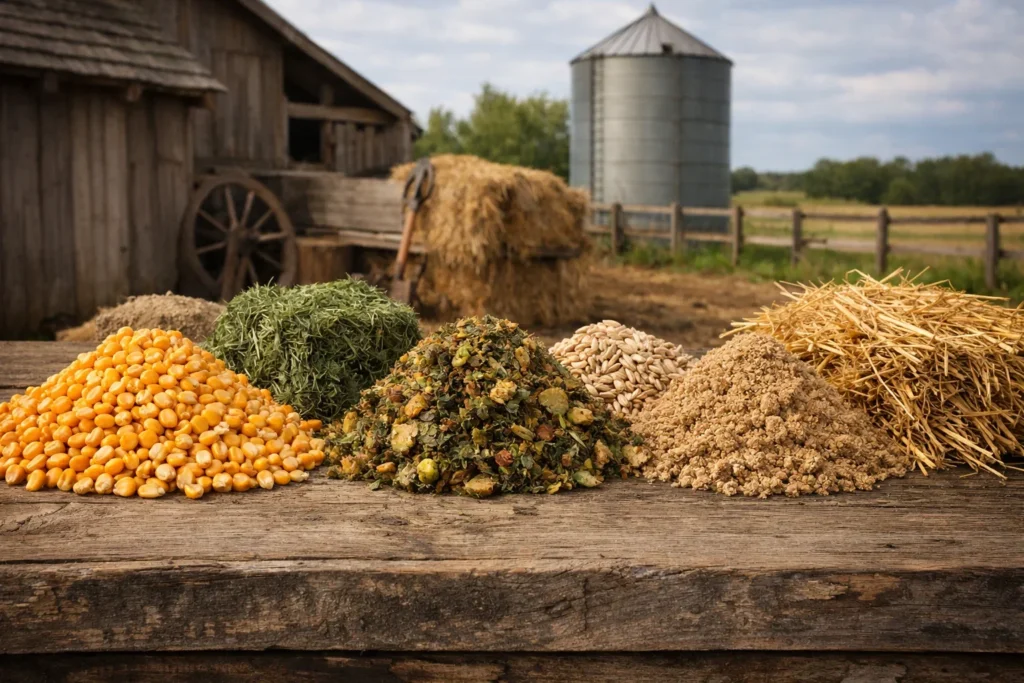
The table below gives a practical overview of TDN values for feeds commonly used in cattle rations. These figures are expressed on a dry matter basis and represent average values; actual results will vary depending on variety, harvest timing, storage conditions, and processing method.
| Feed Type | TDN % (Dry Matter Basis) | Crude Protein % | Primary Use in Ration |
| Corn grain | 88% | 9% | Energy supplement, finishing |
| Corn silage | 68–72% | 8–9% | Forage base, stocker/dairy |
| Alfalfa hay (early bloom) | 62–68% | 18–22% | Protein + energy, dairy/calves |
| Mixed grass hay (good quality) | 54–58% | 10–14% | Maintenance forage, beef cows |
| Mature grass hay (low quality) | 46–52% | 6–9% | Dry cow forage, supplementation needed |
| Wheat straw | 40–46% | 3–5% | Filler roughage, low-energy diets |
| Soybean meal | 78–82% | 44–48% | Protein supplement |
| Distillers dried grains (DDGs) | 80–84% | 28–32% | Energy + protein supplement |
| Oats | 74–78% | 12–14% | Growing cattle, starter diets |
| Cottonseed (whole) | 74–78% | 22–26% | Dairy cows, beef supplementation |
TDN vs Digestible Energy: Understanding the Difference
TDN vs digestible energy is such comparison that arises on a relatively regular basis when discussing feeding in a more technical sense, especially when it comes to dealing with nutritionists or using university ration-balancing software. Both systems will indicate how much usable energy there is in a feed, but they do this in different forms and with slightly varying degrees of accuracy.
TDN is expressed in percentage of the dry matter and is unitless in that regard as you can say a feed contains 65% TDN without specifying a unit of measurement. Displayed in megacalories (Mcal)/kg. of dry matter, however, is digestible energy (DE). DE can be determined directly by conversion of TDN: 1 kg of TDN can be converted to about 4.409 Mcal of digestible energy. This enables easy transfer between the two systems where necessary.
Both TDN and DE are regarded as an energy system that is digestible i.e. they consider the losses of the energy in feces but do not include losses of energy in the urine, gases (methane) or body heat. Refined systems like net energy (NE) extend further to include these extra losses thereby being more precise when it comes to the exact balancing of the ratios in a high-production dairy or feedlot environment. In the case of the majority of beef cattle enterprises, however, TDN is affordable and can be used as a workable and sufficiently stable tool in daily feeding choices.
Did You Know? Based on TDN and DE, the net energy system separates energy into net energy to maintain (NEm) and net energy to gain (NEg). The TDN value of a feed may be identical to that of another feed, but act differently regarding the proportion of actual energy it supplies to growth as compared to maintaining the animal alive hence the strong preference of net energy values in high-performance finishing diets formulation by the feedlot nutritionist.
Using TDN to Balance a Practical Cattle Ration
An application of TDN knowledge implies that you sit down with your test results of forage and needs of your cattle and understand whether there should be a bridge between the two that needs to be filled with supplementation. It is at this stage that a mere livestock feeding instruction manual comes in handy to assist in day-to-day farm management choices.
To begin with, determine the TDN requirement of the type of cattle that you are feeding based on the listed above requirements. Then check the value of your primary forage in terms of TDN. When your hay is 50 percent TDN, and your late-gestation cows require 60 percent TDN, you have a 10-percentage-point gap that you have to fill. This rift could be closed by a gradual inclusion of increase in energy feed like corn, DDGs or commercial energy supplement.
- Multiply the cow’s daily dry matter intake (in kg) by the required TDN percentage to find the total TDN needed per day
- Multiply the same intake by the forage’s TDN percentage to find how much TDN the forage is providing
- The difference is the TDN deficit that must be covered by a supplement
- Work with a licensed nutritionist or extension specialist when formulating rations for high-value animals or large herds
Seasonal TDN Considerations for Beef and Dairy Herds
TDN requirements and forage TDN availability do not stay constant throughout the year, which is why seasonal adjustments are a key part of any sound feeding program. Spring pasture is typically the highest-TDN feed available; fresh, leafy, rapidly growing grass can reach 65 to 72% TDN, easily exceeding the needs of most mature beef cows. As the season progresses and grasses mature, TDN values fall steadily.
| Season | Typical Forage TDN Range | Cow Requirement (Maintenance) | Supplementation Need |
| Spring (lush pasture) | 65–72% | 50–55% | Low to none |
| Summer (mature pasture) | 52–60% | 50–55% | Low monitor body condition |
| Autumn (stockpiled/hay) | 48–56% | 55–60% (pre-calving) | Moderate |
| Winter (hay/silage) | 46–54% | 58–62% (late gestation) | High grain or supplement needed |
Planning your supplement program around these seasonal TDN fluctuations allows you to spend your feed budget where it matters most supporting your herd during the periods of highest nutritional demand rather than over-supplementing when pasture quality is already meeting requirements.
Conclusion
TDN can be described as one of the most convenient and usable tools that cattle producers can use to assess the quality of feed and compose effective rations. As soon as you are aware of what the number is, the way it is calculated, and how it varies with the feeds and seasons, you will have some degree of confidence in the choices you make when it comes to feeding, which immediately translates into improved herd performance and wiser use of your feed budget. TDN provides a sound base on which to build whether dealing with a small beef herd or a large dairy herd.
For producers who want the guesswork taken out of their supplementation program, Mid South Feeds offers a range of livestock feed products formulated with clear nutritional profiles including TDN values so you always know exactly what your cattle are getting. Their team understands the practical realities of cattle nutrition at every stage, making them a resource well worth bookmarking as you refine your feeding program through the seasons.
FAQs
1. What does TDN mean in cattle feed?
TDN stands for Total Digestible Nutrients and represents the total energy value of a feed. It combines all digestible nutrients to show how much usable energy cattle receive.
2. Why is TDN important in cattle nutrition?
TDN helps farmers understand if cattle are getting enough energy for growth, milk production, and maintenance. Without proper energy levels, overall performance declines.
3. How is TDN calculated in cattle feed?
TDN is calculated by adding digestible protein, fiber, carbohydrates, and fat (multiplied by 2.25). Most farmers rely on lab reports instead of manual calculations.
4. What is a good TDN level for cattle?
Maintenance cattle need around 50–55% TDN, while lactating and growing cattle require 60–75% or more. The exact level depends on production stage.
5. Which feeds have the highest TDN values?
Feeds like corn grain, DDGs, and concentrates have high TDN values, often above 80%. These are commonly used to boost energy in cattle diets.