 Dogs & Cats
 Cattle
 Equine
 Poultry
 Swine
Swine Goats & Sheep
 Game Bird
 Gamecock
 Deer & Wildlife
 Fish & Pond
 Rabbit
 Specialty
 Ingredients & Bulk
 Special Order

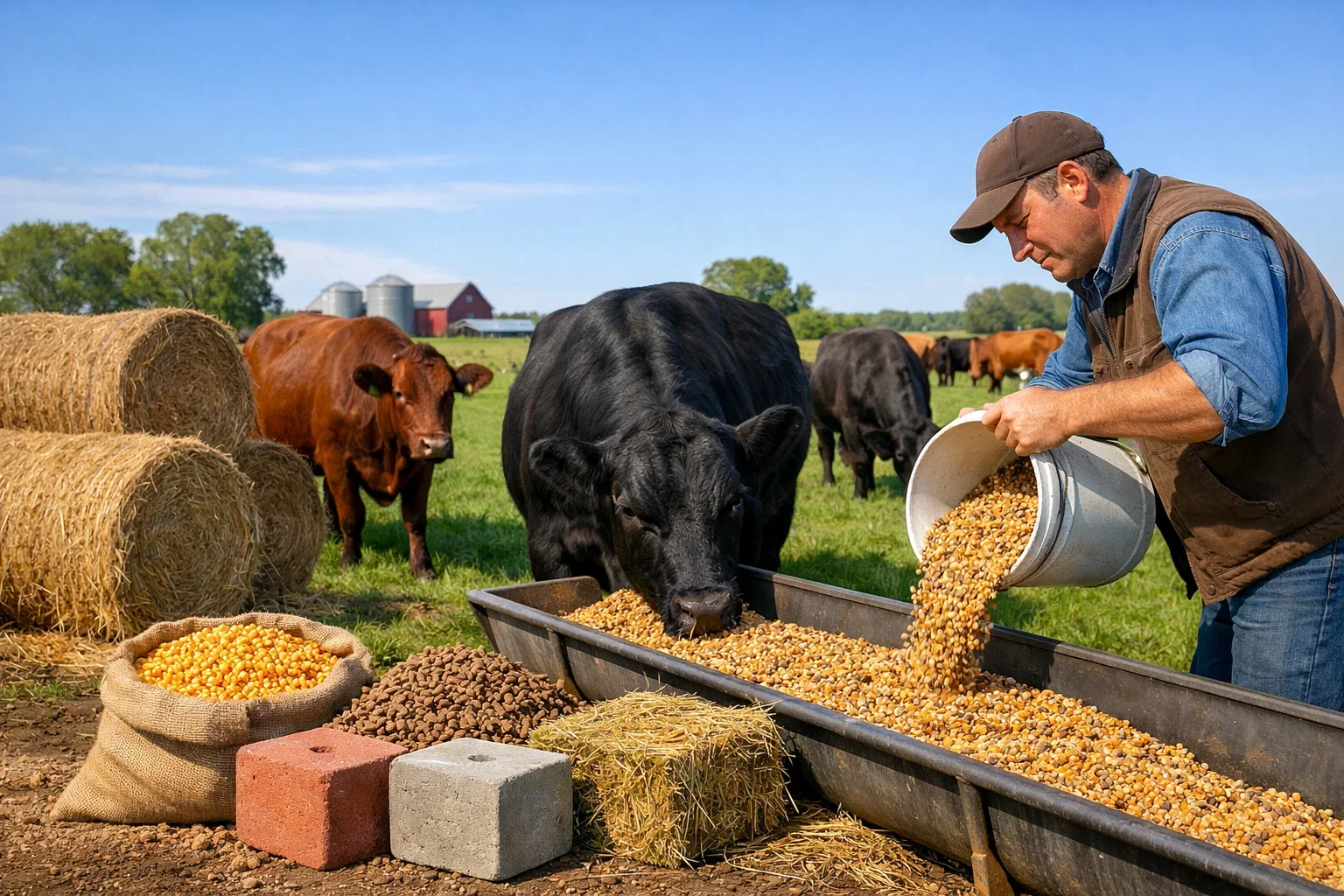
The proper way of feeding cattle is one of the most significant choices that a farmer or a rancher will make on a daily basis. Regardless of whether you are keeping a small herd on a small farm or whether you are operating a high scale commercial business, knowing how to feed cattle properly will result in healthier, stronger animals, higher weight gain and herd health. Having the right nutrition does not necessarily mean being complicated, it merely makes you aware of what your cattle require at certain life stages and adapt to it.
Cattle are ruminant animals and hence by the definition, their digestive system is constructed in a unique manner that enables them to digest the fibrous plant substances through a process of fermentation. This ensures that they are great transformers of grass, hay and silage into energy. Nevertheless, cattle should be offered a balanced diet, which extends beyond pasture to succeed and live up to their potential.
Understanding the Basics of Cattle Nutrition

The first step to a good cattle feeding guide is to know the six basic nutritional categories that every cow requires: energy, protein, minerals, vitamins, water and fiber. All these play a different role in ensuring that your herd is productive, healthy and in good body shape. The most restrictive nutrient in beef cattle diets is generally energy, particularly during cold temperatures or other periods of high production such as lactation.
The bulk of cattle ration is comprised of forages such as pasture grass, hay, and silage. They contain fiber which is necessary to healthy rumen performance. This is followed by the inclusion of grains like corn, barley and oats to increase the energy density especially in cattle feedlots or on finishing stages. Soybean meal or distillers grains are protein supplements that are used to supplement the amino acid needs of developing and lactating animals.
- Always provide clean, fresh water cattle can drink 30 to 50 liters per day depending on size and climate
- Salt and mineral blocks should be available free-choice at all times
- Vitamin A, D, and E supplementation is especially important during winter months
- Body condition scoring (BCS) on a scale of 1 to 9 helps guide feeding decisions throughout the year
Nutritional Fact: A mature beef cow weighing around 550 kg requires approximately 11–13 kg of dry matter intake per day to maintain body condition. This figure rises significantly during the last trimester of pregnancy and peak lactation.
How Much to Feed Cattle Per Day
The amount of food cattle should be fed on per day is one of the most frequently asked questions by new owners of cows. Responses to this question vary with a number of variables; the weight of the animal, its age, stage of production (growing, lactating, finishing), and the quality of food being provided. One of the common guidelines is that cattle is expected to feed on 2 to 3 percent of body weight in dry matter every day.
To give an example, a 500 kg beef cow is supposed to be fed on about 10 to 15 kg of dry matter in a day. Good-quality forages enable cattle to feed more and to get more energy with each bite, eliminating the necessity to increase the amount of grain supplementation. Weigh your feed and do not assume that all feeds are equal in volume since various cattle feeds vary in density and moisture content.
| Cattle Type | Body Weight (kg) | Daily Dry Matter Intake | Forage % | Grain / Supplement % |
| Weaned Calf (4–6 months) | 150–200 | 3.5–5 kg | 60–70% | 30–40% |
| Growing Stocker (6–12 months) | 200–350 | 6–9 kg | 65–75% | 25–35% |
| Finishing Steer | 400–550 | 10–13 kg | 10–20% | 80–90% |
| Mature Beef Cow (maintenance) | 500–650 | 10–15 kg | 85–95% | 5–15% |
| Lactating Beef Cow | 500–650 | 14–18 kg | 70–80% | 20–30% |
| Mature Dairy Cow (peak lactation) | 600–700 | 20–25 kg | 40–50% | 50–60% |
Dairy Cattle Feeding Tips for Better Milk Production

The nutritional requirements of dairy cows are much greater than those of beef cows since the daily energy, protein, calcium, and phosphorus production of milk is enormous. Among the most feasible dairy cattle feeding recommendations is to use total mixed ration (TMR) feeding method where all feed materials foraging, grains, proteins, and minerals are mixed into one homogenous mixture. It will not allow selective eating and will make sure that each animal receives a well-balanced diet at every bite.
Another important dairy nutrition aspect is transition feeding. During 3 weeks prior to and after calving, the metabolism of the cow changes radically. Close-up dry cow diet which is moderately limited in energy but sufficient in protein and minerals is used to prevent metabolic syndrome such as milk fever and ketosis. Following calving, the gradual increase in the amount of concentrate over two to three weeks will help in adapting the rumen without acidosis.
- High-producing cows need a diet with at least 16–18% crude protein during peak lactation
- Neutral detergent fiber (NDF) should make up at least 28–30% of the diet to support rumen health
- Feeding three or more times per day keeps feed intake high and stimulates consistent milk let-down
- Monitor body condition score monthly a BCS below 2.5 at calving significantly reduces conception rates
Cattle Feed Chart: Seasonal Feeding Adjustments
A practical cattle feed chart accounts for the changing nutritional demands across seasons. In summer, when pasture quality is high, most mature beef cattle can meet their needs from grass alone. However, as forages mature and dry out in late summer, their protein and energy content drops, requiring supplementation. Winter is the most demanding season, as cattle burn more energy to stay warm and quality roughage becomes scarce.
| Season | Primary Feed Source | Supplementation Need | Key Nutrients to Monitor |
| Spring | Fresh pasture grass | Low mineral blocks advised | Magnesium (grass tetany risk) |
| Summer | Established pasture | Low to moderate | Protein if grass matures |
| Autumn | Pasture + hay transition | Moderate | Energy, phosphorus |
| Winter | Hay, silage, straw | High grain or concentrate needed | Energy, vitamins A & D |
Did You Know? Cattle have a four-chambered stomach, the rumen, reticulum, omasum, and abomasum. The rumen alone can hold up to 200 liters of fermenting feed, making it one of nature’s most efficient feed-processing systems. This is why forage quality has such a profound impact on overall cattle performance.
Feeding Calves: Building a Strong Foundation
Calves must be fed on the colostrum in the initial six hours of birth; it is mandatory. Colostrum is loaded with immunoglobulins which confer passive immunity of the disease to the newborn calf. Whole milk or quality milk replacer can be fed to the calves after the colostrum stage up to the first eight or twelve weeks of life. Feeding of high-quality starter pellets as early as one week of age stimulates rumen growth and results in earlier and easier weaning.
After feeding on a starter of about one kilogram/day, the calves are usually ready to leave the milk. With the help of good growing diet after weaning, based on good hay and balanced supplement, the calves will gain their target weights with ease. The daily gain at this stage is a good measure of the outcome of the nutrition program.
Common Feeding Mistakes to Avoid
Patterns that cause backward holding up of herds can befall even seasoned cattle producers. The problem of feeding low-quality hay without the previous testing on nutrient levels is one of the most common. Hay could be extremely different in protein and energy. Being green and clean does not necessarily mean that it is a healthy meal. A minor investment of sending the hay samples to a forage testing lab will be immediately rewarded with an accurate feed planning.
- Switching feed types too quickly always transition over 7 to 14 days to protect rumen health
- Overcrowding at feed bunks every animal needs adequate linear space (at least 60 cm per head)
- Ignoring water quality contaminated or restricted water leads to sharp drops in feed intake
- Feeding moldy or spoiled hay this can cause respiratory issues and reduced feed consumption
Conclusion
Rearing cattle is an art and science, it involves being able to monitor progress, keep good records, and be able to revise the program as the requirements of your herd vary in each season, age, etc. You can look at the results of investing in knowing what your cattle actually require at each stage, and that results in healthier cattle, higher-performing daily gains, and greater reproduction rates. The concepts that are discussed herein form the basis of all effective feeding programs, whether small hobby farms or large businesses.
For producers looking to take their feeding program to the next level with high-quality, research-backed feed products, Mid-South Feeds is a trusted resource worth exploring. Their range of livestock feeds and nutritional supplements is designed to support cattle performance at every stage making it easier to put everything you have learned here into consistent, reliable practice on your farm.
FAQs
1. What is the best way to feed cattle daily?
The best way is to provide a balanced diet of forage, grains, minerals, and clean water based on the cattle’s stage. Consistency in feeding time and quality ensures better intake and performance.
2. How much should cattle eat per day?
Cattle typically eat 2% to 3% of their body weight in dry matter daily. The exact amount depends on weight, age, and production stage.
3. What do cattle mainly eat on a farm?
Cattle mainly eat pasture grass, hay, and silage as their primary feed sources. Grains and supplements are added to improve energy and protein intake.
4. How often should cattle be fed?
Cattle should be fed at least once or twice daily, while dairy cattle benefit from more frequent feeding. Regular feeding schedules help maintain digestion and productivity.
5. What nutrients are essential in cattle feed?
Cattle require energy, protein, minerals, vitamins, fiber, and water for proper health. Each nutrient plays a key role in growth, reproduction, and milk production.