 Dogs & Cats
 Cattle
 Equine
 Poultry
 Swine
Swine Goats & Sheep
 Game Bird
 Gamecock
 Deer & Wildlife
 Fish & Pond
 Rabbit
 Specialty
 Ingredients & Bulk
 Special Order

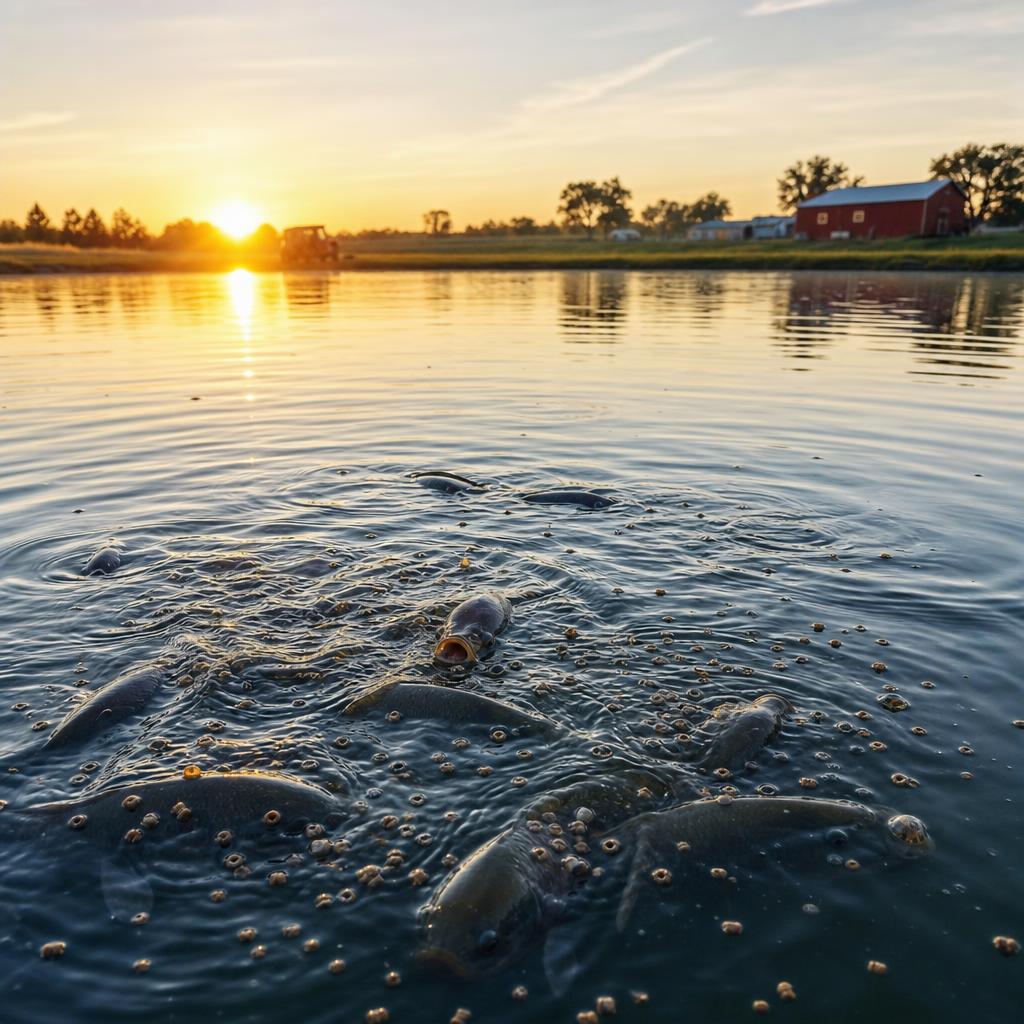
When the water warms up, a catfish pond comes alive. Summer pond management and feeding catfish in warm water go hand in hand, because warm water is when your fish are most active, feeding hard, and putting on the fastest growth of the year. Get the feeding right through these months and you'll see it in the size and health of the fish come fall.
But warm water is a double-edged thing. The same heat that fires up feeding also holds less oxygen and turns uneaten feed into a water-quality problem fast. Here in the Southeast, where summer ponds can sit hot and still for weeks, knowing how much to feed, when to feed, and when to hold off is what separates a thriving pond from a fish kill.
Why Warm Water Means Fast Growth
Catfish are cold-blooded, so their metabolism rises and falls with water temperature. As the pond warms into the comfortable summer range, their appetite and their ability to convert feed into growth climb right along with it. This is your prime growing season — the stretch where consistent, quality feeding pays off the most.
That growth potential is exactly why summer feeding deserves your attention. Feed too little and you leave growth on the table; feed too much and you can foul the water. The target is feeding enough to fuel that fast summer growth without pushing the pond past what it can handle.
Use a Good Floating Pelleted Feed
For pond feeding, a quality floating pelleted feed is your best friend. The single biggest advantage is that you can actually see it. When feed floats, you can watch the fish come up and eat, gauge how aggressively they're feeding, and tell exactly when they start to slow down and walk away.
That visual feedback is the whole strategy. It lets you feed to satiation — giving the fish all they'll actively clean up in a set period — without dumping in more than they'll eat. A sinking feed leaves you guessing, and guessing is how ponds get overfed. Reach for a floating catfish feed and let the fish tell you when they're done.
Feed to Satiation, But Never Overfeed
Here's the balance that matters most. Feed the fish what they'll eat, then stop. Every pellet that isn't eaten sinks, breaks down, and rots — and that decomposition consumes oxygen and fouls the water. In the heat of summer, when oxygen is already tight, overfeeding is one of the fastest ways to trigger trouble.
- Feed at a set spot and time so fish learn to come up and you can watch them consistently.
- Feed what they clean up in several minutes of active feeding, then quit.
- Back off if feeding slows. When fish get less aggressive at the surface, that's your signal to reduce the amount, not to force more in.
- Never leave uneaten feed floating. Leftover pellets mean you gave them too much.
It's better to slightly underfeed than to overfeed. The fish won't suffer from a little less, but the whole pond suffers from too much.
Feed in the Cooler Hours
Timing is a big deal in summer. Dissolved oxygen in a pond runs on a daily cycle — it's lowest in the early morning hours before dawn and highest in the afternoon after a day of sunlight and plant activity. But feeding in the heat of a blazing afternoon isn't ideal either, and the fish are often less comfortable then.
A good rhythm for hot weather is feeding in the cooler morning after oxygen has recovered, or in the evening as the day settles down. Watch how your fish respond and settle into a schedule that fits your pond. Consistency helps the fish, and it helps you spot changes in their behavior.
Watch Dissolved Oxygen in the Heat
Oxygen is the thing that will bite you in summer. Warm water simply holds less of it, and a pond heavy with fish and algae can crash low overnight. The classic warning sign is fish gasping at the surface in the early morning, mouths at the top, looking for the thin layer of oxygen where water meets air.
- Learn to check the pond at first light, when oxygen is at its lowest.
- Take fish piping at the surface in the early morning as a serious warning.
- Have aeration ready — a pump, paddlewheel, or agitator can pull a pond back from the edge.
- Watch for sudden algae die-offs and long stretches of hot, cloudy, still weather, which raise the risk.
If your pond runs heavy, aeration isn't a luxury in summer — it's insurance. An emergency aerator on hand has saved many a Southeast pond during a July night.
Hold Off Feeding When Fish Are Stressed
There are days you should skip a feeding, and reading them is a skill worth building. When oxygen is low, when fish are stressed, or when they're clearly off their feed, don't push it. Feeding stressed fish adds an oxygen demand right when the pond can least afford it, and it can turn a shaky morning into a fish kill.
If fish were gasping at dawn, if a storm just churned the pond, or if the water's had a die-off, ease back. Let the pond stabilize before you resume normal feeding. The fish will make up the growth once conditions improve — a missed meal is nothing compared to a lost pond.
Feed a good floating pellet, let the fish show you when they're full, feed the cool hours, and keep one eye on oxygen all summer long. Manage those things and warm water becomes what it should be — your best growing season of the year. Need help picking the right catfish feed for your pond? Find a Mid South Feeds dealer near you.