 Dogs & Cats
 Cattle
 Equine
 Poultry
 Swine
Swine Goats & Sheep
 Game Bird
 Gamecock
 Deer & Wildlife
 Fish & Pond
 Rabbit
 Specialty
 Ingredients & Bulk
 Special Order

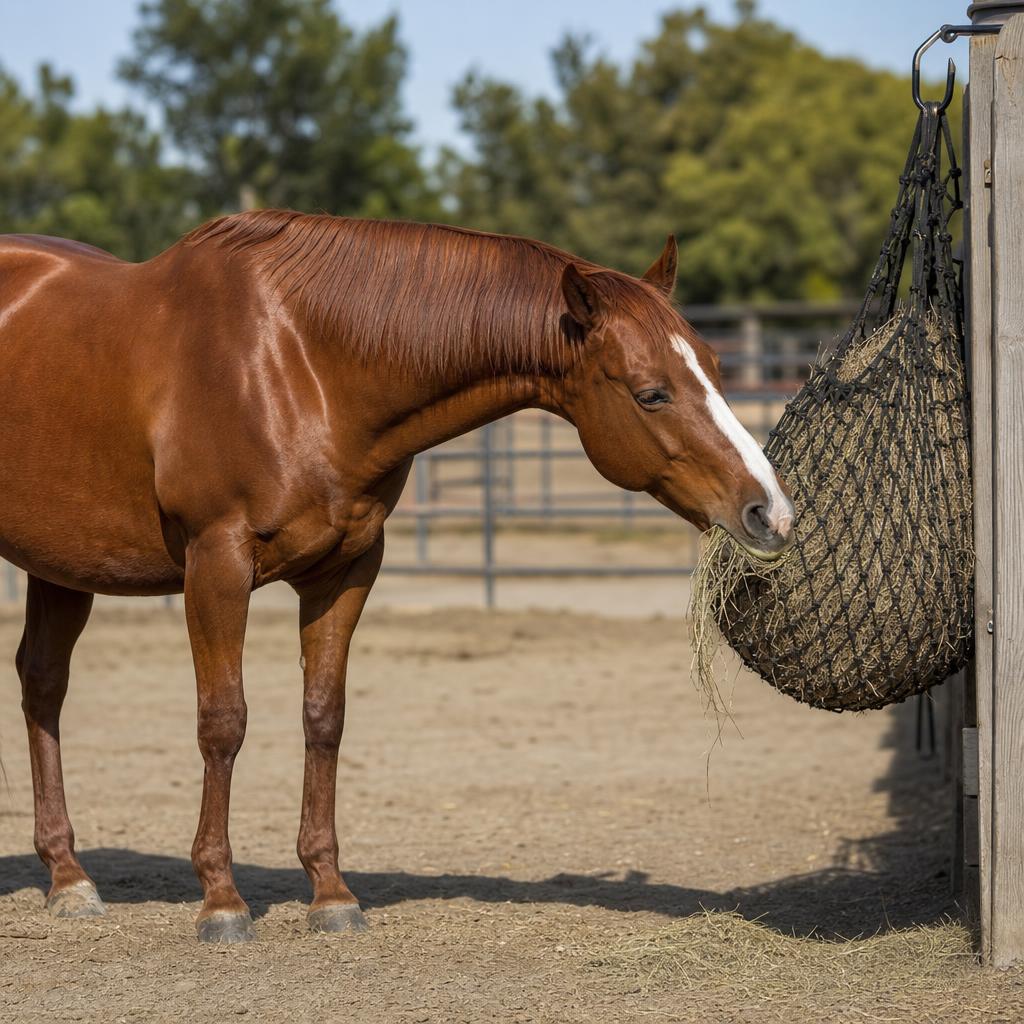
Some horses stay round on a stiff breeze. If you've got an easy keeper — the kind that holds weight on almost nothing and blows up on a little spring grass — you know feeding one is a different job entirely. Feeding the easy keeper horse without the weight gain is less about adding calories and more about supplying the protein, vitamins, and minerals your horse needs while keeping the excess energy out of the diet.
It matters more than it might seem. An overweight horse isn't just carrying extra pounds; obesity drives laminitis and metabolic problems that can turn into an expensive, painful mess in a hurry. That risk climbs in our lush Southeast spring and summer pastures. Getting the balance right protects your horse's feet and long-term health.
Why Easy Keepers Gain Weight So Easily
Easy keepers are often the efficient breeds — ponies, drafts, and many stock-type horses — that evolved to make the most of sparse forage. Put that efficient metabolism on rich pasture and unlimited feed and the weight piles on fast. Many of these horses are also prone to insulin dysregulation, which makes them far more sensitive to sugars and starches in the diet.
The trap owners fall into is cutting the feed way back to control weight. That does drop calories, but it also strips out the protein, vitamins, and minerals a horse needs every day. You end up with a fat horse that's still nutritionally short. The fix is to separate calories from nutrition.
Use a Ration Balancer or Low-Starch Feed
This is where a ration balancer earns its keep. A balancer is a concentrated feed fed in small amounts — often a pound or two a day — that delivers quality protein, vitamins, and minerals without the calories of a full grain ration. For an easy keeper, that's exactly the tool you want: it fills the nutritional gaps a forage-only or restricted diet leaves behind, without adding the energy that puts on weight.
If your horse needs a bit more than a balancer provides, a low-starch horse feed fed at the recommended rate is the next step. The key word is low-starch — you want a feed that keeps sugars and starches down, which is easier on a metabolic horse. Whatever you choose, feed it according to the directions on the tag; feeding a full concentrate at a fraction of the rate leaves the horse short on the very nutrients the feed is designed to supply.
Manage the Forage — It's the Real Driver
Forage makes up the bulk of any horse's diet, so for an easy keeper it's where most of your calorie control happens. A few practical moves make a big difference:
- Test your hay. Have your hay analyzed so you know its sugar and starch levels. For metabolic-prone horses, lower-sugar hay is worth seeking out, and soaking hay can help reduce sugars.
- Use slow feeders. Small-hole hay nets slow intake, stretch a meal out over hours, and keep the gut busy without piling on quantity.
- Limit lush pasture. Rich spring and early summer grass is loaded with sugars. Use a grazing muzzle, limit turnout time, or set up a dry lot to control intake during the risky seasons.
- Weigh, don't guess. Feed hay by weight rather than by the flake, since flakes vary a lot.
Don't cut forage so hard that the horse goes long stretches with an empty stomach — that invites ulcers and stall vices. The goal is controlled, lower-calorie forage offered often, not starvation.
Body Condition Scoring: Know Where You Stand
You can't manage what you don't measure. Body condition scoring gives you an honest read on your horse's fat cover using a simple 1-to-9 scale, where the middle of the range is ideal. Learn to run your hands over the key spots and feel what's really there under a summer coat.
- Feel along the ribs — you should be able to feel them easily without seeing them standing out.
- Check the crest of the neck for a thick, firm, cresty appearance.
- Look at fat pads behind the shoulder, over the loin, and at the tailhead.
Score your horse every few weeks and jot it down. A cresty neck and hard fat pads are red flags worth a conversation with your veterinarian, because they often go hand in hand with metabolic trouble.
Don't Forget Exercise
Feed management gets a lot of attention, but exercise is half the equation. Regular work burns calories and, just as importantly, improves how the body handles sugars — which is exactly what a metabolic-prone easy keeper needs. Even consistent light-to-moderate work adds up.
In our summer heat, ride in the cooler morning or evening hours, keep water available, and build the horse up gradually. A horse that's sound and moving well is far easier to keep at a healthy weight than one standing in a stall.
Putting It Together
- Base the diet on tested, lower-sugar forage, fed by weight and slowed down.
- Add a ration balancer or low-starch feed to cover protein, vitamins, and minerals.
- Limit lush pasture during the high-sugar seasons.
- Body condition score regularly and adjust.
- Keep the horse in consistent work.
The whole game with an easy keeper is giving the horse everything it needs and nothing it doesn't. Balance the nutrition, control the forage and pasture, keep it moving, and you'll protect those feet for years to come. If you're not sure which balancer or low-starch feed fits your situation, find a Mid South Feeds dealer and talk through the options.