 Dogs & Cats
 Cattle
 Equine
 Poultry
 Swine
Swine Goats & Sheep
 Game Bird
 Gamecock
 Deer & Wildlife
 Fish & Pond
 Rabbit
 Specialty
 Ingredients & Bulk
 Special Order

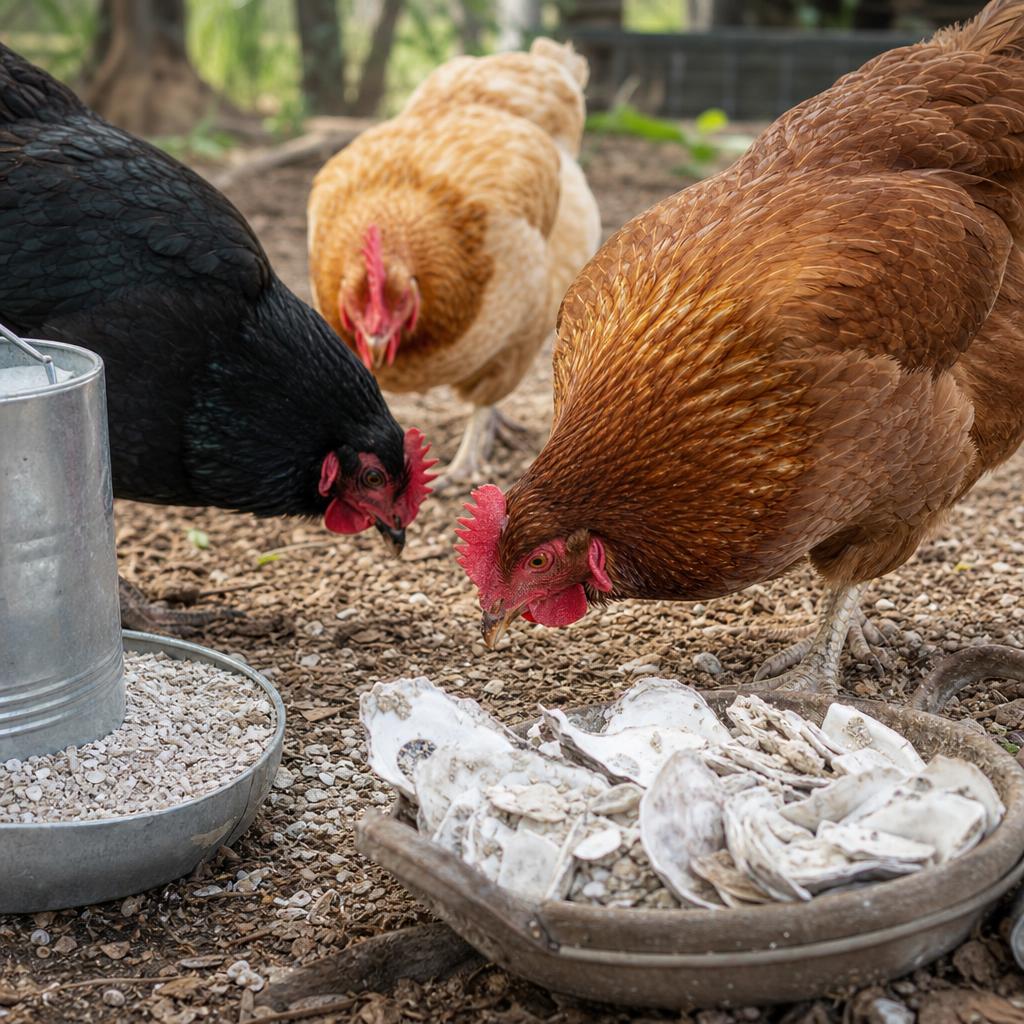
Walk into any feed store and you'll find two products that get mixed up more than just about anything else in the poultry aisle: grit and oyster shell. They look similar, they sit on the same shelf, and folks grab one thinking it does the job of the other. But grit vs. oyster shell is a real distinction, and knowing what your chickens actually need from each one keeps your flock healthy and your eggshells strong.
Here's the short version before we dig in: grit is for grinding food, and oyster shell is for building eggshells. They do completely different jobs, and most flocks benefit from having both available. Let's break down what each one is and when your birds need it.
What Insoluble Grit Actually Does
Grit is nothing fancy — it's tiny, hard, insoluble stones. Chickens don't have teeth, so they swallow food whole and grind it up in the gizzard, a muscular part of the digestive tract. The grit sits in the gizzard and acts like the teeth the bird never had, mashing and grinding everything that comes through.
The key word is insoluble. Grit doesn't dissolve — it stays in the gizzard doing its grinding work, and the bird slowly wears it down and replaces it over time. It doesn't add any real nutrition; it's a tool, not a food.
When Chickens Need Grit
Whether your birds need grit depends entirely on what they're eating. A complete, formulated feed is already ground fine and fully digestible, so a bird eating nothing but complete feed doesn't strictly need grit. But the moment your chickens eat anything beyond that feed, grit comes into play.
- Scratch grains — whole or cracked grains need grinding.
- Treats and kitchen scraps — anything chunky or fibrous.
- Forage — birds on pasture eating grass, weeds, seeds, and bugs need grit to process it all.
Since most backyard flocks free-range at least a little or get the occasional treat, the simple move is to keep grit available free choice. The birds take what they need. If your chickens have access to sandy or gravelly ground, they may pick up some naturally, but offering it removes any doubt.
Don't Forget Chick Grit
Baby chicks that get anything beyond starter feed — even a little treat or forage — need grit too, just in the right size. Chick grit is a finer grade made for their smaller systems. Never offer chicks the coarse grit meant for grown birds.
What Oyster Shell Does — And Why It's Different
Oyster shell is a whole different animal. It's a soluble calcium source, and its job is to give laying hens the calcium they need to build strong eggshells. An eggshell is mostly calcium, and a hen pulls a remarkable amount of it out of her body for every single egg. If she doesn't get enough in her diet, she'll draw it from her own bones — and you'll start seeing thin, soft, or shell-less eggs.
Because it's soluble, oyster shell dissolves and gets absorbed rather than sitting in the gizzard like grit. Crushed limestone does a similar job as a calcium source. This is about nutrition and shell quality, not grinding food. That's the core of the grit vs. oyster shell difference: one grinds, one gets absorbed for shell-building.
Layer Feed Already Has Calcium — Don't Overdo It
This is where people trip up. A good layer feed is already formulated with the calcium a laying hen needs, so you're not starting from zero. Oyster shell is a supplement offered on the side, because individual hens vary — a heavy layer or an older bird may want a little extra, and she'll help herself if it's there.
The important part is that calcium balance matters. Too much calcium is hard on birds that aren't laying — that includes roosters, chicks, and pullets not yet in production. So don't mix oyster shell into the feed for the whole flock. Offer it free choice in its own container and let the layers that need it take what they want, while the birds that don't need it leave it alone.
How to Offer Both the Right Way
The setup is simple once you understand the two products do different jobs. Keep them separate, keep them available, and let the birds self-regulate.
- Feed a complete, quality feed as the foundation of the diet.
- Offer grit free choice in its own container if your birds eat anything beyond complete feed.
- Offer oyster shell free choice in a separate container for your laying hens.
- Use the correct sizes — chick grit for chicks, standard grit for adults.
- Keep both dry and topped off, and let the flock take what it needs.
Never combine the two in one dish, and never assume one replaces the other. They solve two different problems.
Bottom line: think of grit as the tool your hens grind with and oyster shell as the calcium they build shells with. Set out both in their own containers, feed a solid layer ration underneath it all, and your flock will handle the rest. If you're not sure which products fit your birds, find a Mid South Feeds dealer and ask — that's what they're there for.