 Dogs & Cats
 Cattle
 Equine
 Poultry
 Swine
Swine Goats & Sheep
 Game Bird
 Gamecock
 Deer & Wildlife
 Fish & Pond
 Rabbit
 Specialty
 Ingredients & Bulk
 Special Order

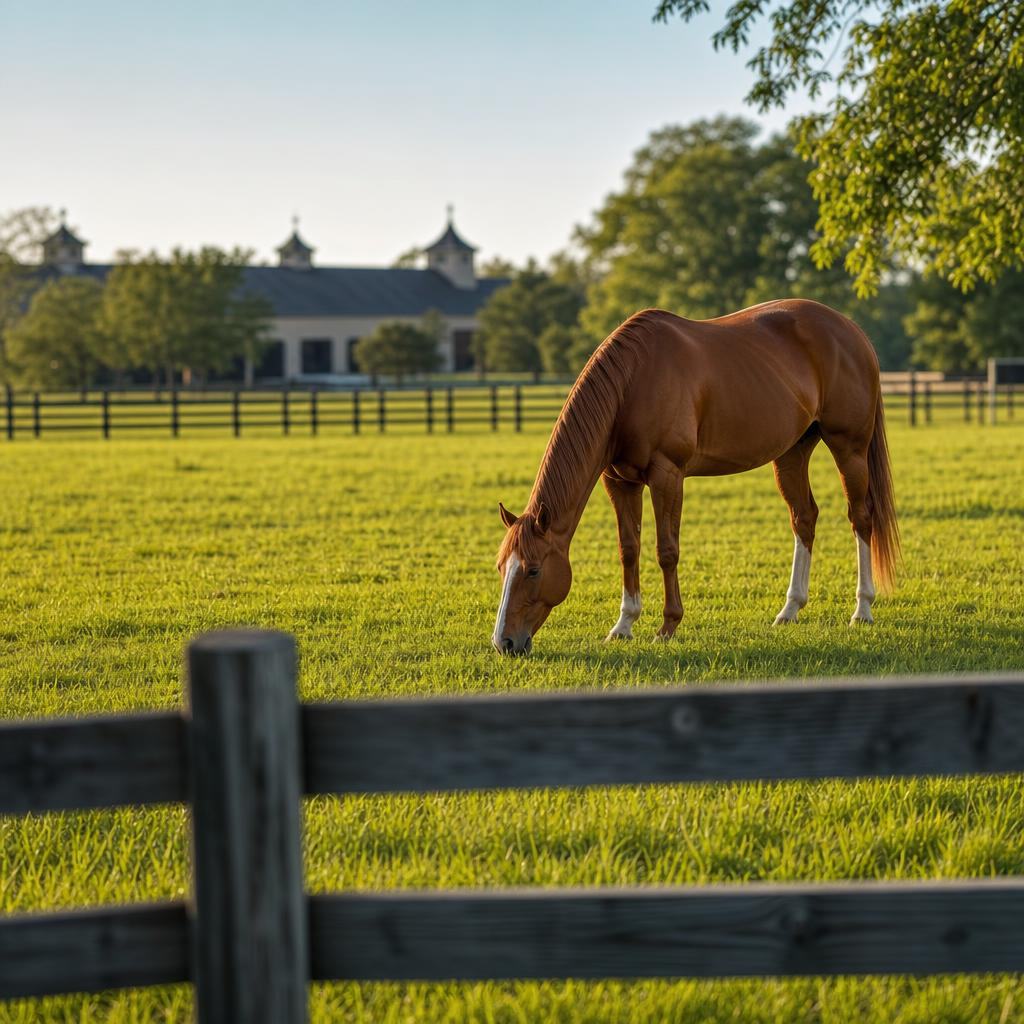
When spring green-up hits and summer pastures come on strong here in the Southeast, most of us are glad to see the grass. But that lush, fast-growing forage carries a hidden risk for horses: a spike in sugars and starches — what nutritionists call NSC, or non-structural carbohydrates. For easy keepers and metabolic horses, that sugar surge is one of the most common triggers of laminitis, a painful and sometimes crippling inflammation inside the hoof.
Laminitis isn't just a spring problem, either. Grass keeps stockpiling sugar through the warm months, especially on cool nights followed by bright sunny days. If you own a pony, a stout Quarter Horse, or any horse that gets fat on air, this is the season to pay attention.
The good news: laminitis is far easier to prevent than to treat. A little management now saves a world of hurt later.
Why Summer Pasture Sugars Spike NSC
Grass makes sugar during the day through photosynthesis and burns some of it off overnight. On a sunny afternoon after a chilly night, plants pile up sugar faster than they use it, so pasture NSC tends to run highest from late morning through evening. Stressed grass — drought-stunted, overgrazed, or frost-touched — can hold even more sugar than healthy, actively growing pasture.
For a healthy, hard-working horse, that sugar is usually just fuel. For an overweight horse, an insulin-resistant horse, or one with a history of laminitis, that same load can tip the scales toward a flare-up. Knowing when and how much your horse grazes is half the battle.
Limiting Grazing Without Locking Them Up
You don't have to keep an at-risk horse off grass entirely, but you do need to control the dose. A few practical ways to do that:
- Use a grazing muzzle. A well-fitted muzzle cuts intake dramatically while still letting the horse move, socialize, and nibble. Introduce it gradually and check for rubs.
- Graze in the early morning. Turn out overnight and pull them in by mid-morning, when pasture sugars are typically at their lowest. Avoid afternoon and evening grazing on high-risk horses.
- Set up a dry lot. A grass-free paddock with quality hay lets a horse move and eat without gorging on sugar. This is the gold standard for a horse already showing metabolic trouble.
- Strip-graze or rotate. Fencing off small sections limits how much rich grass a horse can reach at once.
Whatever method you choose, make changes gradually. A horse's gut needs time to adjust, and abrupt swings in diet cause their own troubles.
Choosing Low-Starch Feeds and Ration Balancers
Feed matters just as much as pasture. An easy keeper rarely needs a rich, grain-heavy concentrate — that only adds more starch and sugar on top of what the grass is already delivering. Instead, lean toward a low-starch horse feed or a ration balancer.
Here's the difference. A ration balancer is fed in small amounts (often a pound or two a day) and delivers the protein, vitamins, and minerals a horse needs without a big load of calories or starch. It's ideal for the horse that holds weight on forage alone but still needs its nutritional gaps filled. A low-starch feed works for horses that need more condition but can't handle high sugar and starch.
When you're comparing options, look for feeds described as low-NSC or controlled-starch, and match the amount to your horse's actual workload and body condition — not the scoop that's handy. If you're unsure what fits, a Mid South Feeds dealer can help you sort through the categories; you can find a Mid South Feeds dealer near you.
Recognizing the Early Warning Signs
Catching laminitis early can mean the difference between a horse that recovers and one that's never quite sound again. Learn to spot the first hints:
- Heat in the hoof. A hoof that feels noticeably warm compared to the others is a red flag.
- A bounding digital pulse. Feel the artery at the back of the fetlock or pastern. A strong, throbbing pulse where you'd normally feel little to nothing suggests inflammation.
- Shifting weight. A horse rocking back onto its heels or repeatedly shifting from foot to foot is trying to take pressure off sore toes.
- The classic stance. Front feet stretched out ahead, hind feet tucked underneath — a horse leaning back off painful front feet.
- Short, reluctant steps. A stiff, walking-on-eggshells gait, especially turning in tight circles or on hard ground.
- Lying down more than usual. A horse that's suddenly reluctant to stand is hurting.
When in Doubt, Check the Feet
Get in the habit of running your hands down each leg and feeling for heat and pulse during summer, especially after a stretch of sunny days on rich pasture. It takes thirty seconds and gives you a baseline so you'll notice when something changes.
Call the Vet Fast — Don't Wait It Out
Laminitis is a genuine emergency. The internal damage can progress in hours, not days, so the moment you suspect it, get your veterinarian on the phone. Early intervention — pain management, hoof support, and getting the horse off the trigger — gives the best shot at a full recovery.
While you wait for the vet, move the horse to soft footing like deep bedding or sand, pull it off grass, and don't force it to walk any more than necessary. Resist the urge to hand-walk a laminitic horse; movement on damaged feet can make things worse.
Build a Season-Long Plan
Prevention beats crisis management every time. Before the grass really takes off, put a plan in place: know your horse's body condition, decide on your grazing strategy, have the right feed on hand, and talk with your vet about any horse with a metabolic history. Consider a spring metabolic workup for repeat offenders so you're managing with facts, not guesses.
The bottom line: watch the grass, watch the waistline, and watch the feet. Manage the sugar before it manages your horse — and when something feels off, trust your gut and call for help sooner rather than later. Your horse's soundness is worth the extra caution.