 Dogs & Cats
 Cattle
 Equine
 Poultry
 Swine
Swine Goats & Sheep
 Game Bird
 Gamecock
 Deer & Wildlife
 Fish & Pond
 Rabbit
 Specialty
 Ingredients & Bulk
 Special Order
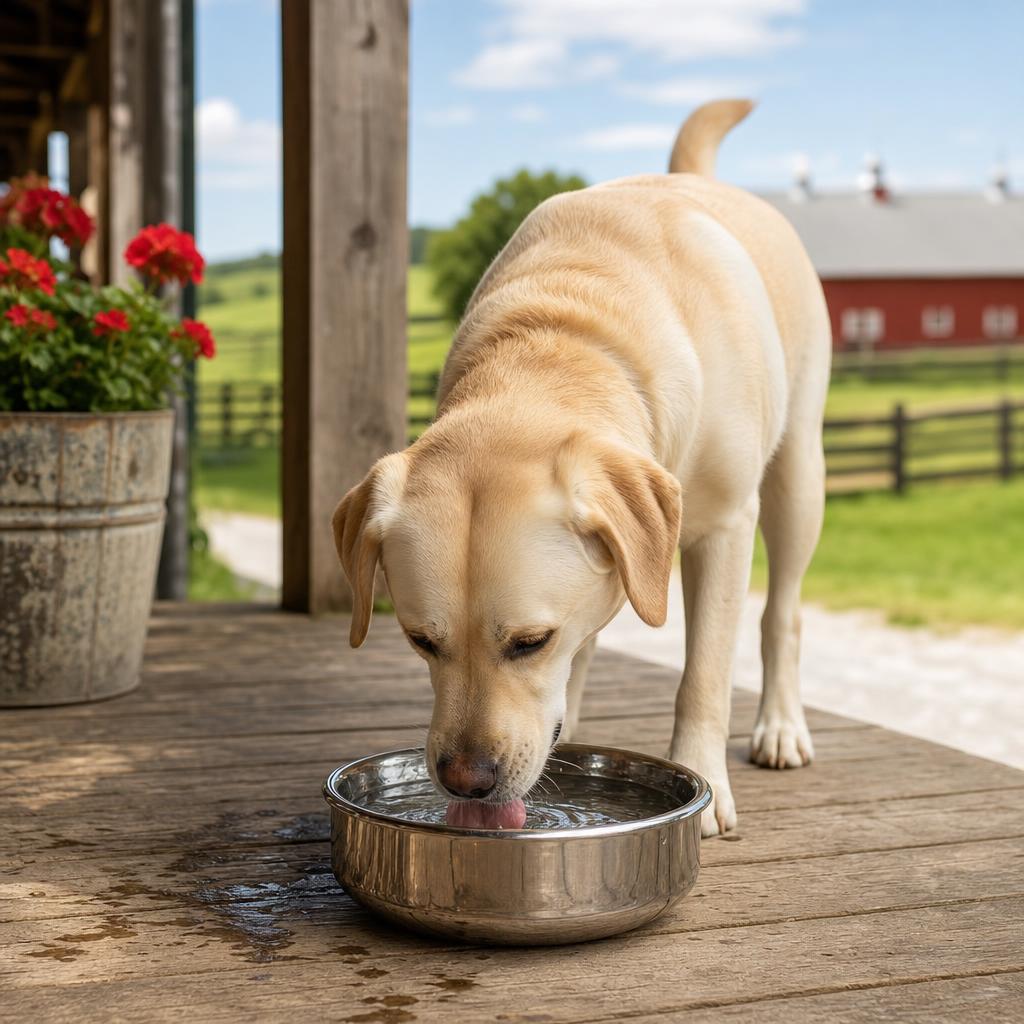
Whether you've got a stock dog working cattle in the pasture or a good old porch hound who mostly supervises, summer changes what your dog needs from you. Summer feeding and hydration tips for active dogs come down to a few sensible habits: water first, calories matched to the work, smart timing around meals and exercise, and a close eye on body condition. In the Southeast's heat and humidity, getting these right keeps your dog healthy and comfortable through the dog days.
Dogs handle heat differently than we do — they can't sweat to cool off, so they rely on panting and shade. That makes hydration and thoughtful feeding even more important once the temperature climbs. Here's how to keep your dog fueled and cool all summer.
Hydration Comes First
Before we talk food, talk water — it's the most important thing on this list. A dog can lose fluid fast through panting on a hot day, and dehydration sneaks up quickly. Make clean, cool water easy to find and impossible to run dry:
- Keep multiple water bowls available, indoors and out, and refresh them often.
- Place water in the shade so it stays cool and inviting.
- Carry water for your dog when you head out to work or walk — don't count on finding a source.
- Watch for signs of dehydration: heavy panting, thick or sticky saliva, dull sunken eyes, loss of skin elasticity, or lethargy.
If you ever see signs of true heat stress — frantic panting, bright red gums, staggering, vomiting, or collapse — cool your dog and call your veterinarian right away. Heatstroke is an emergency.
Match Calories to Activity
Not every dog needs the same amount of food in summer, and the difference comes down to how hard they're working. A farm dog running fence lines, moving stock, or hunting is burning serious energy and may need more calories and a higher-quality, protein-rich diet to keep up. Feeding that dog like a couch companion will leave him thin and worn down.
On the flip side, many pets get less active in the heat — the afternoon walk gets shorter, and they'd rather nap on the cool floor. If you keep filling the same bowl while activity drops, the pounds add up, and extra weight makes heat even harder to handle. Adjust portions to the season and the actual workload, and feed a complete, quality dog food so every bite counts. When you're unsure about the right amount, your veterinarian can help you set a target.
Feed During the Cooler Parts of the Day
Timing helps a lot in summer. Dogs, like most animals, have less appetite in the heat of the day, and a bowl left out in the midday sun isn't appealing. Offer meals in the cooler morning and evening hours when your dog is more willing to eat and better able to digest comfortably.
The same logic applies to exercise. Save hard work and long runs for early morning or after the sun drops, and be mindful of hot pavement or metal truck beds that can burn paw pads. A dog worked in the cool of the day eats better and recovers better.
Mind the Timing Around Hard Exercise
This one is especially important for big, deep-chested dogs, but it's smart practice for any dog. Avoid feeding a large meal right before or right after hard exercise. In deep-chested breeds, a full stomach combined with heavy activity is associated with a higher risk of bloat — a sudden, life-threatening twisting of the stomach.
A few simple habits lower the risk:
- Let your dog rest and settle before offering a big meal after hard work — wait until the panting has calmed and he's cooled down.
- Don't send a dog out for heavy exercise on a stomach full of food and water.
- Consider splitting the daily ration into smaller meals rather than one big feeding.
- Discourage fast, gulping eating, which swallows air along with the food.
If your dog ever shows a swollen, tight belly with unproductive retching, restlessness, and distress, treat it as an emergency and get to a veterinarian immediately.
Quality Protein and Body Condition
Working dogs run on protein and fat — those nutrients rebuild muscle and supply steady energy for long days. A quality food with good protein serves an active dog far better than a bargain filler that leaves him hungry and running on empty. Even for less active dogs, a complete, balanced diet supports the coat, joints, and overall health that help them handle summer well.
Let body condition be your guide rather than the number on the bag. Run your hands over your dog's ribs: you should feel them easily under a light layer, without them being sharply visible, and you should see a tucked waist from above. If ribs are buried, ease back on portions; if they're too prominent on a hard-working dog, bump the food up. Reassess through the season, because activity and appetite shift with the weather.
Never Without Shade and Water
All the feeding strategy in the world won't help a dog left in the heat. Any dog spending time outdoors needs constant access to deep shade and fresh water — no exceptions. Never leave a dog in a parked vehicle, even briefly, since the inside heats to deadly levels in minutes. A shady spot, moving air, and a full water bowl are the baseline your dog depends on all summer.
Put it all together and summer care is simple: water everywhere and always, calories that fit the work, meals and exercise scheduled for the cool hours, a careful gap between big meals and hard effort, and a body-condition check every few weeks. Keep your dog cool, hydrated, and well fed, and he'll be ready to work — or supervise — right alongside you. Need help picking the right food? You can find a Mid South Feeds dealer nearby.