 Dogs & Cats
 Cattle
 Equine
 Poultry
 Swine
Swine Goats & Sheep
 Game Bird
 Gamecock
 Deer & Wildlife
 Fish & Pond
 Rabbit
 Specialty
 Ingredients & Bulk
 Special Order
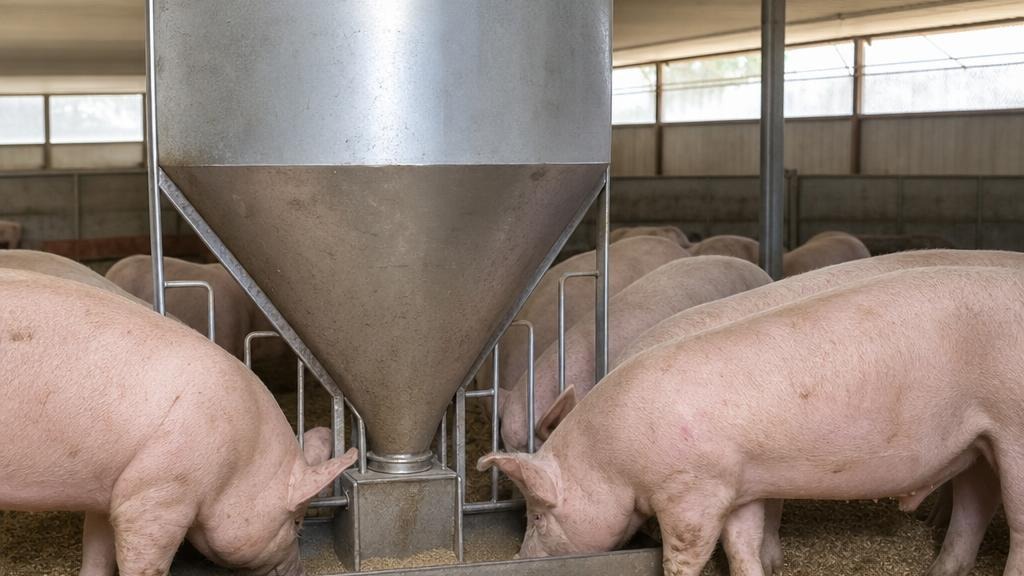
Feed on the floor is more than a housekeeping problem. It is purchased nutrition that pigs cannot use, and it makes feed-disappearance records look like intake. A feeder opened too wide can build a deep pile that pigs root out. One closed too tightly can limit access, especially for smaller or less aggressive pigs. The useful setting is the one that keeps fresh feed available without filling the pan.
There is no single notch that works for every feeder, feed form, or group. Pellets and meal flow differently. Humidity changes flow. Pigs grow, and their eating behavior changes. Feeder adjustment is therefore a short, repeated management task rather than a one-time setup.
Know What a Good Pan Looks Like
For many dry feeders, the goal is a light, even presentation of feed across part of the trough or pan, with the mechanism working freely and no large mound. Exact coverage targets depend on feeder design and manufacturer guidance. The key is that pigs can get feed without having to fight an empty pan, while loose feed is not being pushed onto the floor.
Observe during an active feeding period. An empty pan at one quiet moment does not always mean restriction, and a full pan immediately after filling does not tell you how much will be wasted. Watch pigs operate the feeder, then look at the floor and corners after they move away.
Signs the Feeder May Be Too Open
- Feed forms a deep layer or piles in the trough.
- Pigs sort, nose, or sweep feed out while searching through it.
- Fresh feed accumulates beneath or around the feeder.
- Caked or stale material remains in corners.
- Feed disappearance rises without a matching change in pigs or growth.
Before closing the setting, make sure the waste is truly coming from adjustment. A damaged lip, loose gate, bridging feed, poorly positioned feeder, or water leak can create a similar mess.
Signs the Feeder May Be Too Tight
- The pan stays bare during periods when pigs want to eat.
- Pigs work the mechanism repeatedly but little feed drops.
- Smaller pigs wait behind larger pigs or leave without eating.
- Feed bridges above the opening, especially in humid conditions.
- Intake or growth becomes uneven across the pen.
Feeder space matters along with the opening. A perfectly adjusted feeder cannot solve inadequate access for the number and size of pigs in the pen. Check the feeder manufacturer's capacity guidance, observe competition, and make sure every pig can reach feed and water.
Adjust in Small Steps
Large turns make it hard to learn which setting worked. Use this routine:
- Observe pan coverage, pig behavior, and floor waste before touching the feeder.
- Check for damp feed, bridging, broken parts, or an empty bin.
- Move the adjustment only one small increment.
- Allow pigs time to use the feeder, then observe again under normal conditions.
- Record the date, pen, feed form, and setting.
When a new feed is introduced, watch more often. A change from pellets to meal, a different particle size, or a shift in moisture can alter flow even when the hardware has not moved. Follow the feed label and make ration transitions gradually. The swine feed page can help you compare feed stages and forms; it cannot tell you the correct gate setting for a specific feeder.
Keep Fresh Feed Moving
Do not use a wide-open feeder to hide poor flow. Remove wet or spoiled material promptly and clear buildup from corners and openings. Refill often enough to keep feed fresh without leaving long-standing inventory in a humid feeder. Nursery, grow-finish, and sow units operate on different schedules, so set inspection frequency to the group.
Water Is Part of Feed Intake
Pigs need dependable access to clean water to maintain normal feed intake. Check drinker flow and height for the pig size, and repair leaks that wet the feeder or floor. In a wet-dry feeder, follow the equipment maker's setup instructions; the water and feed controls work as a system and should not be managed as unrelated parts.
Use Records That Separate Intake From Waste
Feed disappearance is the amount delivered minus what remains. It includes whatever was spilled, spoiled, or removed, so it is not automatically the amount eaten. Pair feed records with pig counts, weights or growth checks, mortality and removal records, and observations of waste. A sudden unexplained jump is a reason to inspect the system, not proof that pigs need more feed.
Mark a reference line near the adjustment or photograph the setting. That prevents accidental changes from becoming a mystery and helps different caretakers use the same standard. Assign responsibility for feeder checks instead of assuming someone else noticed.
A Practical Daily Walk-Through
- Confirm feed is present in the bin and flowing freely.
- Look for a light, usable layer rather than a deep pile or bare pan.
- Watch both large and small pigs approach the feeder.
- Clear damp, caked, or stale feed.
- Check drinkers and repair leaks.
- Change one setting at a time and record it.
Good feeder management protects both access and efficiency. It does not require a complicated tool—just consistent observation and small corrections. For help choosing an age-appropriate complete feed available locally, speak with a swine nutrition professional or use the dealer locator to contact a nearby retailer.