 Dogs & Cats
 Cattle
 Equine
 Poultry
 Swine
Swine Goats & Sheep
 Game Bird
 Gamecock
 Deer & Wildlife
 Fish & Pond
 Rabbit
 Specialty
 Ingredients & Bulk
 Special Order

A dog food label contains more useful information than the picture on the front, but it helps to know where to look. Marketing phrases can catch your eye while the details that guide everyday feeding—the nutritional adequacy statement, calorie content, life stage, feeding directions, and net weight—sit in smaller type elsewhere on the package.
Reading those sections and measuring meals consistently will not produce one perfect portion for every dog. It does give you a sound starting point that can be adjusted with your veterinarian based on body condition, activity, age, and treats. The process is less about chasing a trendy ingredient and more about knowing what the whole diet provides.
Start With the Nutritional Adequacy Statement
Look for the statement that identifies whether the food is complete and balanced and for which life stage. Adult maintenance, growth, reproduction, and all life stages do not mean the same thing. A food intended only for intermittent or supplemental feeding should not quietly become the entire daily diet unless a veterinarian has directed its use.
Match the life-stage statement to the dog in front of you. Puppies, reproducing dogs, and healthy adults have different nutrient needs. Senior dogs vary widely, so "senior" on the front panel is not enough by itself; health, body condition, and veterinary guidance still matter.
Find Calories per Cup, Can, or Serving
In the United States, dog food labels include a calorie content statement. It is commonly shown as kilocalories per kilogram and per familiar household unit, such as a cup or can. The per-cup or per-can number is the easiest for daily use.
Two foods can look similar in the bowl but provide different calories in the same volume. That is why carrying over the exact same number of cups after changing foods may unintentionally change total energy intake. Use the label on the current package, not a number remembered from a different recipe.
Use Feeding Directions as a Starting Point
The feeding chart is a general guide, not a prescription. It often starts with body weight, while an individual dog's needs also reflect neuter status, activity, environment, age, and body condition. Begin near the appropriate label recommendation, count all other calorie sources, and then monitor the dog rather than automatically refilling the bowl.
Measure the Meal You Think You Are Feeding
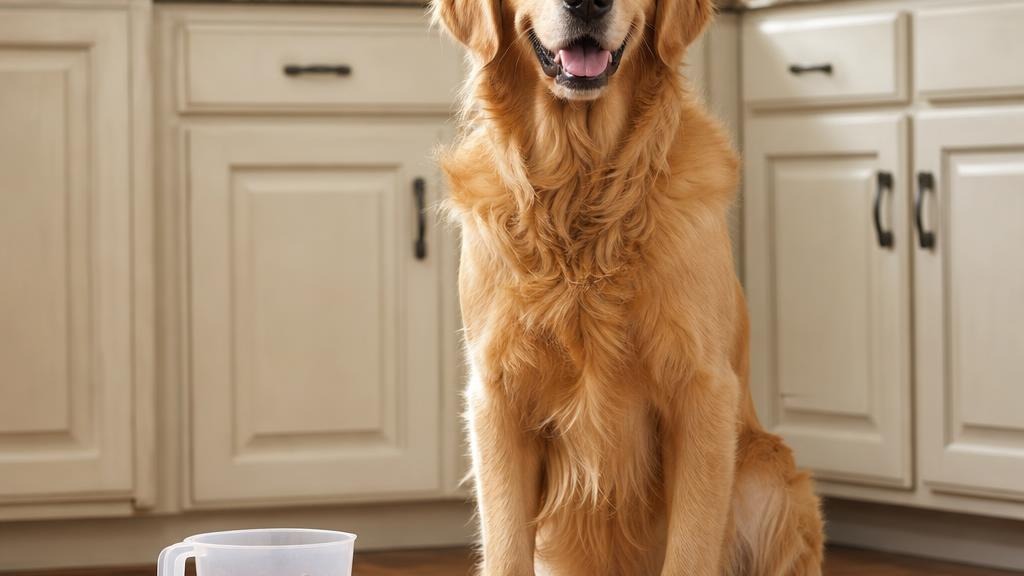
A drinking glass, coffee mug, or heaping scoop is not a standard cup. Even a marked scoop can be inconsistent when one person levels it and another piles it high. For better repeatability:
- Use the same level measuring cup each time, or weigh portions on a small kitchen scale.
- Write the daily amount where every family member can see it.
- Divide the daily total into the dog's normal number of meals.
- Pre-portion food when several people share feeding duties.
- Keep the bag or label information until the food is finished.
Weighing is especially useful because kibble shape and density vary. If the label lists calories per cup but not per gram, the manufacturer can clarify conversion information. Do not invent a conversion from another food.
Read the Ingredient List in Context
Ingredients are listed in descending order by weight as formulated, but that order does not tell the complete nutritional story. Ingredients contain different amounts of water, and nutrients come from the full recipe rather than the first item alone. The guaranteed analysis also needs context: percentages on foods with very different moisture levels are not direct apples-to-apples comparisons.
Instead of ranking a food by a single ingredient or the highest crude protein number, check the adequacy statement, life stage, calorie content, feeding directions, manufacturer contact information, and how the dog does over time. The dog and cat feed page can help you see available choices without turning the front label into the only decision tool.
Count Treats and Extras
Treats, chews, table food, training rewards, and food used to hide medication all add to the day. Small items are easy to forget, especially when several family members give them. Put the day's treat allowance in one container each morning; when it is empty, the whole household knows the limit has been reached.
Extras should remain a small part of the overall diet so they do not crowd out complete and balanced food. If training requires many rewards, use tiny pieces or reserve part of the measured daily kibble for sessions, when appropriate for the dog.
Check Body Condition, Not Just Bowl Size
Observe the dog's shape and feel the ribs regularly. In an ideal range, many dogs have ribs that are easy to feel with a light fat covering, a visible waist from above, and an abdominal tuck from the side. Coat, breed, and conformation can affect appearance, so ask your veterinarian to show you how to use a body condition score for your dog.
Record weight and condition over time. If the trend moves away from the veterinarian's target, review portions, treats, and activity before making a measured adjustment. Unexpected weight or appetite changes deserve a veterinary conversation rather than a do-it-yourself diet overhaul.
A Five-Minute Label Routine
- Confirm species, life stage, and complete-and-balanced status.
- Locate calories per cup, can, or serving.
- Read the feeding chart as an initial range, not an automatic answer.
- Measure consistently and count treats.
- Track weight and body condition with your veterinary team.
A useful label routine is simple enough to repeat with every bag or can. If you are comparing everyday feeding options after talking with your veterinarian, a local feed retailer can help you locate the formats you have selected. Use the dealer locator to find one nearby.