 Dogs & Cats
 Cattle
 Equine
 Poultry
 Swine
Swine Goats & Sheep
 Game Bird
 Gamecock
 Deer & Wildlife
 Fish & Pond
 Rabbit
 Specialty
 Ingredients & Bulk
 Special Order

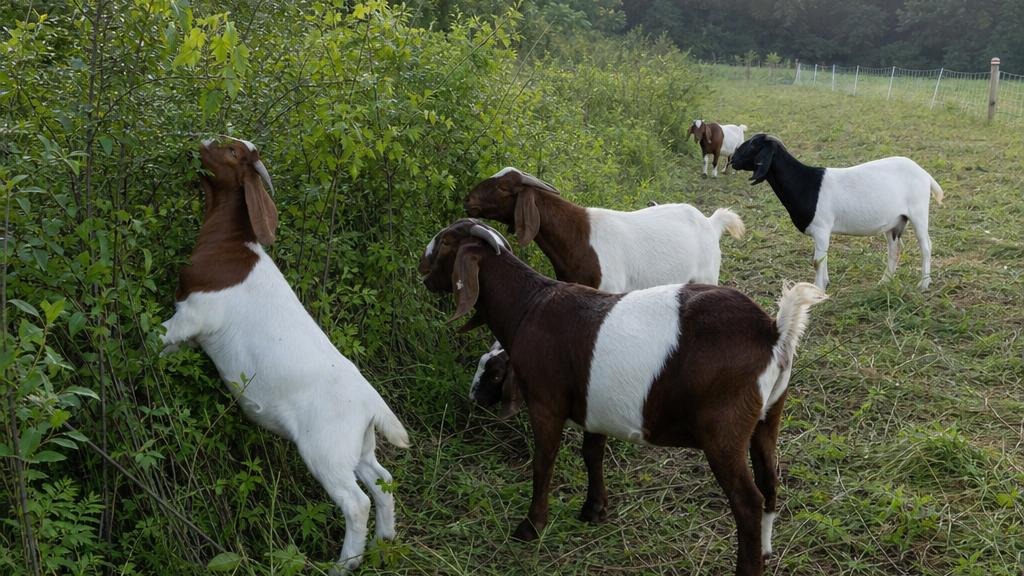
Goats are selective browsers, not small lawn mowers. Given a choice, many reach for leaves, vines, twigs, and broadleaf plants before clipping a pasture into an even carpet. That behavior can be useful in late summer, when grass quality may be slipping but browse remains available. It can also create trouble when goats repeatedly strip favorite plants, graze too close, or gain access to toxic landscaping.
A good browse plan connects plant supply, paddock movement, animal demand, and a backup forage. The goal is not to make goats live on brush alone. It is to use safe browse as part of a forage-first program and add stored forage or a balanced supplement when the available diet no longer meets the group's needs.
Start With an Inventory of the Paddock
Walk every area before turning goats in. Identify desirable plants, toxic plants, weak fences, dumped yard material, and places where goats may become tangled or trapped. Plant identification matters because "they will know what not to eat" is not a safe management plan. Storm debris and ornamental clippings should never be tossed into a goat paddock.
Estimate usable leaves and stems at goat height rather than total green acreage. A paddock full of mature, trampled, or unreachable growth may offer less feed than it appears. Note whether water, shade, and mineral can be placed where every animal will use them without crowding.
Rotate Before the Best Plants Are Stripped
Move goats based on what remains, not a fixed promise that every paddock lasts a certain number of days. Leaving adequate leaf area supports regrowth. Rest also helps avoid repeated grazing of the same plants and can play a role in an overall parasite-management plan.
Rotation is not a stand-alone parasite treatment, and a short rest does not automatically make a paddock "clean." Weather, forage height, stocking rate, and animal class all affect risk. Work with a veterinarian or Extension professional on monitoring and control rather than deworming by a calendar or relying on rotation alone.
Use Temporary Fence Thoughtfully
Temporary divisions can improve control, but goats test weak systems. Train them to the fence in a secure area, maintain reliable power where electric fencing is used, and keep vegetation from grounding the line. Gates and water lanes should not force animals to walk through deep mud or crowd into a narrow corner.
Match the Best Forage to the Highest Need
Growing kids, late-gestation does, and lactating does generally have greater nutrient demands than mature, dry animals at maintenance. Reserve the more nutritious paddocks or best hay for the groups with the highest requirements. Separate groups when practical so dominant mature goats do not consume the share intended for younger or thinner animals.
Body condition scoring adds a useful check. Hair can hide the topline, so handle goats safely and feel over the loin and ribs. Track groups and individuals over time. A goat losing condition while herd mates remain steady may have an access, dental, parasite, or health issue that deserves investigation.
Know When Browse Needs Backup
Browse quantity and quality change with plant species, maturity, drought, and repeated use. Provide good-quality hay when the paddock cannot supply enough usable forage. If a concentrate or other supplement is appropriate, base it on animal class, forage information, and label directions rather than an automatic scoop for every goat.
Introduce feed changes gradually and provide enough feeder space. Goats sort aggressively, so dumping grain into one small pan rewards the fastest animals and leaves an uneven ration. The goat and sheep feed page can help you compare species-appropriate options. Remember that sheep and goats differ in mineral needs; do not assume one loose mineral is interchangeable for both species.
Keep Water and Mineral Working
Clean, cool water supports forage and feed intake. Place tubs where they stay upright and can be scrubbed easily, and check them more than once during hot weather. A species-appropriate free-choice mineral should be protected from rain and offered according to its label.
Track mineral disappearance instead of guessing. If intake changes sharply, check moisture, feeder placement, salt sources elsewhere in the diet, and whether the product matches the species and production stage. Do not add extra single minerals on top of a complete program without qualified guidance.
Create a Late-Summer Trigger List
Decide in advance what will cause a move or feed review. Useful triggers include:
- Preferred leaves are being stripped and goats are reaching higher or eating less-desirable stems.
- Bare soil and heavily grazed lanes are increasing.
- Group body condition or kid growth is trending down.
- Hay use rises because goats leave little forage in the paddock.
- Water or feeder competition keeps timid animals away.
- Drought or plant maturity changes the paddock faster than expected.
Keep a short log of paddock entry and exit dates, rainfall, forage observations, hay or supplement offered, and body condition. Those notes make next year's decisions easier and help separate a true forage shortage from a feeder-access problem.
Put the Pieces Together
A strong browse system is flexible. Identify plants, rotate before overuse, protect regrowth, match forage quality to animal needs, and keep hay ready when conditions change. Pair the plan with veterinary parasite guidance rather than asking pasture movement to do every job.
When late-summer forage no longer covers the group's needs, choose any supplemental feed from a forage-based assessment and transition gradually. A local dealer can help you find the feed form you and your nutrition adviser select; the dealer locator is a simple place to start.