 Dogs & Cats
 Cattle
 Equine
 Poultry
 Swine
Swine Goats & Sheep
 Game Bird
 Gamecock
 Deer & Wildlife
 Fish & Pond
 Rabbit
 Specialty
 Ingredients & Bulk
 Special Order

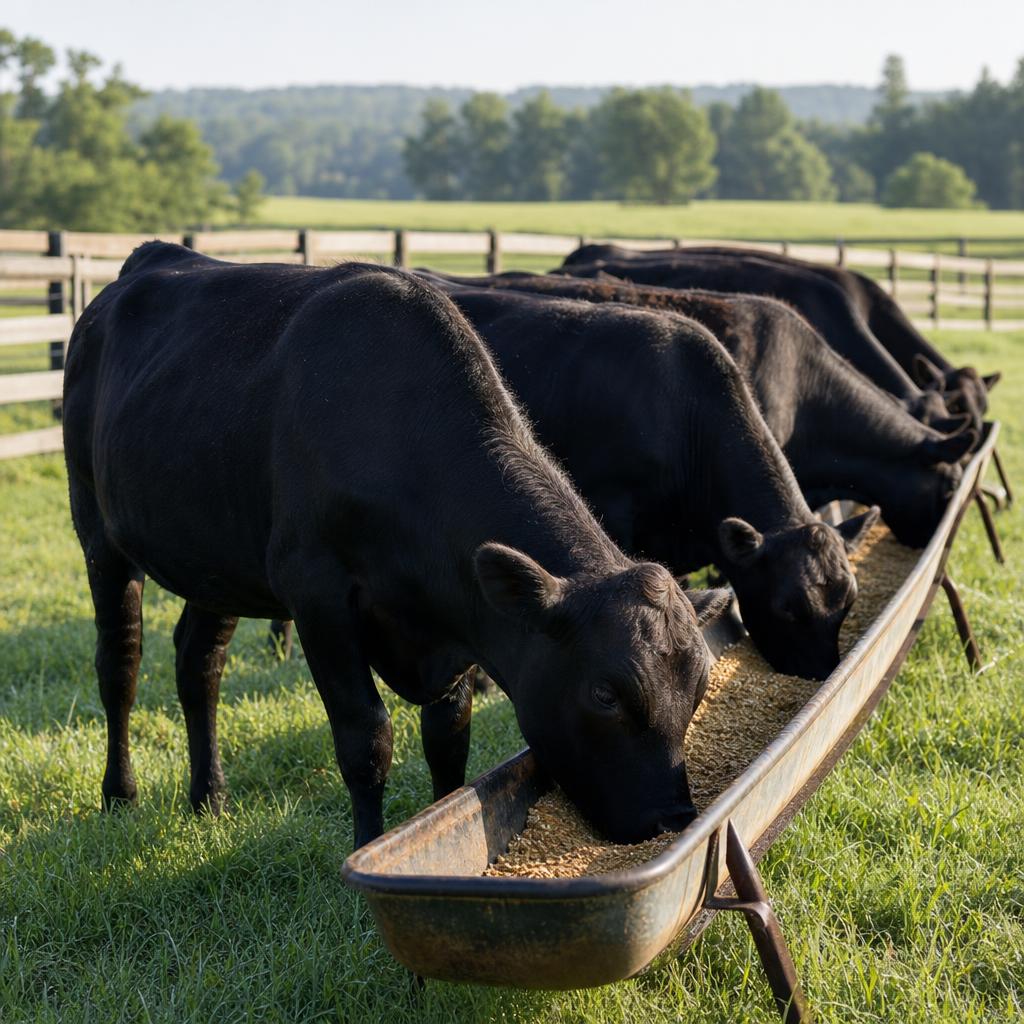
Anytime you switch cattle from one feed to another — moving off pasture onto a supplement, stepping calves up on a growing ration, or just changing brands — the safest thing you can do is slow down. A sudden feed change is one of the most common ways to knock cattle off feed, trigger digestive upset, and lose the very gains you're trying to add. Learning how to transition cattle to a new feed safely is worth every bit of the extra week it takes.
Here in the hot, humid Southeast, that patience matters even more. Heat already stresses cattle and shifts when they want to eat, so piling a big ration change on top of a July heat wave is asking for trouble. A gradual step-up keeps the rumen happy and keeps your herd eating through the switch.
Why a Sudden Feed Change Hurts the Rumen
A cow isn't really digesting feed — the bugs in her rumen are. That rumen is a living fermentation vat packed with billions of microbes, and each population is tuned to the diet she's been eating. Forage-eating microbes are different from the ones that ferment grain and starch. When you swap feeds overnight, you outrun those microbes' ability to adjust.
Dump in a load of starch the rumen isn't ready for and fermentation goes sideways. Acid builds up faster than it can be buffered, pH drops, and you get ruminal acidosis — cattle go off feed, act dull, and their manure turns loose and bubbly. Rapid changes can also set up bloat, where gas gets trapped and the animal's left side swells. Both problems are far easier to prevent than to treat.
A Practical 7–10 Day Step-Up Schedule
The idea is simple: blend the old feed and the new feed together, and shift the ratio a little at a time so the rumen bugs adapt gradually. Mix the two thoroughly so cattle can't sort out just the new stuff. A workable schedule looks like this:
- Days 1–2: Roughly 75% old feed, 25% new feed.
- Days 3–4: Move to about half and half.
- Days 5–6: Shift to 25% old, 75% new.
- Days 7 and beyond: If intake and manure look normal, finish the change to 100% new feed.
Stretch it to a full 10 days when you're making a bigger jump — say, moving from mostly forage to a higher-energy ration, or bringing in freshly weaned or newly received calves. There's no prize for rushing. A slow, boring transition is exactly what you want.
Signs to Watch During the Switch
Your cattle will tell you how the change is going if you're paying attention. Walk the pen or pasture each day and read them:
- Manure: Firm, consistent piles are good. Watery, foamy, or grain-flecked manure means you've moved too fast.
- Intake: Feed should keep disappearing at a steady rate. A sudden drop in what they clean up is a red flag.
- Behavior: Look for cattle standing off by themselves, hanging back at the bunk, humped up, or grinding their teeth.
- Body signs: A distended left side, obvious discomfort, or kicking at the belly can point to bloat and needs attention right away.
If you see any of these, don't push through — that's your cue to back off the pace.
Don't Forget Water and Forage
Clean, cool water isn't a side note during a feed change — it's part of the plan. The rumen runs on water, and cattle that don't drink well won't eat well. In our Southeast summers, cattle can drink a tremendous amount, so check that troughs are full, flowing, and clean. Shade near the water helps them use it during the hottest hours.
Good forage matters just as much. Keeping quality hay or pasture in front of cattle throughout the transition gives the rumen the fiber it needs to keep chewing, keep making saliva, and keep buffering acid naturally. Effective fiber is your friend, especially anytime you're adding energy or starch to the diet. Pair a steady forage base with the right cattle feed for your goals, and the switch goes smoother.
When to Slow the Transition Down
Some situations call for extra caution and a longer step-up. Slow the pace — or hold at the current mix for a day or two — when any of these apply:
- Cattle are freshly weaned, newly received, or already stressed from hauling or working.
- You're in the middle of a heat wave and intake is naturally down.
- You're making a large jump in energy or starch, not just a small tweak.
- Manure loosened up or intake dipped at the last step.
When in doubt, hold steady until things settle, then resume. There's no penalty for taking eleven or twelve days instead of seven if that's what a stressed set of cattle needs.
A Word on Consistency
Once you've completed the transition, keep things steady. Feed at consistent times, keep the ration the same day to day, and avoid running out and then overfeeding to catch up — that swing can undo everything the slow start accomplished. Cattle thrive on routine, and a predictable bunk keeps rumen fermentation stable.
If you're not sure how aggressive a ration is right for your class of cattle or your forage quality, it's worth a conversation with your veterinarian or local extension office before you start. And if you'd like to talk through options milled right here in Alma, Georgia since 1991, you can always find a Mid South Feeds dealer near you.
Bottom line: give the rumen time to catch up. Blend old and new over a week to ten days, keep water and forage front and center, watch the manure and the bunk, and ease off the moment anything looks off. Do that, and a feed change becomes a non-event instead of a wreck.