 Dogs & Cats
 Cattle
 Equine
 Poultry
 Swine
Swine Goats & Sheep
 Game Bird
 Gamecock
 Deer & Wildlife
 Fish & Pond
 Rabbit
 Specialty
 Ingredients & Bulk
 Special Order

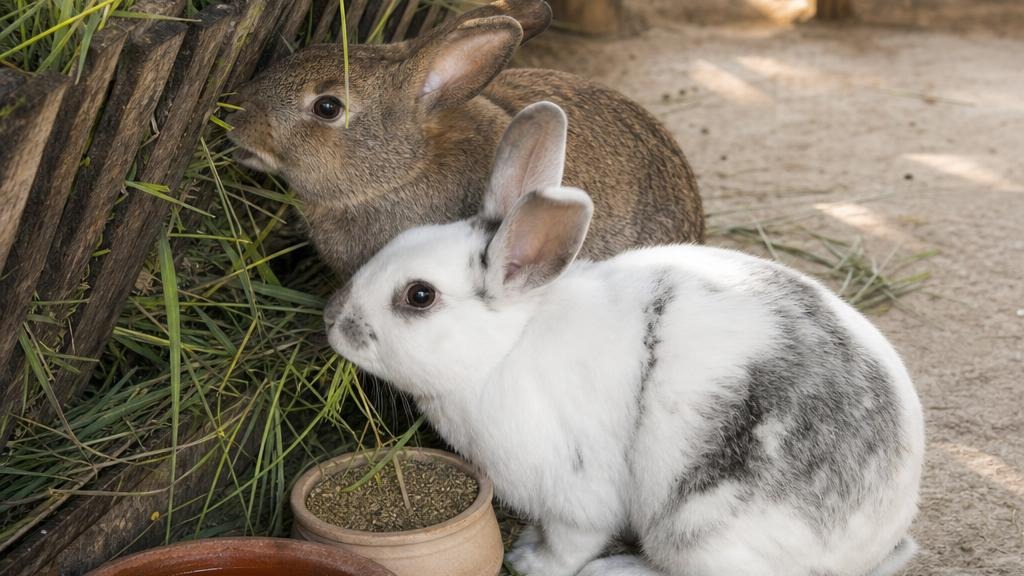
A rabbit's daily menu should look more like a forage plan than a bowl of colorful treats. Rabbits are built to spend long periods chewing fibrous plant material. Good grass hay supports that normal feeding behavior, while a measured complete rabbit pellet helps supply consistent nutrients. Fresh water ties the whole program together.
The exact balance changes with age, size, production stage, health, and whether the rabbit is a pet or part of a breeding herd. This article offers a management framework, not a prescription for an individual animal. Sudden appetite or manure changes can become serious in rabbits and warrant prompt veterinary attention.
Make Clean Hay the Everyday Foundation
For most healthy adult pet rabbits, grass hay is the core of the diet and should be available consistently. Timothy, orchardgrass, and other suitable grass hays provide long-stem fiber and encourage chewing. The best hay is clean, dry, leafy enough to be readily eaten, and free of mold, dust, foreign objects, and toxic plants.
Hay color varies with species, cutting, and storage, so green color alone is not a guarantee of quality. Smell it, shake out a small flake, and inspect several parts of the bale. Store hay off the floor in a dry, ventilated place protected from rain and pests. Do not seal damp hay in an airtight container.
Make the Hay Easy to Use
Place hay in a clean rack or feeding area that allows natural browsing without trapping a rabbit's head or feet. Many rabbits eat hay while using a litter area, but soiled or wet hay should be removed. Refill with fresh hay before the rack is completely bare and note whether the rabbit is eating it or simply pulling it out.
Use Pellets as a Measured Part of the Plan
Choose a uniform, species-appropriate complete rabbit pellet for the animal's life stage. A plain pellet makes it harder to select only favorite pieces, which can unbalance intake. Follow the product label and the plan you establish with a veterinarian; do not keep the crock full by habit when a measured amount is intended.
Growing rabbits, breeding animals, and adults at maintenance do not all have the same requirements. Body condition, breed size, activity, and the nutrient content of hay also matter. The rabbit feed page can help you review available feed formats, but the label and individual management plan determine how a product should be used.
Keep Water Fresh and Dependable
Rabbits need constant access to clean water. Bowls allow easy drinking for many rabbits but can tip or collect bedding. Bottles save floor space but can clog, leak, or freeze. Either system can work when it is checked daily; some owners provide both.
Do more than glance at a bottle. Touch the valve to confirm flow and look for an air lock or mineral buildup. Scrub bowls and bottles regularly, rinse thoroughly, and increase checks during hot weather. If several rabbits share a space, provide enough water points that one animal cannot block another.
Change Foods Slowly
A new bale of hay, pellet formula, or batch of greens can be a meaningful diet change. Blend old and new pellets gradually while watching normal appetite and manure. Introduce one new fresh food at a time in a small amount so you can identify what changed if the rabbit does not tolerate it well.
Do not let the old feed run out before buying the replacement. Keeping a short overlap avoids an emergency switch. If a rabbit refuses food, produces much less manure, appears painful, or becomes unusually quiet, contact a rabbit-experienced veterinarian promptly rather than waiting for the transition schedule to fix it.
Treat Greens and Treats as Additions
Appropriate leafy greens can add variety and moisture for rabbits already accustomed to them, but plant identification and gradual introduction matter. Wash produce, remove spoiled portions, and avoid material exposed to pesticides or roadside contamination. Wild plants should be offered only when positively identified as safe.
Sweet fruit, commercial treats, seeds, nuts, and starchy foods can displace the hay and complete pellet the rabbit needs. Keep treats small and occasional. Colorful mixed feeds encourage sorting and should not be mistaken for a balanced daily ration just because the rabbit eats the sweetest pieces first.
Use Appetite and Manure as Daily Records
Rabbit caretakers have two useful observations every day: what disappeared and what came out. Learn the normal amount of hay, pellet, and water each rabbit uses, along with the usual quantity and appearance of manure. Clean feeding areas on a regular schedule so today's output is not confused with yesterday's.
A kitchen scale can track body weight, and hands-on body condition checks help under a thick coat. Record weight on a consistent schedule. Weight loss, reduced appetite, drooling, difficulty chewing, or persistent changes in manure deserve veterinary evaluation; adding more pellets may mask the real issue without solving it.
A Simple Hay-First Routine
- Provide clean grass hay in an accessible rack or feeding area.
- Measure a complete rabbit pellet according to the label and individual plan.
- Confirm water flow and cleanliness every day.
- Introduce any new feed gradually, one change at a time.
- Keep treats limited so they do not replace forage.
- Track appetite, manure, body condition, and weight.
The best routine is consistent enough that a small change stands out. Hay stays central, pellets are measured, water is verified, and new foods arrive slowly. If you have established an appropriate feeding plan and need help finding a plain complete pellet locally, contact a knowledgeable retailer through the dealer locator.