 Dogs & Cats
 Cattle
 Equine
 Poultry
 Swine
Swine Goats & Sheep
 Game Bird
 Gamecock
 Deer & Wildlife
 Fish & Pond
 Rabbit
 Specialty
 Ingredients & Bulk
 Special Order

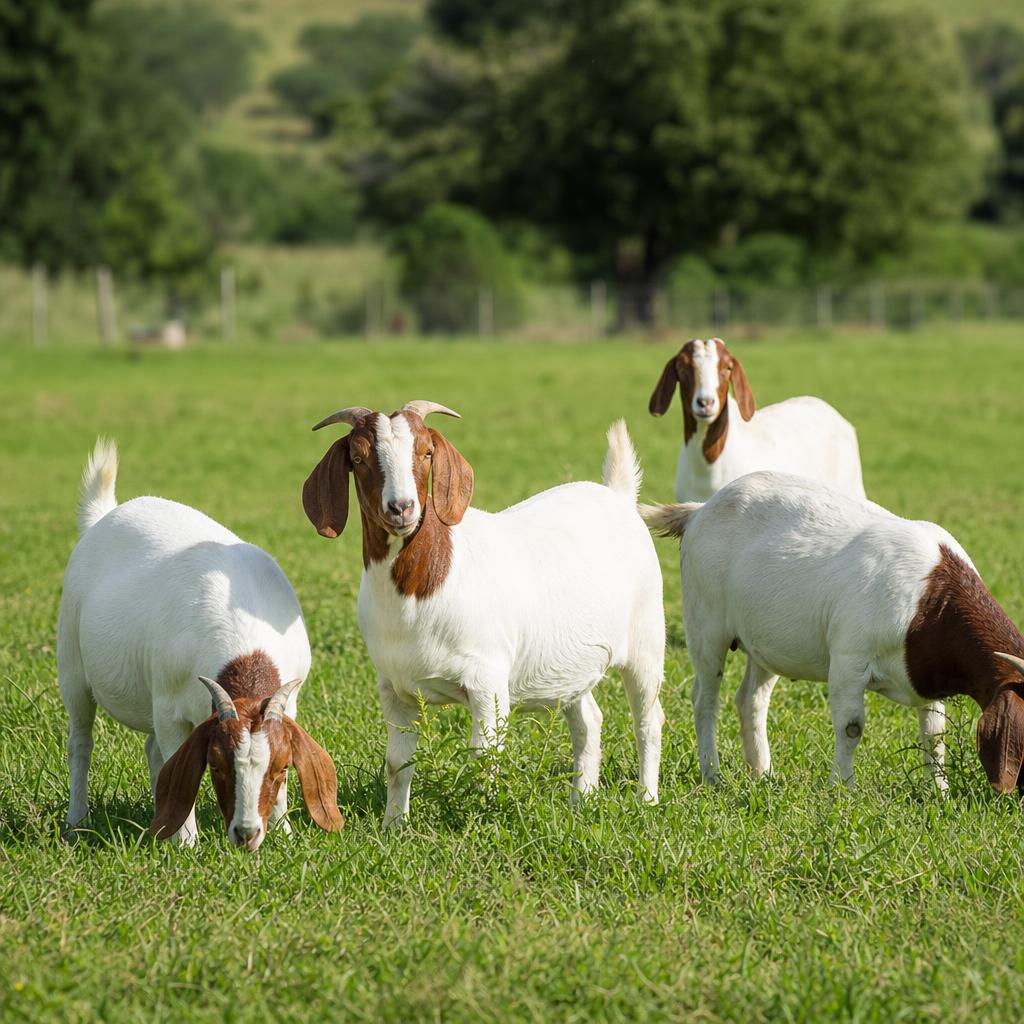
If you're raising meat goats, growth is the name of the game — you want kids that gain steadily, stay healthy, and reach market weight without a lot of setbacks along the way. Feeding meat goats for faster, healthier growth isn't about pouring on the grain and hoping for the best. It's about building the right foundation, filling the gaps with a good supplement, and tying your nutrition program to parasite management, which in the Southeast can make or break a herd.
Growing kids have real demands. They're building frame, muscle, and bone all at once, and that takes adequate protein and energy day in and day out. Our warm, humid climate adds a wrinkle, because it's parasite heaven — and a goat carrying a heavy worm load won't grow no matter how good the feed is. So let's cover both sides of the coin.
Start With a Solid Forage and Browse Base
Goats are browsers by nature. They'd rather reach up for leaves, brush, weeds, and brambles than graze grass with their heads down like cattle. That browsing instinct is a gift — good browse and quality forage should be the base of any meat goat's diet, and around here we've usually got plenty of it.
Quality forage and browse supply a lot of what a goat needs, but a growing kid pushing for fast gains often needs more energy and protein than pasture alone provides — especially as browse gets stemmy and mature in late summer. That's where supplementation comes in, to top off what the forage can't fully deliver.
Add a Supplement for Growing Kids
To hit faster gains, most growing meat goats benefit from a supplemental feed alongside their forage. A quality goat feed supplies the extra protein and energy that pushes growth, especially during the periods when kids are stacking on weight the fastest.
Feed it to match the animal's stage and body condition rather than dumping in a set amount and forgetting it. And any time you change feeds or bump up the amount, do it gradually over a week or so. Goats have sensitive rumens, and a sudden jump in grain can throw them off or worse. Slow and steady keeps the gut happy and the gains coming.
Creep Feed the Kids
One of the best tools for early growth is creep feeding. A creep is a setup that lets kids get to feed while keeping the bigger does out — usually a pen or feeder with openings only a kid can slip through. It gives the little ones access to a high-quality feed right when their bodies can turn it into growth most efficiently.
Creep feeding does a couple of things well. It adds nutrition beyond what the doe's milk and available forage provide, and it gets the kids started on solid feed early, which helps their rumens develop and eases the transition at weaning. Kids that are creep fed often wean heavier and hit the ground running afterward.
Keep a Free-Choice Goat Mineral Out
Forage and feed won't cover every mineral need on their own, so a free-choice goat mineral should always be available. Notice the word goat — this matters. Goats need copper in their diet, and a mineral formulated for goats accounts for that.
Do not feed sheep mineral to your goats. Sheep are copper-sensitive, so sheep-specific products are made low in copper on purpose — and that shortfall can leave goats deficient over time. If you run sheep and goats together, that's a real management challenge worth discussing with your veterinarian. For a goat herd, keep a proper free-choice goat mineral topped off and dry, and let the animals balance themselves.
Clean Water Is Non-Negotiable
It's easy to overlook, but clean, fresh water drives everything — intake, digestion, and growth. Goats are picky about water, and in our summer heat a trough can go warm, green, and nasty fast. A goat that won't drink dirty water won't eat well either, and growth stalls.
- Check and refill water daily, especially in hot weather.
- Scrub troughs and buckets regularly to keep them clean.
- Place water in the shade so it stays cooler and more appealing.
- Make sure kids can reach it too, not just the full-grown does.
Tie Nutrition to Parasite Management
Here's the piece that trips up a lot of Southeast goat raisers: you can feed the best ration in the county and still get poor growth if internal parasites are dragging your goats down. Our warm, wet climate keeps the barber pole worm and its cousins active for much of the year, and heavy worm loads rob condition and stunt growth.
This is where FAMACHA comes in. FAMACHA is a system for checking the color of the goat's lower eyelid membrane to gauge anemia caused by blood-feeding parasites — a pale membrane signals a problem. It lets you spot the animals that actually need treatment instead of blanket-worming the whole herd, which helps slow down dewormer resistance. Ask your veterinarian or local extension office about getting trained on it.
- Check eyelid color regularly during the warm months.
- Practice rotational grazing when you can to break the parasite cycle.
- Keep good nutrition up — a well-fed goat handles a parasite challenge far better.
- Work with your vet on a deworming plan and watch for resistance.
Watch Out for Urinary Calculi in Wethers
If you're feeding wethers (castrated males) — common in meat and show programs — there's a specific risk to keep on your radar: urinary calculi, or stones, which can block the urinary tract and become a life-threatening emergency. Diet plays a big role here.
The calcium-to-phosphorus balance in the diet matters a great deal; too much phosphorus relative to calcium, often from heavy grain feeding, raises the risk. Many goat feeds designed for males include ammonium chloride to help prevent stones, and plenty of clean water encourages the frequent urination that helps keep the system flushed. If you're feeding wethers hard, talk with your veterinarian about keeping that mineral balance right.
Get the foundation right — good browse and forage, a smart supplement, creep feed for the kids, a free-choice goat mineral, and clean water — then guard those gains with solid parasite management, and your meat goats will grow the way they should. When you're ready to match a feed to your herd, find a Mid South Feeds dealer and talk it over.