 Dogs & Cats
 Cattle
 Equine
 Poultry
 Swine
Swine Goats & Sheep
 Game Bird
 Gamecock
 Deer & Wildlife
 Fish & Pond
 Rabbit
 Specialty
 Ingredients & Bulk
 Special Order
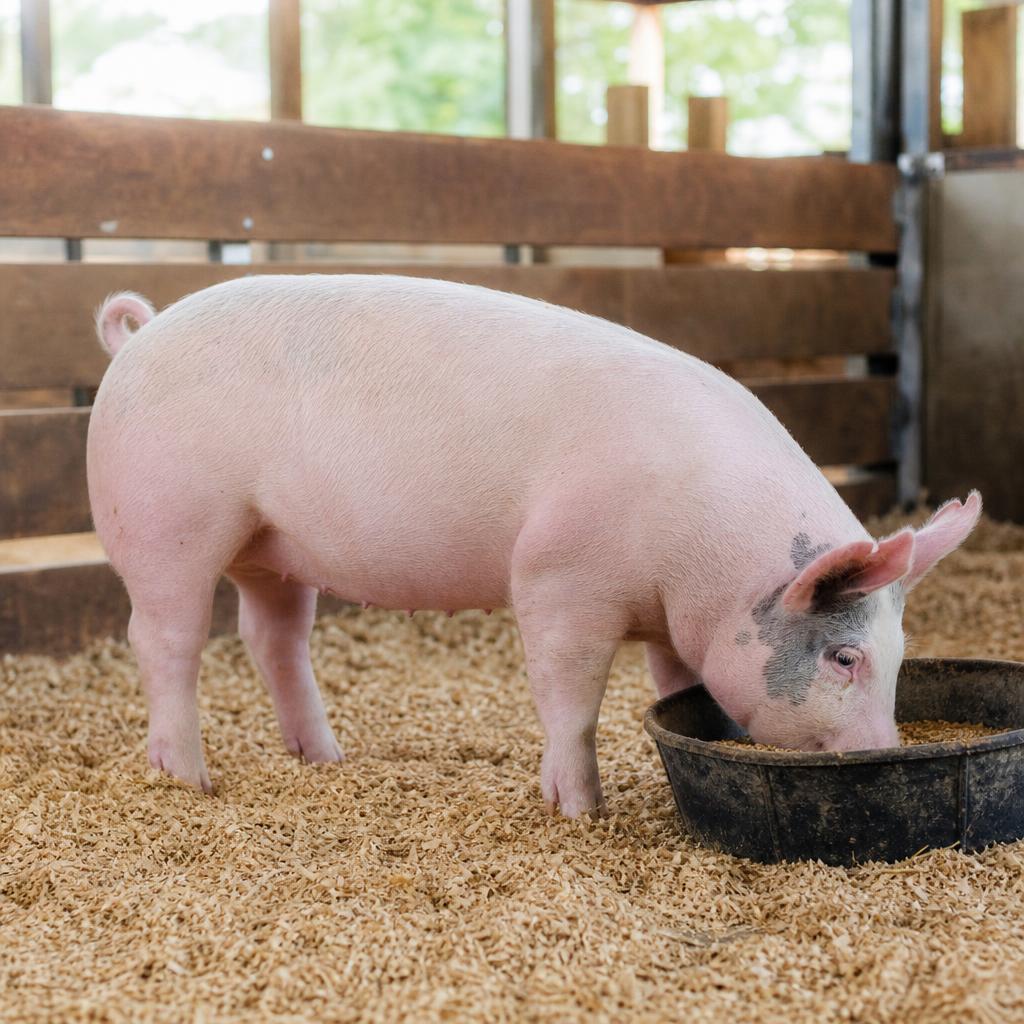
If you're raising a show pig for a summer fair, you already know the calendar runs the show. Feeding show pigs through summer fair season is all about hitting your target weight and finish on the right day — not two weeks early, not scrambling at the end. And here in the Southeast, you're fighting the heat every step of the way, because a pig that quits eating in a hot barn won't grow the way you need it to.
The good news is that this isn't complicated. It's a matter of feeding the right balance of protein and energy, keeping that pig on feed when it's ninety-five degrees and sticky, and putting your hands on the animal every single day so you can read where it's headed.
Hitting Target Weight and Finish on Schedule
Start with the math. Know your show date, know the weight class you're aiming for, and weigh your pig regularly so you can figure out an honest average daily gain. From there you can back into how much your pig needs to gain per day to land in the right spot. If it's gaining too fast, you'll be heavy and over-fat early; too slow, and you'll be light and green at the show.
Weighing every week or two — same scale, same time of day — takes the guesswork out. A pig that's ahead of pace can be slowed down; a pig that's behind can be pushed. But you can only make those calls if you're tracking real numbers instead of eyeballing it.
Balancing Protein and Energy for Muscle Without Fat
Muscle is what a market hog is judged on, and muscle is built on adequate protein and the right amino acids, especially lysine. Energy from grains fuels growth too, but too much energy relative to protein — especially as the pig gets heavier — is what lays on excess backfat.
Generally, younger, lighter pigs handle a higher-protein ration well because they're building frame and lean. As a pig matures and approaches finish weight, its need for protein drops and its tendency to deposit fat climbs. That's why many show feeders step down through feeds designed for different phases. Match the feed to the stage of growth rather than running one bag straight through. A quality show pig feed formulated for muscle and finish takes a lot of that balancing act off your plate.
Keeping Pigs Eating in the Heat
This is the make-or-break part of a Southeast summer. Pigs don't sweat, so when the barn heats up they back off feed, and lost intake means lost gain you can't get back. Your job is to make eating easy and appealing during the cooler parts of the day.
- Feed the cool part of the day. Feed heaviest in the early morning and again in the evening when temperatures drop, and go light during the hottest afternoon hours.
- Wet the feed. Mixing feed into a mash or slop makes it more palatable and gets more into a pig that's picking at dry feed in the heat.
- Top-dress for palatability. A little something on top can coax a finicky pig back to the trough. Keep it consistent so you're not upsetting the gut.
- Always fresh, cool water. Water drives intake. A pig that won't drink won't eat. Check waterers daily and make sure the water isn't sitting hot in the line.
Shade, fans, and airflow matter as much as the ration. A misting setup or a wallow gives a pig a way to shed heat, and a comfortable pig keeps eating.
Daily Handling and Hair and Skin Care
The pigs that stand out in the ring are the ones that have been handled every day and cared for down to the skin. Daily walking builds condition, firms up muscle, and gets the pig used to moving with a whip and a board so it isn't a rodeo on show day.
Skin and hair care starts on the inside with good nutrition, but the outside work counts too. Regular brushing pulls dead hair and dirt and brings oils to the surface. Washing keeps the skin clean, and in our climate it also helps with heat. Watch for sunburn on light-skinned pigs and give them shade to duck under.
- Walk the pig daily to build muscle tone and ring manners.
- Brush regularly to work the skin and lay the hair.
- Keep the pen clean and dry to protect feet and skin.
- Provide shade and check daily for sunburn or irritation.
Adjusting the Ration as the Show Nears
As the show gets close, you're fine-tuning. If your pig is on pace and finishing nicely, don't change much — consistency wins in the final stretch. If it's a little heavy and fat, you may pull back energy slightly or shift toward a higher-protein feed to firm it up. If it's carrying too light and needs cover, you might hold energy up a bit longer.
Make any change gradually. Pigs have sensitive digestion, and a sudden feed switch right before a show is exactly how you end up with a pig off feed at the worst possible time. Any real transition should happen over several days, not overnight.
A Simple Final-Stretch Checklist
- Confirm your projected show-day weight against your average daily gain.
- Decide whether to hold, push, or ease off based on finish.
- Make feed changes slowly over several days.
- Keep the pig cool, hydrated, and eating right up to load-out.
- Keep walking and grooming so it looks and moves its best.
Feed the cool hours, keep water in front of that pig, and get your hands on it every day — do those three things and you'll walk into the ring with a hog that's on weight, well finished, and ready to show. If you need help matching a feeding program to your show date, find a Mid South Feeds dealer and talk it through with someone who knows the local shows.