 Dogs & Cats
 Cattle
 Equine
 Poultry
 Swine
Swine Goats & Sheep
 Game Bird
 Gamecock
 Deer & Wildlife
 Fish & Pond
 Rabbit
 Specialty
 Ingredients & Bulk
 Special Order

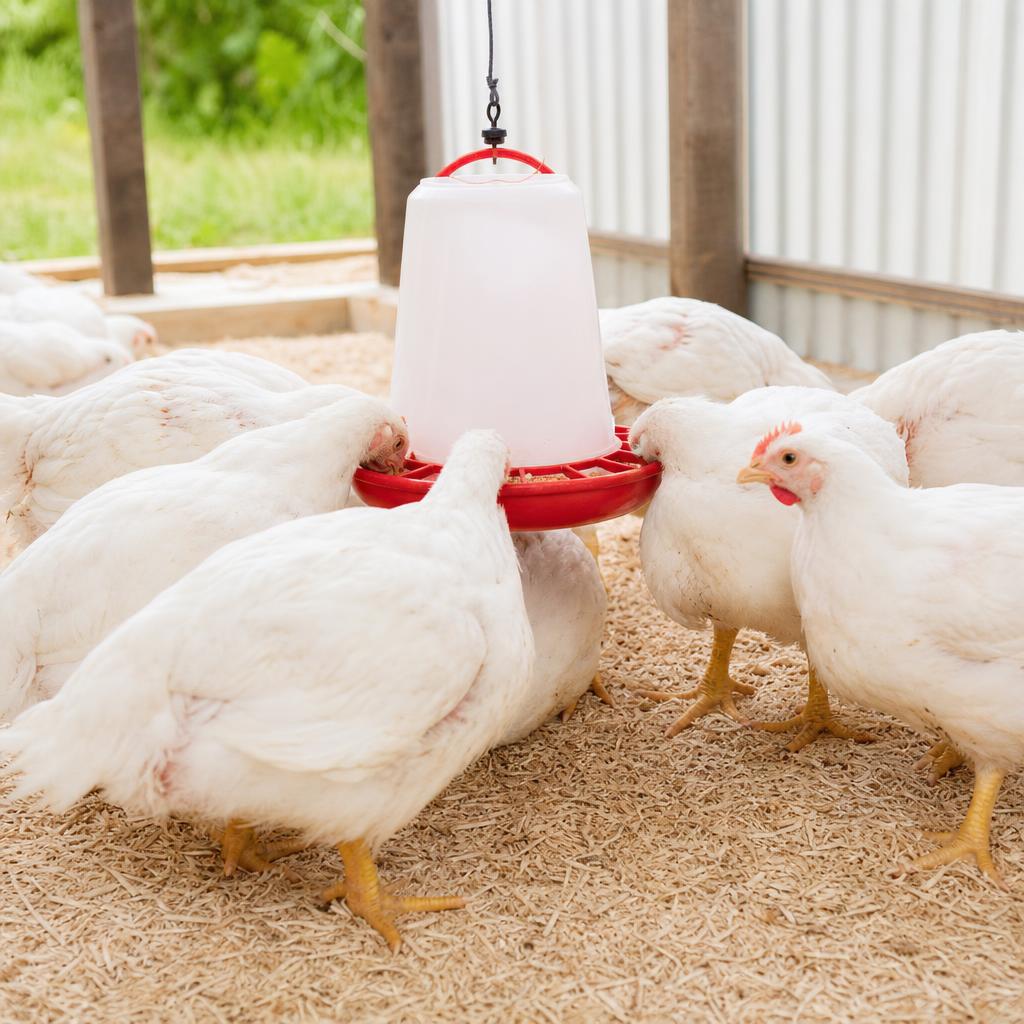
Raising your own meat birds is one of the most rewarding things a family can do, and it goes a lot faster than folks expect. A batch of broilers can be freezer-ready in about the time it takes a laying pullet to just get started. But feeding meat birds is a different game than feeding layers, and getting the nutrition right is what stands between a healthy, thrifty flock and a pen full of birds with sore legs.
The short version: meat birds grow fast, so they need more protein and energy than layers, and with the fastest breeds you actually have to manage that growth instead of just turning them loose on feed. Here in the hot, humid Southeast, that also means staying on top of clean water and fresh feed, because both go bad quickly in the heat.
How Meat Birds Differ From Layers
A laying hen is built to lay eggs over months and years, so her feed is moderate in protein and loaded with calcium for strong shells. A broiler is built to put on muscle fast in a matter of weeks, so she needs higher protein and a lower calcium level. Feeding a growing broiler a layer feed shortchanges the protein she needs and pushes calcium her kidneys don't need yet.
Start meat birds on a proper high-protein broiler feed from day one. It's formulated for exactly what those fast-growing bodies are doing.
Phase Feeding: Starter, Grower, Finisher
Broilers do best on a three-phase program that steps the protein down as they mature. Think of it as feeding the bird in front of you at each stage rather than one feed the whole way through.
- Starter — the first couple of weeks. This is the highest-protein phase, fueling frame and organ development and getting chicks off to a strong start.
- Grower — the middle stretch. Protein steps down a bit while energy stays up to build muscle and keep them gaining.
- Finisher — the last week or two before processing. Protein comes down again and energy carries them to weight.
A crumble or pellet sized for their age keeps waste down and makes sure every bird gets a balanced bite instead of picking through it.
Understanding Feed Conversion
Feed conversion is simply how many pounds of feed it takes to put a pound on the bird. Meat breeds are efficient converters when they're healthy, which is a big part of why home-raised chicken pencils out. A few things protect that efficiency:
- Keep feed fresh and dry — moldy or stale feed gets refused and wasted.
- Use the right feeder height, roughly at the bird's back, to cut billing-out onto the ground.
- Don't let feeders run bone empty for long during active growth, and don't let them overflow either.
- Keep the pen comfortable — birds that are too hot or crowded eat poorly and convert worse.
Managing Fast Growth in Cornish Cross
The Cornish Cross is the classic fast broiler, and it's so efficient it can outgrow its own legs and heart if you let it eat around the clock. Free-feeding 24/7 can lead to leg problems, flip-over heart failure, and birds that can barely get up. The old-timer's fix is simple and it works: give them a break from the feeder.
A common approach is 12 hours on, 12 hours off — pull or empty the feeders overnight after the first week or so. They still gain plenty; you're just slowing them down enough to let bones and hearts keep pace with the muscle. Slower-growing colored broiler breeds are more forgiving and can usually be free-fed, but even then, active birds with room to move are healthier birds.
Signs You're Pushing Too Hard
- Birds reluctant to stand or walk, or sitting on their hocks
- Panting and lethargy beyond normal heat behavior
- Sudden losses of your biggest, fastest-growing birds
If you see these, back off the feed schedule and make sure they aren't heat-stressed. When in doubt, your veterinarian or local extension office can help you sort it out.
Clean Water Is Half the Job
Water matters as much as feed, and in a Georgia summer it matters more. Birds drink far more than they eat, and they won't eat well if they can't drink well. Warm, algae-slimed water gets refused fast.
- Provide cool, clean water at all times and rinse waterers daily.
- Add extra waterers in heat so no bird has to fight for a drink.
- Place water in the shade and refresh it often through the hottest part of the day.
A Rough Timeline to Processing Weight
Every batch is a little different, but here's the general shape of it:
- Weeks 1–2: Brooder warmth and broiler starter. Small, fragile, growing fast.
- Weeks 3–5: Move to grower, add space and ventilation, begin the on/off feeding on Cornish Cross.
- Weeks 6–8: Finisher feed, birds bulking to weight. Many fast broilers reach a good table size in this window; slower breeds run a few weeks longer.
Weigh a couple of birds as you go so you can plan processing day rather than guessing.
Bottom line: feed meat birds for what they are — fast growers that need protein up front, a step-down through grower and finisher, plenty of clean cool water, and a little discipline on the feeder with Cornish Cross. Do that and you'll fill the freezer with healthy birds. If you need help matching a feed to your flock, find a Mid South Feeds dealer near you.