 Dogs & Cats
 Cattle
 Equine
 Poultry
 Swine
Swine Goats & Sheep
 Game Bird
 Gamecock
 Deer & Wildlife
 Fish & Pond
 Rabbit
 Specialty
 Ingredients & Bulk
 Special Order
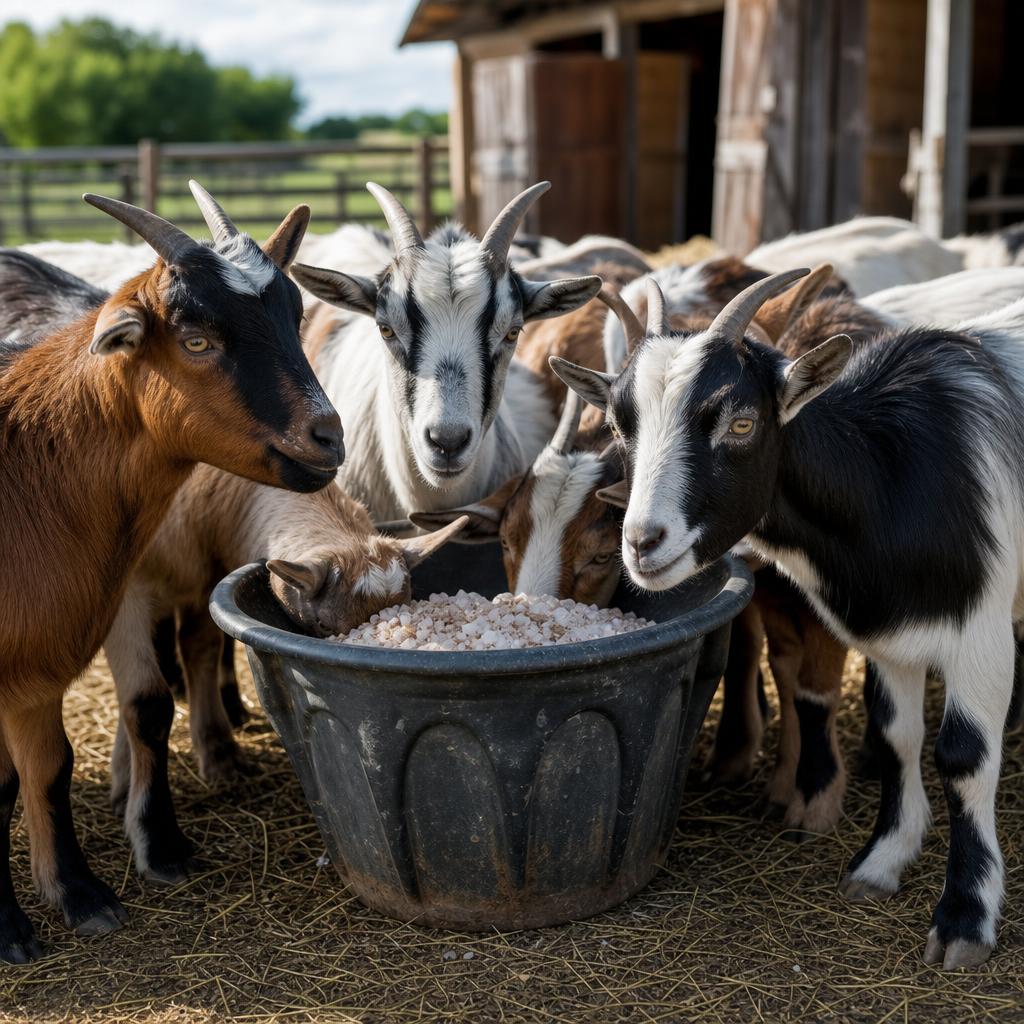
If you've ever looked at a goat with a dull, rusty-looking coat and wondered what's missing, there's a good chance the answer is copper. Getting the mineral balance right is one of the most important — and most misunderstood — parts of raising healthy goats. Goats need more copper than many other livestock species, and when they don't get enough, it shows up in their coats, their growth, and even their ability to fight off worms.
Copper also happens to be where the most dangerous mistake in small-ruminant feeding hides. What keeps a goat thriving can poison a sheep. So before we talk about feeding copper to goats, we need to be crystal clear about who can have it and who can't.
Let's break down how to feed copper to your goats safely and effectively.
Why Goats Need More Copper Than Most Livestock
Copper is a trace mineral, meaning goats only need a small amount — but that small amount does big work. It supports coat and pigment, healthy growth, immune function, and the enzymes that keep a goat's whole system running. Goats are simply built to require more dietary copper than cattle, horses, and especially sheep.
Because the need is real and ongoing, copper isn't something you supplement once and forget. It's a year-round part of good goat nutrition, delivered steadily through the right mineral program.
Signs Your Goats May Be Copper Deficient
Copper deficiency creeps in slowly, and the signs are easy to blame on something else. Learn to recognize the classic indicators:
- A faded or rusty coat. Black goats turning reddish or a general washed-out, dull color is a hallmark sign.
- A "fish tail." Balding or thinning at the tip of the tail is a well-known deficiency clue.
- Poor growth in kids or a general failure to thrive.
- Rough, brittle coat that never quite looks healthy.
- Heavier parasite loads. Copper-deficient goats often struggle more with worms, since copper plays a role in resistance.
- Anemia and low energy in more advanced cases.
If several of these line up in your herd, copper is worth a hard look — but confirm with your veterinarian or local extension office before making big changes, since some of these signs overlap with other issues.
The Critical Safety Point: Never Feed Goat Mineral to Sheep
This is the part you cannot get wrong. Sheep are copper-sensitive. Their bodies store copper in the liver, and levels that are perfectly healthy for a goat can build up and become toxic to a sheep — sometimes fatally, and often without warning until it's too late.
That means two hard rules:
- Never feed goat mineral to sheep. The added copper that helps your goats can slowly poison your sheep.
- Never rely on a sheep mineral — or a bargain all-stock mineral — for your goats. Sheep formulas are deliberately low in copper, and many cheap all-purpose minerals skimp on it too, leaving your goats short.
If you keep goats and sheep together, this gets tricky, because a shared mineral can't be right for both. Talk with your vet or extension agent about how to manage a mixed flock safely, and when in doubt, keep the goat mineral where the sheep can't reach it.
Feed a Goat-Specific Loose Mineral Free Choice
The everyday backbone of a good copper program is a goat-specific loose mineral offered free choice. A few reasons loose beats block:
- Goats can eat as much loose mineral as they actually need; a hard block is tough to lick enough of to meet requirements.
- Free-choice access lets each goat self-regulate its intake over time.
- A goat-formulated mineral is built with the higher copper level goats require, unlike sheep or generic all-stock products.
Keep It Fresh and Available
Loose mineral doesn't help if it's caked, wet, or empty. Put it in a covered mineral feeder to keep our summer rain and humidity out, check it regularly, and keep it topped off so your goats always have access. If they clean it up fast at first, that's often a sign they were short and are catching up.
Copper Boluses and What Affects Uptake
Sometimes free-choice mineral alone isn't enough, especially where local conditions work against copper. That's where copper oxide wire particle boluses come in — a targeted dose given by mouth that releases copper slowly over time. Boluses are a useful tool for herds with a confirmed deficiency, but they're not a casual add-on. Because copper can build up, work with your veterinarian on whether, when, and how much to bolus for your specific herd.
It's also worth knowing that what's in your forage and water affects how well goats absorb copper. Minerals like molybdenum, sulfur, and iron can bind up copper and block absorption — a situation called a copper antagonism. That's why two farms feeding the same mineral can get different results. If your goats stay deficient despite a good program, ask your extension office about testing your forage and water so you know what you're really working with.
Put It All Together
Copper is a case where knowing the details truly pays off. Feed a quality goat-specific loose mineral free choice year-round, keep it fresh and available, watch your herd for the telltale signs, and lean on your vet for boluses or deeper testing when the coat and growth tell you something's off. Above all, keep goat mineral far away from any sheep.
Do that, and you'll spend a lot less time chasing dull coats and worm problems. Not sure which mineral fits your herd and your area? A local dealer who knows Southeast conditions can help — find a Mid South Feeds dealer and get set up right.