 Dogs & Cats
 Cattle
 Equine
 Poultry
 Swine
Swine Goats & Sheep
 Game Bird
 Gamecock
 Deer & Wildlife
 Fish & Pond
 Rabbit
 Specialty
 Ingredients & Bulk
 Special Order
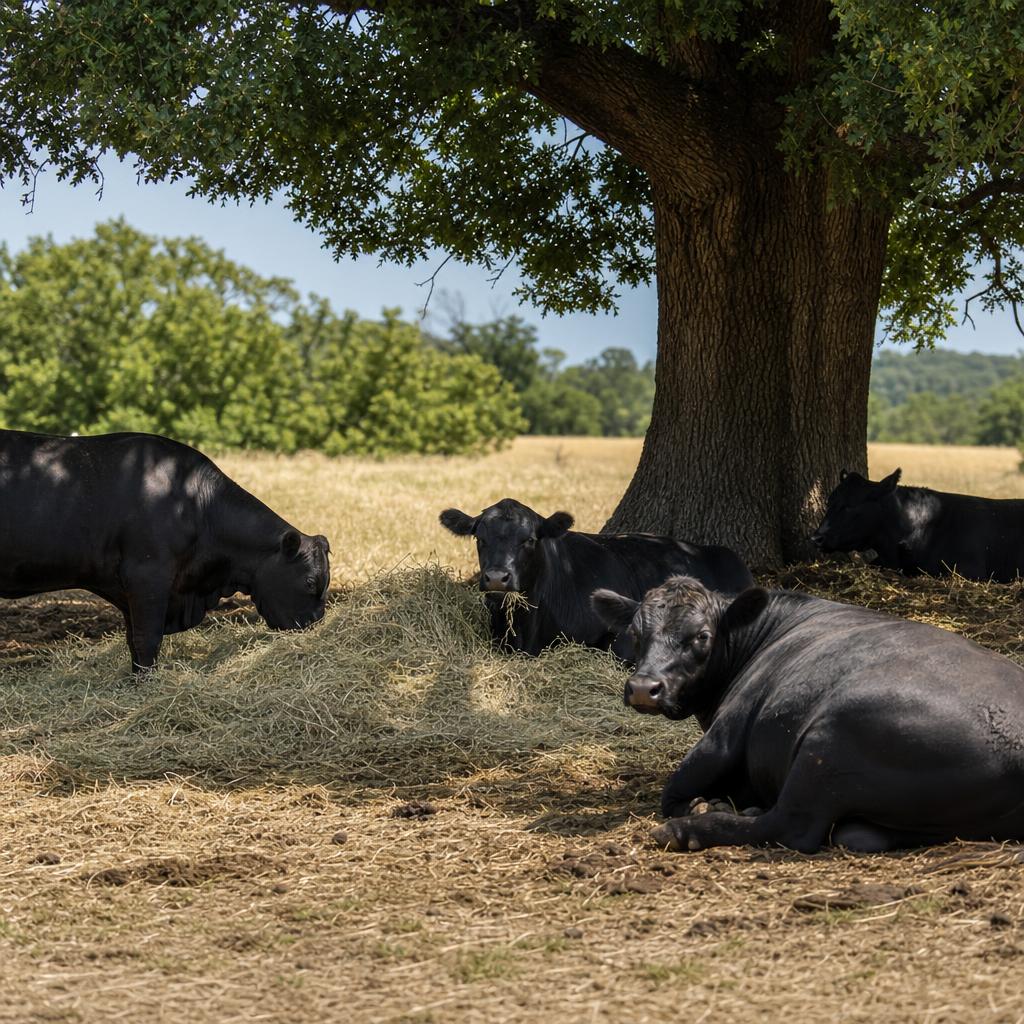
Come July and August in the Southeast, the biggest threat to your cattle's performance isn't a lack of feed in the bunk — it's the heat that keeps them from eating it. When temperatures and humidity climb, cattle back off feed, stand around in the shade, and quit gaining like they should. Learning how to keep cattle eating through summer heat is one of the best ways to protect both their health and your bottom line.
A cow's rumen is a big fermentation vat, and that fermentation throws off a lot of body heat all on its own. Pile our Georgia humidity on top of that, and it's no wonder intake and average daily gain slide when the weather turns brutal.
Here's how to keep them on feed and gaining when the mercury rises.
How Heat Cuts Intake and Gain
Cattle eat less in the heat for a simple reason: eating and digesting generate warmth, and an already-hot animal instinctively pulls back to avoid making things worse. Less feed in means less energy for growth, milk, and condition — so average daily gain drops right when you'd hoped to be putting on pounds.
The animals feel it before you see it in the numbers. Your job is to remove as many heat burdens as you can and make eating as easy and appealing as possible during the cooler parts of the day.
Feed During the Cooler Hours
One of the simplest, highest-payoff changes is when you feed. Cattle naturally want to eat in the cool of early morning and again in the evening, and they'll take more when it's comfortable to do so.
- Shift feeding to early morning and late evening so the bulk of intake happens when it's coolest.
- Avoid dumping fresh feed at midday. The peak of digestive heat production comes hours after a big meal, so a large midday feeding lands that heat load right in the hottest part of the afternoon.
- Keep feed timing consistent day to day, since cattle settle into a rhythm and eat better on a routine.
Water and Shade Are Non-Negotiable
Water intake skyrockets in the heat, and cattle simply won't eat well if they can't drink well. Make sure supply keeps up with demand:
- Provide abundant, clean, cool water and check that your tanks or waterers can refill fast enough for the whole herd on a scorching day.
- Keep enough drinking space so timid animals aren't crowded out by the boss cows.
- Clean troughs regularly — warm, dirty, algae-filled water depresses intake.
Shade matters just as much. Whether it's trees, a shade structure, or a barn, cattle need somewhere to escape direct sun. Animals baking in the open burn energy just coping with heat and won't graze or come to the bunk like they should. Good airflow across the shaded area helps even more.
Keep Quality Forage in Front of Them
Don't let heat become an excuse for poor-quality forage. When cattle are eating less overall, every mouthful needs to count. Keep good grass, hay, or other quality forage available so the smaller amount they do consume delivers real nutrition.
Manage grazing so animals can get out early and late when it's cooler, and make sure paddocks with shade and water don't get overgrazed and bare. On pasture and in the bunk alike, palatable, high-quality feed is what keeps a heat-stressed animal coming back for more.
Maintain Free-Choice Mineral — Needs Rise in Heat
Heat changes an animal's mineral needs. Cattle lose electrolytes as they cope with high temperatures, and heavy water intake and reduced feed intake both affect their mineral balance. This is not the season to let the mineral feeder run empty.
Keep a quality free-choice cattle mineral available at all times, and check it often. A few pointers for summer:
- Place mineral feeders near water and shade where cattle already congregate, so they'll actually use them.
- Use covered or weather-resistant feeders to protect mineral from our summer rain and humidity.
- Watch consumption — a sudden change in how fast they clean up mineral can signal a problem worth investigating.
Don't Let the Heat Spoil Your Feed
Hot, humid weather is hard on feed, too. Feed left in the bunk goes off quickly in the heat, and moldy or sour feed will kill intake fast — cattle are picky about spoiled feed and rightly so.
- Feed amounts your cattle will clean up promptly rather than leaving piles to sour in the sun.
- Clean bunks and troughs regularly to clear out old, fermenting leftovers.
- Store feed in a cool, dry, pest-protected spot and rotate stock so nothing sits too long.
Watch for Heat-Stress Signs
Even with everything set up right, keep a close eye on the herd during heat waves. Warning signs to watch for include heavy or open-mouth panting, drooling, crowding into shade or water, lethargy, and animals refusing to lie down. Handle, sort, or move cattle only in the cool early morning — never work them in the afternoon heat, and get your veterinarian involved if an animal is in genuine distress.
Keeping cattle eating through the summer really comes down to good timing and good management: feed cool, water hard, shade well, keep quality forage and mineral in front of them, and don't let anything spoil. Nail those basics and your herd will hold its intake and its gains right through the dog days. Need help matching mineral and feed to your operation? A local dealer can help — find a Mid South Feeds dealer near you.