 Dogs & Cats
 Cattle
 Equine
 Poultry
 Swine
Swine Goats & Sheep
 Game Bird
 Gamecock
 Deer & Wildlife
 Fish & Pond
 Rabbit
 Specialty
 Ingredients & Bulk
 Special Order
A lot of cattle problems don’t start in the pasture. They start in the feed.
Slow weight gain. Poor milk output. Weak calves. Mineral deficiencies that don’t show until it’s too late. Most of the time, it’s not bad genetics or bad luck. It’s gaps in nutrition.
Here’s the straight answer:
If your feed program isn’t balanced across energy, protein, minerals, and supplementation, your cattle will underperform. Period.
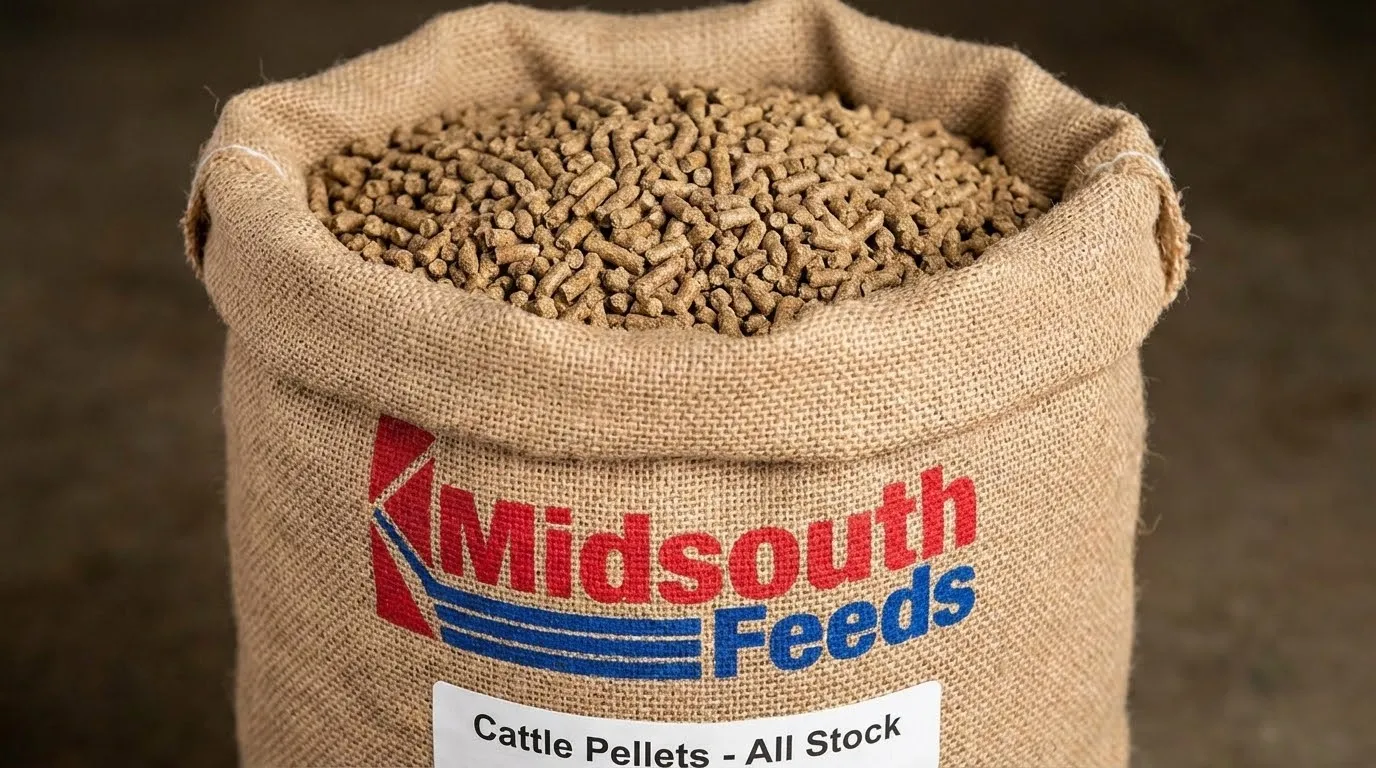
This guide breaks down every cattle livestock feed type offered by Midsouth Feeds so you can quickly see what each product does, when to use it, and how it fits into a complete feeding program.
The Complete Cattle Feed Checklist (At a Glance)
A solid cattle nutrition program includes:
- Base feeds (energy + protein)
- Mineral and salt supplementation
- Targeted support (milk replacers, fly control)
- Digestive and forage enhancers
Midsouth Feeds covers all four categories. Let’s break them down.
1. Performance Feeds (Energy + Protein Foundation)
This is where most cattle diets either succeed or fail.
Protein drives muscle growth and milk production. Energy fuels everything from weight gain to reproduction. According to animal nutrition research, beef cattle typically require 10–14% crude protein for maintenance, and higher levels for growth or lactation.
✔ 16% Bucking Bull Performance & Growth
This is a high-protein feed designed for aggressive growth.
Best for:
- Growing bulls
- Show cattle
- Animals needing rapid weight gain
Why it matters:
A 16% protein level supports muscle development and improves feed efficiency. It’s especially useful when forage quality is low or inconsistent.
✔ 12% Steer Feed
A more balanced, moderate-protein option.
Best for:
- Maintenance diets
- Steers in mid-growth phase
Why it matters:
Overfeeding protein wastes money and can stress metabolism. A 12% feed keeps animals steady without unnecessary excess.
✔ 20% Range Cubes
Dense, portable nutrition for grazing cattle.
Best for:
- Open-range feeding
- Supplementing poor pasture
Why it matters:
Range cubes provide concentrated protein and energy when grass alone isn’t enough. Research shows supplementation like this improves average daily gain in pasture systems.
✔ Nutra Blend Milk Replacer 22/20 (Non-Medicated)
Designed specifically for calves.
Best for:
- Orphaned calves
- Early weaning programs
Why it matters:
The 22% protein and 20% fat ratio mimics natural milk composition, supporting immune development and early growth. Calves fed balanced milk replacers often show better long-term performance.
2. Minerals & Salt (The Most Ignored Problem in Cattle Nutrition)

Most producers underestimate mineral deficiencies until symptoms appear. By then, performance is already compromised.
Cattle require consistent intake of:
- Calcium
- Phosphorus
- Magnesium
- Trace minerals like zinc, copper, and selenium
Even small deficiencies affect fertility, immunity, and weight gain.
✔ Hi-Mag Grazing Mineral
Best for:
- Preventing grass tetany
Why it matters:
Magnesium deficiency can lead to serious neurological issues. This is critical during early spring grazing.
✔ 14-1-14 Winter Grazer Mineral
Best for:
- Winter pasture conditions
Why it matters:
Winter forage lacks key nutrients. This blend restores balance and prevents seasonal performance drops.
✔ All Purpose Mineral
Best for:
- General herd use
Why it matters:
A consistent baseline mineral supplement ensures cattle aren’t operating with hidden deficiencies.
✔ 20% MVP Mineral
Best for:
- High-performance cattle
Why it matters:
Higher phosphorus supports reproduction, growth, and milk production.
✔ Breeder Cattle Mineral
Best for:
- Breeding herds
Why it matters:
Reproductive efficiency is highly sensitive to mineral balance, especially trace minerals like selenium and zinc.
✔ Salt & Delivery Options
- Mixing Salt
- Salt Block
- TM Block
- Sulfur Block
- TM Bricks (12 per case)
- Salt Bricks (12 per case)
Why they matter:
Salt drives intake. Without it, cattle won’t consume enough minerals. Blocks and bricks also allow controlled, weather-resistant feeding.
✔ Fly Control w/ Clarifly
Best for:
- Reducing fly populations
Why it matters:
Flies stress cattle, reduce feed intake, and lower weight gain. Clarifly works by interrupting the fly lifecycle through manure.
3. Tubs & Blocks (Consistent, Self-Fed Nutrition)
These products solve a real-world problem: inconsistent feeding.
Not every operation can feed daily. Tubs and blocks allow cattle to self-regulate intake while still getting essential nutrients.
✔ Sweetlix Bloat Guard (Pressed Block)
Best for:
- Preventing pasture bloat
Why it matters:
Bloat can kill cattle quickly, especially on lush legumes. This adds a protective layer to high-risk grazing systems.
✔ Crystalyx Mineral-Lyx (Clarifly)
Best for:
- Mineral intake + fly control
Why it matters:
Combines two essential needs into one product, improving compliance and reducing labor.
✔ Crystalyx Mineral-Lyx (Garlic)
Best for:
- Natural fly deterrence
Why it matters:
Garlic has been shown to help repel insects, offering a more natural control option.
✔ Triple Trust 32% Low-Moisture Cooked Tub
Best for:
- Protein supplementation
Why it matters:
At 32% protein, this is a powerful supplement for cattle on low-quality forage. It also improves rumen function and digestion.
✔ Mid South Forage Enhancer 24% Tub
Best for:
- Maximizing forage use
Why it matters:
Enhances microbial activity in the rumen, helping cattle extract more nutrients from grass and hay. This directly improves feed efficiency.
How to Build a Complete Feeding Program (Simple Framework)
If you’re not sure how to combine these, use this structure:
Step 1: Start with a Base Feed
Choose based on your goal:
- Growth → 16% Bucking Bull Feed
- Maintenance → 12% Steer Feed
- Pasture support → 20% Range Cubes
Step 2: Add Mineral Support
At minimum:
- All Purpose Mineral or Breeder Mineral
- Salt source (block or loose)
Adjust based on season:
- Spring → Hi-Mag Mineral
- Winter → Winter Grazer Mineral
Step 3: Fill Gaps with Supplements
- Calves → Milk Replacer
- Poor forage → Protein tubs
- Fly season → Clarifly products
Step 4: Ensure Consistency
This is where most operations fail.
Cattle need daily, consistent intake. If you can’t feed daily, use:
- Tubs
- Blocks
- Self-fed systems
Common Mistakes This Checklist Helps You Avoid
- Feeding protein without minerals
- Ignoring seasonal deficiencies
- Relying only on pasture quality
- Underfeeding calves in early life
- Not controlling flies (hidden performance loss)
Each of these directly impacts profitability.
Final Takeaway
There’s no single “best” cattle feed.
The best program is the one that:
- Matches your cattle’s life stage
- Adapts to pasture conditions
- Covers protein, energy, minerals, and supplementation
Midsouth Feeds offers a complete system, not just individual products. When used together, these feeds close nutritional gaps that most operations don’t even realize exist.
If your cattle aren’t performing the way they should, don’t start by blaming genetics.
Start with the feed.