 Dogs & Cats
 Cattle
 Equine
 Poultry
 Swine
Swine Goats & Sheep
 Game Bird
 Gamecock
 Deer & Wildlife
 Fish & Pond
 Rabbit
 Specialty
 Ingredients & Bulk
 Special Order

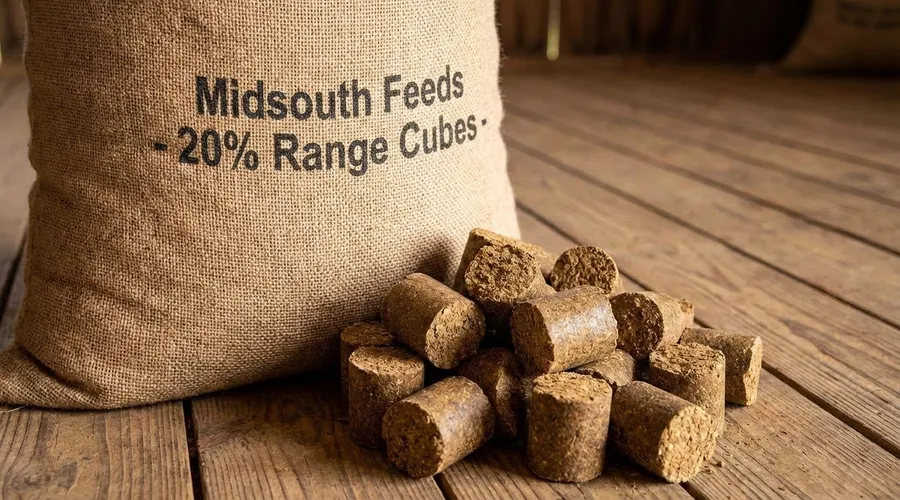
A herd starts slipping long before you notice it on the scale. Intake drops. Forage quality dips. Cattle look “fine,” but gains stall and condition slowly fades. That’s where most feeding programs fail — not in shortage, but in timing and nutrient balance.
20% range cube feed is a high-protein supplement designed to fill nutritional gaps in forage, support rumen function, and maintain consistent growth and body condition when pasture alone isn’t enough. If used correctly, it stabilizes performance during stress periods like winter, drought, or poor pasture quality.
Now let’s break it down properly.
What Is 20% Range Cube Feed for Cattle?
20% range cubes are compressed feed supplements containing 20% crude protein, built specifically for cattle grazing on pasture or rangeland.
They’re not meant to replace forage. They’re designed to fix what forage lacks — mainly protein and digestibility.
When pasture matures or dries out, protein levels can drop below 7%, which limits rumen microbial activity. Without enough protein, cattle can’t properly digest fiber — even if there’s plenty of grass available.
That’s where range cubes step in.
Key Ingredients in 20% Range Cubes
Most high-quality 20% range cubes are formulated using:
- Plant-based protein sources (like soybean meal or cottonseed meal)
- Energy sources (corn, milo)
- Fiber components (hulls, bran)
- Vitamins and minerals (especially calcium, phosphorus, trace minerals)
The goal is simple: support rumen microbes so cattle can extract more energy from forage.
Benefits of Using 20% Range Cube Feed
Improved Weight Gain and Muscle Development
Protein is directly tied to growth. When cattle don’t get enough, weight gain slows — even if calorie intake looks fine.
A 20% protein supplement:
- Improves feed efficiency
- Supports lean muscle development
- Helps maintain consistent average daily gain (ADG)
This is especially important for:
- Growing calves
- Stocker cattle
- Late-stage finishing support on forage systems
Supporting Herd Health During Nutritional Gaps
Low-protein diets don’t just affect growth. They weaken the entire system.
Cattle on protein-deficient forage often show:
- Reduced immunity
- Lower reproductive performance
- Poor body condition
Supplementing with feeds for cow that include 20% protein helps stabilize:
- Rumen function
- Nutrient absorption
- Overall herd resilience
When Should You Feed 20% Range Cubes to Cattle?
Seasonal Feeding Strategies (Winter vs. Summer)
Winter:
Dormant grass has low protein and digestibility. This is the most common time to use 20% cubes. They help cattle maintain weight without overfeeding hay.
Summer:
Even in summer, mature or overgrazed pasture can drop in quality. Strategic supplementation keeps gains steady.
Feeding During Drought or Poor Pasture Conditions
Drought changes everything.
Grass may still be present, but:
- Protein levels crash
- Fiber becomes harder to digest
In these conditions, 20% cubes act as a nutritional bridge, helping cattle utilize what little forage is available.
How to Properly Feed 20% Range Cube Feed
Recommended Feeding Amounts by Cattle Type
General guidelines (adjust based on forage quality and body condition):
- Mature cows: 2–4 lbs per head per day
- Growing calves: 1–3 lbs per head per day
- Stocker cattle: 2–5 lbs depending on target gain
The key is balance. Overfeeding protein is wasteful. Underfeeding defeats the purpose.
Feeding Methods and Best Practices
- Feed on the ground, in bunks, or via range feeders
- Maintain consistent feeding times
- Ensure clean water access at all times
- Monitor body condition regularly
Consistency matters more than volume.
If you’re already using farm animal feed, integrating range cubes should complement — not replace — your base program.
20% Range Cube Feed vs Other Protein Feeds
Comparing 12%, 16%, and 20% Protein Feeds
- 12% feed: Maintenance-level nutrition (good forage conditions)
- 16% feed: Moderate supplementation
- 20% feed: High-impact correction for low-quality forage
If pasture quality drops significantly, lower protein feeds won’t be enough.
Range Cubes vs Pellets and Sweet Feed
- Range cubes: Ideal for pasture feeding, less waste, easy handling
- Pellets: More uniform but can be overconsumed quickly
- Sweet feed: Higher palatability but less controlled intake and inconsistent nutrition
Range cubes strike the best balance between intake control and nutrient delivery.
Common Mistakes to Avoid When Feeding Range Cubes
- Feeding without testing or evaluating forage quality
- Over-supplementing when protein isn’t actually deficient
- Inconsistent feeding schedules
- Ignoring mineral balance
- Assuming all cubes are nutritionally equal
Not all feeds are built the same. Ingredient quality and formulation matter.
Why Choose Midsouth Feeds for 20% Range Cube Feed
Quality Ingredients and Consistent Nutrition
At Midsouth Feeds, formulation isn’t guesswork. Each batch is designed for:
- Consistent protein levels
- Reliable ingredient sourcing
- Balanced nutrition for real-world conditions
If you’re looking for a proven solution, explore the product here:
Trusted by Farmers for Performance and Results
Performance is what matters on the ground.
Farmers don’t stick with a feed unless it delivers:
- Visible body condition improvement
- Better feed efficiency
- Predictable results across seasons
That’s why many producers continue to locate Midsouth Feeds Dealers and rely on consistent supply.
Become a Midsouth Feeds Dealer and Grow Your Business Today
Demand for reliable livestock nutrition isn’t slowing down. Producers are actively looking for feed that works — not just something cheap.
If you’re in the supply chain, this is an opportunity.
By choosing to Become a Midsouth Feeds Dealer, you get:
- Access to high-demand products
- Support from a trusted brand
- Long-term business growth potential
Bottom line:
20% range cubes aren’t just another supplement. They’re a targeted solution for one of the biggest hidden problems in cattle production — protein deficiency in forage.
Use them at the right time, in the right amount, and you’ll see the difference where it counts: performance, health, and profitability.