 Dogs & Cats
 Cattle
 Equine
 Poultry
 Swine
Swine Goats & Sheep
 Game Bird
 Gamecock
 Deer & Wildlife
 Fish & Pond
 Rabbit
 Specialty
 Ingredients & Bulk
 Special Order
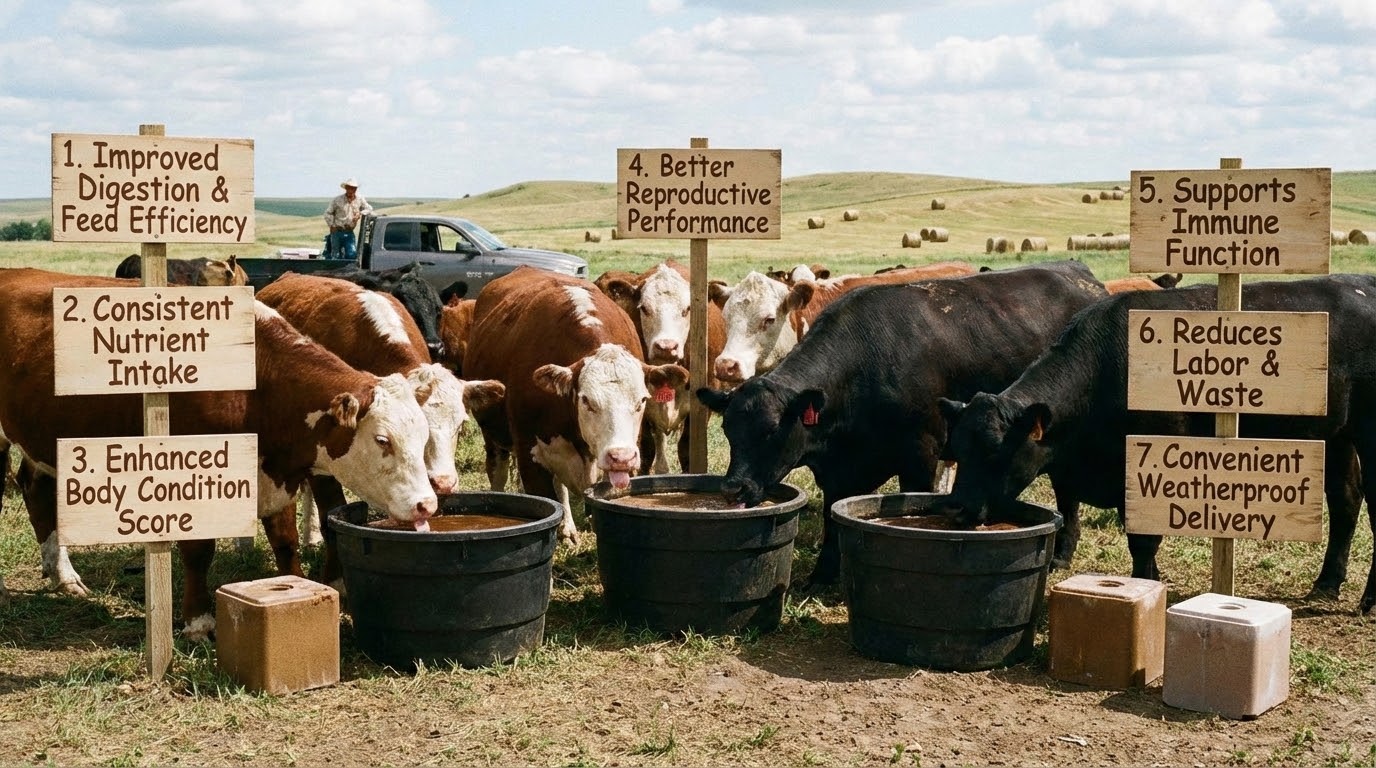
Feed costs keep climbing, pasture quality keeps dropping, and cattle performance starts slipping before you even realize what went wrong. Most producers don’t have a feeding problem—they have a nutrient gap problem.
Block and tub supplements for cattle solve that gap quietly. They deliver consistent protein, minerals, and energy without needing extra labor or complex feeding systems. If your herd is underperforming, this is often the missing piece.
Let’s break down exactly why protein tubs for cattle work—and where they make the biggest difference.
What Are Block and Tub Supplements for Cattle?
Block and tub supplements (often called cattle lick tubs or protein tubs) are self-fed nutritional sources designed to balance what forage lacks.
They typically contain:
- Protein (often 20–32%)
- Molasses for palatability
- Vitamins and trace minerals
- Intake regulators to prevent overconsumption
Unlike loose feed, cattle consume them gradually throughout the day. That steady intake is what makes them effective.
1. They Fill Protein Gaps When Pasture Falls Short
Most pastures—especially in late summer or winter—drop below the protein levels cattle need.
According to the USDA, mature forage can fall under 7% crude protein, which slows rumen activity and reduces feed intake.
That’s where cow protein tubs step in.
They:
- Boost rumen microbes
- Improve fiber digestion
- Help cattle extract more energy from poor forage
Real impact: Better digestion means cattle eat more and gain more—without increasing forage costs.
2. Consistent Intake Without Daily Labor
Hand-feeding supplements every day sounds good in theory—but in reality, it’s inconsistent.
Weather, time, and labor gaps all affect delivery.
Protein tub systems solve that:
- Cattle self-regulate intake
- No daily feeding required
- Intake remains steady across the herd
Dr. Rick Rasby, Beef Nutrition Specialist at the University of Nebraska–Lincoln, notes that consistent nutrient intake improves overall herd performance more than sporadic high feeding.
This is one of the biggest advantages of cattle tubs in large or remote operations.
3. Improved Weight Gain and Feed Efficiency
When rumen microbes get enough protein, they break down forage more efficiently.
That leads to:
- Higher dry matter intake
- Better weight gain
- Improved feed conversion
A study from Oklahoma State University found that protein supplementation in low-quality forage diets can increase forage intake by up to 30%.
Translation: Your cattle get more out of what they already eat.
That’s why many producers rely on options like:
- Triple Trust 32% Low-Moisture Cooked Tub
- Mid South Forage Enhancer 24% Tub
These are designed specifically to maximize digestion efficiency.
4. Reduced Risk of Nutritional Disorders
Inconsistent feeding often leads to problems like:
- Bloat
- Acidosis
- Mineral deficiencies
Block supplements help stabilize intake patterns, which reduces these risks.
Products like:
- Sweetlix Bloat Guard (Pressed Block)
are formulated to specifically address digestive issues like bloat in lush pasture conditions.
Meanwhile, mineral-focused tubs such as:
- Crystalyx Mineral-Lyx (Clarifly)
- Crystalyx Mineral-Lyx (Garlic)
help maintain:
- Fly control
- Immune support
- Overall herd health
5. Better Mineral and Vitamin Balance
Even good forage can lack essential trace minerals like:
- Zinc
- Copper
- Selenium
Deficiencies don’t always show immediately—but they affect:
- Fertility
- Immunity
- Growth rates
According to Dr. Katherine McCann, Ruminant Nutritionist at University of Tennessee, trace mineral imbalances are one of the most overlooked causes of poor herd performance.
Cattle lick tubs provide:
- Controlled mineral intake
- Better absorption due to steady consumption
- Long-term health benefits
6. Cost-Effective Supplementation Strategy
Let’s be practical—everything comes down to cost per pound of gain.
While tubs may seem expensive upfront, they often reduce:
- Labor costs
- Feed waste
- Equipment use
Compared to daily feeding of bulk supplements, they’re often more efficient.
When paired with:
you can build a flexible feeding program that adjusts with seasons and pasture quality.
Key advantage: You spend less time feeding and more time managing.
7. Ideal for All Production Stages
Not all cattle have the same nutritional needs—but tub supplements are adaptable.
They work well for:
- Cow-calf operations
- Growing calves
- Stocker programs
- Breeding herds
Different formulations (like molasses tubs for cattle or high-protein tubs) allow you to match:
- Season
- Weight goals
- Forage conditions
This flexibility makes them one of the most practical tools in cattle nutrition.
Are Molasses Tubs for Cattle Worth It?
Yes—especially when intake is a concern.
Molasses-based tubs:
- Improve palatability
- Encourage consistent consumption
- Deliver quick energy
They’re particularly useful when cattle are:
- Transitioning diets
- Grazing low-quality forage
- Under stress
How to Choose the Best Protein Tub for Cattle
Not all protein tubs are equal. The right choice depends on your herd and conditions.
Look for:
- Protein level (20–32% depending on forage quality)
- Intake control technology
- Mineral balance
- Weather resistance
Ask yourself:
- Is my pasture protein-deficient?
- Do I need more energy or more minerals?
- How often can I realistically feed?
Your answers will guide whether you need:
- High-protein tubs
- Mineral-focused tubs
- Low-moisture cooked tubs
Common Questions About Cattle Tub Supplements
How much protein tub does a cow eat per day?
Most cows consume between 1–3 pounds per day, depending on formulation and forage quality.
Can cattle overeat protein tubs?
Quality tubs are designed with intake regulators to prevent overconsumption. Always follow manufacturer guidelines.
When should I start using cattle lick tubs?
Start when:
- Forage quality drops
- Body condition declines
- Nutritional demands increase (breeding, lactation)
Are cow protein tubs better than loose supplements?
They’re not always “better,” but they are:
- More consistent
- Lower labor
- Easier to manage in pasture systems
Where Block Supplements Fit in a Smart Feeding Program
Block and tub supplements aren’t a replacement for good feeding—they’re a support system.
They work best alongside:
- Quality forage management
- Strategic use of cattle sweet feed
- Seasonal adjustments in Bulk animal feed
When used correctly, they stabilize nutrition across the entire herd.
Final Insight
Most cattle operations don’t fail because of major mistakes—they lose performance through small nutritional gaps that go unnoticed.
Block and tub supplements close those gaps quietly, day after day. The producers who see the best results aren’t guessing—they’re controlling intake, supporting rumen health, and making every pound of forage count.
That’s where consistent nutrition turns into consistent profit.