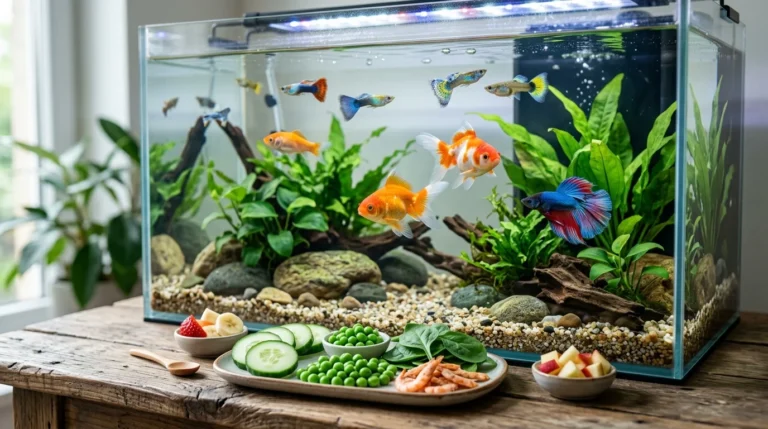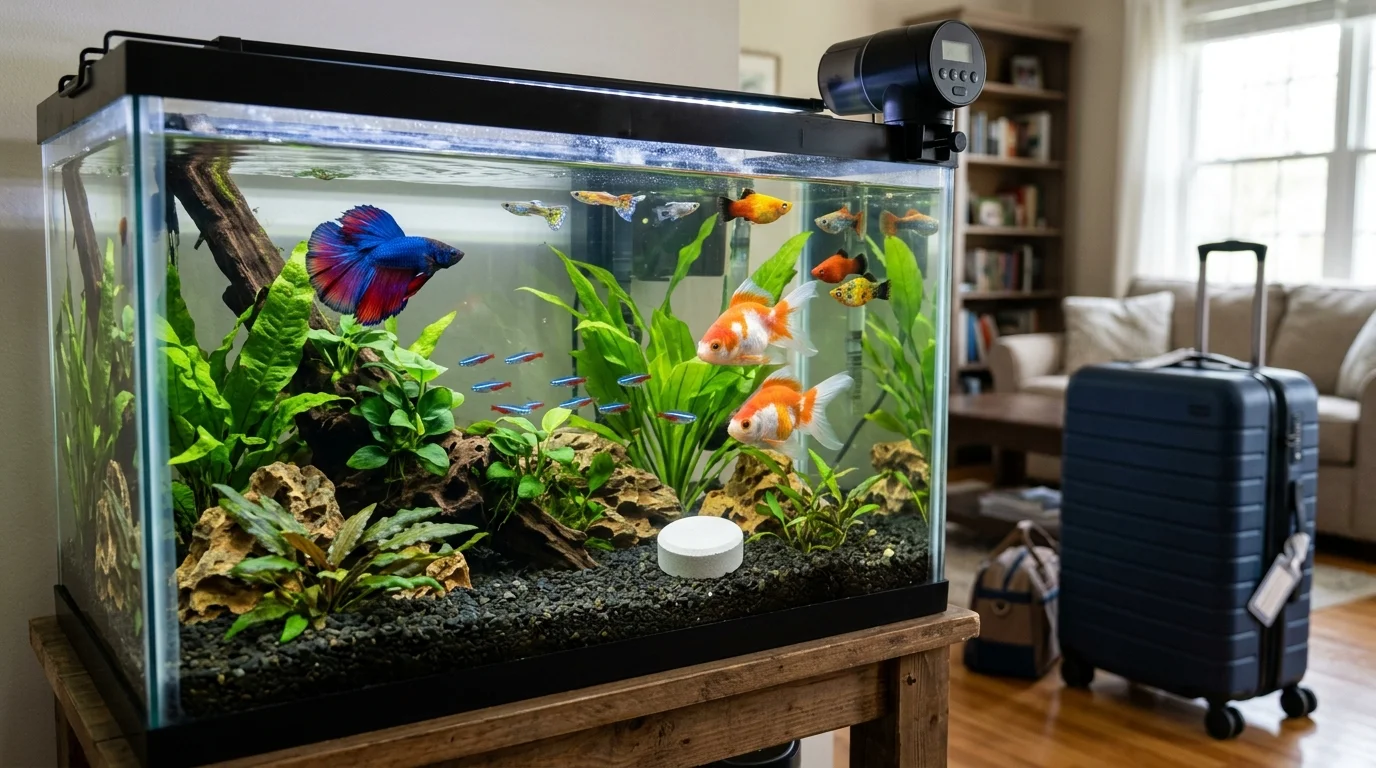
Going on vacation is exciting but if you own fish, one question always pops up: who’s going to feed them? Unlike dogs or cats, fish can’t meow at a neighbor or raid the trash. They depend entirely on you. This guide covers everything you need to know about how to feed fish when on vacation, so you can travel with total peace of mind.
Why Feeding Fish on Vacation Is a Real Concern
Fish are more sensitive than most people think. Irregular feeding, overfeeding by an inexperienced helper, or poor water conditions can all cause serious harm. Many fish deaths during owner vacations happen not from starvation but from overfeeding by well-meaning friends or family.
Understanding the risks helps you plan better. The good news is that with the right approach, your fish can stay healthy whether you’re gone for 3 days or 2 weeks.
How Long Can Fish Go Without Food?
Before you panic, it helps to know the facts. How long can fish go without food depends on the species, age, and tank conditions.
| Fish Type | Safe Duration Without Food |
| Adult Tropical Fish | 5 – 7 days |
| Goldfish | 8 – 14 days |
| Betta Fish | 10 – 14 days |
| Small or Young Fish | 2 – 3 days max |
| Herbivore Fish (e.g., Plecos) | 3 – 5 days |
Healthy adult fish store energy in their bodies and can comfortably skip meals for several days. However, fry (baby fish) and sick fish should never be left without food for more than 1–2 days.
Leaving Fish Alone for a Week: Is It Safe?
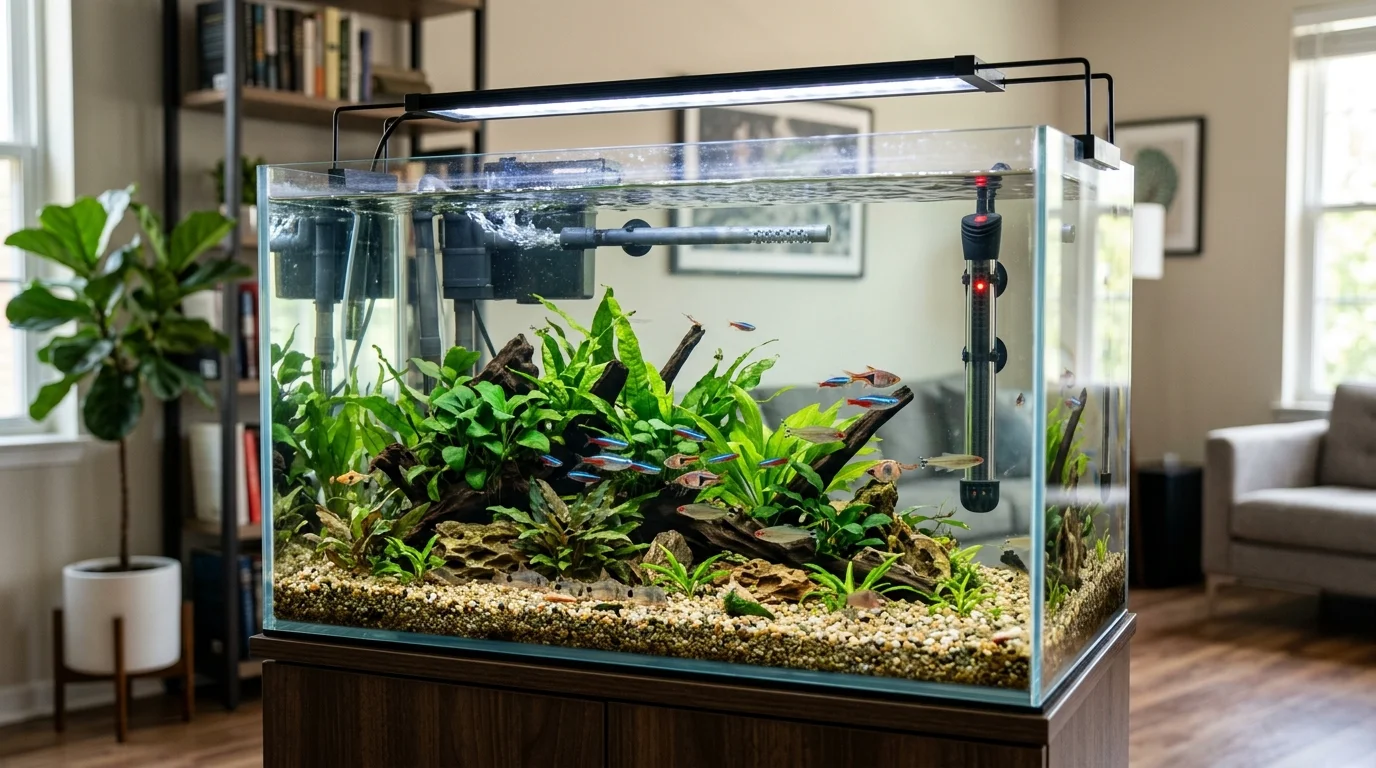
Leaving fish alone for a week is completely safe for most healthy adult fish as long as the tank is properly set up beforehand. The key is preparation, not just food.
Before you leave, make sure:
- The filter is running properly and recently cleaned
- The heater is set to the correct temperature
- The tank light is on a timer (8–10 hours per day)
- Water levels are topped off
- No fish are showing signs of illness
A well-maintained tank with healthy fish can run on its own for 5–7 days without any intervention. Skipping food for that period is far safer than having someone accidentally overfeed and spike ammonia levels.
The Role of Fish Feed Manufacturers in Vacation Feeding
This is where fish feed manufacturers quietly play a huge role one most hobbyists overlook. Over the last decade, leading aquarium feed brands have invested heavily in research and development specifically around slow-release and portion-controlled nutrition for home aquariums.
What makes manufacturer-grade vacation food different from generic options:
- Precision binders that control how fast the block dissolves in water
- Balanced nutrient ratios designed for low-activity, fasting-period metabolism
- Stabilized vitamins (especially Vitamin C) that remain bioavailable even after days of water exposure
- Species-specific formulations some brands offer separate blocks for tropical fish, goldfish, and bettas
When choosing a vacation feeder product, always look for a brand that clearly states the nutritional breakdown on the label. A reputable fish feed manufacturer will list crude protein, crude fat, crude fiber, and moisture content just like food labels for pets or humans. If a product skips this, it is worth avoiding.
The Best Ways to Feed Aquarium Fish When Away
The best way to feed aquarium fish when away depends on your trip length and budget. Here are your most reliable options ranked by effectiveness.
1. Automatic Fish Feeders
An automatic fish feeder is the most reliable solution for vacations longer than 3 days. These battery-powered devices attach to your tank lid and dispense a set amount of food on a programmed schedule.
- Set feeding times (usually once or twice daily)
- Control portion sizes to prevent overfeeding
- Works for flakes, pellets, and granules
- Prices range from $15 to $60
Pro tip: Run the feeder for 3–5 days before your trip to test it. Make sure portions are correct and food actually falls into the water not onto the lid.
2. Vacation Feeder Blocks (Slow-Release Food)
These are compressed food blocks that dissolve slowly in water over several days. They are widely available at pet stores and are a budget-friendly option for short trips of 2–5 days.
However, use them with caution. Low-quality blocks from unknown manufacturers can cloud the water and disrupt water chemistry. Always choose a product from a trusted aquarium feed.
3. Ask a Trusted Fish-Savvy Friend
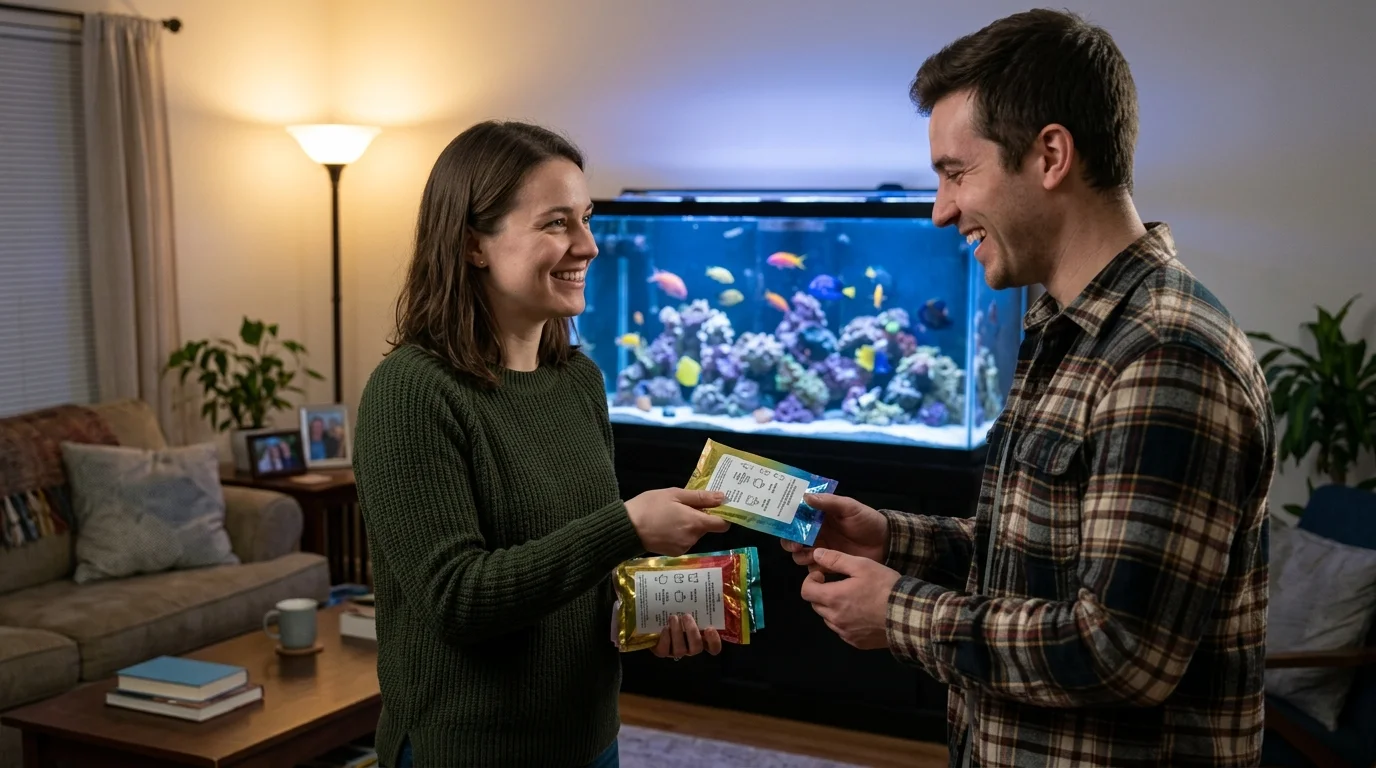
If you prefer a human touch, ask someone who already owns fish or has aquarium experience. Give them:
- Pre-portioned food in small labeled bags (one bag per feeding)
- Clear written instructions on what to fish feed and when
- Your vet or aquarium store contact in case of emergency
Never hand them the whole food container. Overzealous feeding is one of the top causes of vacation fish deaths.
4. Weekend Feeder Gel Foods
Gel foods are another slow-release option developed by specialty aquatic nutrition brands. The gel sticks to the tank wall and fish graze on it throughout the day at their own pace. It is a great natural alternative to blocks and works especially well for herbivore species like cichlids or goldfish.
Quick Comparison: Vacation Feeding Options
| Feeding Method | Best For | Trip Length | Risk Level |
| Automatic Feeder | All fish types | 3 – 14 days | Low |
| Manufacturer Vacation Block | Community tanks | 2 – 5 days | Medium |
| Trusted Fish-Keeper Friend | Any setup | Any length | Low (if experienced) |
| Gel Food / Grazing Food | Herbivores | 3 – 7 days | Low |
| No Feeding | Healthy adult fish | Up to 7 days | Low |
How to Read a Fish Feed Label Before You Buy
One practical skill every aquarium owner should develop is reading fish feed labels especially before buying a vacation product. Reputable fish feed manufacturers follow strict nutritional guidelines, and their labels tell you a lot.
Look for these key indicators on any vacation feeder product:
- Guaranteed Analysis section lists protein, fat, fiber, and moisture percentages
- Ingredient list fish meal, shrimp meal, or spirulina should appear near the top
- Expiry date fresh food dissolves and releases nutrition correctly; old stock may not
- Water stability claim quality brands will state how long the food holds its shape in water
What NOT to Do Before Leaving
Many fish owners make avoidable mistakes right before a trip. Here are the ones to watch out for:
- Do not overfeed in the days before you leave fish don’t store extra food like a camel stores water
- Do not add new fish before vacation new additions stress the tank and need monitoring
- Do not ask a non-fish-owner to manage the tank without very clear, written instructions
- Do not buy unbranded feeder blocks from unknown sources poor manufacturing means unpredictable dissolution rates
These simple steps dramatically reduce the chances of returning to a tank in crisis.
Expert Facts About Fish and Fasting
Here are some evidence-backed facts that aquarium hobbyists, fish biologists, and animal feed manufacturers agree on:
- Fish metabolism slows naturally in cooler water, reducing their need for food
- In the wild, many fish species regularly go days or weeks between meals
- Overfeeding is a far more common cause of aquarium fish death than underfeeding
- Uneaten food breaks down into ammonia, which is toxic even in small amounts
- Leading fish feed manufacturers now use slow-dissolve binder technology specifically to prevent ammonia spikes during owner-absent periods
These facts confirm what experienced aquarists already know: the quality of the food matters just as much as the quantity especially when no one is home to monitor the tank.
Final Checklist Before You Leave for Vacation
Use this checklist the day before your trip:
- ✅ Tank filter cleaned and running
- ✅ Heater set and tested
- ✅ Light on a timer
- ✅ Automatic feeder tested and loaded with manufacturer-recommended food
- ✅ Water change done (2–3 days before departure)
- ✅ Vacation feeder block from a trusted brand placed in tank (if applicable)
- ✅ All fish appear healthy and active
Final Thoughts
Knowing how to feed fish when on vacation is one of the most important skills you develop as an aquarium owner. The answer is simpler than most people expect: healthy adult fish handle short fasts well, and a quality automatic feeder or manufacturer-grade vacation block solves nearly every situation beyond that.
Plan ahead, choose products from reputable fish feed manufacturers, and avoid the temptation to overfeed before you go. Your fish will be just fine and so will your vacation.
FAQs
1. Can fish survive only on natural tank food during a vacation?
Some fish can nibble on algae and microorganisms, but it is not enough for all species. It only works for short trips and well-established tanks.
2. Should you adjust the water temperature before leaving?
No, sudden temperature changes can stress fish and weaken immunity. Keep it stable and within the normal range for your species.
3. Is it okay to skip feeding entirely for more than a week?
For most fish, skipping beyond 7 days increases health risks. Longer trips require an automatic feeder or a reliable backup plan.
4. Can multiple feeding methods be combined for safety?
Yes, using a feeder along with natural grazing or plants adds a safety buffer. Just avoid overlapping methods that may lead to overfeeding.
5. Do fish need different feeding strategies in colder weather?
Yes, fish metabolism slows in cooler temperatures, so they require less food. This can make short fasting periods even safer.
6. Should you isolate aggressive fish before going on vacation?
If aggression is an issue, separating fish can prevent injuries while you are away. A calm tank environment reduces stress and risk.