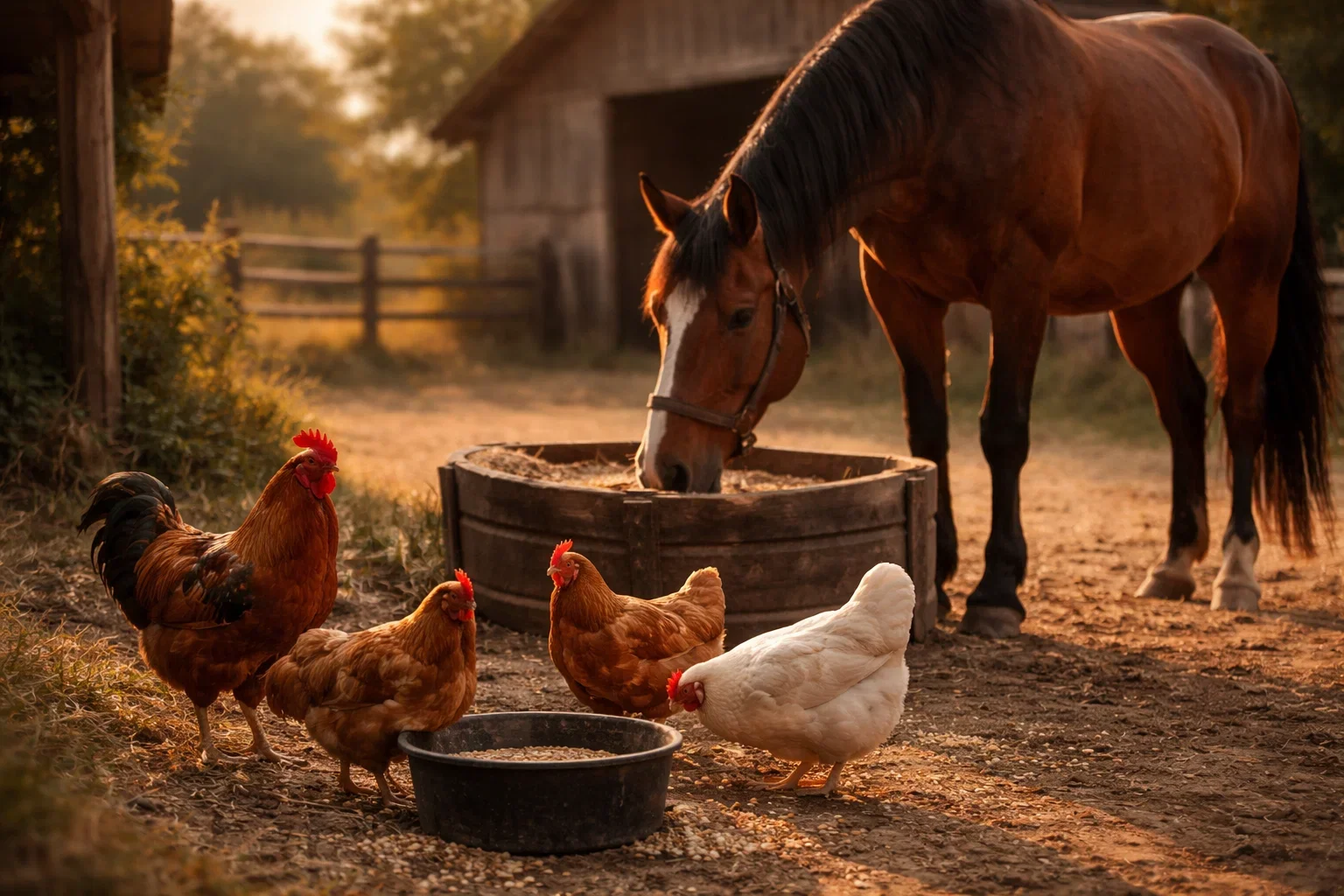
If you’ve ever caught your backyard chickens sneaking bites from the horse’s bucket, you’re not alone. It’s one of the most common questions among small farm owners: can chickens eat horse feed? The short answer is occasionally and in small amounts, it’s unlikely to be immediately harmful. But the long answer is far more important, and understanding it could protect the long-term health of your flock.
This guide walks you through everything you need to know from what horse feed actually contains, to what chickens genuinely need, and why mixing up your animal food can lead to nutritional imbalances you may not notice right away.
What Is Horse Feed Made Of?
Before we answer whether chickens can safely eat it, let’s understand what horse feed actually is. Horse feed is specifically formulated to meet the nutritional demands of large, high-energy herbivores. It typically contains:
- Grains such as oats, corn, and barley
- Forages like alfalfa and timothy hay blends
- Molasses for palatability and energy
- Added vitamins and minerals including selenium, copper, zinc, and iron at equine-specific levels
- Ionophore medications in some medicated varieties (such as monensin or lasalocid)
The last ingredient on that list is the most dangerous. Ionophores are commonly added to some commercial horse feeds as coccidiosis preventatives or growth promoters for livestock. While horses tolerate these compounds, ionophores are highly toxic to poultry even in small doses. This alone is reason enough to keep your chicken feed and horse feed in completely separate spaces.
Can Chickens Eat Horse Feed? The Full Truth
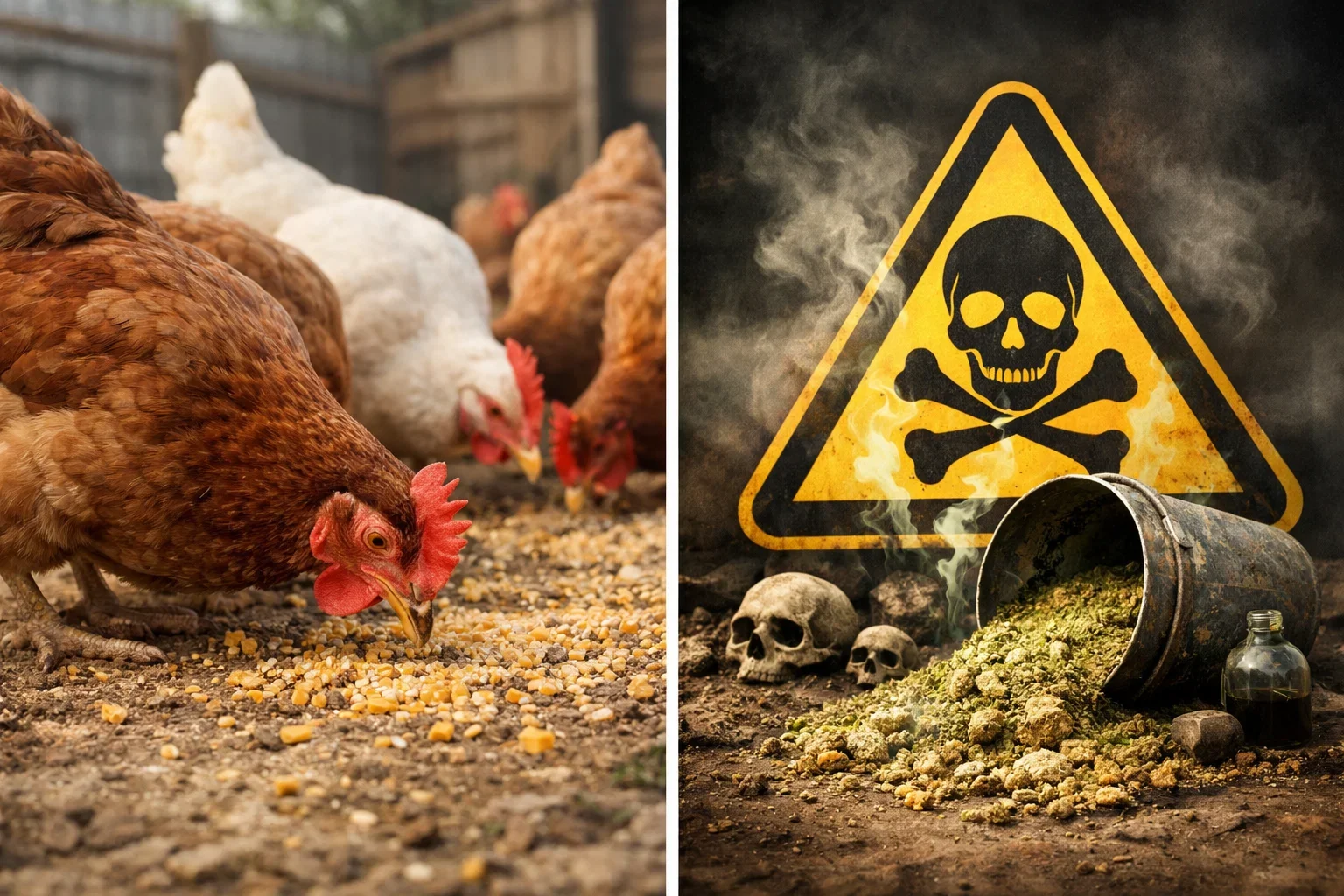
In a strictly non-medicated horse feed scenario plain oats, corn, or a simple grain mix chickens can consume small amounts without immediate danger. Chickens are natural foragers and will eat just about anything they come across. Grains found in horse feed aren’t poisonous by themselves.
However, “not immediately dangerous” is very different from “nutritionally appropriate.”
Here’s what you need to understand: chicken feed is a precision-engineered product. Laying hens, broilers, and chicks each require specific protein percentages, calcium levels, and amino acid profiles. Horse feed simply doesn’t meet these needs and feeding it regularly can result in poor egg production, weak shells, feather loss, and slower growth in meat birds.
| Concern | Horse Feed Impact on Chickens |
| Ionophore additives (medicated) | Fatal even trace amounts can kill poultry |
| Excess copper | Toxic to chickens at high equine-level concentrations |
| Low protein content | Leads to poor feathering, low egg yield |
| High molasses content | Causes loose droppings, digestive upset |
| Calcium imbalance | Weak eggshells, poor bone development |
Bottom line: Chickens can survive a few accidental bites of plain horse feed, but it should never be offered as a substitute or supplement for proper chicken feed.
Difference Between Horse Feed and Chicken Feed
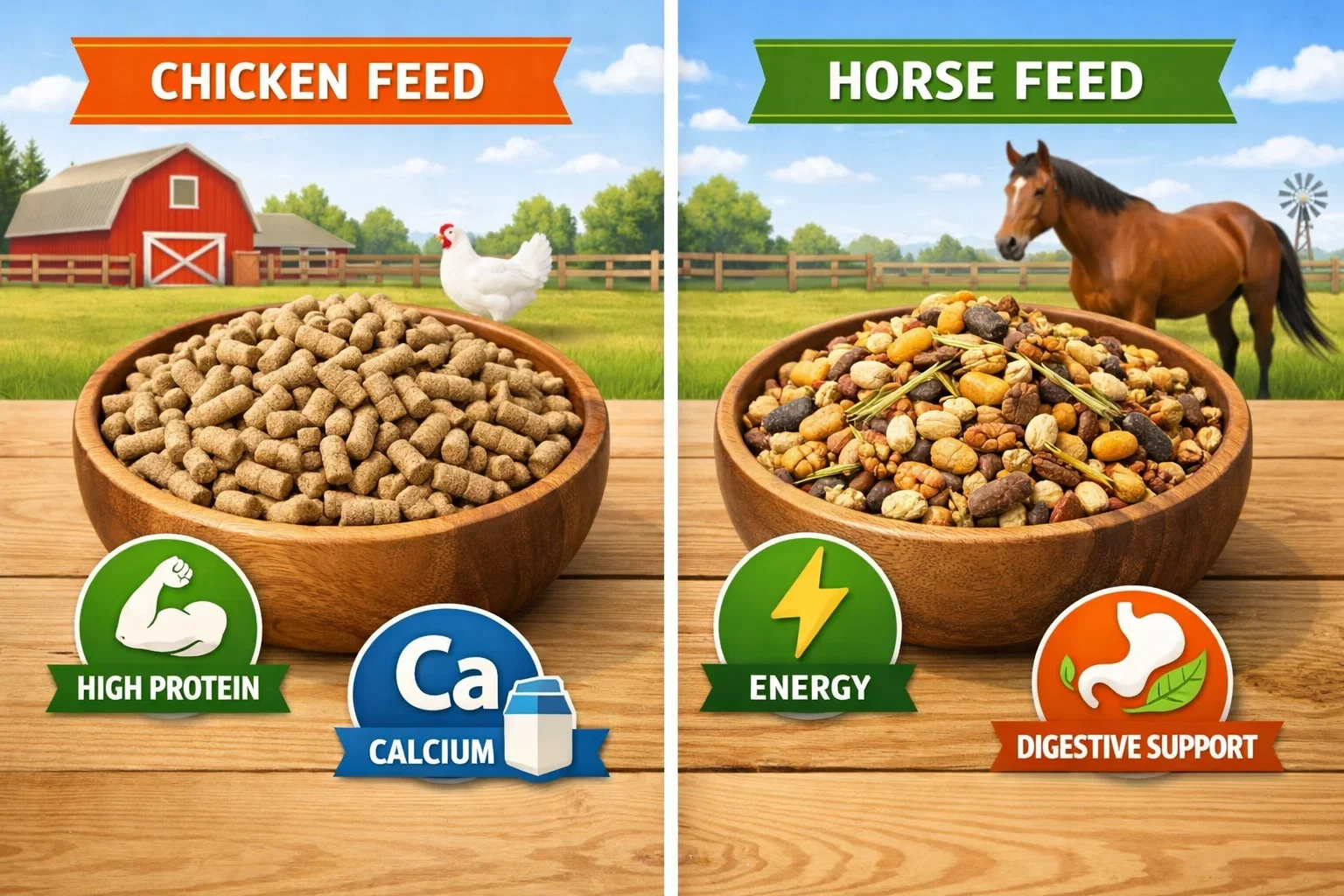
Understanding the difference between horse feed and chicken feed is essential for any mixed-species farm owner. These feeds are not interchangeable; they’re designed for entirely different digestive systems, body sizes, and metabolic needs.
| Nutrient/Feature | Chicken Feed | Horse Feed |
| Protein content | 16–20% (layers), 20–24% (chicks) | 10–14% |
| Calcium | High (3–4% for layers) | Low (0.5–1%) |
| Fiber | Moderate | Very High |
| Ionophores | Never included in poultry feed | Sometimes included |
| Formulation goal | Egg production, growth, feathering | Energy, endurance, gut health |
| Grit requirement | Yes | No |
The digestive anatomy of a chicken with its gizzard and highly specialized gut flora processes nutrients very differently than a horse’s hindgut fermentation system. Feeding a chicken a diet designed for a horse is like asking it to run on the wrong type of fuel.
What Happens If Chickens Eat Horse Feed?
Knowing what happens if chickens eat horse feed depends heavily on the type and quantity consumed.
Scenario 1
A Few Bites Of Plain, Non-Medicated Horse Feed: Your chickens will likely be fine. Grains like oats and corn won’t cause immediate harm. Monitor for loose stools due to molasses content.
Scenario 2
Regular Access To Horse Feed: Over weeks, expect nutritional deficiencies. Laying hens may begin producing thin-shelled eggs or stop laying altogether. Feather quality will decline. Birds may appear lethargic.
Scenario 3
Medicated Horse Feed Containing Ionophores: This is a genuine emergency. Ionophore toxicity in poultry causes muscle weakness, paralysis, and can be fatal within 24–48 hours. If you suspect your chickens have consumed medicated horse feed, contact a veterinarian immediately.
The safest practice on any mixed farm is to store all animal food separately and ensure feeding stations are species-specific and inaccessible to other animals.
What Can Chickens Eat? A Practical List
Now that you know what chickens shouldn’t eat, here’s a practical what can chickens eat list to help you keep your flock healthy and productive:
Safe and Recommended Foods:
- High-quality layer pellets or crumbles (the cornerstone of their diet)
- Scratch grains (wheat, corn, milo) as a treat, not a staple
- Fresh vegetables: leafy greens, cucumber, squash, carrots
- Fruits: watermelon, berries, apples (no seeds)
- Mealworms and insects (excellent protein source)
- Plain cooked rice or oatmeal (occasional treat)
- Grit and oyster shell (essential for digestion and eggshell strength)
Foods Chickens Should Never Eat:
- Avocado (toxic)
- Chocolate or caffeine
- Raw beans
- Onions and garlic in large amounts
- Anything moldy or spoiled
- Medicated feeds not intended for poultry
The key to a healthy flock always comes back to species-specific chicken feed as the dietary foundation is supplemented thoughtfully with healthy treats.
How to Safely Manage a Mixed-Species Farm
If you raise both horses and chickens, cross-contamination of feed is a real and manageable risk. Here are expert-backed practices to keep every animal safe:
- Store feeds in locked, separate containers. Use clearly labeled bins with tight-sealing lids for each type of animal food.
- Feed horses in enclosed stalls. Prevent chickens from accessing the horse’s feeding area during meal times.
- Always read feed labels. Before purchasing any horse feed, check for ionophore additives. Common ones include monensin (Rumensin) and lasalocid. Never allow these near poultry.
- Use species-specific formulas. Work with a trusted supplier that clearly labels each formula’s intended species and nutritional profile.
- Find an animal dealer near you who specializes in livestock nutrition so you can get personalized guidance for your specific farm setup and flock size.
Why Species-Specific Nutrition Always Wins
Every animal on your farm has evolved to thrive on a specific type of diet. Horses are hindgut fermenters built for fibrous forage. Chickens are omnivorous foragers built for high-protein, calcium-rich diets with digestive grit. Crossing those dietary lines even out of convenience creates nutritional gaps, health risks, and in the worst case, preventable deaths.
This is why investing in proper, species-formulated chicken feed and horse feed from a reliable manufacturer isn’t just good practice, it’s responsible animal ownership.
Conclusion
If you’re serious about the health of your flock and your horses, the quality of what goes in the bucket matters more than most people realize. That’s exactly where Mid South Feeds comes in.
Mid South Feeds is a premium animal food manufacturer marketplace based in Alma, Georgia, with a full product lineup covering poultry, equine, cattle, gamebird, swine, and more every formula crafted to meet the specific nutritional demands of each species. Whether you need a high-performance layer feed for your hens or a balanced maintenance formula for your horses, Mid South Feeds formulates with science-backed precision and southern-bred integrity.
Don’t leave your animals’ health to chance by mixing feeds that were never meant to go together. Choose the right chicken feed for your flock and the right horse feed for your horses and let every animal thrive on what was made specifically for them.
Ready to upgrade your farm’s nutrition game? Find animal dealers near you through the Mid South Feeds dealer locator and get access to premium, species-specific formulas trusted by farmers and breeders across the country.
Because better feed means stronger animals and that’s what Mid South is all about.
FAQs
1. Can chickens eat horse feed safely?
Chickens can eat small amounts of plain, non-medicated horse feed without immediate harm, but it is not suitable for regular feeding. Horse feed lacks the proper balance of protein, calcium, and nutrients that chickens need for healthy growth and egg production, making it an unsuitable long-term option.
2. Why is medicated horse feed dangerous for chickens?
Medicated horse feed often contains ionophores such as monensin or lasalocid, which are highly toxic to poultry even in tiny amounts. Consuming such feed can lead to severe health issues like paralysis or death, making it critical to keep medicated feeds completely away from chickens.
3. What happens if chickens regularly eat horse feed?
If chickens regularly consume horse feed, they may develop nutritional deficiencies due to low protein and improper mineral balance. Over time, this can result in poor egg production, weak eggshells, feather loss, and overall reduced health and vitality.
4. Can chickens eat grains found in horse feed?
Yes, chickens can eat grains like corn, oats, and barley that are commonly found in horse feed, but only as occasional treats. These grains alone do not provide the complete nutrition chickens require, so they should never replace a balanced chicken feed.
5. How is chicken feed different from horse feed?
Chicken feed is specifically formulated with higher protein levels, adequate calcium, and essential nutrients to support egg production and growth, whereas horse feed is designed for energy and fiber needs of horses. These fundamental differences make the two feeds non-interchangeable.