 Dogs & Cats
 Cattle
 Equine
 Poultry
 Swine
Swine Goats & Sheep
 Game Bird
 Gamecock
 Deer & Wildlife
 Fish & Pond
 Rabbit
 Specialty
 Ingredients & Bulk
 Special Order
Most chicken health problems start with food. Weak eggshells, feather loss, low egg production, obesity, digestive issues, and even sudden deaths are often linked to poor feeding habits. A lot of backyard flock owners think chickens can eat almost anything. Technically, they will try to. That does not mean they should.
If you are wondering what do chickens eat, the short answer is this: chickens need balanced poultry feed first, healthy treats second, and certain foods should never be fed at all.
The safest approach is simple. Build your flock’s diet around complete poultry nutrition, then add fruits, vegetables, grains, and protein treats in moderation. That keeps birds productive, active, and healthy long term.
According to Poultry Nutrition research published through the University of Kentucky poultry extension program, chickens require a balance of protein, carbohydrates, fats, vitamins, minerals, and constant access to clean water for proper growth and egg production.
What Do Chickens Eat Naturally?
People often ask, what do chickens eat naturally?
In natural outdoor environments, chickens are opportunistic omnivores. They spend most of their day scratching and pecking for:
- Seeds
- Grains
- Grass
- Weeds
- Bugs
- Worms
- Small insects
- Berries
- Kitchen scraps
That natural behavior matters because chickens are built to consume a varied diet. But modern laying hens also need precise nutrition levels that natural foraging alone usually cannot provide.
That is why complete chicken feed remains the foundation of a healthy flock.
What Should Chickens Eat Every Day?
A chicken’s daily diet should depend on its age and purpose.
Chicks Need High-Protein Starter Feed
Young chicks grow fast. Their bodies need higher protein levels to support muscle, feather, and bone development.
Starter feeds like 20% Pullet Starter-Grower Crumbles are designed specifically for that stage.
Veterinary feeding guides recommend starter or grower feed for young birds because homemade diets often miss critical nutrients.
Laying Hens Need Calcium and Balanced Protein
Once hens begin laying eggs, their nutritional needs change.
Most experts recommend layer feed with around 16% protein plus adequate calcium support for eggshell production.
Good options include:
During molting or colder seasons, some poultry keepers increase protein intake temporarily to support feather regrowth and body maintenance.
Adult Flocks Benefit From Scratch Grains in Moderation
Scratch grains are treats, not complete nutrition.
Feeds like 4-Grain Scratch Feed (50 lb) encourage natural scratching behavior and help keep birds active.
But too much scratch feed can dilute protein intake and reduce egg production.
According to poultry nutrition discussions among experienced flock owners and feed formulators, birds fed excessive scratch grains often end up protein deficient.
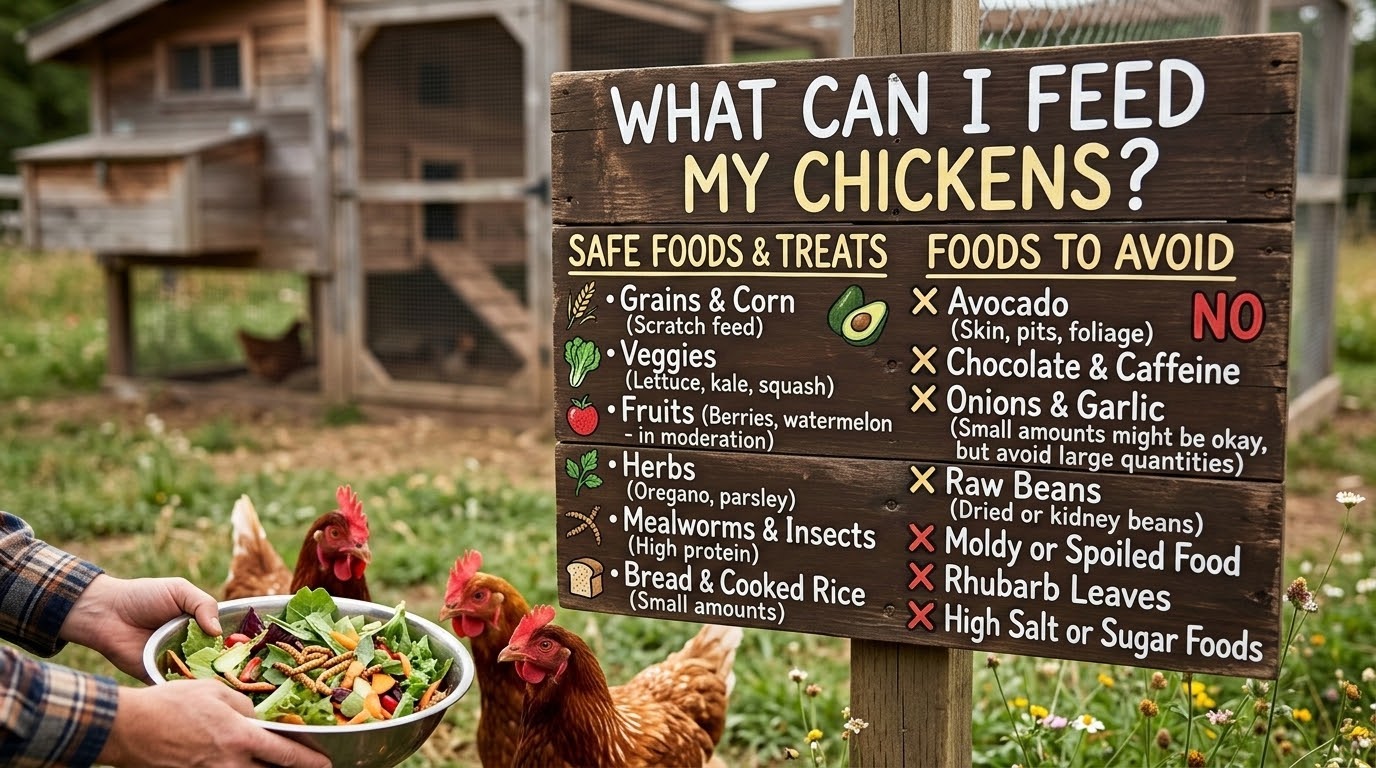
What Can Chickens Eat Safely?
If you are asking what can chickens eat, here are the safest categories.
Vegetables Chickens Can Eat
Most chickens enjoy vegetables, especially leafy greens.
Safe vegetables include:
- Lettuce
- Kale
- Cucumbers
- Carrots
- Broccoli
- Cabbage
- Peas
- Pumpkin
- Cooked sweet potatoes
Vegetables provide fiber, vitamins, and enrichment.
Fruits Chickens Like to Eat
Many flock owners ask, what do chickens like to eat?
Fruit is usually near the top of the list.
Safe fruits include:
- Watermelon
- Strawberries
- Blueberries
- Apples without seeds
- Grapes
- Bananas
- Pears
Fruit should stay occasional because excess sugar can lead to obesity.
Protein-Rich Foods for Poultry
Protein matters more than many beginners realize.
According to Dr. Jacquie Jacob from the University of Kentucky, protein supports feathers, muscle tissue, egg production, and overall poultry health.
Healthy protein treats include:
- Mealworms
- Crickets
- Earthworms
- Cooked eggs
- Plain cooked fish
This becomes especially important during molting season.
Grains and Seeds Chickens Enjoy
Common grains in poultry diets include:
- Corn
- Wheat
- Oats
- Barley
Research from poultry extension programs shows grains are primarily energy sources in poultry diets.
What Foods Are Toxic to Chickens?
This is where many flock owners make dangerous mistakes.
Some foods are genuinely harmful to poultry.
Never Feed Chickens These Foods
Avoid feeding:
- Avocado pits and skins
- Chocolate
- Caffeine
- Raw beans
- Moldy food
- Rotten leftovers
- Excess salty foods
- Alcohol
- Green potato peels
Several veterinary and poultry health resources warn these foods can cause poisoning, digestive damage, or death in chickens.
Why Moldy Feed Is Dangerous
Mold produces toxins called mycotoxins. Poultry are highly sensitive to them.
Spoiled feed can quickly lead to:
- Respiratory issues
- Digestive problems
- Reduced egg production
- Sudden mortality
Feed storage matters just as much as feed quality.
What Is the Best Food for Poultry?
The best food for poultry is balanced feed matched to the bird’s age and production stage.
A healthy feeding setup usually includes:
- Complete poultry feed
- Fresh clean water
- Calcium support for layers
- Occasional healthy treats
- Limited scratch grains
According to the Merck Veterinary Manual, poultry require at least 38 nutrients in proper balance for healthy production and growth.
That is why random kitchen scraps alone are never enough.
What Do I Feed a Chicken for Better Egg Production?
If your hens suddenly stop laying well, nutrition is usually one of the first things to check.
For strong egg production:
- Use quality layer feed
- Maintain proper calcium intake
- Avoid excessive treats
- Ensure constant clean water access
- Increase protein during molt when needed
Feeds like 20% Layer Pellets are commonly used when birds need additional protein support.
Research from poultry extension programs shows even temporary water shortages can reduce egg production quickly.
Common Feeding Mistakes Backyard Chicken Owners Make
Feeding Too Many Treats
Treats should not replace balanced poultry feed.
Many experts recommend treats stay around 10% or less of the total diet.
Giving Layer Feed Too Early
Young birds should not receive high-calcium layer feed before laying age.
Experienced poultry nutrition specialists warn this may contribute to kidney problems in immature birds.
Ignoring Water Intake
Water is often overlooked even though it is one of the most important nutrients in poultry production.
Birds can survive longer without feed than without water.
Can Chickens Eat Kitchen Scraps?
Yes, but carefully.
Safe scraps include:
- Plain rice
- Cooked pasta
- Vegetable trimmings
- Small fruit leftovers
Avoid:
- Greasy foods
- Sugary desserts
- Highly processed foods
- Spoiled leftovers
Think of scraps as supplements, not the main meal.
Why Quality Feed Matters More Than Most People Think
A healthy flock starts with consistent nutrition.
Cheap feed often creates expensive problems later through:
- Poor egg quality
- Lower production
- Feather issues
- Weak immune systems
- Higher mortality
That is why experienced poultry owners usually stick with nutritionally balanced feeds designed for specific flock stages instead of guessing with homemade mixes.
For flock owners looking for dependable poultry nutrition, Mid South Feeds offers feed options built for chicks, growers, and laying hens with formulations designed to support long-term flock performance.
And if you are planning to expand beyond a backyard flock, you can also explore opportunities to become a livestock feed dealer through their distribution network.
A healthy chicken rarely happens by accident. Most productive flocks come down to one thing: consistent feeding habits backed by proper nutrition instead of random scraps and guesswork.
Sources
- University of Kentucky Poultry Extension
- Merck Veterinary Manual Poultry Nutrition
- Penn State Extension Poultry Nutrition Resources
- PetMD Chicken Care & Feeding Guides
- Vet Verified Poultry Feeding Resources
- Petco Poultry Feeding Resource Center