 Dogs & Cats
 Cattle
 Equine
 Poultry
 Swine
Swine Goats & Sheep
 Game Bird
 Gamecock
 Deer & Wildlife
 Fish & Pond
 Rabbit
 Specialty
 Ingredients & Bulk
 Special Order
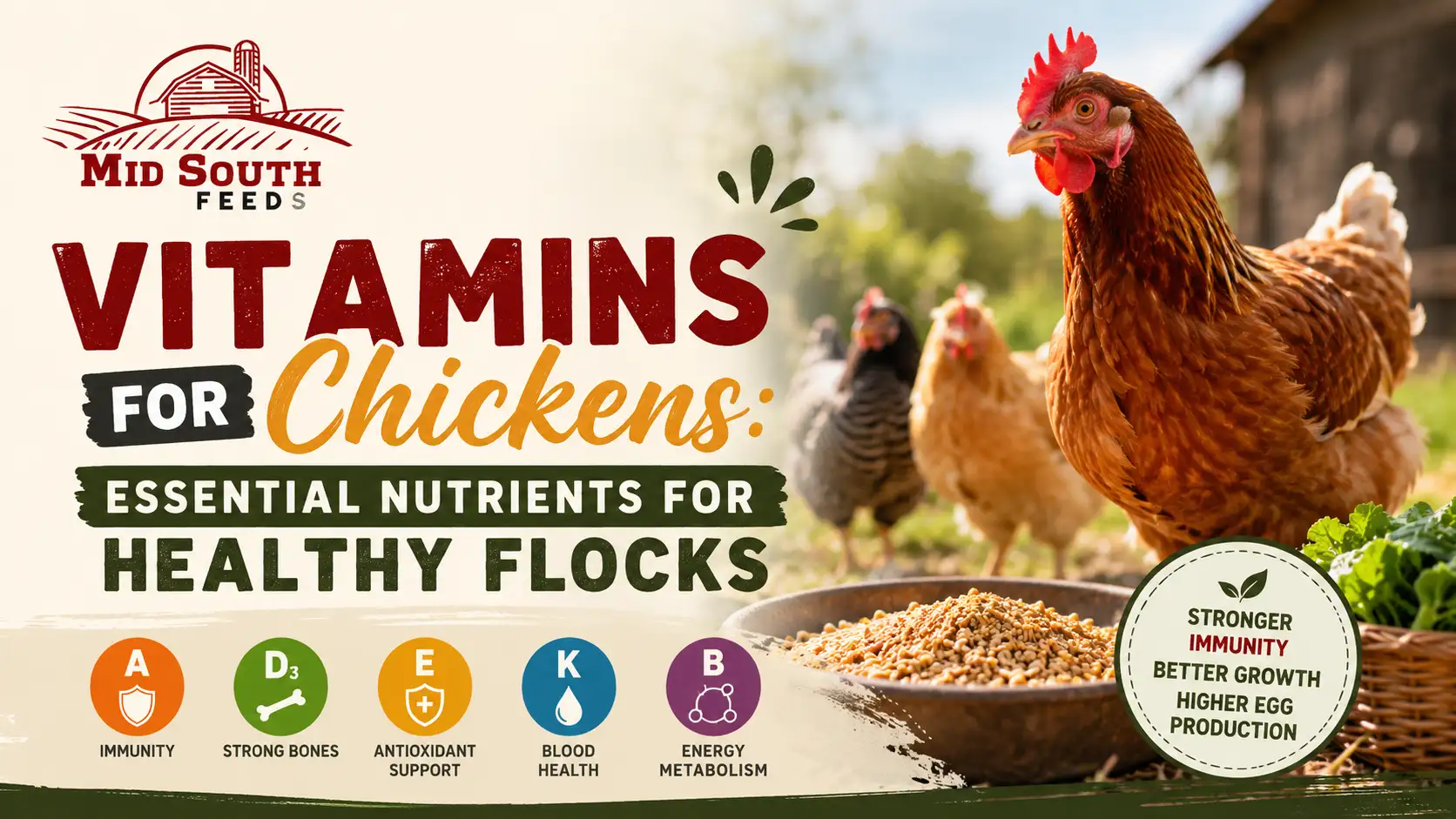
A chicken can eat plenty of feed and still become unhealthy if the vitamins are wrong.
That is the part many backyard flock owners miss. Weak eggshells, poor feather growth, low egg production, tired hens, slow-growing chicks, and repeated illness are often tied to vitamin deficiency in chickens, not just protein levels or feed quantity.
Good chicken nutrition is not about feeding more. It is about feeding correctly.
The right vitamins for chickens support bone strength, egg production, immunity, metabolism, feather development, and healthy growth from chick stage to laying years. Without balanced vitamins, even healthy-looking birds can quietly develop long-term poultry health problems.
According to University of Georgia Cooperative Extension poultry specialist Dr. Casey Ritz, proper vitamin supplementation is critical because modern chickens grow and produce at rates that require “highly balanced nutrition to maintain health and productivity.”
For most flocks, the solution starts with a complete feed formulated for the bird’s age and purpose, not random kitchen scraps or inconsistent grain mixes.
Why Are Vitamins Important for Chickens?
Chickens need vitamins for the same reason humans do. Their bodies rely on them to regulate essential functions.
These nutrients help with:
- Immune system support
- Eggshell formation
- Bone development
- Feather growth
- Muscle function
- Fertility
- Stress recovery
- Nervous system health
When chickens do not receive enough vitamins in chicken feed, their health declines fast. Chicks may stop growing properly. Layers may produce fewer eggs or soft shells. Adult birds may appear weak, lose feathers, or become more vulnerable to disease.
This is why experienced poultry owners focus heavily on choosing the right chicken feed instead of relying on supplements alone.
What Vitamins Do Chickens Need Most?
Vitamin A: Vision, Skin, and Immunity
Vitamin A supports eye health, respiratory function, skin condition, and immune response.
A deficiency can cause:
- Eye swelling
- White patches in the mouth
- Poor growth
- Breathing problems
- Reduced egg production
Birds raised indoors or under stress may require extra attention to Vitamin A intake.
Many high-quality poultry feeds already contain stabilized Vitamin A because it breaks down quickly during storage.
Vitamin D3: Bone Strength and Eggshell Quality
Vitamin D3 is one of the most important hen vitamins for laying flocks.
It helps chickens absorb calcium properly. Without enough Vitamin D3, hens can develop:
- Thin eggshells
- Weak bones
- Leg issues
- Reduced laying performance
Chicks are especially vulnerable because bone growth happens rapidly during early development.
Dr. Jacqueline Jacob, poultry extension expert at University of Kentucky, explains that Vitamin D deficiency can lead to rickets in young birds and poor shell quality in adult hens.
Balanced layer feeds typically include Vitamin D3 along with calcium and phosphorus for better absorption.
Which Vitamins Help Chickens Fight Disease?
Vitamin E: Immunity and Muscle Health
Vitamin E acts as an antioxidant and helps protect cells from damage.
It supports:
- Immune response
- Fertility
- Muscle function
- Stress recovery
Low Vitamin E levels can contribute to neurological problems, weakness, and poor hatchability in breeding birds.
Backyard chicken nutrition programs often include Vitamin E because birds experience stress from weather changes, predators, overcrowding, and seasonal shifts.
Vitamin C: Stress Support
Chickens naturally produce some Vitamin C on their own, but heat stress can increase their needs.
During hot summers, poultry nutrition experts sometimes recommend extra Vitamin C support to help birds cope with:
- Heat exhaustion
- Reduced appetite
- Lower egg production
This becomes especially important in southern U.S. climates where summer temperatures can heavily impact flock performance.
What B Vitamins Do Chickens Need?
B vitamins play a major role in energy production and nervous system function.
Important chicken vitamins in this group include:
Vitamin B1 (Thiamine)
Supports nerve and brain function.
Deficiency signs include:
- Loss of balance
- Weakness
- Tremors
Vitamin B2 (Riboflavin)
Critical for chick growth and leg development.
Riboflavin deficiency is one of the most recognized causes of curled-toe paralysis in chicks.
Vitamin B12
Supports metabolism and red blood cell production.
Low B12 levels may reduce growth and egg production.
Most commercial feeds include these vitamins because deficiencies develop quickly in poultry.
Do Chicks Need Different Vitamins Than Adult Chickens?
Yes. Vitamins for chicks are different from vitamins for laying hens.
Young chicks require higher nutrient density because they grow rapidly in the first weeks of life.
Starter feeds are specifically designed to support:
- Skeletal growth
- Organ development
- Feather formation
- Immune health
Using adult layer feed too early can create nutritional imbalances.
That is why poultry nutrition guides recommend age-specific feeding programs such as:
- Starter feed for chicks
- Grower feed for pullets
- Layer feed for laying hens
This feeding transition matters more than many flock owners realize.
For example, feeds like:
- 20% Pullet Starter-Grower Crumbles
- 16% Layer Crumbles
- 16% Layer Pellets
- 16% Layer Mash
- 20% Layer Pellets
are formulated differently because chickens have different nutritional demands at each life stage.
Can Chickens Get Too Many Vitamins?
Yes.
Over-supplementing chicken vitamin products can create serious health problems.
Too much:
- Vitamin D can damage kidneys
- Calcium can interfere with growth
- Excess supplements can upset nutrient balance
According to poultry nutrition researchers at Mississippi State University Extension Service, most healthy backyard flocks already receive proper vitamin levels from complete commercial feed.
That means supplements should solve specific deficiencies, not replace balanced feeding practices.
What Are the Signs of Vitamin Deficiency in Chickens?
Vitamin deficiency in chickens often appears gradually.
Common warning signs include:
- Weak eggshells
- Poor feather condition
- Reduced egg production
- Swollen eyes
- Slow chick growth
- Leg weakness
- Loss of appetite
- Low energy
- Pale combs
- Poor hatchability
These symptoms are sometimes confused with disease, parasites, or stress.
In reality, poor chicken feed ingredients or incorrect feeding programs are often the root problem.
What Is the Best Way to Provide Vitamins for Chickens?
The most reliable method is feeding a complete poultry ration made for the bird’s age and production stage.
Experienced poultry owners usually avoid homemade feed unless guided by a poultry nutrition expert because balancing vitamins, minerals, amino acids, and energy levels is extremely difficult.
A strong poultry feeding program typically includes:
- Fresh balanced feed
- Clean water
- Proper storage to protect vitamins from heat
- Age-appropriate feed formulas
- Consistent feeding schedules
When evaluating the best poultry feed, ingredient quality matters more than marketing labels.
Look for feeds designed specifically for:
- Layers
- Pullets
- Chicks
- Broilers
Many backyard flock owners searching for animal feed dealers near me also compare:
- Protein levels
- Vitamin fortification
- Pellet vs crumble texture
- Feed freshness
- Manufacturer reputation
Layer Feed vs Starter Feed: Why the Difference Matters
One of the biggest chicken nutrition mistakes is feeding layer feed too early.
Layer feed contains extra calcium for egg production. Young birds do not need those levels yet.
Starter-grower feeds focus more on:
- Protein
- Bone growth
- Development vitamins
Layer formulas focus more on:
- Eggshell support
- Sustained laying performance
- Calcium metabolism
That difference directly affects long-term flock health and egg consistency.
What Do Chickens Eat Besides Feed?
Chickens naturally enjoy:
- Grains
- Seeds
- Insects
- Greens
- Kitchen vegetables
But treats should not replace balanced feed.
According to poultry nutrition advice from extension experts, treats should stay below 10% of total intake to avoid nutritional imbalance.
Owners asking “what do chickens eat” often underestimate how precise modern poultry nutrition really is.
Even small vitamin gaps can affect egg quality, immunity in chickens, and growth performance.
Are Chicken Vitamin Supplements Necessary?
Sometimes, yes.
Chicken feed supplements may help during:
- Heat stress
- Illness recovery
- Molting
- Transportation stress
- Poor appetite periods
But supplements work best when paired with quality feed, not used as a shortcut for poor nutrition.
This is why experienced poultry keepers often prioritize trusted feed programs before adding extra products.
A well-formulated feed usually provides more consistent nutrition than separate supplement mixes.
Final Thoughts
Healthy chickens rarely happen by accident.
Strong egg production, healthy feathers, active behavior, and long flock life usually come from consistent nutrition decisions made weeks earlier. Vitamins quietly control many of those outcomes behind the scenes.
The best poultry owners pay attention to feed quality long before visible health problems appear. They understand that vitamins for chickens are not optional extras. They are part of the foundation of poultry health and nutrition.
For flock owners looking for dependable feed options in the United States, Mid South Feeds offers poultry feed formulas designed for different growth stages, including layer feeds and starter-grower options that support balanced chicken nutrition from chick development through egg production.
Sources
- University of Georgia Cooperative Extension Poultry Resources
- University of Kentucky Poultry Extension Resources
- Mississippi State University Extension Poultry Nutrition Resources
- Merck Veterinary Manual Poultry Nutrition Guide