 Dogs & Cats
 Cattle
 Equine
 Poultry
 Swine
Swine Goats & Sheep
 Game Bird
 Gamecock
 Deer & Wildlife
 Fish & Pond
 Rabbit
 Specialty
 Ingredients & Bulk
 Special Order
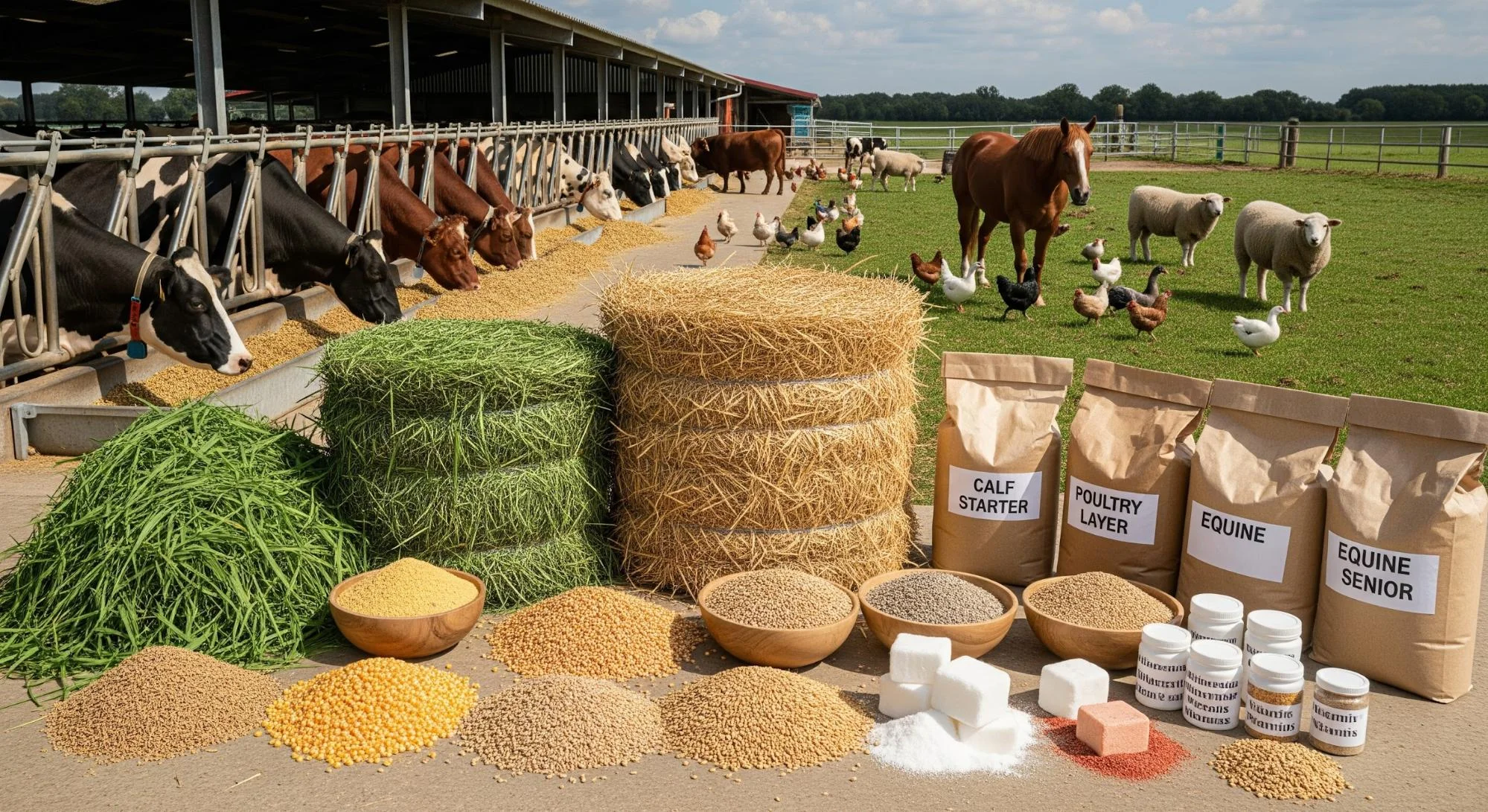
Good feeding is one of the most critical factors in livestock husbandry and pet keeping. This Complete Guide to Animal Feed explains the 6 types of feed, their nutritional benefits, and how they contribute to healthy growth and productivity in cattle, poultry, horses, and sheep. By understanding these feed types, farmers and pet owners can make informed decisions that ensure optimal health and performance.
The Foundation of Animal Nutrition
Science of animal nutrition has developed a lot with the decades. The animal feed classification system assists the farmers, ranchers and animal minders to choose suitable sources of nutrition depending on the needs of the animals. All of the different types of feeds serve a specific purpose to the diet of an animal, and they give the animal essential nutrients, energy, and roughages that are needed to grow, breed, and prosper.
The food and agricultural organization (FAO) reports that the animal feed business in the world generates more than 1.1 billion tons of feeds each year, making it one of the largest agricultural sectors in the world. This large scale production is an indication of how important proper nutrition is to the global food security.
The Six Primary Types of Animal Feed
1. Roughages and Forages
Herbivorous animals mostly depend on roughages as the basis of their food. This group comprises of hay, silage, pasture grass and other fibrous plant materials. These feeds are rich in fiber and relatively less in the amount of digestible nutrients per unit weight. Roughages are especially valuable to the ruminant animals such as cattle and sheep as they need a lot of fiber to support the healthy functioning of the rumen and healthy digestion.
The types of livestock feed in this category are timothy hay, alfalfa, clover, and other types of grasses like bermudagrass, orchardgrass and fescue. The quality of roughage depends on the type of plant species, harvest maturity and storage conditions. Fresh pasture is usually the most nutritious followed by the well-cured hay that offers the best year-round nutrition.
Studies conducted in agricultural universities prove that the majority of nutritional needs during maintenance in adult ruminants are satisfied by high-quality forage. Roughages contain fiber and this causes saliva to be secreted and saliva serves to maintain pH normalcy in the rumen and prevent digestive ailments.
2. Concentrates
High nutritional feeds that have low fiber content are called concentrates. This group consists of grains such as corn, wheat, barley, oats and sorghum and protein rich feed such as soybean feed and cotton feed. The concentrates are also rich in energy and protein and require lesser volumes than roughages and can be used with the animals that have a higher nutritional requirement.
In the case of cattle feed types, concentrates are usually used to complement forage based diets especially in dairy cows which need more energy intake to produce milk or beef cattle during finishing. Majority of the nutritional needs are achieved by balancing the roughages and concentrates well to maintain rumen health and to achieve the necessary growth. Land-grant university extension services usually suggest that ruminants should not have more than 60% of the overall diet as concentrates to avoid acidosis and other metabolic problems.
3. Protein Supplements

Protein supplements are manufactured feeds that are specifically made to increase the amount of protein a particular animal consumes. These are soybean meal, fish meal, canola meal, distillers grains and legume products. Protein plays an important role in muscle building, milk growth, egg-bearing, wool growth and general repair and maintenance of tissues.
Types of poultry feed are commonly characterized by large quantities of protein supplements since chicken, turkey, and other birds need more protein than most mammals. Young growing birds might require feeds with 20-24% of crude protein whereas laying hens normally need 16-18% crude protein to produce eggs maximally. As per the poultry nutrition studies, the quality of protein is an equally important attribute to its quantity, and the balance of amino acids is of specific significance to the health and productivity of birds.
4. Energy Feeds
Energy feeds are rich in carbohydrates and fats which contain energy that animals require in their day-to-day operations, growth and production. Grains are definitely included in this group although so are such products as molasses, fats, oils and by-products of other food manufacturing businesses like wheat middlings, rice bran, and beet pulp.
The types of horse feeds also use different energy feeds based on the amount of workload and metabolic requirements of the animal. Racing or intensive training of performance horses demand more energy intake than pleasure horses and those in light riding. Common energy sources include corn, oats and barley with each grain providing varying levels of energy that are digestible. The average energy content of oats is around 1,500 kilocalories per pound, whereas the average energy content of corn is around 1,800 kilocalories per pound, which is why grain should be chosen based on the particular energy needs.
5. Mineral and Vitamin Supplements
This group incorporates feeds particularly needed to supply fundamental minerals and vitamins that might be inadequate in main feeds. These supplements exist as different forms such as premixes, salt block, loose minerals and fortified feeds. The important minerals are calcium, phosphorus, sodium, chloride, magnesium, and the trace elements such as copper, zinc, selenium, manganese and iron.
A study conducted by the USDA Agricultural Research Service has shown that mineral deficiencies may reduce the productivity of livestock by 20-30 per cent affecting growth rates, reproduction, and immune systems. This stresses the extreme significance of correct mineral supplementation of animal feeds.
Mineral supplementation in this case is of particular importance to sheep feed types because there are also certain sensitivities towards particular minerals in sheep. Although copper is required in small quantities (around 10-15 parts per million), it can be toxic to sheep in amounts that do not harm cattle (that can withstand 25-40 parts per million). This species-specific need is what necessitates the need to understand how to formulate minerals properly.
6. Special Purpose Feeds
Special purpose feeds deal with particular circumstances or growth stage of animal production. They consist of milk substitutes to young animals that are no longer with their mother, medicated feeds that include antibiotics or coccidiostats to prevent diseases, creep feeds that are promoted to young offspring undergoing their period of nursing, and special formulas that are used in breeding animals, show animals, and sick animals.
This classification shows the complex animal feed classification as they understand that the nutritional requirements evolve with the lifespan of an animal and will differ depending on production objectives, environmental factors, and health requirements. It is especially significant to learn what are the 6 types of animal feed, when choosing special purpose options since in many cases they can be a combination of several categories.
Nutritional Composition Comparison
| Feed Type | Primary Nutrient | Fiber Content | Energy Density | Protein Range | Common Examples |
| Roughages | Fiber | High (25-45%) | Low to Moderate | 8-20% | Hay, Silage, Pasture, Straw |
| Concentrates | Energy/Protein | Low (2-12%) | High | 8-45% | Corn, Wheat, Barley, Soybean Meal |
| Protein Supplements | Protein | Low to Moderate | Moderate to High | 35-65% | Soybean Meal, Fish Meal, Canola Meal |
| Energy Feeds | Carbohydrates/Fats | Very Low | Very High | 4-12% | Grains, Molasses, Vegetable Oils |
| Mineral/Vitamin Supplements | Minerals/Vitamins | Minimal | Minimal | Variable | Premixes, Salt Blocks, Trace Mineral Mix |
| Special Purpose Feeds | Varies by Purpose | Varies | Varies | Varies | Milk Replacers, Creep Feed, Medicated Feed |
Selecting Appropriate Feed for Different Livestock
Cattle Nutrition Considerations
There is a big difference in the type of cattle feed used in dairy and beef production depending on the production goal. The dairy cattle are dieting more concentrates and protein supplement to help in milk production as high producing cows can consume up to 40-60% of their food as concentrates. Much beef cattle grazing can be done on roughages, with a judicious use of concentrate supplementation at the stage of finishing, whereby grain-based feeding contributes to the attainment of desired marbling and weight gain.
Creep feeds are beneficial to growing calves as they expose them to concentrates at a slow rate as they keep to nursing. These rations are high in proteins (14-16 percent) and are very palatable which stimulates early rumen growth. A study conducted on beef cattle found out that the appropriate creep feeding could also help add 30-50 pounds to the weaning weights as the calves were prepared to take up their post-weaning diets.
Poultry Dietary Requirements
Poultry feed has also been diversified to meet the demands of the different species of birds and production systems. Commercial meat broiler chickens are fed high energy feeds that are high in protein and adapted to grow fast with starter concentrations of 22-24% protein and finisher concentrations of 18-20% protein. The layer hens require calcium fortified feeds to help them grow strong eggshells which normally requires 3.5-4.5 percent of calcium in their feed.
Each of the turkeys, ducks, and geese has its own needs in terms of nutritions which commercial feeds cater. Poults of turkeys need more protein levels than chickens (28 percent during the initial few weeks) and waterfowl respond well to feeds supplemented with niacin to avert leg issues.
Equine Feeding Strategies

The knowledge of the types of horse feed will enable the owner to keep the animal in good condition to achieve the desired purpose. Horse stomachs are not very large in comparison to their body size (about 8-15 liters of capacity) and they are adapted to almost constant grazing. Equine diets should be based on quality forage, and the horses generally feed on 1.5-2.5 percent of their weight in forage per day.
Concentrates are introduced based on workload, age, and body condition. Most recreational horses thrive on a forage-based diet supplemented with essential vitamins and minerals, while performance horses may require grain supplements to meet higher energy demands. Sourcing quality feed from reputable horse feed manufacturers wholesalers helps ensure consistent nutrition and ingredient reliability. According to equine nutritionists, diets should never be changed abruptly; instead, transitions to new feeds should be made gradually over 7–10 days to prevent colic and digestive disturbances.
Small Ruminant Feeding Approaches
In the question of the type of sheep feed, the animal has an efficient digestive system, and a selective grazing habit which the producer must put into consideration. Sheep are able to derive high nutritional value of lesser quality forages than cattle because they have lesser requirements of the particle size and good microbial fermentation. Nevertheless, they continue to be advantageous by concentrate supplement during late pregnancy (when fetal development is brisk), lactation (especially where ewes have twins or triplets), and lamb development.
Close consideration should be given to copper levels in mineral supplementation in order to avoid copper toxicity. Though cattle can comfortably digest feeds containing copper to 25-40 parts per million, sheep can comfortably digest feeds containing copper to a level of 10-15 parts per million to avoid the build-up of copper in the liver, which may cause death at the onset of stress.
Feed Categories by Animal Species
| Animal Species | Primary Feed Base | Typical Daily Intake | Common Supplements | Special Considerations |
| Dairy Cattle | High-quality forage + concentrates | 2.5-4% of body weight | Protein, minerals, vitamins, buffers | High calcium (0.6-1%) for milk production |
| Beef Cattle | Pasture and hay | 2-3% of body weight | Energy concentrates (finishing phase) | Gradual transition to grain over 14-21 days |
| Poultry (Layers) | Complete pelleted feed | 100-120g per bird daily | Calcium (oyster shell, limestone) | Consistent feeding schedule, 3.5-4.5% calcium |
| Poultry (Broilers) | High-protein complete feed | Ad libitum (free choice) | Grit for digestion | Growth-phase formulations, coccidiostats |
| Horses | Quality hay or pasture | 1.5-2.5% of body weight | Grains (if needed), minerals, salt | Forage should be minimum 50% of diet |
| Sheep | Grass hay, pasture | 2-4% of body weight | Grain (limited), minerals | Avoid excess copper, selenium important |
Maximizing Feed Efficiency and Animal Health
The awareness of the 6 types of animal feed helps the livestock managers come up with balanced rations, which favor health and productivity at an affordable cost. Effective feeding programs take into account both the animal species and its age, production level, reproductive level, along with its requirements. Quality feed storage helps to avoid the destruction of nutrients and contamination, whereas the correct feeding schedule keeps the digestive system healthy and minimizes the waste.
Frequent evaluation of the conditions of the body are used to know whether the feeding programs address the needs of animals satisfactorily. Seasonal adaptation is the use of cold stress during winter and heat stress during summer, reproductive status (pregnancy and lactation) and production level to provide animals with relevant nutrition at all times. Agricultural extension services have developed body condition scoring systems that offer standardized procedures of assessing nutritional condition of species.
The feed efficiency differs significantly across species and systems of production. Poultry generally exhibit the best conversion of feeds (about 1.8-2.0 pounds of feed per pound of gain among broilers) and beef cattle need as a rule 6-8 pounds of feed per pound of gain. The knowledge of such differences allows producers to make realistic expectations and define opportunities of management.
Practical Applications for Animal Caretakers
In operating a business enterprise or keeping backyard pets, the use of the knowledge about the classification of animal feeds enhances better results and prevents nutritional issues. Adding good quality roughages gives herbivores a good foundation to rumen and offers adequate fiber. The inclusion of the right concentrates satisfies the energy requirements, as they grow, lactate, and work hard.
Protein supplements aid in growth and production where base feeds do not have enough protein to meet the requirements of the animals. Mineral and vitamin supplementation helps to fill the nutritional deficiency of particular geographic areas or source of feed. Working animals or those in intensive production are fed by energy which fuels their performance and activity. Special purpose feeds are designed to meet the specific needs of animals at different stages of life, such as newborns all the way to breeding stock.
Such a holistic view of the types of feed applied to livestock will enable the animal care personnel to make sound decisions, which will be advantageous to both livestock and business. Understanding the unique nature and functions of each type of feed, you are able to design feeding approaches that enhance the well-being of the animals and at the same time fulfill your management objectives, be it to maximize output, have pets, or show livestock.
Expert Insights on Feed Selection
The veterinary nutritionists state that it is not the quantity of feed, but its quality. Veterinary schools have found that improperly stored hay may lose 30- 40% of its vitamin A value in six months and that mouldy feed is dangerous to health with mycotoxin poisoning being a major health problem. Feed investment and health of animals are safeguarded by proper storage in well-ventilated places and a dry environment.
To identify the nutritional content, extension professionals suggest that regular forage testing be conducted in lieu of its visual assessment. The protein content, the energy content, the composition of the minerals, possible contamination is identified through laboratory analysis and precises in the formulation of the ration. This type of scientific thinking to comprehend what are the 6 types of animal feed and their individual nutritional profiles results in increased animal performance as well as decreased feeds.
There is also an important influence of the quality and availability of water on the feed utilization. Animals that feed on less water are unable to digest feed, however good it may be. Lactating ewes need 2-3 gallons a day, whereas dairy cows can drink 30-50 gallons per day. Clean water must be provided at all times as much as possible to ensure maximum feed efficiency.
The Economics of Feed Selection
The veterinary nutritionists state that it is not the quantity of feed, but its quality. Veterinary schools have found that improperly stored hay may lose 30- 40% of its vitamin A value in six months and that mouldy feed is dangerous to health with mycotoxin poisoning being a major health problem. Feed investment and health of animals are safeguarded by proper storage in well-ventilated places and a dry environment.
To identify the nutritional content, extension professionals suggest that regular forage testing be conducted in lieu of its visual assessment. The protein content, the energy content, the composition of the minerals, possible contamination is identified through laboratory analysis and precises in the formulation of the ration. This type of scientific thinking to comprehend what are the 6 types of animal feed and their individual nutritional profiles results in increased animal performance as well as decreased feeds.
There is also an important influence of the quality and availability of water on the feed utilization. Animals that feed on less water are unable to digest feed, however good it may be. Lactating ewes need 2-3 gallons a day, whereas dairy cows can drink 30-50 gallons per day. Clean water must be provided at all times as much as possible to ensure maximum feed efficiency.
Conclusion
To achieve effective management of nutrition and animal health, it is essential to understand the six types of animal feed. Selecting the right balance of roughages, concentrates, proteins, and supplements improves productivity and overall welfare across all species. Regular monitoring and timely feeding adjustments help ensure animals receive balanced nutrition throughout their lives. Working with reliable animal feed manufacturers and trusted feed suppliers such as Mid South Feeds simplifies feed selection and supports long-term success.
FAQs
1. What should I do to avoid feeding my dog with hypothyroidism?
Avoid large amounts of cruciferous vegetables, soy-based foods, and high-fat diets, as they may interfere with thyroid function and weight control. Highly processed treats and table scraps can worsen obesity and metabolic imbalance. Focus instead on lean proteins, omega-3 rich foods, and controlled portions.
2. How much should I feed my dog with hypothyroidism?
Feed your dog based on ideal body weight rather than current weight, dividing meals into two portions daily. Hypothyroid dogs often need 20–30% fewer calories due to slower metabolism. Regular weight monitoring helps ensure proper portion control.
3. Can diet alone manage hypothyroidism in dogs?
Diet alone cannot manage hypothyroidism, as thyroid hormone replacement medication is essential. Proper nutrition supports metabolism, weight control, and overall health alongside medication. Long-term management requires both diet and veterinary care.
4. How long does it take to see improvement with proper diet and medication?
Most dogs show improved energy and weight control within 4–8 weeks of treatment. Skin and coat health typically improve within 8–12 weeks. Follow-up blood tests confirm correct medication dosing.
5. Are grain-free diets better for dogs with hypothyroidism?
Grain-free diets are not necessarily better for hypothyroid dogs. High-quality whole grains provide fiber and steady energy for metabolism support. Ingredient quality matters more than grain exclusion.
6. What are the best protein sources for hypothyroid dogs?
Lean proteins such as chicken, turkey, fish, eggs, and salmon are ideal choices. These proteins help maintain muscle mass without excess fat. Fish also provides omega-3 fatty acids for inflammation support.