 Dogs & Cats
 Cattle
 Equine
 Poultry
 Swine
Swine Goats & Sheep
 Game Bird
 Gamecock
 Deer & Wildlife
 Fish & Pond
 Rabbit
 Specialty
 Ingredients & Bulk
 Special Order
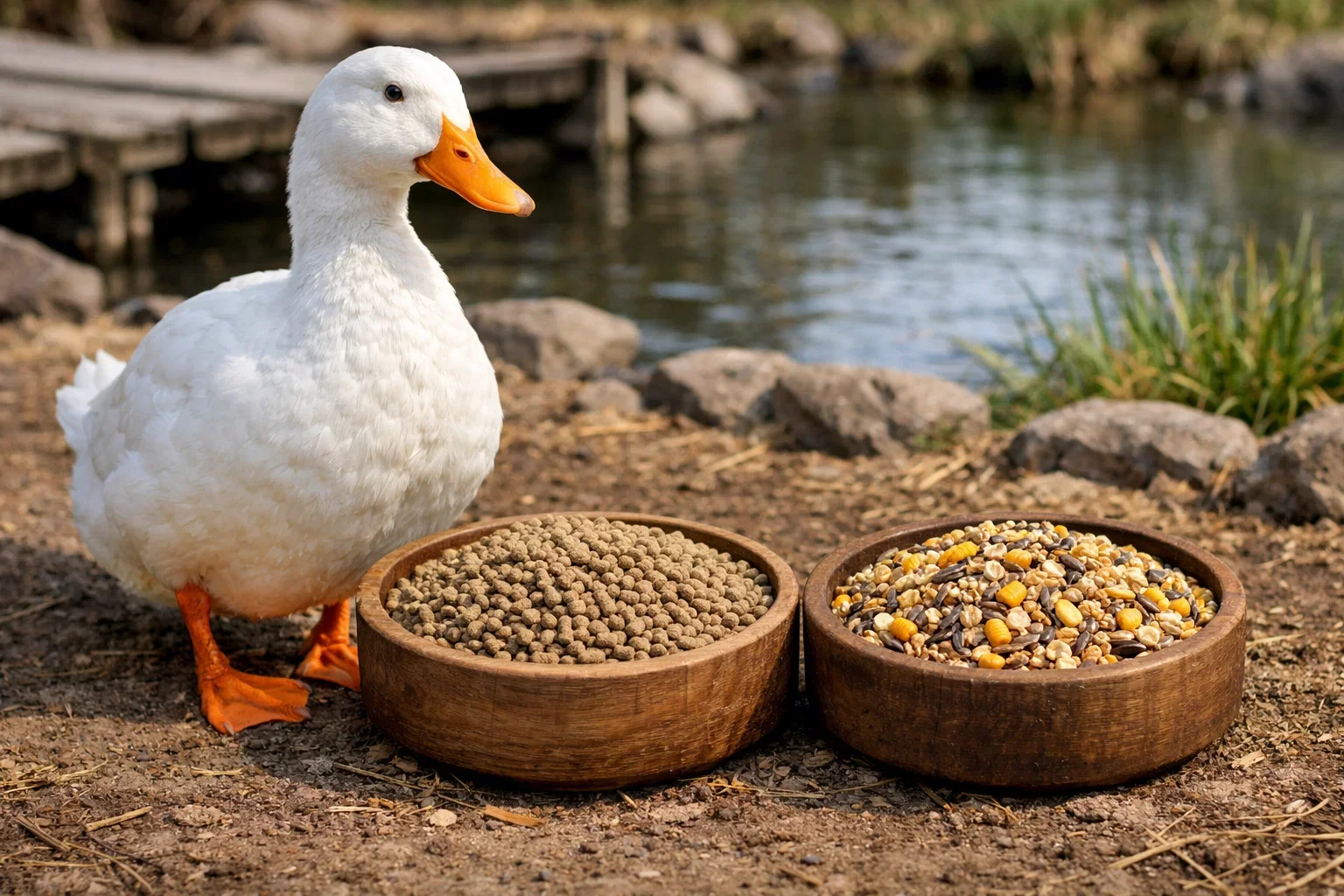
The success in raising ducks is achieved by ensuring proper feeding. Like keeping backyard ducks, whether you are using them to produce eggs, meat or companionship, it is the type of food that you feed them which will determine their health, growth and productivity. The question that many poultry owners tend to ask is can ducks eat game bird feed and notwithstanding the fact that the ducks may have game bird feed ready to go, they still may have quails, pheasants or turkey.
The straightforward reason is that ducks can occasionally consume game bird food, although it is not always the most appropriate choice in their long-term food. Ducks possess some special nutritional needs in comparison to most of the game birds and this is the reason why a distinction between the feeds is a concern when taking care of poultry responsibly.
Understanding the Nutritional Needs of Ducks

Ducks require a balanced diet containing protein, energy, vitamins, and minerals. Their dietary needs change depending on their age, whether they are laying eggs, and how active they are.
Generally, ducks require:
- Moderate protein levels
- Adequate niacin (Vitamin B3)
- Balanced calcium and phosphorus
- Proper energy sources such as grains
Unlike chickens or game birds, ducks need higher levels of niacin for proper leg and bone development. A deficiency in niacin can cause weak legs, poor mobility, and slow growth.
Fact: Ducks need roughly 55–70 mg of niacin per kilogram of feed, while many poultry feeds contain much lower levels.
This nutritional difference is one of the main reasons poultry experts carefully evaluate whether game bird feed is suitable for ducks.
Is Game Bird Feed Safe for Ducks?
When raising several types of birds, many poultry keepers will question whether game bird feed is safe on ducks. Mostly, ducks are able to eat game bird food at times without instant damage. Nonetheless, frequent feeding might not contain balanced nutrients as ducks need.
The game bird feeds are designed with the main focus on such birds as pheasants, quail, and turkeys, which demand high levels of protein to grow quickly and develop muscle to fly.
Typical characteristics of game bird feed include:
- Higher protein percentages (20–30%)
- Concentrated energy levels
- Specialized formulations for game bird species
While ducks can digest this feed, prolonged use may lead to nutritional imbalances.
Duck Feed vs Game Bird Feed

Understanding duck feed vs game bird feed helps poultry owners make smarter feeding decisions. The table below highlights some key differences between the two.
| Feature | Duck Feed | Game Bird Feed |
| Protein Level | Moderate (16–18%) | High (20–30%) |
| Niacin Content | High (important for ducks) | Often lower |
| Calcium Balance | Designed for egg laying ducks | Balanced for game birds |
| Growth Focus | Healthy growth and egg production | Rapid muscle development |
| Suitable for Ducks | Yes | Occasionally |
The main difference lies in nutrient balance. Ducks thrive on feeds specifically designed for waterfowl because these formulas support their unique physiology.
When Ducks Can Eat Game Bird Feed
There are situations where game bird feed can temporarily be given to ducks. For example, some duck owners use it when specialized duck feed is not available.
Situations where it may be acceptable include:
- Short-term feeding when duck feed is unavailable
- Mixing small amounts with duck feed
- Emergency feeding during supply shortages
However, long-term use should be avoided because ducks may not receive enough niacin or balanced minerals.
Fact: Excess protein in poultry diets can sometimes lead to angel wing, a wing deformity seen in young waterfowl.
Risks of Feeding Only Game Bird Feed to Ducks
Although ducks can eat game bird feed occasionally, relying on it entirely may cause several health problems.
Some potential risks include:
- Niacin deficiency leading to weak legs
- Improper calcium balance affecting eggshell quality
- Excess protein causing growth issues
- Nutritional imbalance in adult ducks
Young ducklings are especially vulnerable because they require very specific nutrient levels during their early growth stages.
Because of these risks, poultry specialists usually recommend feeds formulated specifically for ducks or waterfowl.
Alternative Feed for Ducks
If specialized duck feed is not available, poultry keepers can use alternative feed for ducks to maintain balanced nutrition.
Below is a helpful comparison of safe feeding options.
| Feed Type | Suitability for Ducks | Notes |
| Waterfowl Feed | Excellent | Designed for ducks and geese |
| Layer Feed | Good for adult ducks | Provides calcium for egg production |
| Starter Feed (with added niacin) | Suitable for ducklings | Needs niacin supplementation |
| Whole Grains | Supplement only | Should not replace balanced feed |
| Vegetables & Greens | Healthy treat | Adds vitamins and fiber |
Healthy treats that ducks enjoy include:
- Peas
- Lettuce
- Kale
- Corn
- Cooked rice
These foods should only supplement the main diet rather than replace it.
Best Feeding Practices for Ducks
Proper feeding management is just as important as choosing the right feed. Ducks eat frequently and require constant access to clean water while eating.
Key feeding tips include:
- Provide fresh water during feeding
- Avoid moldy or spoiled feed
- Introduce new feed gradually
- Monitor duck health and growth
Duck owners should also ensure that feed is stored correctly. Poor storage can lead to mold contamination, which can cause serious health issues in poultry.
Signs Your Ducks Are Not Getting Proper Nutrition
Ducks often show clear signs when their diet is unbalanced. Recognizing these signs early helps prevent long-term health problems.
Common signs include:
- Weak legs or difficulty walking
- Poor feather quality
- Reduced egg production
- Slow growth in ducklings
If these symptoms appear, adjusting the diet or consulting a poultry nutrition expert can help correct the issue quickly.
Choosing High-Quality Poultry Feed
No matter the kind of poultry you are rearing, quality of feed contributes significantly to the health and performance of animals. Quality feeds are often characterized with high quality carefully chosen ingredients, balanced nutrients and stable formulations that are aimed at promoting maximum growth and productivity.
The formula of professional feeds is usually species-specific, so the animals obtain nutrients required to live and work in the long term.
Conclusion
Then is it possible to feed ducks on game bird food? To some extent yes ducks can eat it though it must not substitute a balanced duck or waterfowl feed. Ducks contain different nutritional requirements particularly in regards to niacin and mineral balance which are not always guaranteed by game bird feed.
To achieve optimal outcomes, owners of poultry should use feeds designed to meet the nutritional demands of waterfowl or balance alternative diets very well to ensure healthy development and laying.
In seeking quality animal nutrition products, firms such as Mid South Feeds provide a variety of livestock and animal feed products that are formulated with a balanced nutrient mix and have science-based formulations that are formulated to help animals perform better and stay healthy. They develop their feeds in line with a standard of quality and also using ingredients that have been carefully chosen so as to ensure that animals can have reliable nutrition at various growth stages.
FAQs
1. Can ducks eat game bird feed safely?
Yes, ducks can eat game bird feed occasionally without immediate harm. However, it should not be used as a long-term diet because it may not meet all of a duck’s nutritional needs. Ducks require specific nutrients like higher niacin levels that are often missing in game bird feed.
2. Is game bird feed safe for ducks long term?
Game bird feed is generally not ideal for long-term feeding of ducks. Ducks require balanced minerals and higher niacin for proper bone and leg development. Feeding it for extended periods may lead to nutritional deficiencies or health issues.
3. Can ducklings eat game bird feed?
Ducklings may eat game bird starter feed if it is properly balanced and supplemented with niacin. Young ducks require higher niacin levels to support healthy leg and bone development. Poultry keepers should monitor their growth carefully and provide proper waterfowl nutrition whenever possible.
4. What risks come from feeding ducks only game bird feed?
Feeding ducks only game bird feed can cause nutritional imbalances over time. Ducks may experience niacin deficiency, weak legs, poor feather growth, or reduced egg production. These issues occur because the feed is not specifically designed for waterfowl.
5. What is a good alternative feed for ducks?
Good alternative feed for ducks includes waterfowl feed, layer feed for adult ducks, and grains or vegetables as supplements. Foods like peas, lettuce, corn, and cooked rice can also be given as treats. However, these foods should support a balanced main diet rather than replace it.