 Dogs & Cats
 Cattle
 Equine
 Poultry
 Swine
Swine Goats & Sheep
 Game Bird
 Gamecock
 Deer & Wildlife
 Fish & Pond
 Rabbit
 Specialty
 Ingredients & Bulk
 Special Order
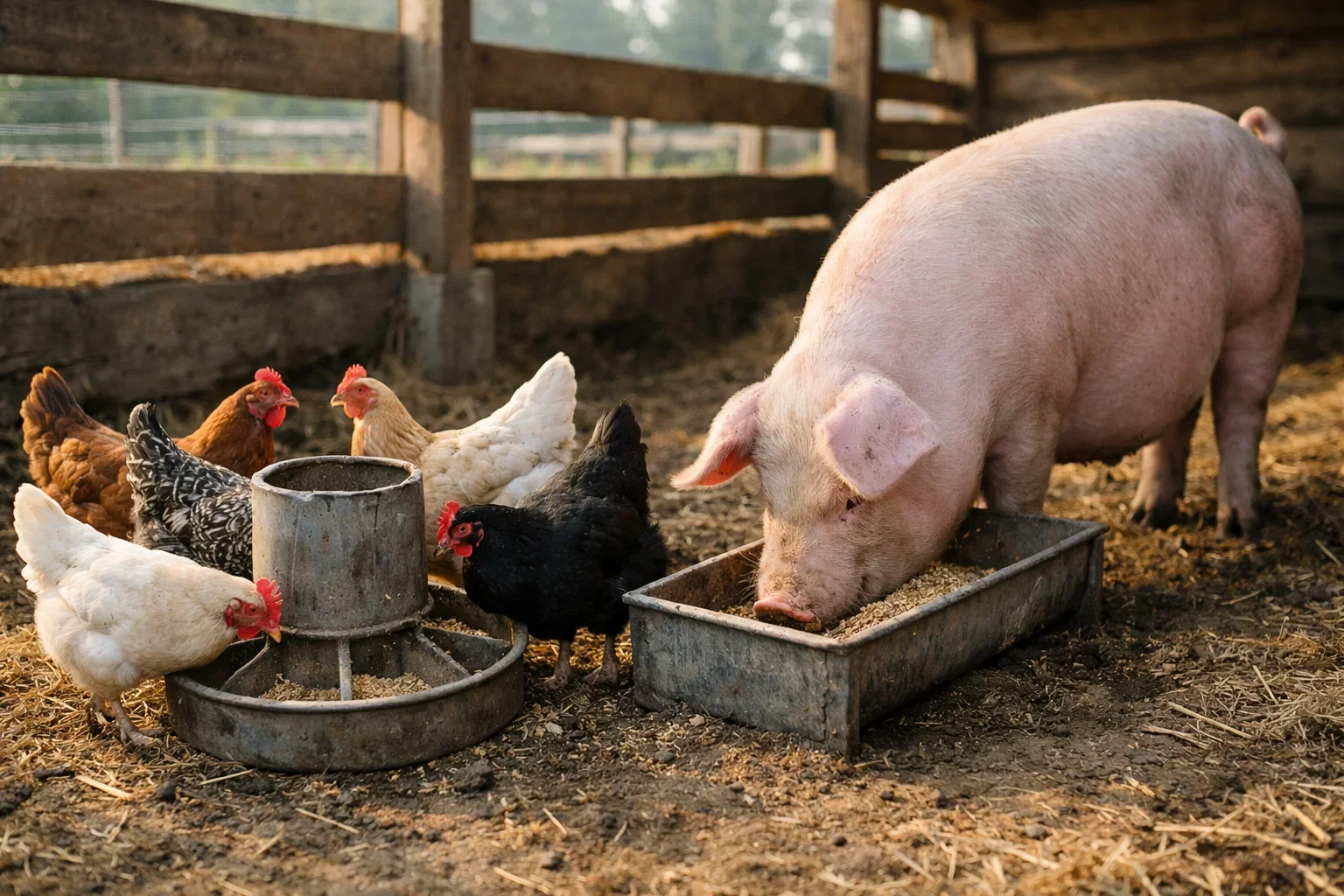
You have no doubt on more than one occasion caught your chickens popping a bite at the pig feeder in case you keep both chickens and pigs in the same yard. It is one legitimate question: do chicken feed on pig food, and are you supposed to care?
The quick response is that one nibble will not hurt them immediately but feeding the chickens on pigs feed on a regular basis is not a good practice. We should now examine how and why, and how, properly, to operate a mixed-animal setup safely.
What Is Pig Feed Made Of?
It is useful first to learn what constitutes the average pig food before evaluating the dangers involved. Pig feed is designed in a manner that encourages growth, muscle building and fat production of swine at a very rapid rate. It is usually rich in calories and protein and it is also likely to have ingredients that are not an issue with pigs but are with poultry.
Common ingredients in commercial pig feed include:
- Corn and soybean meal as the base
- Added fats and oils for energy
- Copper sulfate as a growth supplement
- Salt at higher concentrations than poultry feed
- Vitamins and minerals calibrated for swine physiology
- Sometimes urea or other non-protein nitrogen sources
The problem is not that these ingredients are toxic on their own it is that they are present in amounts and ratios designed for a pig’s body, not a chicken’s.
Is Pig Feed Safe for Chickens?
This is where things become important. Is pig feed safe for chickens? A little unintentional ingestion is technically not going to kill your birds. Nevertheless, regular or large doses can be potentially dangerous to health.
The Copper Problem
Copper sulfate is one of the largest concerns. Pig feeds are rich in copper which will grow swine. Chickens are very sensitive to copper toxicity on the other hand. Copper in moderately high concentrations can damage the liver of poultry at the long run. This does not manifest itself at once, but builds, and that is even more hazardous, since the keepers in most cases fail to make the connections until the damage is complete.

High Salt Content
Pig feed also has more salt as compared to chicken feed. Chicken is very intolerant to sodium. Excessive salt leads to excessive thirst, wet droppings and in extreme situations, salt toxicity which is lethal particularly during hot climatic conditions when birds already consume more water.
Protein Imbalance
The requirements of pigs and chicken differ in terms of protein requirement at various life stages. Pig grower feed usually contains inappropriate protein levels that cannot correspond to the requirements of the laying hens or broilers, thus affecting the egg production and the general health.
Chickens have a copper tolerance level of approximately 35-50mg/kg. Commercial pig feed usually includes copper 125-250 mg/kg or more -which could be five times the amount that the chicken can reasonably cope with safely.
Difference Between Chicken Feed and Pig Feed
Understanding the difference between chicken feed and pig feed makes it much clearer why they should not be interchanged.
| Feature | Chicken Feed | Pig Feed |
| Copper levels | Low (35–50 mg/kg) | High (125–250+ mg/kg) |
| Protein source | Balanced for egg/meat production | Optimized for muscle and fat gain |
| Calcium content | High (especially for layers) | Lower |
| Salt levels | Moderate | Higher |
| Fiber content | Moderate | Can vary widely |
| Digestive target | Avian digestive system | Monogastric mammal gut |
| Typical form | Pellets, crumble, mash | Pellets, meal, wet mix |
As the table shows, the formulations are quite different in nearly every dimension. Swapping one for the other even temporarily is not advisable as a regular practice.
What Happens If Chickens Eat Pig Feed?
So what happens if chickens eat pig feed? The outcome largely depends on how much they ate and how often.
One-Time or Occasional Exposure
Unless you put your hennas into the pig feeder once and have a small portion, chances are that they will be all okay. Observe them during the following 24-48 hours. Symptoms to be observed are lethargy, soft droppings, loss of appetite, or strange thirst. One accidental exposure in most cases does not produce any permanent damage.

Regular or Long-Term Exposure
This is where real damage occurs. Over weeks or months, the elevated copper content builds up in the liver. Chickens may begin to show signs of:
- Reduced egg production
- Pale combs and wattles
- Lethargy and weakness
- Diarrhea or abnormal droppings
- In severe cases, sudden death from liver failure
The insidious thing about copper toxicity is that birds can appear fine for a long time before showing obvious symptoms, by which point the liver damage may already be significant.
Large One-Time Ingestion
In case a chicken somehow ate an extremely large amount of pig food at the same time, such as an unmonitored open bag, the sheer amount of salt would be sufficient to induce salt poisoning. It manifests itself as excessive thirst, stumbling, tremors and once untreated, it becomes life threatening within hours.
Copper toxicity in chicken is accumulative. Investigations have revealed that the liver copper levels may increase to hazardous levels within 46 weeks of continuous exposure to copper-contaminated feed despite their lack of noticeable external manifestations at the initial stages.
Managing a Mixed Farm: Practical Tips
If you raise both chickens and pigs, keeping their feed separate is essential. Here are some practical management strategies:
Separate feeding areas: Feed pigs in an enclosed pen that chickens cannot access. Elevating pig feeders slightly off the ground also helps, since chickens will struggle to reach them.
Use covered or enclosed feeders for pigs: Trough-style open feeders are an invitation for curious chickens. Covered feeders or those with lids significantly reduce accidental access.
Feed pigs at scheduled times: Rather than free-choice feeding pigs all day, feed them at specific times and remove leftover feed. This reduces the window during which chickens can sneak in.
Inspect your property layout: Fencing between pig and chicken areas is the most reliable solution. Even basic chicken wire between their respective runs makes a significant difference.
Store feed separately and securely: Bags of pig feed should be in a locked container or a room chickens cannot enter.
What Should Chickens Eat Instead?
Chickens are fed a diet that is adjusted to its life stage. Egg-laying hen layer pellets, meat bird broiler feed, and young chicken starter/grower, all these are precisely balanced to meet the needs of the avian.
As a more natural supplement to a natural feed, keeping chicken products such as vegetables, cooked grains, and fruits in moderation are excellent feeding choices. In case you are also keeping young pigs on your farm, you can borrow information on what to feed a baby pig to make sure that each pig is getting the right species-specific feed when it is young.
As far as chickens are concerned, the most appropriate supplemental foods are the leafy greens, corn, mealworms, and plain cooked rice. What you would not want to feed chickens with is anything salty, processed, or created to feed another species- even pig food.
Can Chickens Ever Eat Pig Feed Safely?
Pig feed is never the correct pig feed that should be used on chickens. But, when you no longer have chicken feed and you only have pig feed on hand, a single emergency feeding would not be much of a problem, so long as it is really an emergency situation. Use a little, always have fresh water on hand and get back to the correct chicken food as early as possible.
Do not replace pig feed with chicken feed on a regular basis although it may seem cheaper and more convenient. Any short-term savings are vastly outweighed by the long-term health costs in terms of the cost of vet bills, decreased production of eggs and possible losses of the flock.
Final Thoughts
Can chickens eat pig feed? They are able, and they will, provided opportunity, to, but it does not imply that they ought. The most important variations in the copper levels, salt content, and general nutritional profiles are the fact that pig feed is ineffective and can even be hazardous to poultry, particularly after being repeatedly exposed to it.
The easiest solution is straightforward, isolate the feeds, lock the pig feeders and make sure that all the animals on your farm are being fed what their biology is supposed to eat. When they are eating chicken feed and not that of the pig next door, your chickens will produce better and live longer and be healthier.
FAQs
1. Can chickens eat pig feed in small amounts?
Yes, chickens can eat a small accidental amount of pig feed without immediate harm, but it should not become a regular habit. Pig feed is formulated for swine and contains higher copper and salt levels than chickens can safely tolerate over time. Occasional nibbling is usually fine, but consistent access can lead to serious health problems.
2. Why is copper in pig feed dangerous for chickens?
Pig feed often contains copper sulfate at levels designed to promote growth in pigs, which is much higher than what chickens can safely handle. Over time, excess copper accumulates in a chicken’s liver and may cause toxicity. The damage builds slowly, making it difficult to detect until symptoms become severe.
3. What happens if chickens regularly eat pig feed?
Regular consumption can lead to copper buildup, salt toxicity, and nutritional imbalances that affect egg production and overall health. Chickens may show lethargy, diarrhea, pale combs, or reduced laying performance. In extreme cases, long-term exposure can result in liver failure or sudden death.
4. Is pig feed ever safe to use as a replacement for chicken feed?
Pig feed should not be used as a routine substitute for chicken feed because it is not nutritionally balanced for poultry. In a true emergency, a single short-term feeding is unlikely to cause lasting harm if fresh water is available. However, proper chicken feed should be restored as soon as possible.
5. How can I prevent chickens from eating pig feed?
The best way to prevent access is to separate feeding areas and use enclosed or covered pig feeders. Feeding pigs at scheduled times and removing leftovers also reduces the chance of chickens sneaking in. Secure storage and proper fencing are the most reliable long-term solutions.
6. What should chickens eat instead of pig feed?
Chickens should eat feed specifically formulated for their life stage, such as layer pellets for hens or starter feed for chicks. These feeds are balanced for proper calcium, protein, and mineral needs. Safe supplements include vegetables, grains, and mealworms, but anything salty or formulated for another species should be avoided.