Most poultry problems don’t start with disease. They start with misunderstanding the life cycle of poultry.
Feed too early, too late, or incorrectly, and you’ll see it fast: slow growth, weak bones, poor egg production. Many flock owners think chickens “just grow.” They don’t. Each stage has a biological purpose, and missing it costs you.
Here’s the straight answer:
A chicken’s growth follows six clear stages, and each stage demands different nutrition, care, and expectations. Get these right, and your birds grow faster, lay better, and stay healthier.
What Is the Life Cycle of Poultry?
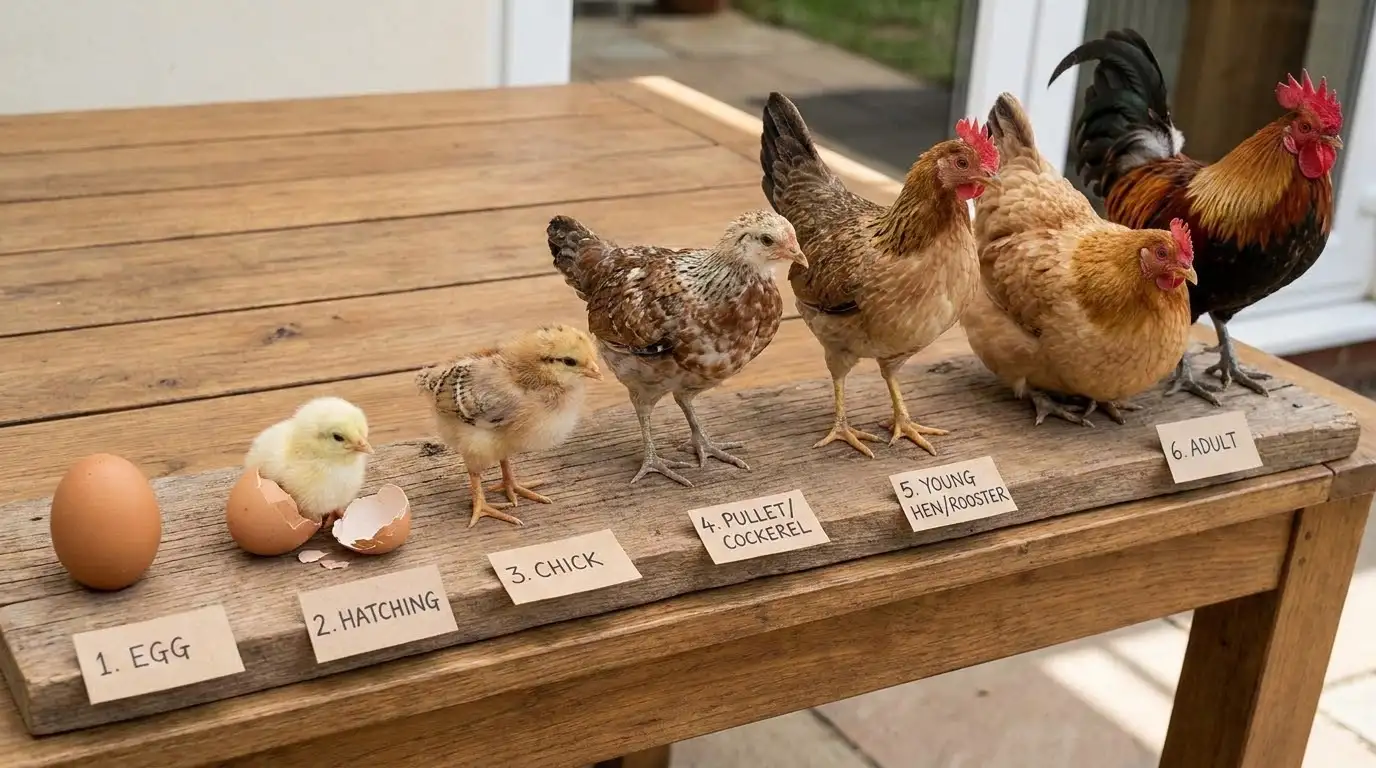
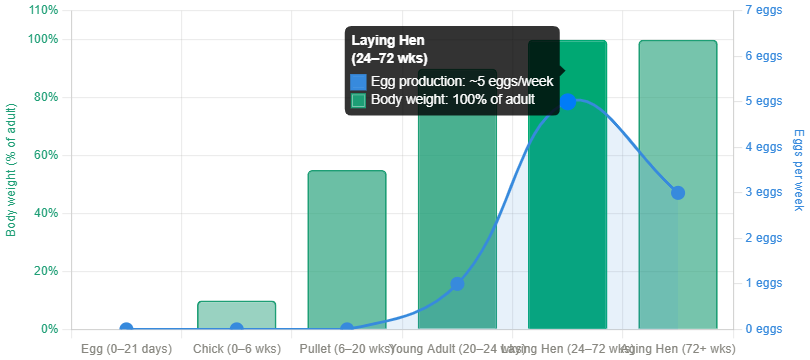
The life cycle of poultry refers to the complete biological development of a chicken from egg to mature adult. It includes six key chicken growth stages, each marked by physical, hormonal, and nutritional changes.
According to poultry physiologist Dr. Michael Lilburn (Ohio State University, Poultry Nutrition Expert), early-life nutrition alone can influence lifetime egg production by up to 20%. That’s not a small margin—it’s the difference between profit and loss.
The 6 Growth Stages in the Life Cycle of Poultry
1. Egg Stage (Day 0–21)
Everything starts here.
A fertilized egg incubates for about 21 days under controlled temperature (99.5°F) and humidity. Embryo development is rapid, especially in the last week.
What matters:
- Stable incubation conditions
- Proper egg turning
- Clean handling to prevent contamination
Even slight temperature variation can reduce hatch rates by 5–10%.
2. Chick Stage (0–6 Weeks)
This is the most fragile stage in the growth cycle of a chicken.
Newly hatched chicks depend entirely on external care. Their immune systems are immature, and their metabolism is extremely high.
Key characteristics:
- Rapid weight gain
- Feather development begins
- High protein demand
Feeding focus:
- Start with 20% Pullet Starter-Grower Crumbles
- Clean water at all times
Expert insight:
Dr. Jacquie Jacob (University of Kentucky, Poultry Extension Specialist) notes that chicks can double their body weight within the first week if properly fed.
3. Pullet Stage (6–20 Weeks)
This is where structure is built.
A pullet is a young female chicken that hasn’t started laying eggs yet. This stage defines future productivity.
What happens:
- Skeletal development
- Muscle formation
- Reproductive organs begin developing
Feeding strategy:
- Continue with pullet grower feeds
- Avoid early calcium overload (can damage kidneys)
Important note:
If you rush this stage with high-calcium layer feed, you may reduce lifetime egg production.
4. Young Adult Chicken (20–24 Weeks)
This is the transition phase.
At around 18–24 weeks, chickens reach sexual maturity. This stage is often referred to as the young adult chicken phase.
Signs:
- First eggs appear
- Comb and wattles become brighter
- Behavioral changes (nesting, vocalization)
Feeding shift:
- Move to 16% Layer Mash, Pellets, or Crumbles
- Gradually introduce calcium
This transition must be smooth. Sudden feed changes stress the bird and affect egg consistency.
5. Laying Hen Stage (24–72 Weeks)
This is the production engine.
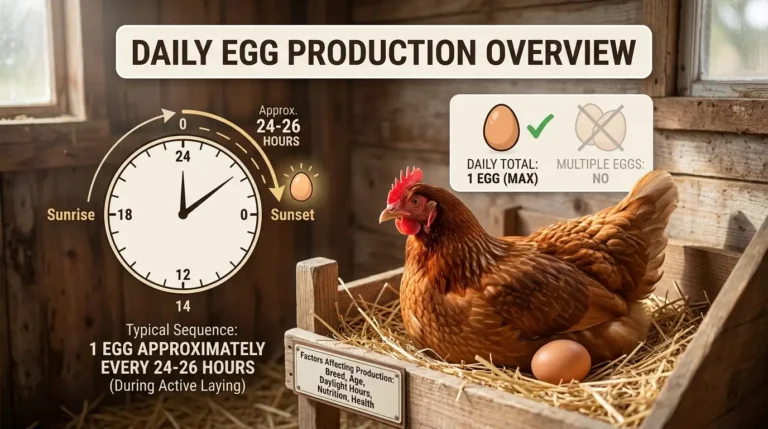
A mature hen can lay 250–300 eggs per year depending on breed, nutrition, and management.
What matters most:
- Consistent feed
- Proper calcium levels
- Light exposure (14–16 hours daily)
Feed options:
- 16% Layer Pellets
- 16% Layer Crumbles
- 20% Layer Pellets for higher production demand
Add-ons:
- 4-Grain Scratch Feed (50 lb) (in moderation)
- Supplements like OGS Poultry-Case for overall health
6. Aging or Decline Stage (72 Weeks and Beyond)
Production slows down. That’s normal.
Egg quality may drop, shells become thinner, and laying frequency decreases.
Management approach:
- Maintain balanced nutrition
- Reduce stress
- Consider flock rotation if needed
According to USDA poultry data, egg production can decline by 15–20% after the first laying year.
How Long Does It Take for a Chicken to Grow?
A common question: how long does it take for a chicken to grow?
Simple answer:
- Hatch to laying stage: ~20–24 weeks
- Full productive maturity: ~6 months
But growth quality matters more than speed. Faster isn’t always better if bone density and reproductive health are compromised.
Chicken Growth Chart (Quick Reference)
| Stage | Age | Key Focus |
| Egg | 0–21 days | Incubation |
| Chick | 0–6 weeks | Immunity + growth |
| Pullet | 6–20 weeks | Structure development |
| Young Adult | 20–24 weeks | First eggs |
| Laying Hen | 24–72 weeks | Egg production |
| Aging Hen | 72+ weeks | Maintenance |
This chicken age chart helps align feeding and care decisions at each step.
What Affects the Growth Stages of Chickens?
Not all flocks grow the same. Here’s why:
1. Nutrition
The biggest factor. Poor feed = poor outcomes.
2. Genetics
Choosing the best breed for laying hens directly impacts production.
3. Environment
Temperature, space, and lighting all influence development.
4. Disease Control
Early infections can permanently stunt growth.
Common Mistakes in the Life Cycle of Poultry
Most flock issues trace back to these:
- Feeding layer feed too early
- Ignoring protein needs in chicks
- Sudden feed changes
- Overfeeding scratch grains
- Poor water hygiene
These seem small, but they compound fast.
Frequently Asked Questions
What is the difference between pullet and hen growth stages?
A pullet is a young female not yet laying eggs, while a hen is a mature egg-laying bird.
Can chickens skip growth stages?
No. The cycle of life chicken is biologically fixed, but poor management can delay or damage stages.
What is the best feed at each stage?
- Chick: Starter (high protein)
- Pullet: Grower
- Adult: Layer feed with calcium
If you’re searching for the Best Poultry Feed, the key is matching feed to stage, not just brand.
When should I switch to layer feed?
Around 18–20 weeks, or when the first eggs appear.
Where Most Flock Owners Get It Right (and Wrong)
The difference between an average flock and a high-performing one isn’t luck. It’s timing.
Right feed. Right stage. No shortcuts.
Many flock owners only realize this after poor egg production or slow growth. By then, recovery is harder.
If you’re serious about improving your flock, start with the basics: understand the life cycle of poultry, match your feed to each stage, and stay consistent.
And when you’re ready to upgrade your results, don’t guess your feed strategy.
Work with people who understand poultry nutrition inside out.
At Midsouth Feeds, we supply stage-specific options like pullet starter-grower crumbles, layer mash, pellets, and complete poultry solutions designed for real farm performance.
If you’ve ever searched for “Find poultry feeds dealer near me,” you already know availability matters. What matters more is getting the right feed at the right time.
That’s where the real difference shows up—in healthier birds, stronger eggs, and better returns.