 Dogs & Cats
 Cattle
 Equine
 Poultry
 Swine
Swine Goats & Sheep
 Game Bird
 Gamecock
 Deer & Wildlife
 Fish & Pond
 Rabbit
 Specialty
 Ingredients & Bulk
 Special Order

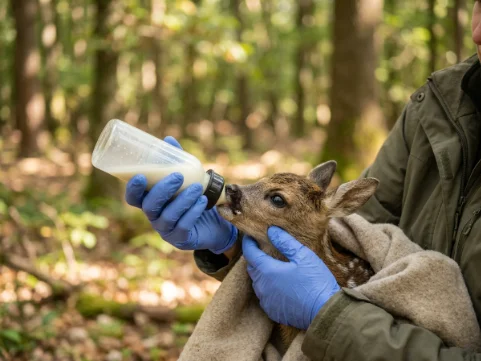
Finding a baby deer alone can feel urgent and emotional. Your instinct is to help right away. But knowing what to feed a baby deer and what NOT to feed it is critical. The wrong food can seriously harm or even kill a fawn within hours.
This guide is built on wildlife rehabilitator guidelines and veterinary-backed practices. Whether you found an orphaned fawn or are raising one on a farm, this complete baby deer diet guide covers everything you need, step by step.
Legal Note First: In most U.S. states and many countries, keeping a wild deer without a wildlife rehabilitation permit is illegal. Before doing anything else, call a licensed wildlife rehabilitator or your state’s fish and wildlife agency. The information here is for emergency situations and permitted caregivers.
Step 1: Is the Fawn Actually Abandoned?

This is the most important question and most people get it wrong. Mother deer leave their fawns alone for 8 to 12 hours at a time while they graze. A fawn that is quiet and curled up is almost always safe and waiting for its mother.
Do NOT feed or touch the fawn unless you see these signs:
- It has been crying loudly and non-stop for more than 3–4 hours
- It is visibly injured, bleeding, or covered in flies/maggots
- It is wandering in circles, wobbling, or unable to stand
- You have confirmed the mother is dead nearby
- It appears severely dehydrated (skin stays pinched when you gently press it)
If none of these apply, walk away and monitor from a distance. Touching a fawn can transfer your scent and cause the mother to reject it.
Step 2: The First and Most Critical Nutrient Colostrum
If you are caring for a fawn that is less than 24 hours old, colostrum is the single most important thing it needs. Colostrum is the first milk produced by the doe right after birth.
It is packed with antibodies, proteins, and immune factors that protect the fawn from diseases like pneumonia, scours (severe diarrhea), and necrotic stomatitis. Without colostrum in the first 12–24 hours of life, a newborn fawn has almost no immune defense.
If the fawn missed colostrum from its mother:
- Contact a wildlife vet immediately
- Some farm supply stores carry colostrum supplements designed for fawns or lambs
- A vet may administer plasma or colostrum replacement products
This step is non-negotiable for newborns under 24 hours old.
Step 3: What to Feed a Baby Deer by Age
Once past the colostrum stage, the baby deer diet shifts to milk but not just any milk. Here is the complete age-by-age feeding guide:
Milk Stage (0 to 10 Weeks)

The best milk option for fawns is goat’s milk or a fawn-specific milk replacer. Deer milk is very high in fat and protein compared to other animals, and goat milk comes closest to matching it among readily available options.
Fawn milk replacers from reputable animal food manufacturers’ specialty feed lines are even better because they are formulated to match the exact fat, protein, and sugar ratios of doe’s milk. Look for these at Tractor Supply, farm supply stores, or through wildlife rehabilitation suppliers.
| Fawn Age | Best Milk Option | Daily Amount | Feedings Per Day |
| 0–7 days | Colostrum, then goat milk or fawn replacer | 10–20% of body weight | 5–6 times |
| 1–2 weeks | Goat milk or fawn milk replacer | 10–20% of body weight | 4–5 times |
| 2–4 weeks | Fawn milk replacer (preferred) | 10–20% of body weight | 3–4 times |
| 4–6 weeks | Fawn milk replacer + start offering solids | Reduce gradually | 3 times |
| 6–10 weeks | Milk replacer + solid foods | Reduce gradually | 2 times |
| 10–12 weeks | Wean based on solid food consumption | Minimal | 1 time or stop |
Feeding Amount Rule: Feed 10–20% of the fawn’s body weight in milk per day, divided across all feedings. For a 6 lb (96 oz) fawn, that is 10–19 oz of milk daily total.
Can Baby Deer Drink Cow Milk?
This is one of the most searched questions about baby deer diet and the answer is a firm no. Baby deer cannot safely drink cow milk.
Cow milk has a completely different fat, protein, and sugar composition than deer milk. It can cause:
- Severe bloating and gas
- Diarrhea and dehydration
- Intestinal damage
- Death in young fawns
Even whole cow milk from the store should never be used. If goat milk or fawn milk replacer is unavailable in an emergency, contact a wildlife rehabilitator immediately rather than substituting cow milk.
Step 4: Proper Bottle Feeding Technique
Knowing what to feed is only half the answer. How you feed the fawn matters just as much for its safety.
Before feeding:
- Warm the milk to body temperature (~100°F / 38°C) never microwave, always warm in a bowl of hot water
- Use a small animal nursing bottle with a lamb or fawn nipple (not a human baby nipple the flow rate is wrong)
- Test the temperature on your wrist it should feel warm, not hot
During feeding:
- Hold the bottle at an upward angle so the fawn must raise its head slightly this mimics the natural nursing position under the doe
- Feed slowly and let the fawn control the pace never squeeze milk in forcefully
- If milk comes out of the nose, stop immediately, hold the fawn upright, and wait 5 minutes before trying again
- Gently stroke the fawn’s belly during feeding to stimulate its digestive system
After feeding:
- Use a warm, damp cloth or baby wipe to gently rub the fawn’s lower belly and anus this stimulates urination and bowel movements, which fawns cannot do on their own for the first few weeks
- Always wear gloves to minimize human scent transfer
Step 5: Introducing Solid Foods (What Do Fawns Eat as They Grow?)
Fawns begin showing interest in solid foods around 3 to 4 weeks of age, but their digestive systems are not ready for grains or hard foods until closer to 6–8 weeks. The transition must be gradual.
Weeks 3–6: Early Solid Exploration
- Offer soft leaves, clover, dandelion greens, and fresh grass
- Place a small bowl of clean dirt in the pen fawns need soil bacteria to develop healthy gut flora
- Always provide fresh, clean water in a shallow bowl
Weeks 6–10: Soft Solids and Browse
- Add alfalfa hay in small amounts
- Introduce calf manna or starter pellets from animal food manufacturers product lines many wildlife rehabilitators use these as a bridge food
- Offer small pieces of soft fruits like apples and pears
- Mix small amounts of creep feed or deer pellets into the diet
Weeks 10–12 and Beyond: Weaning to Full Solid Diet
- Base weaning on the fawn’s solid food consumption, not just its age
- A fawn eating well on browse, pellets, and hay can be fully weaned earlier
- Continue offering a wide variety of natural browse: leaves, twigs, clover, acorns, and grasses
| Food Type | When to Introduce | Notes |
| Goat milk / milk replacer | From day 1 | Warmed to body temp always |
| Clean dirt | Week 1–2 | Critical for gut bacteria |
| Clover, dandelion, soft leaves | Week 2–3 | Offer freely |
| Alfalfa hay | Week 3–4 | Small amounts only |
| Calf manna / starter pellets | Week 4–6 | Use specialty feed brands |
| Soft fruits (apple, pear) | Week 6+ | Cut into small pieces |
| Deer pellets / adult feed blend | Week 8+ | Transition slowly |
| Acorns, twigs, browse | Week 10+ | Natural wild diet |
Safe Foods for Baby Deer (Older Fawns)
Once a fawn is past the milk stage and eating solids well, here are foods that are generally safe:
- Clover a natural favorite and easy on digestion
- Dandelion greens nutritious and widely available
- Alfalfa hay good fiber and protein source
- Apples and pears soft, sweet, and well-tolerated
- Grass and browse mimics natural wild diet
- Acorns fine from 3 months onward
- Sweet potatoes nutritious occasional treat
- Deer pellets from trusted animal food manufacturers’ specialty feed line
Foods to NEVER Feed a Baby Deer
Some foods are toxic or dangerous to deer regardless of age. Avoid these completely:
- Cow milk causes severe GI distress (see above)
- Corn in large amounts causes fatal bloat and acidosis, especially in young fawns
- Spinach and beet greens high in oxalates, damaging to kidneys
- Bread and processed grains cause dangerous fermentation in the gut
- Dog or cat food wrong protein profile, harmful additives
- Chocolate or sweets toxic to deer
- Coco Puffs, sodas, or junk food documented cases of fawn death from this
- Excess sweet feed or corn at 3–4 weeks can cause scours and bloat even in small amounts
Hydration: A Step Most People Miss
Dehydration kills fawns quickly, especially in hot weather. Even fawns that are actively milk-feeding need access to fresh, clean water at all times.
To check hydration, do the skin turgor test: gently pinch the fawn’s skin and release. If the skin springs back immediately, the fawn is well-hydrated. If the pinch mark stays visible for a moment, the fawn needs more fluids right away.
For sick or dehydrated fawns, a wildlife vet may recommend bottle-feeding with electrolyte supplements alongside water. Never replace milk with electrolytes they work together, not as a substitute.
When to Call a Wildlife Rehabilitator
If any of the following happen, stop home care and call a licensed rehabilitator immediately:
- The fawn is not gaining weight after 3–4 days
- It has persistent diarrhea or soft, foul-smelling stools
- It refuses to feed for more than one feeding cycle
- It is lethargic, weak, or has labored breathing
- Milk came out of its nose during feeding (aspiration risk)
Wildlife rehabilitators have access to veterinary-grade specialty feed products, electrolyte formulas, and medical treatments that are not available to the public. They give orphaned fawns the best chance at a healthy life and safe release back into the wild.
Final Thoughts
Understanding what to feed a baby deer goes beyond just picking the right milk. It starts with colostrum for newborns, moves through proper bottle technique, advances into gradual solid food introduction, and ends with a fawn confidently eating natural browse. Each stage matters.
The most important things to remember:
- Never use cow milk it causes serious harm
- Colostrum first for any fawn under 24 hours old
- Feed 10–20% of body weight in milk daily, divided into multiple small feedings
- Introduce solids gradually starting at 3–4 weeks
- Always contact a wildlife rehabilitator they are your best resource
A fawn raised with the right diet, proper technique, and expert support will grow into a strong, healthy deer ready to return to the wild. That outcome starts with the choices you make in the very first feeding.
FAQs
1. What should I feed a newborn baby deer (fawn)?
A newborn fawn should first receive colostrum within the first 12–24 hours for immunity. After that, use goat milk or a proper fawn milk replacer only.
2. How often should I feed a baby deer?
Feed a newborn 5–6 times per day in the first week for proper growth and digestion. Gradually reduce to 2–3 feedings daily as it grows.
3. Can I give a baby deer cow milk?
No, cow milk is unsafe and can cause diarrhea, bloating, and dehydration. Only goat milk or fawn-specific milk replacer should be used.
4. When can a baby deer start eating solid food?
Fawns begin trying soft greens like clover and grass at 3–4 weeks of age. Full transition to solid foods happens around 10–12 weeks.
5. What foods are unsafe for baby deer?
Avoid cow milk, bread, chocolate, processed food, and sugary items completely. Corn, spinach, and junk food can also seriously harm their digestion.