 Dogs & Cats
 Cattle
 Equine
 Poultry
 Swine
Swine Goats & Sheep
 Game Bird
 Gamecock
 Deer & Wildlife
 Fish & Pond
 Rabbit
 Specialty
 Ingredients & Bulk
 Special Order
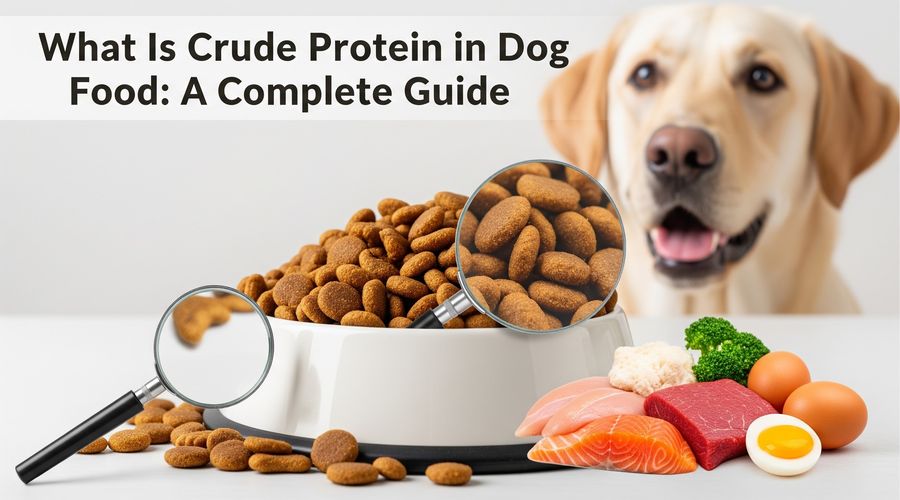
What is crude protein in dog food? Crude protein is the total amount of protein in dog food, measured through laboratory testing that calculates nitrogen content. The term “crude” refers to the testing method (Kjeldahl method), not the quality of protein. This number appears on every dog food label as “Crude Protein (min) X%” and helps pet owners understand the protein content in their dog’s diet.
Understanding Crude Protein: The Simple Explanation
Crude protein represents all protein sources in dog food combined into one percentage. It’s measured by testing nitrogen levels and converting that to an estimated protein value. This standardized measurement allows you to compare different dog foods, though it doesn’t indicate protein quality or digestibility.
How Crude Protein Is Measured
The Kjeldahl method, used since the 1880s, measures nitrogen in dog food and multiplies it by 6.25 to estimate protein content. Since protein contains approximately 16% nitrogen, this calculation provides the crude protein percentage you see on labels.
Important Limitation: This method measures ALL nitrogen sources, including non-protein nitrogen compounds, which can sometimes inflate the crude protein number on inferior foods.
Protein Sources in Dog Food: Quality Comparison
| Protein Source | Digestibility | Biological Value | Best For |
| Chicken, Turkey, Beef | 85-95% | High | All dogs – complete amino acids |
| Fish (Salmon, Whitefish) | 85-92% | High | Dogs with allergies, omega-3 needs |
| Eggs | 95-100% | Highest | Supplemental protein, puppies |
| Meat Meal/By-Products | 75-85% | Medium-High | Concentrated protein, cost-effective |
| Peas, Lentils, Beans | 60-75% | Medium | Plant-based diets, grain-free options |
| Corn, Wheat, Soy | 60-70% | Low-Medium | Budget foods, not ideal as primary source |
What the Crude Protein Number Tells You (and What It Doesn’t)
What It DOES Tell You:
- Total protein content in the food
- Whether the food meets minimum AAFCO standards
- A baseline for comparing different brands
What It DOESN’T Tell You:
- Protein quality or source
- How digestible the protein is
- Whether protein comes from meat or plants
- Amino acid completeness
- Biological value for your dog
How to Read Crude Protein on Dog Food Labels
Step 1: Find the Guaranteed Analysis section on the bag
Step 2: Look for “Crude Protein (min) X%”
Step 3: Check the first 5 ingredients to identify protein sources
- Good: “Chicken, chicken meal, turkey”
- Concerning: “Corn, wheat gluten, pea protein”
Step 4: Calculate protein-to-calorie ratio for accurate comparison:
(Crude Protein % × 10) ÷ (kcal per cup) × 1000 = grams of protein per 1,000 calories
Step 5: Compare with AAFCO statement to ensure the food meets your dog’s life stage requirements
Crude Protein by Dog Food Type
| Food Type | Typical Crude Protein Range | Protein Sources |
| Kibble (Dry Food) | 20-32% | Meat meals, fresh meat, plant proteins |
| Canned (Wet Food) | 7-13% (as fed)* | Fresh meat, meat by-products |
| Raw Food | 12-18% (as fed)* | Whole meat, organs, bones |
| Freeze-Dried | 35-45% | Concentrated meat sources |
| Grain-Free | 28-38% | Meat, fish, peas, lentils |
*Lower “as fed” percentages due to moisture content. Dry matter basis shows 35-50% protein.
Why “Crude” Doesn’t Mean “Bad”
The word “crude” confuses many pet owners, making them think it indicates poor quality. What is crude protein in dog food is simply a standardized testing method name. “Crude” is a laboratory term meaning “approximate” or “total,” not “inferior” or “unrefined.”
The same testing method is used for all dog foods, from budget brands to premium organic options. The word has nothing to do with the protein’s quality or source.
Red Flags: When Crude Protein Numbers Mislead
Artificially Inflated Numbers
Some manufacturers add non-meat nitrogen sources to boost crude protein percentages:
- Feather meal
- Leather meal
- Excessive plant proteins
- Synthetic amino acids
These technically increase the crude protein number but provide poor nutrition.
The Ingredient Order Trick
If crude protein is 28% but the first three ingredients are corn, wheat, and soy, most protein comes from plants, not meat—despite the decent percentage.
Matching Crude Protein to Your Dog’s Needs
1. Puppies (High Growth Demands)
- Crude Protein Need: 28-32%
- Why: Rapid growth requires more amino acids for tissue development
- Best Sources: Chicken, turkey, fish with calcium balance
2. Adult Dogs (Maintenance)
- Crude Protein Need: 22-28%
- Why: Maintains muscle mass and supports daily functions
- Best Sources: Mixed animal proteins for variety
3. Senior Dogs (Muscle Preservation)
- Crude Protein Need: 24-28%
- Why: Prevents age-related muscle loss without stressing kidneys
- Best Sources: Highly digestible fish or poultry
4. Active/Working Dogs (Performance)
- Crude Protein Need: 30-40%
- Why: Supports muscle recovery and sustained energy
- Best Sources: Dense animal proteins with high fat
5. Dogs with Health Issues
- Kidney Disease: 14-20% (veterinary supervision required)
- Allergies: 22-28% from novel protein sources
- Weight Management: 25-30% with lower fat
Crude Protein vs. Other Nutrients
Understanding what is crude protein in dog food also means knowing how it fits with other nutrients:
| Nutrient | Typical Range | Works With Protein For |
| Crude Fat | 10-20% | Energy, nutrient absorption |
| Crude Fiber | 2-5% | Digestive health |
| Moisture | 10-12% (kibble) | Overall hydration |
| Calcium | 0.5-2.5% | Bone health with protein |
| Phosphorus | 0.4-1.6% | Bone health, protein metabolism |
Beyond the Percentage: Quality Indicators
Don’t just look at crude protein percentage. Evaluate these factors:
1. Named Meat Sources: “Chicken” beats “poultry meal” beats “meat meal”
2. Meat Positioning: Animal protein in the first 2-3 ingredients indicates quality
3. Protein Variety: Multiple animal proteins provide complete amino acid profiles
4. Digestibility Claims: Look for “highly digestible” or digestibility percentages (80%+ is excellent)
5. AAFCO Feeding Trial Statement: “Feeding tests” prove the food works better than “formulated to meet” statements
Common Myths About Crude Protein Debunked
Myth: High crude protein causes kidney disease
Truth: No scientific evidence supports this in healthy dogs. Dogs with existing kidney problems need modified protein, but protein doesn’t cause the disease.
Myth: Dogs need grain-based protein
Truth: Dogs are facultative carnivores thriving on animal protein. They can digest grains but don’t require them.
Myth: More expensive food always has better crude protein
Truth: Price doesn’t guarantee quality. A $30 bag might have better protein sources than a $70 bag. Check ingredients, not just price.
Myth: Crude protein percentage is the most important factor
Truth: Source quality, digestibility, and amino acid profile matter more than the percentage alone.
Making Smart Choices with Crude Protein Knowledge
Now that you understand what is crude protein in dog food, apply this knowledge:
For Label Reading: Look beyond the percentage to ingredient quality and order
For Comparison Shopping: Calculate protein per 1,000 calories, not just percentages
For Your Dog’s Health: Match protein levels and sources to age, activity, and health status
For Long-Term Wellness: Focus on digestible animal proteins from named sources
The Bottom Line on Crude Protein
Crude protein is a standardized measurement showing total protein content in dog food. While helpful for comparison, it doesn’t reveal protein quality, digestibility, or source. The best dog food balances an appropriate crude protein percentage with high-quality animal protein sources matched to your dog’s individual needs.
Look for animal foods where named animal proteins appear in the first few ingredients, crude protein levels suit your dog’s life stage and activity level, and the manufacturer provides transparency about protein sources and digestibility. Your dog’s body condition, energy, coat quality, and overall health are the ultimate indicators of whether their food provides adequate, quality protein.
Understanding crude protein empowers you to make informed decisions, but remember: the percentage is just one piece of your dog’s nutritional puzzle. Quality always trumps quantity when it comes to keeping your canine companion healthy and thriving.
FAQs
1. Is 30% Crude Protein Too Much for Dogs?
No, 30% crude protein is not too much for healthy dogs. Most dogs can safely consume 25-40% protein without any health issues. Active dogs, puppies, and working breeds often benefit from 30% or higher. The myth that high protein damages kidneys in healthy dogs has been scientifically disproven through multiple studies.
2. What’s a Good Crude Protein Percentage for Dogs?
A good crude protein percentage depends on your dog’s life stage and activity level. Average adult dogs thrive on 22-28%, while active dogs need 28-35% to support energy and muscle recovery. Puppies require 28-32% for proper growth, and senior dogs benefit from 24-28% to maintain muscle mass and prevent age-related weakness.
3. Is Crude Protein the Same as Real Protein?
Not exactly. Crude protein measures total nitrogen content, which estimates protein but doesn’t guarantee quality or digestibility. Real, digestible protein from chicken or fish is nutritionally superior to crude protein from low-quality sources like feathers or hooves, even if both show the same percentage on the label.
4. Does Higher Crude Protein Mean Better Food?
No, higher percentages don’t automatically mean better nutrition. A food with 25% crude protein from quality chicken and fish may be far better than 35% crude protein from plant fillers and meat by-products. The source quality, digestibility rate, and amino acid completeness matter significantly more than the percentage alone.
5. Can Crude Protein Be Too Low for Dogs?
Yes, if crude protein falls below 18% for adult dogs or 22.5% for puppies, it doesn’t meet AAFCO minimum requirements. Dogs on low-protein diets may experience muscle loss, poor coat quality, weakened immune function, and low energy levels. Even senior dogs need adequate protein to maintain health and prevent muscle wasting.
6. What Happens If Dogs Get Too Much Crude Protein?
Healthy dogs with normal kidney function can handle high protein levels without problems. Excess protein is simply converted to energy or excreted by the body. However, if your dog is sedentary and the high-protein food is also calorie-dense, they may gain unwanted weight from overall calorie excess, not from the protein itself.
7. Is Plant-Based Crude Protein Good for Dogs?
Plant-based proteins like peas, lentils, and soy can contribute to crude protein percentages but are less digestible than animal proteins for dogs. Dogs lack the optimal enzymes to break down plant proteins efficiently, resulting in lower biological value and incomplete amino acid profiles. Animal proteins should always be the primary protein source in quality dog food.
8. How Do I Know If Crude Protein Is from Meat or Plants?
Check the ingredient list on the dog food label. Ingredients are listed by weight, so the first 5-7 ingredients reveal the primary protein sources. If you see named meats like “chicken” or “salmon” at the top, most crude protein comes from quality animal sources. If you see “pea protein,” “corn gluten,” or “soy” first, most protein is plant-based.
9. Does Wet Food Have Less Crude Protein Than Dry Food?
Wet food appears to have lower crude protein (7-13%) compared to dry food (20-32%), but this is misleading. The difference is due to moisture content. When calculated on a dry matter basis (removing water weight), wet food typically contains 35-50% protein, which is comparable to or higher than many dry foods.
10. Should I Choose Dog Food Based Only on Crude Protein?
No, crude protein percentage is just one factor in choosing quality dog food. You should also consider protein source quality, ingredient freshness, digestibility rates, fat content, carbohydrate sources, and whether the food meets AAFCO standards through feeding trials. Your dog’s individual needs, health status, and how they respond to the food matter most.